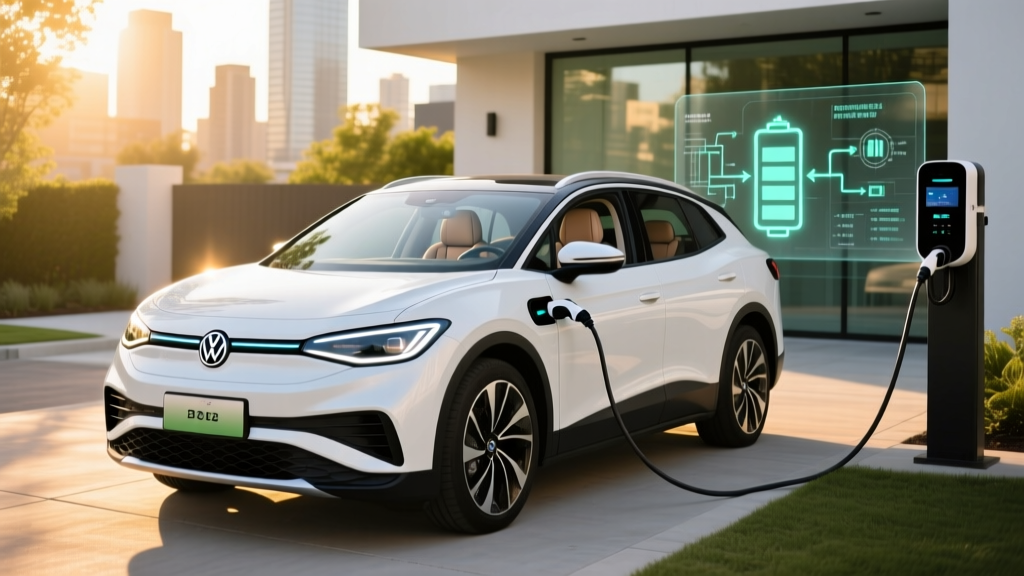
The Volkswagen ID.4 occupies a specific niche in the compact electric crossover segment: it is not the longest-range, not the quickest-charging, and not the most tech-forward EV in its class. What it is, in 2026, is one of the most compelling vehicles to lease — thanks to aggressive dealer discounts, a favorable federal tax credit structure for leased vehicles, and a price-to-space ratio that undercuts most AWD electric SUVs on the market.
After spending time with the current-generation ID.4 on highway loops, suburban commutes, and DC fast-charging stops, here is the data-driven case for buying versus leasing, along with the exact numbers you need to evaluate whether this EV fits your driveway.
Range, Efficiency, and the Real-World Caveat
The 2026 ID.4 is offered with two battery configurations. The Standard Range model uses a 62 kWh (usable) lithium-ion NMC pack, while the Pro and Pro S trims carry an 82 kWh (usable) NMC battery. Volkswagen does not currently offer an LFP chemistry option in the ID.4 lineup — all US-market packs are nickel-manganese-cobalt, which provides higher energy density but requires more careful state-of-charge management for longevity compared to LFP.
| Trim | Battery (usable kWh) | EPA Range (mi) | MPGe (city/hwy/combined) | kWh/100 mi |
|---|---|---|---|---|
| Standard Range RWD | 62 kWh (NMC) | 206 | 115 / 98 / 107 | 31 |
| Pro RWD | 82 kWh (NMC) | 291 | 115 / 100 / 108 | 30 |
| Pro S AWD | 82 kWh (NMC) | 263 | 104 / 90 / 97 | 34 |
The ID.4's efficiency of roughly 30–34 kWh/100 mi places it in the middle of the compact EV SUV pack. The Hyundai Ioniq 5 RWD achieves about 30 kWh/100 mi with a slightly smaller battery, while the Ford Mustang Mach-E Extended Range RWD is comparable at 31 kWh/100 mi. The ID.4 is not a class leader in efficiency, but its large 82 kWh battery compensates with raw capacity.
Charging Speed: DC Fast, Level 2, and the Curve
Charging performance is where the ID.4 draws both praise and criticism. The Pro/Pro S models with the 82 kWh pack support a peak DC fast-charge rate of 170 kW on a CCS connector (NACS adapter availability expanded for 2026 for Tesla Supercharger access). The Standard Range model peaks at approximately 135 kW.
| Charge Level | Power (kW) | Time / Rate | Notes |
|---|---|---|---|
| Level 1 (120V household) | ~1.4 kW | ~3–4 mi/hr | Emergency/top-up only; full charge takes 3+ days |
| Level 2 (240V home) | 11 kW (onboard charger max) | ~25–30 mi/hr; 0–100% in ~8.5 hrs (82 kWh) | Requires 48A circuit; 60A breaker recommended |
| DC Fast (CCS/NACS adapter) | 170 kW peak (Pro/Pro S) | 10–80% in ~28 min | Peak rate sustained to ~40% SoC, then tapers; 80–100% adds ~20 min |
| DC Fast (Standard Range) | 135 kW peak | 10–80% in ~30 min | Smaller battery fills faster but holds less total energy |
The 28-minute 10–80% time on the Pro models is competitive but not class-leading. The Hyundai Ioniq 5 and Kia EV6, with their 800V architectures, achieve 10–80% in approximately 18 minutes at 240+ kW. On a road trip, that 10-minute gap per stop matters over a 600-mile drive. However, for daily driving and overnight Level 2 home charging, the ID.4's 11 kW onboard charger is generous — many competitors limit Level 2 to 7.7 kW or 9.6 kW, meaning the ID.4 refills faster at home than several rivals.
One practical note: battery preconditioning for DC fast charging activates automatically when you set a fast charger as your navigation destination. Without preconditioning — for example, pulling into a charger without nav routing — peak charge rates can be 20–30% lower in cold weather. Always navigate to your charger.
Performance and Drivetrain
The ID.4 was never engineered to be a performance SUV, and the numbers reflect a comfort-oriented tuning philosophy.
- Pro RWD: 282 hp, single rear motor, 0–60 mph in approximately 7.3 seconds
- Pro S AWD: 335 hp (combined), dual-motor, 0–60 mph in approximately 5.4 seconds
- Standard Range RWD: 201 hp, 0–60 mph in approximately 8.5 seconds
The RWD model's rear-motor layout gives the ID.4 a tight 31.5-foot turning circle — genuinely useful in urban environments and parking garages. The AWD model adds a front AC induction motor that disengages during light-load cruising to preserve efficiency, engaging on demand for traction or hard acceleration.
Ride quality is a genuine strength. The MEB platform delivers a low center of gravity, and VW's suspension tuning absorbs road imperfections with a composure that the sportier Ioniq 5 and Mach-E don't quite match. If ride comfort on rough pavement matters to you, the ID.4 punches above its price point.
Interior, Cargo, and Technology
The ID.4's cabin is spacious for its footprint, with seating for five and cargo volume that competes with gas-powered compact SUVs.
- Cargo behind rear seats: 30.3 cu ft
- Cargo with rear seats folded: 64.2 cu ft
- Rear legroom: 37.6 inches
- Front headroom: 41.1 inches
- No front trunk (frunk): The MEB platform's packaging leaves only a small cubby under the hood for washer fluid and cables — not usable cargo space.
The infotainment system has been a consistent pain point in owner surveys. The 12.9-inch touchscreen (Pro S and above) runs VW's latest ID. Software 4.0, which is a meaningful improvement over earlier versions — faster response times, wireless Apple CarPlay and Android Auto, and a revised menu structure. However, the capacitive touch sliders for volume and climate remain frustrating to use while driving, and the lack of physical buttons for core functions is a persistent complaint.
Driver assistance comes via VW's IQ.DRIVE suite, which includes adaptive cruise control with stop-and-go, lane centering, automatic emergency braking, and blind-spot monitoring. This is an SAE Level 2 system — it assists with steering and speed but requires continuous driver supervision. It is not autonomous driving. The system is competent for highway cruising but does not offer hands-free operation like GM's Super Cruise or Ford's BlueCruise on approved roads.
Pricing, Trims, and the Lease-vs-Buy Tax Credit Strategy
The 2026 ID.4 is built at VW's Chattanooga, Tennessee plant, which has significant implications for federal tax credit eligibility under IRS §30D rules.
| Trim | Drivetrain | Base MSRP | As-Tested (typical options) |
|---|---|---|---|
| Standard Range | RWD | $39,735 | $40,500 |
| Pro | RWD | $43,735 | $45,200 |
| Pro S | RWD | $47,235 | $48,800 |
| Pro S Plus | AWD | $51,235 | $53,100 |
All trims fall well under the IRS §30D MSRP cap of $80,000 for SUVs. However, buyer eligibility for the full $7,500 credit on a purchase depends on adjusted gross income limits ($150,000 single / $300,000 joint), battery component sourcing requirements, and critical mineral sourcing thresholds — rules that have tightened progressively. Because the ID.4 is US-assembled with a domestically sourced battery pack, it generally qualifies for the full credit for eligible buyers, but you should verify current-year sourcing compliance on IRS.gov's clean vehicle credit page and confirm with your tax professional before signing.
| Scenario | Pro RWD MSRP | Federal Credit | Effective Price / Monthly |
|---|---|---|---|
| Purchase (eligible buyer) | $43,735 | Up to $7,500 (point-of-sale) | ~$36,235 before state incentives |
| 36-month lease (typical) | — | Credit passed as cap-cost reduction (dealer-dependent) | ~$249–$349/mo with $2,999–$3,999 due at signing (varies by region and promotion) |
Why Leasing the ID.4 Deserves a Hard Look
Under the IRS commercial clean vehicle credit (§45W), leasing companies can claim the $7,500 credit on leased vehicles regardless of the lessee's income, the vehicle's MSRP cap, or battery sourcing rules. Many leasing companies pass this savings through as a capitalized cost reduction, effectively lowering your monthly payment. This is why Volkswagen ID.4 car leasing has become a particularly popular strategy: you can access the full $7,500 benefit even if your income exceeds the §30D purchase caps or if battery sourcing rules disqualify a direct purchase in a given model year.
The trade-off is that you do not own the vehicle at the end of the lease, you are subject to mileage limits (typically 10,000–15,000 miles/year), and you cannot claim the credit on your personal tax return. However, if you prefer driving a new vehicle every three years and want to avoid long-term battery degradation risk, the lease structure is financially compelling — especially when VW and its dealers layer on additional lease cash incentives, which are common on the ID.4.
Battery Warranty and Long-Term Ownership
Volkswagen provides an 8-year/100,000-mile battery warranty on the ID.4, guaranteeing that the high-voltage pack will retain at least 70% of its original usable capacity during that period. The powertrain warranty mirrors this at 8 years/100,000 miles, and the basic vehicle warranty is 4 years/50,000 miles.
NMC battery chemistry, as used in the ID.4, typically degrades at a rate of approximately 1.5–2.5% per year under normal use patterns, based on fleet data from similar MEB-platform vehicles. After 5 years and 75,000 miles, expect roughly 88–92% state of health (SoH). To maximize longevity, avoid routinely charging to 100% on the 82 kWh pack — set your daily charge limit to 80% and reserve 100% charges for road trips. (This advice applies to NMC specifically; LFP batteries tolerate 100% daily charges better, but the ID.4 does not offer LFP.)
If a battery replacement were ever needed out of warranty, current estimates for an 82 kWh NMC pack replacement run between $12,000 and $18,000 including labor — a significant sum, though full replacements remain rare within the first decade of ownership based on industry data.
How the ID.4 Stacks Up Against Key Competitors
The compact electric SUV segment is crowded. Here is how the ID.4 Pro RWD compares to the three most cross-shopped alternatives:
| Spec | VW ID.4 Pro RWD | Hyundai Ioniq 5 SEL RWD | Ford Mach-E Select RWD | Tesla Model Y Long Range AWD |
|---|---|---|---|---|
| EPA Range | 291 mi | 303 mi | 250 mi | 320 mi |
| Battery (usable) | 82 kWh (NMC) | 77.4 kWh (NMC) | 70 kWh (NMC) | 75 kWh (NMC) |
| DC Fast Peak | 170 kW | 240 kW (800V) | 150 kW | 250 kW |
| 10–80% Time | ~28 min | ~18 min | ~35 min | ~22 min |
| 0–60 mph | 7.3 sec | 7.0 sec | 6.1 sec | 4.8 sec |
| Cargo (rear seats up) | 30.3 cu ft | 27.2 cu ft | 29.7 cu ft | 30.2 cu ft |
| Base MSRP | $43,735 | $44,500 | $42,995 | $47,990 |
| Home L2 Rate | 11 kW | 10.9 kW | 9.6 kW | 11.5 kW |
Pros
- Class-leading cargo volume at 30.3 cu ft
- Strong 11 kW Level 2 onboard charger for fast home refills
- Comfortable, compliant ride quality over rough roads
- US-built, strong §30D and lease-credit eligibility
- Tight turning circle (31.5 ft) for easy urban maneuvering
- Competitive lease pricing with frequent dealer incentives
Cons
- DC fast charging slower than 800V rivals (28 min vs 18 min)
- Infotainment touch sliders are frustrating in daily use
- No front trunk (frunk) for additional storage
- Real-world highway range falls ~15–18% below EPA sticker
- No hands-free driving mode (Level 2 only)
- Cold-weather range loss significant without heat pump on all trims
Who the ID.4 Suits Best
The ID.4 is the right pick if you prioritize ride comfort, cargo practicality, and a strong lease deal over outright performance or cutting-edge charging speed. It works well as a family daily driver for suburban households with home Level 2 charging, where most miles are accumulated within 30 miles of home and road trips are occasional rather than weekly.
It is less ideal for high-mileage road warriors who need the fastest possible DC charging, tech enthusiasts who want the latest hands-free driving systems, or buyers who need a frunk for gear storage. If you regularly tow, note that the ID.4's maximum towing capacity is 2,700 pounds (AWD) — adequate for a small utility trailer but not a camper.
Frequently Asked Questions
What is the real-world range of the 2026 Volkswagen ID.4?
The Pro RWD's EPA estimate is 291 miles. In real-world mixed driving, expect 250–270 miles. Sustained highway driving at 75 mph reduces this to roughly 240–260 miles, and cold weather (below freezing) can drop usable range to 190–220 miles. The AWD Pro S delivers approximately 220–240 real-world miles in moderate conditions.
How fast does the ID.4 charge at home and on the road?
At home on a 240V Level 2 charger, the ID.4 accepts up to 11 kW, adding roughly 25–30 miles of range per hour and fully recharging the 82 kWh battery in about 8.5 hours. On a DC fast charger, the Pro/Pro S peaks at 170 kW and reaches 10–80% in approximately 28 minutes when the battery is preconditioned via navigation routing.
Does the Volkswagen ID.4 qualify for the federal EV tax credit?
For eligible buyers purchasing outright, the US-built ID.4 generally qualifies for up to $7,500 under IRS §30D, subject to income caps ($150K single / $300K joint), MSRP limits (under $80K for SUVs — all trims qualify), and battery sourcing requirements that should be verified at IRS.gov. For leases, the $7,500 commercial credit (§45W) is available to the leasing company and is frequently passed through as a cap-cost reduction, with no income or sourcing restrictions on the lessee.
Is leasing the ID.4 better than buying?
Leasing offers a lower effective monthly cost when the $7,500 credit is applied as a cap-cost reduction, avoids long-term battery degradation risk, and sidesteps the purchase income caps. Buying makes more sense if you drive over 15,000 miles per year, want to keep the vehicle 5+ years, or want to capture the full credit at point of sale and own an appreciating-utility asset. Run the numbers with your dealer on both scenarios before committing.
How does the ID.4 compare to the Tesla Model Y?
The Model Y Long Range AWD offers more range (320 mi EPA), faster DC charging (~250 kW peak), quicker acceleration (4.8 sec 0–60), and access to Tesla's Supercharger network natively. The ID.4 counters with a more comfortable ride, slightly more cargo space (30.3 vs 30.2 cu ft), a lower starting price on the Pro RWD, and often more aggressive lease incentives. If Supercharger access is a priority, note that 2026 ID.4 models support NACS adapters for Tesla network compatibility, though adapter-based charging may not always match native speeds.
Sources: EPA Fuel Economy — Volkswagen ID.4, IRS Clean Vehicle Credits (§30D / §45W), NHTSA — 2026 VW ID.4 Safety Ratings.