Quick Verdict: The Pragmatic Electric Family Crossover
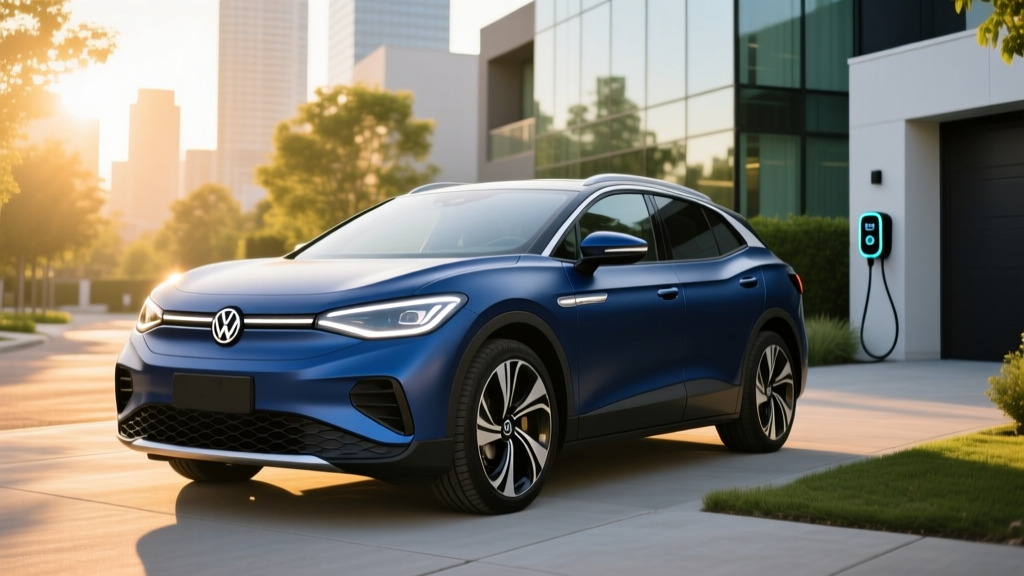
The 2026 Volkswagen ID.4 doesn't chase headline-grabbing performance figures or futuristic styling. Instead, it delivers exactly what most EV buyers actually need: a usable 291-mile EPA range, comfortable seating for five, straightforward charging speeds, and a starting price that undercuts many rivals before federal tax incentives. After spending time with VW's compact electric SUV, it's clear this is the electric equivalent of a well-sorted compact crossover — competent, practical, and occasionally frustrating in its software execution.
For 2026, Volkswagen has refined the ID.4 with a slightly larger battery pack, updated infotainment software (addressing many earlier complaints), and standard NACS charging port compatibility for Tesla Supercharger access. The result is an EV that feels more mature and ownership-friendly than its 2021-2024 predecessors, even if it still lacks the thrill factor of a Hyundai Ioniq 5 or Tesla Model Y.
Range, Efficiency, and Real-World Expectations
Real-World Expectation: 240-265 miles on mixed highway driving; 200-220 miles in sustained cold weather (below 30°F) with cabin heating
The 2026 ID.4 Pro S with rear-wheel drive carries an EPA rating of 291 miles, while the dual-motor AWD variant drops to 263 miles due to added weight and drivetrain losses. These figures come from an 82 kWh usable battery pack (91 kWh gross) using NMC (nickel-manganese-cobalt) chemistry — the same cell format VW has used since the ID.4's launch, sourced primarily from SK On and LG Energy Solution.
In real-world driving, expect to see 3.2-3.5 miles per kWh in temperate city and suburban conditions, which aligns closely with the EPA's combined rating. Highway cruising at 70-75 mph drops efficiency to roughly 2.8-3.0 mi/kWh, yielding 230-250 miles before you'll want to find a charger. Cold weather is the ID.4's Achilles heel: without a standard heat pump (available on higher trims), cabin heating draws significant energy, cutting range by 25-35% in sub-freezing conditions. If you live in the northern U.S. and lack home charging, this is a genuine consideration.
Efficiency ratings from fueleconomy.gov list the RWD model at 107 MPGe combined (31 kWh/100mi) and the AWD at 98 MPGe combined (34 kWh/100mi). These are mid-pack numbers — the Ioniq 5 RWD achieves 114 MPGe, while the Model Y Long Range hits 122 MPGe. The ID.4 trades some efficiency for a softer ride and more traditional crossover proportions.
| Spec | Pro S (RWD) | Pro S Plus (AWD) |
|---|---|---|
| EPA Range | 291 miles | 263 miles |
| Battery (usable / gross) | 82 kWh / 91 kWh | 82 kWh / 91 kWh |
| Chemistry | NMC | NMC |
| Horsepower | 282 hp | 335 hp |
| 0-60 mph | 7.3 sec | 5.4 sec |
| Drivetrain | Rear-Wheel Drive | Dual-Motor AWD |
| Max DC Charge Rate | 175 kW | 175 kW |
| 10-80% DC Charge Time | ~28 min | ~28 min |
| Level 2 Charge Rate | 11 kW (37 mi/hr) | 11 kW (37 mi/hr) |
| Efficiency (combined) | 107 MPGe / 31 kWh/100mi | 98 MPGe / 34 kWh/100mi |
| Cargo (rear seats up / down) | 30.3 / 64.2 cu ft | 30.3 / 64.2 cu ft |
| Rear Legroom | 37.6 in | 37.6 in |
| Base MSRP | $40,790 | $47,290 |
Charging Speed and Infrastructure
The 2026 ID.4 peaks at 175 kW on a DC fast charger — respectable but not class-leading. On a 350 kW Electrify America or Tesla Supercharger stall, you'll see 10-80% in approximately 28 minutes under ideal conditions (battery preconditioned, ambient temperature 60-80°F). The charge curve tapers noticeably above 80%, with the final 20% taking an additional 18-22 minutes. For road trips, plan to charge to 80% and move on; lingering for a full charge is rarely time-efficient.
| Charging Level | Power | Time (10-80%) | Miles Added per Hour |
|---|---|---|---|
| Level 1 (120V household) | 1.2 kW | ~68 hours | ~4 mi/hr |
| Level 2 (240V, 48A) | 11 kW | ~7.5 hours | ~37 mi/hr |
| DC Fast Charge (peak) | 175 kW | ~28 minutes | ~250 mi/hr (peak) |
For 2026, the ID.4 ships with a native NACS (Tesla-style) charge port in North America, eliminating the need for a CCS-to-NACS adapter at Tesla Superchargers. This is a significant practical upgrade, as Tesla's network remains the most reliable and widespread DC fast-charging infrastructure in the U.S. The ID.4 can also still use Electrify America, EVgo, and other CCS networks via a NACS-to-CCS adapter (included with the vehicle).
At home, the ID.4 accepts up to 11 kW on a Level 2 charger (48 amps on a 240V circuit). A full overnight charge from 10-100% takes roughly 8.5 hours. Most owners will install a 48-amp hardwired Level 2 unit (such as the ChargePoint Home Flex or Wallbox Pulsar Plus) on a 60-amp breaker. Expect installation costs of $800-$2,000 depending on your electrical panel's capacity and the run distance from panel to garage. Homes with older 100-amp service panels may need a $1,500-$3,000 panel upgrade — factor this into your purchase budget.
Performance and Driving Dynamics
The RWD ID.4 produces 282 horsepower from a single rear-mounted permanent-magnet motor, reaching 60 mph in 7.3 seconds. That's adequate for merging and passing but won't win any stoplight sprints against the dual-motor Ioniq 5 (5.0 seconds) or Model Y Long Range (4.8 seconds). The AWD Pro S Plus adds a front induction motor for 335 combined horsepower and a 5.4-second 0-60 time, which feels genuinely quick for a family crossover.
Where the ID.4 shines is ride quality. VW tuned the suspension for comfort over sportiness, and it absorbs highway expansion joints and potholes with a maturity that the stiffer-riding Ioniq 5 and Model Y can't match. Steering is light and numb — this is not a driver's EV — but it's predictable and confidence-inspiring. The turning circle is remarkably tight at 31.5 feet, making the ID.4 surprisingly maneuverable in urban parking situations.
Regenerative braking offers two modes: a coasting mode (B-mode off) that lets the car freewheel when you lift off the accelerator, and a mild regen mode (B-mode on) that provides moderate deceleration but falls short of true one-pedal driving. If you're accustomed to the strong regen of a Nissan Leaf or Tesla, the ID.4's approach will feel conservative. VW's philosophy here is intentional — they want the brake pedal to feel natural for drivers transitioning from gas cars.
Interior, Tech, and Practicality
The ID.4's cabin is spacious and airy, with 30.3 cubic feet of cargo space behind the rear seats (64.2 cu ft with seats folded) and 37.6 inches of rear legroom. A panoramic glass roof (standard on Pro S and above) creates an open, almost minivan-like sense of space. Material quality is a mixed bag: the dashboard uses attractive soft-touch materials, but the door panels and lower console feature hard, scratchy plastics that feel out of place at this price point.
The 12.9-inch infotainment touchscreen runs VW's updated ID. Software 4.0, which is a marked improvement over the laggy, frustrating ID. Software 2.x and 3.x that plagued earlier models. Response times are quicker, the navigation system is more reliable, and wireless Apple CarPlay/Android Auto is standard. However, the capacitive touch sliders for volume and climate control remain a usability headache — they're unlit (invisible at night without backlighting) and overly sensitive. Many owners still resort to voice commands or the steering wheel controls.
Driver assistance comes via VW's IQ.DRIVE suite, which includes adaptive cruise control with stop-and-go, lane centering, automatic emergency braking, and blind-spot monitoring. This is a competent SAE Level 2 system — meaning you must keep your hands on the wheel and eyes on the road at all times. It's not "self-driving" and doesn't offer hands-free capability like GM's Super Cruise or Ford's BlueCruise. For highway cruising, it reduces fatigue, but it will nag you with steering-wheel touch prompts every 15-30 seconds if it doesn't detect your hands.
One notable omission: the ID.4 has no front trunk (frunk). The space where a frunk could exist houses electrical components and the cabin HVAC system. For comparison, the Ioniq 5 offers 0.85 cu ft of frunk space, and the Ford Mustang Mach-E provides 4.7 cu ft. If you regularly carry charging cables or small items you want separated from the main cargo area, this is a minor inconvenience.
Pricing, Tax Credits, and Ownership Costs
The 2026 ID.4 lineup starts at $40,790 for the Pro S (RWD) and climbs to $47,290 for the Pro S Plus (AWD). A fully loaded AWD model with the Gradient Package (two-tone paint, 20-inch wheels) can approach $51,000 before destination charges.
| Trim | MSRP | Federal Credit (§30D) | Effective Price* |
|---|---|---|---|
| Pro S (RWD) | $40,790 | Up to $7,500 | ~$33,290 |
| Pro S Plus (AWD) | $47,290 | Up to $7,500 | ~$39,790 |
*Effective price assumes full §30D credit eligibility. Actual credit depends on battery sourcing, buyer income, and MSRP caps. See IRS guidelines.
- MSRP Cap: The ID.4 qualifies (SUVs/crossovers must be under $80,000 MSRP).
- Buyer Income Cap: Adjusted gross income must not exceed $150,000 (single), $225,000 (head of household), or $300,000 (married filing jointly).
- Battery Sourcing: As of 2026, a portion of the credit depends on critical minerals and battery components sourced from the U.S. or free-trade-agreement countries. The ID.4's battery supply chain has improved but may not qualify for the full $7,500 in all cases. Verify current sourcing status on IRS.gov before purchase.
- Point-of-Sale Transfer: You can transfer the credit to the dealer at purchase, reducing your out-of-pocket cost immediately (rather than waiting for a tax refund).
Five-year ownership costs are competitive. Electricity costs roughly $0.13-$0.18 per kWh nationally, meaning a full charge costs $10-$15 at home. Over 15,000 miles per year, expect to spend $500-$700 on electricity versus $1,800-$2,400 on gasoline for a comparable gas-powered compact SUV (at 25 MPG and $3.50/gallon). Insurance premiums for the ID.4 average $1,800-$2,400 annually — higher than a gas Tiguan but in line with other EVs. VW's battery warranty covers 8 years/100,000 miles with a 70% capacity retention guarantee, which is industry-standard.
Pros, Cons, and Who Should Buy
- Comfortable, compliant ride quality
- Spacious cabin with generous rear legroom
- Native NACS port for Tesla Supercharger access
- Competitive pricing after federal tax credit
- Improved infotainment software (ID. Software 4.0)
- Tight turning circle for urban driving
- Cold-weather range loss is significant without a heat pump
- Capacitive touch sliders are frustrating to use
- 175 kW DC charging is slower than rivals (Ioniq 5: 240 kW)
- No front trunk (frunk)
- Driver-assist system nags frequently for hand contact
- Hard plastics on door panels feel cheap at this price
Who this EV suits best: The ID.4 is ideal for suburban families and commuters who prioritize ride comfort, interior space, and straightforward ownership over cutting-edge tech or performance. If you have home Level 2 charging, drive 30-60 miles daily, and take occasional road trips under 250 miles, the ID.4's range and charging speed will serve you well. It's also a strong choice for buyers transitioning from a gas crossover who want an EV that feels familiar rather than futuristic.
Who should look elsewhere: If you regularly drive in sub-freezing climates without a garage, need the fastest possible DC charging for frequent long road trips, or want hands-free highway driving, consider the Hyundai Ioniq 5 (faster charging, available heat pump), Tesla Model Y (Supercharger network, optional FSD), or Ford Mustang Mach-E (BlueCruise hands-free capability).
Frequently Asked Questions
What is the real-world range of the 2026 VW ID.4?
In mixed driving at moderate temperatures, expect 240-265 miles from the RWD model (EPA 291). Highway-only driving at 75 mph drops this to 230-250 miles. In sustained cold weather (below 30°F), range can fall to 200-220 miles due to battery resistance and cabin heating demands.
How fast does the ID.4 charge at home and on the road?
On a Level 2 home charger (11 kW), the ID.4 adds roughly 37 miles of range per hour, reaching a full charge overnight in ~8.5 hours. On a DC fast charger, it peaks at 175 kW and charges from 10-80% in about 28 minutes under ideal conditions.
Does the 2026 ID.4 qualify for the federal EV tax credit?
Yes, the ID.4 is eligible for up to $7,500 under IRS §30D, but the exact amount depends on battery sourcing compliance, your income level (caps apply), and the vehicle's MSRP (under the $80,000 SUV limit). Verify eligibility on IRS.gov or consult a tax professional before purchase.
Is the ID.4 worth buying over the Tesla Model Y or Hyundai Ioniq 5?
The ID.4 wins on ride comfort and interior space but trails in charging speed, efficiency, and tech features. If you prioritize comfort and a traditional crossover feel, it's a strong choice. If you want the fastest charging, longest range, or hands-free driving, the Ioniq 5 or Model Y are better fits.
Does the ID.4 have a heat pump for cold weather?
A heat pump is available on higher trims (Pro S Plus and above) as part of the Cold Weather Package. If you live in a climate with regular sub-freezing temperatures, this option is strongly recommended to reduce range loss.
What is the battery warranty?
Volkswagen covers the ID.4's battery for 8 years or 100,000 miles, whichever comes first, with a guarantee that capacity will not fall below 70% during that period. This is standard for the industry and matches warranties from Hyundai, Ford, and Tesla.