The Volkswagen ID.3 and the American Market: What We Know in 2026
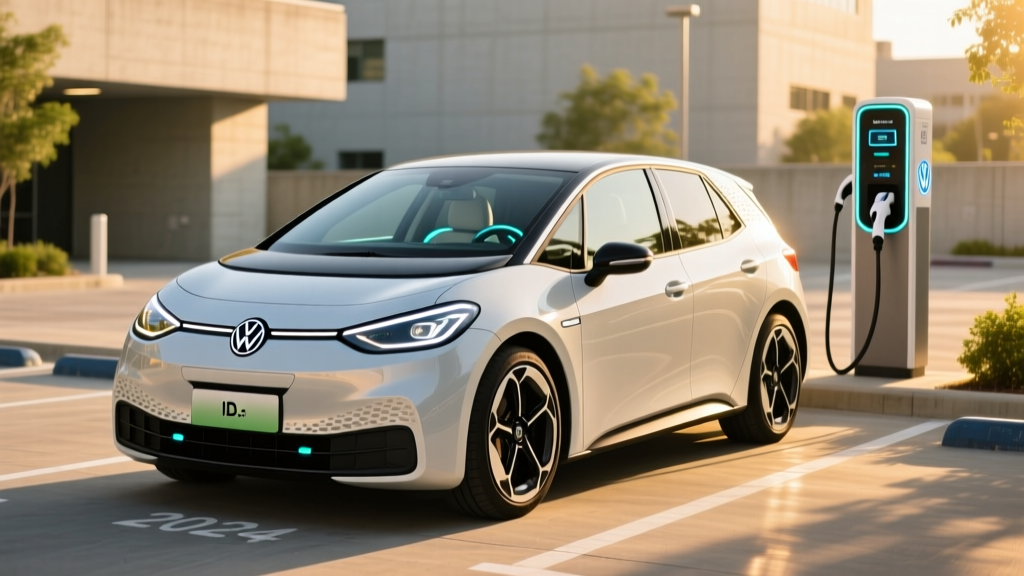
Search for "Volkswagen ID.3 USA" and you'll find years of speculation, forum debates, and dashed hopes. As of 2026, the Volkswagen ID.3 remains unavailable in the United States, and VW has not announced plans to bring its compact electric hatchback to American shores. The ID.3 has been a European sales staple since 2020, offering practical range, a sensible footprint, and VW's MEB platform architecture — but US buyers have been pointed toward the larger ID.4 crossover instead.
This article breaks down what the ID.3 offers in its current generation, why VW has kept it out of the US market, what it would cost if it arrived, and which available EVs American buyers should consider instead.
Volkswagen ID.3 Specs: What the European Model Offers
The ID.3 is currently in its second major refresh (the 2024+ facelift, sold in Europe through 2026). Here's what the latest European-spec ID.3 delivers:
| Attribute | ID.3 Pro (58 kWh) | ID.3 Pro S (77 kWh) |
|---|---|---|
| Battery Capacity (usable) | 58 kWh | 77 kWh |
| Battery Chemistry | NMC (Nickel Manganese Cobalt) | NMC |
| WLTP Range | ~263 mi (423 km) | ~340 mi (547 km) |
| EPA Range (estimated if US-spec) | ~220-235 mi | ~285-305 mi |
| Motor Output | 201 hp (150 kW) | 228 hp (170 kW) |
| Drivetrain | Rear-wheel drive | Rear-wheel drive |
| 0-62 mph (0-100 km/h) | 7.3 sec | 7.1 sec |
| Max DC Fast Charge | 120 kW | 170 kW |
| 10-80% DC Charge Time | ~35 min | ~30 min |
| AC Level 2 Charge Rate | 11 kW | 11 kW |
| Length | 167.8 in (4,261 mm) | 167.8 in |
| Cargo Volume | 13.6 cu ft (385 L) | 13.6 cu ft |
Note: WLTP range figures are typically 10-15% higher than EPA estimates. We've provided estimated EPA equivalents based on how similar MEB-platform vehicles (like the ID.4) translate between testing cycles.
Charging Performance: DC Fast and Home Level 2
Charging speed is where the ID.3's European MEB platform shows its age relative to newer 800-volt architectures from Hyundai/Kia and newer competitors.
| Charging Level | Power/Rate | Time / Miles Added |
|---|---|---|
| Level 1 (120V household) | ~1.4 kW | ~4-5 miles per hour |
| Level 2 (240V home/public) | 11 kW (max) | ~30-35 miles per hour; full charge in ~7-8 hrs (77 kWh) |
| DC Fast Charge (Pro 58 kWh) | Peak 120 kW | 10-80% in ~35 min; tapers significantly above 80% |
| DC Fast Charge (Pro S 77 kWh) | Peak 170 kW | 10-80% in ~30 min; sustained rate drops after ~60% SoC |
The 170 kW peak on the Pro S is respectable, but the charge curve matters more than the peak number. In practice, the ID.3 Pro S sustains roughly 120-140 kW between 10-50% state of charge, then tapers to 70-90 kW through 80%, and slows further to under 40 kW above 80%. This means a 10-90% session takes closer to 45-50 minutes, not the 30 minutes VW's marketing might suggest from the 10-80% figure.
Home charging at 11 kW (48 amps on a hardwired Level 2 circuit) is adequate for overnight replenishment. Most US homes with a 200-amp electrical panel can support a 48-amp Level 2 charger without a panel upgrade, though installation costs typically run $500-$1,500 depending on wiring distance from the panel.
Why the ID.3 Isn't Sold in the United States
VW's decision to withhold the ID.3 from the US market comes down to several converging factors:
1. American preference for crossovers and SUVs. The US compact hatchback market has contracted dramatically. Models like the Honda Civic Hatchback and Toyota Prius occupy a small niche. VW chose to launch the ID.4 compact SUV in the US — a body style that commands higher prices and stronger demand.
2. Pricing pressure and margins. The ID.3 starts around €40,000 in Europe (roughly $43,000 USD before any adjustments). To sell it in the US at a competitive price against the Chevrolet Equus EV, Hyundai Kona Electric, and Nissan LEAF — while meeting US safety and emissions certification requirements — would compress margins on a vehicle with modest volume potential.
3. Battery sourcing and tax credit complexity. Under current IRS §30D rules, the $7,500 federal tax credit requires battery components and critical minerals to meet North American sourcing thresholds. The ID.3's European supply chain would likely disqualify it from the full credit, making it even less price-competitive.
4. Platform evolution. VW is investing in its next-generation SSP (Scalable Systems Platform) with 800V architecture. The company may wait to bring a next-gen compact EV to the US rather than certify the aging MEB-based ID.3.
What the ID.3 Would Cost in the US — If It Arrived
Based on European pricing, US regulatory costs, and VW's current American lineup positioning, here's a realistic estimate:
| Trim | Estimated MSRP | After Potential §30D Credit |
|---|---|---|
| ID.3 Pro (58 kWh) | $35,000 - $38,000 | $27,500 - $30,500 (if eligible)* |
| ID.3 Pro S (77 kWh) | $42,000 - $46,000 | $34,500 - $38,500 (if eligible)* |
*Tax credit eligibility requires meeting MSRP caps ($55,000 for cars), buyer income limits ($150K single / $300K joint), and battery component/critical mineral sourcing requirements per IRS §30D. A European-built ID.3 would very likely fail the sourcing requirements, meaning buyers should not count on the credit.
Best Alternatives: EVs You Can Actually Buy in the US
If you're drawn to the ID.3's compact-hatchback practicality and sensible range, here are the closest alternatives currently available to American buyers:
| Vehicle | EPA Range | Battery | Base MSRP | Max DC Charge |
|---|---|---|---|---|
| Hyundai Kona Electric (2026) | 261 mi | 64.8 kWh NMC | ~$33,000 | 100 kW |
| Chevrolet Equinox EV (2026) | 319 mi | 85 kWh NMC | ~$33,600 | 150 kW |
| Nissan LEAF (2026) | 212 mi | 60 kWh NMC | ~$29,000 | 100 kW (CHAdeMO) |
| Volkswagen ID.4 (2026) | 275 mi | 82 kWh NMC | ~$39,700 | 175 kW |
| Kia Niro EV (2026) | 239 mi | 64.8 kWh NMC | ~$31,000 | 85 kW |
The Chevrolet Equinox EV stands out as the strongest ID.3 alternative: it offers more range, faster charging, qualifies for the full $7,500 federal tax credit (bringing effective pricing below $27,000), and is built in the US. The Hyundai Kona Electric is the closest in spirit to the ID.3 — a compact, efficient hatchback with modern tech, though its DC charging speed lags behind the competition.
For buyers specifically wanting a Volkswagen EV, the ID.4 remains the brand's US electric offering. It's larger, more expensive, and crossover-shaped, but shares MEB DNA with the ID.3 and offers available AWD.
Technology, Interior, and Daily Livability
The refreshed ID.3 (2024+) addressed many of the original model's interior-quality complaints. European reviewers note improved soft-touch materials, a redesigned infotainment system with a 12.9-inch display, and physical shortcut buttons that the first-generation ID.3 lacked.
Notable tech features (European spec):
- 12.9-inch infotainment touchscreen with wireless Apple CarPlay and Android Auto
- Augmented-reality head-up display (available on higher trims)
- Travel Assist: SAE Level 2 adaptive cruise + lane centering (driver supervision required at all times)
- Heat pump (standard on Pro S, optional on Pro) for improved cold-weather efficiency
- Vehicle-to-load (V2L) capability via an adapter
- OTA (over-the-air) software updates
Cargo and passenger space: The ID.3 offers 13.6 cubic feet behind the rear seats and approximately 44.7 cubic feet with rear seats folded. Rear legroom is roughly 35.4 inches — adequate for adults on shorter trips but tighter than the ID.4's 37.6 inches. The lack of a front trunk (frunk) is a missed opportunity given the MEB platform's rear-motor layout.
Warranty and Long-Term Ownership
Based on VW's European warranty structure and its US coverage for the ID.4:
- Battery warranty: 8 years / 100,000 miles (whichever comes first), guaranteeing minimum 70% state of health (SoH) retention
- Powertrain warranty: 8 years / 100,000 miles
- Bumper-to-bumper: 4 years / 50,000 miles
- Roadside assistance: 4 years / 50,000 miles
The 70% SoH threshold is industry-standard and matches what Hyundai, Kia, and Tesla offer. NMC battery degradation data from European ID.3 fleets suggests approximately 5-8% capacity loss over the first 60,000 miles, with degradation slowing significantly after the initial break-in period. Proper charging habits (avoiding frequent 100% charges, limiting DC fast charging to road trips) can extend long-term battery health.
Who Would the ID.3 Suit — and Who Should Look Elsewhere?
Choose a comparable compact EV (Kona, Niro, Equinox EV) if:
- You need a vehicle available now with full US warranty support and dealer service
- Federal tax credit eligibility matters to your budget (the Equinox EV qualifies; an imported ID.3 likely would not)
- You want faster DC charging for regular road trips (Equinox EV at 150 kW outpaces the ID.3 Pro's 120 kW)
- You live in a cold climate and want proven US-market cold-weather data from owners
Wait for a potential US ID.3 (or its SSP successor) if:
- You're a committed VW loyalist who wants the brand's hatchback heritage in electric form
- You prioritize European driving dynamics and a compact footprint for urban parking
- VW announces US availability with North American battery sourcing that qualifies for §30D credits
Frequently Asked Questions
Is the Volkswagen ID.3 available for purchase in the United States?
No. As of 2026, Volkswagen does not sell the ID.3 in the US market. VW has not announced a US release date, and industry analysts expect the company to focus on the ID.4, ID.7, and future SSP-platform vehicles for American buyers.
What is the real-world range of the Volkswagen ID.3?
The European-spec ID.3 Pro S (77 kWh) achieves approximately 340 miles under WLTP testing. Translated to EPA-equivalent figures, expect roughly 285-305 miles. Real-world highway driving at 70+ mph yields approximately 240-260 miles, and cold weather (below 30°F) can reduce range to 200-220 miles.
How fast does the ID.3 charge?
The ID.3 Pro S peaks at 170 kW on DC fast chargers, achieving 10-80% in approximately 30 minutes under ideal conditions. The Pro model peaks at 120 kW with a 10-80% time of about 35 minutes. Home Level 2 charging at 11 kW adds roughly 30-35 miles per hour.
Would the ID.3 qualify for the $7,500 federal EV tax credit?
Almost certainly not in its current form. IRS §30D requires battery components and critical minerals to meet North American sourcing thresholds. The European-built ID.3 with its current supply chain would fail these requirements. Even if VW localized production, the vehicle would still need to meet MSRP caps ($55,000 for passenger cars) and buyer income limits ($150K single / $300K joint filers).
What's the best alternative to the ID.3 that I can buy in the US?
The Chevrolet Equinox EV offers the strongest value proposition: 319 miles EPA range, $7,500 tax credit eligibility, and a starting price around $33,600. The Hyundai Kona Electric is the closest in size and spirit to the ID.3, with 261 miles of range starting near $33,000.
Will VW ever bring the ID.3 to America?
There is no confirmed plan. VW's next-generation SSP platform, expected later this decade, may produce a compact EV designed for global markets including the US. Until VW makes an official announcement, the ID.3 remains a European-market vehicle.