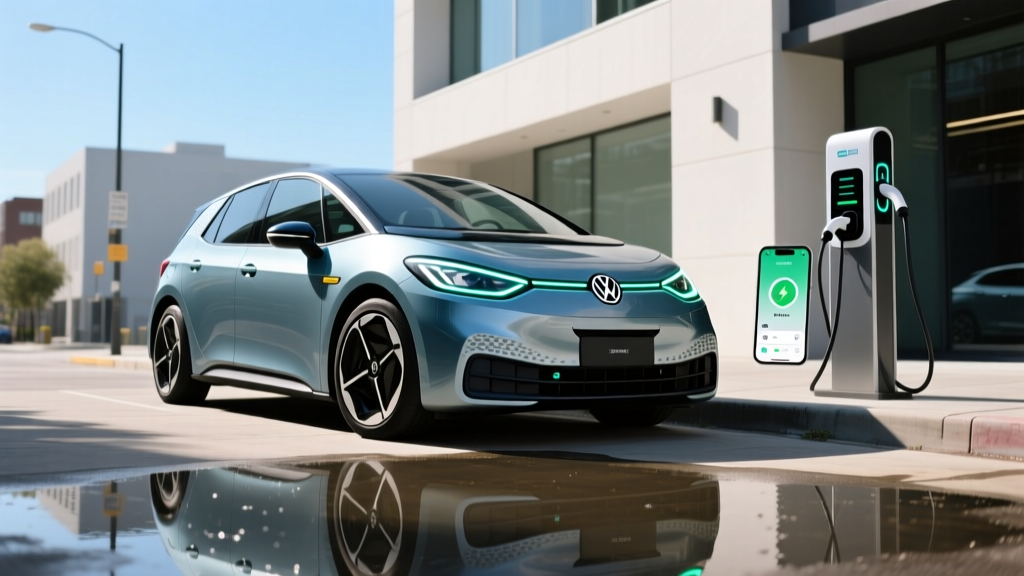
The Volkswagen ID.3 in 2026: What US Buyers Actually Need to Know
If you've been searching for Volkswagen ID.3 lease deals, you've likely noticed a frustrating pattern: most results point to European markets where the ID.3 has been a bestseller since 2020. Here's the reality check for US-based shoppers in 2026 — Volkswagen has not officially launched the ID.3 in the United States. Instead, VW funnels American EV buyers toward the ID.4 crossover and the upcoming ID.7 sedan.
That said, the ID.3 remains one of the most compelling electric hatchbacks globally, and its specs matter if you're considering a gray-market import, tracking VW's EV platform evolution, or weighing it against US-available alternatives like the Chevrolet Bolt EV, Nissan LEAF, or Hyundai Kona Electric. This review breaks down the 2026 European-spec ID.3 with full data — and translates what those numbers mean for American drivers who might encounter one or want to understand VW's EV strategy.
2026 VW ID.3: Core Specifications at a Glance
| Specification | Value |
|---|---|
| EPA-Equivalent Range (WLTP) | ~342 miles (WLTP) / est. ~275 miles (EPA equivalent) |
| Battery Capacity | 77 kWh usable (82 kWh gross), NMC chemistry |
| Max DC Fast Charge | 170 kW (peak) |
| 10–80% DC Charge Time | ~30 minutes |
| Level 2 AC Charge Rate | 11 kW (onboard charger) |
| Motor Output | 228 hp (170 kW), 229 lb-ft torque |
| 0–62 mph (0–100 km/h) | 6.7 seconds |
| Drivetrain | Rear-wheel drive (single motor) |
| Efficiency (WLTP) | ~3.6 mi/kWh (~15.6 kWh/100 km) |
| Cargo Volume | 13.6 cu ft (385 L) rear seats up; 44.7 cu ft (1,267 L) folded |
| European Base Price | ~€43,990 (~$47,500 USD equivalent) |
| US Federal Tax Credit (§30D) | Not eligible (not sold in US) |
| Battery Warranty (EU) | 8 years / 100,000 miles (160,000 km), 70% capacity retention |
Real-World Range: What WLTP Numbers Don't Tell You
WLTP Rated: 342 miles (550 km) for the Pro S 77 kWh model
EPA Equivalent Estimate: ~270–285 miles (EPA testing is ~15-20% more conservative than WLTP)
Real-World Highway (70 mph): ~230–250 miles
Real-World Cold Weather (below 32°F): ~195–220 miles (30-35% reduction due to cabin heating and battery resistance)
The ID.3 Pro S uses a 77 kWh usable (82 kWh gross) NMC (nickel manganese cobalt) battery pack — VW's MEB platform standard for longer-range variants. The smaller Pro trim offers a 58 kWh usable pack with a WLTP range of approximately 263 miles.
Why does WLTP overstate compared to what you'd see on American roads? The EPA test cycle includes more aggressive acceleration, higher sustained speeds, and accounts for climate control usage. European WLTP testing is more generous. If VW were to certify the ID.3 for US sale, expect the EPA sticker to land between 265 and 285 miles for the Pro S — competitive with the Hyundai Kona Electric (261 mi EPA) but short of the Chevrolet Bolt EV's 259 miles from a smaller, lighter package.
In practical terms, the ID.3 Pro S is a comfortable 200-mile-per-day commuter with margin for highway detours, but it is not a road-trip champion without route planning. Cold-weather drivers in the Upper Midwest or Northeast should budget for 30%+ range loss when temperatures drop below freezing, a pattern consistent across NMC packs without aggressive heat-pump preconditioning.
Charging Speed: DC Fast Charging and Home Level 2
Charging infrastructure is where European-spec ID.3 owners have an advantage — CCS2 connectors are standard across the EU, and VW's 170 kW peak DC rate is well-supported by Ionity and other networks. For US context, here's how the ID.3's charging profile translates:
| Charging Level | Power (kW) | Miles Added per Hour | Notes |
|---|---|---|---|
| Level 1 (120V household) | ~1.4 kW | ~4 mi/hr | Emergency/trickle only |
| Level 2 (240V home/public) | 11 kW (max onboard) | ~33 mi/hr | Full charge in ~7.5 hours |
| DC Fast Charge (CCS) | 170 kW (peak) | ~180 mi in 15 min (10-55%) | Tapers above 80% SoC |
The 170 kW peak DC rate is respectable but not class-leading. Competitors like the Hyundai Ioniq 5 (240 kW peak on 800V architecture) and the Kia EV6 (239 kW) significantly outpace the ID.3 at fast chargers. The ID.3's charge curve holds near peak from roughly 10% to 55% SoC, then tapers progressively — the 10-80% time of approximately 30 minutes reflects this taper. Above 80%, charging slows dramatically to protect the NMC cells, adding only ~20-30 kW in the final 20%.
At home on a Level 2 charger, the ID.3's 11 kW onboard charger means a full 0-100% charge takes about 7.5 hours — overnight-friendly for most commuters. Note that kW (power, or charge speed) is distinct from kWh (energy, or battery capacity). An 11 kW charger delivers 11 kWh of energy per hour into the 77 kWh battery.
Performance, Efficiency, and Driving Dynamics
The ID.3 Pro S delivers 228 horsepower and 229 lb-ft of torque from a single rear-mounted motor. The 0-62 mph time of 6.7 seconds (roughly 6.5 seconds 0-60 mph) is brisk for a family hatchback — comparable to a warm GTI from a decade ago, but with instant electric torque delivery that makes it feel quicker in city driving.
Efficiency lands around 3.6 miles per kWh in mixed European driving, translating to approximately 113 MPGe by EPA-equivalent calculations. This is competitive within the compact EV hatchback segment:
- Hyundai Kona Electric: 120 MPGe combined
- Chevrolet Bolt EV: 120 MPGe combined
- Nissan LEAF SV Plus: 111 MPGe combined
- VW ID.3 Pro S (est.): ~113 MPGe combined
The rear-wheel-drive layout and MEB platform's low center of gravity give the ID.3 confident handling, though it prioritizes comfort over sportiness. Regenerative braking offers multiple modes (including a B-mode for stronger regen), but the ID.3 does not offer true one-pedal driving to a complete stop — a common critique from EV enthusiasts accustomed to Nissan LEAF or Tesla behavior.
Interior, Technology, and Cargo Practicality
Inside, the 2026 ID.3 features VW's updated ID. Software 4.0 infotainment system on a 12.9-inch touchscreen — a significant improvement over the laggy, button-capacitive interfaces that plagued early ID. models. The digital instrument cluster is compact and mounted behind the steering wheel, with a head-up display available on higher trims.
Driver assistance includes Travel Assist (adaptive cruise + lane centering, SAE Level 2), Front Assist with automatic emergency braking, and Park Assist. This is a Level 2 driver-assist system — the driver must remain fully engaged with hands on the wheel and eyes on the road at all times. It is not autonomous or self-driving.
Cargo space is practical for the segment: 13.6 cubic feet behind the rear seats (similar to a Honda Civic Hatchback) and 44.7 cubic feet with the 60/40 split rear seats folded. There is no front trunk (frunk) — the MEB platform's electronics occupy that space.
Notable drawbacks include firm rear-seat cushioning that limits long-distance comfort for taller passengers, and the absence of a heat pump in some European trims (which worsens cold-weather range loss). US-market EVs increasingly include heat pumps as standard equipment.
Pricing, Lease Value, and the US Tax Credit Question
Because the ID.3 is not sold in the United States, there are no official US lease deals through Volkswagen dealerships. European pricing for the 2026 ID.3 Pro S starts around €43,990 (approximately $47,500 at current exchange rates). In markets like the UK and Germany, lease deals typically range from £350–450/month or €400–550/month depending on term, mileage, and deposit.
For US shoppers, this matters for comparison purposes. Here's how the ID.3 stacks against what you can actually lease stateside:
| Vehicle | Base MSRP (2026) | EPA Range | §30D Credit Eligibility |
|---|---|---|---|
| VW ID.3 Pro S (EU only) | ~$47,500 (EU) | ~275 mi (est. EPA) | Not eligible |
| VW ID.4 Pro (US) | $40,995 | 275 mi | Partial — varies by sourcing |
| Chevrolet Bolt EV 2LT | $29,995 | 259 mi | Up to $7,500* |
| Hyundai Kona Electric SEL | $33,995 | 261 mi | Up to $7,500* |
*Federal §30D tax credit eligibility depends on battery critical-mineral sourcing, buyer income caps ($150K single / $300K joint AGI), and MSRP caps ($55K for cars, $80K for SUVs/trucks). Rules are subject to change — verify current requirements at IRS.gov or consult a tax professional.
Pros, Cons, and the Verdict
- Spacious cabin with flat floor (MEB platform advantage)
- Competitive ~275 mi EPA-est. range from 77 kWh pack
- Refined ride quality and low cabin noise
- Improved ID. Software 4.0 over earlier ID. models
- Strong European charging network compatibility (CCS2)
- Not available for purchase or lease in the United States
- 170 kW DC peak is slower than Hyundai/Kia 800V rivals
- No true one-pedal driving to a full stop
- No front trunk (frunk) for additional storage
- No US federal tax credit eligibility
- Heat pump optional on some trims (cold-weather penalty)
Who Should Consider the ID.3 (and Who Should Look Elsewhere)?
The ID.3 is ideal for: European-market commuters who want a spacious electric hatchback with strong range for daily driving and moderate road trips. It's a rational, comfortable EV that excels in urban and suburban environments with reliable CCS2 charging access.
US buyers should look at: The VW ID.4 if you want the VW EV experience with US dealer support, or the Chevrolet Bolt EV / Hyundai Kona Electric if you want a compact EV hatchback with federal tax credit eligibility and proven US charging compatibility.
Frequently Asked Questions
Can I lease a Volkswagen ID.3 in the United States?
No. As of 2026, Volkswagen does not sell or lease the ID.3 in the US market. The ID.4 crossover is VW's primary electric offering for American buyers. Importing a European ID.3 privately is possible but involves significant regulatory, homologation, and warranty challenges.
What is the real-world range of the VW ID.3 Pro S?
The WLTP-rated range is 342 miles, but EPA-equivalent testing would likely yield ~270–285 miles. In real-world highway driving at 70 mph, expect approximately 230–250 miles. In freezing temperatures, range can drop to 195–220 miles due to battery chemistry limitations and cabin heating demands.
How fast does the ID.3 charge at home and on the road?
At home on a Level 2 (240V) charger, the ID.3 charges at up to 11 kW, adding roughly 33 miles of range per hour and achieving a full charge in about 7.5 hours. On DC fast chargers, it peaks at 170 kW and can add ~180 miles in 15 minutes (from 10-55% SoC), with the 10-80% charge taking approximately 30 minutes.
Does the VW ID.3 qualify for the US federal EV tax credit?
No. The §30D federal tax credit requires the vehicle to be purchased new from a US dealer and meet battery-sourcing, MSRP, and buyer-income requirements. Since the ID.3 is not sold in the US, it does not qualify. See current rules at IRS.gov.
Is the VW ID.3 worth it compared to US alternatives?
For US buyers, the ID.3 is not an option. The closest US-available comparison is the VW ID.4 (more space, similar range, available tax credit) or the Hyundai Kona Electric (similar hatchback form factor, 261 mi EPA range, up to $7,500 tax credit). The ID.3 is a strong EV for its intended European market, but American shoppers have better-suited alternatives with full dealer and incentive support.
What battery chemistry does the ID.3 use, and how long will it last?
The ID.3 Pro S uses an NMC (nickel manganese cobalt) lithium-ion battery with 77 kWh usable capacity. VW warrants the battery for 8 years or 100,000 miles (160,000 km in Europe) with a minimum 70% state-of-health retention. NMC chemistry offers higher energy density than LFP (lithium iron phosphate) but is more sensitive to sustained high-state-of-charge storage and extreme temperatures. For maximum longevity, charge to 80% for daily use and avoid frequent DC fast charging when Level 2 is available.