The Real Volkswagen Electric Bus Cost: Beyond the Sticker Price
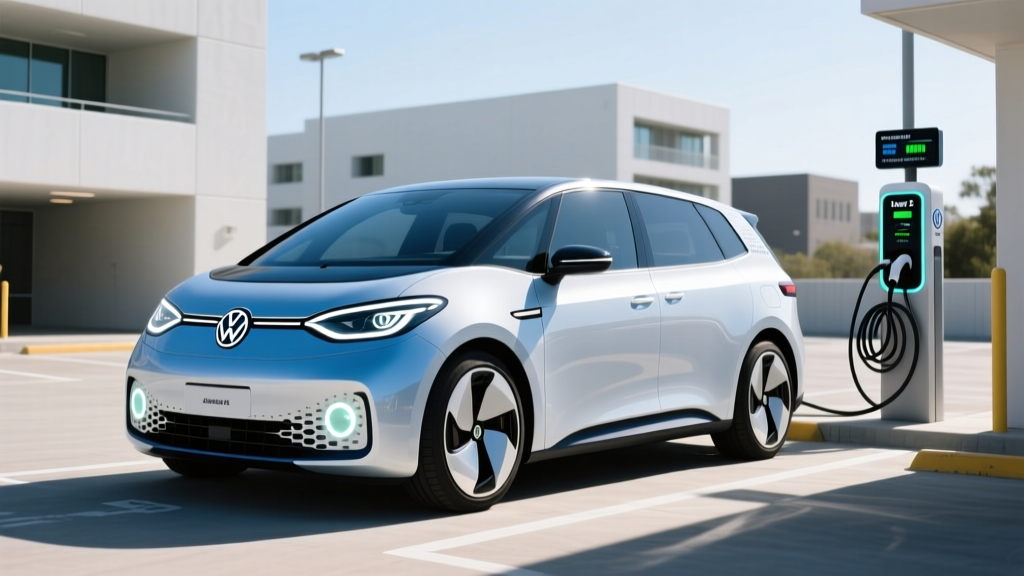
The Volkswagen ID. Buzz is the first mass-market electric minivan to reach U.S. shores in the retro-van segment, starting at $59,995 for the 2026 Pro S trim. With its 91 kWh (84 kWh usable) NMC battery pack, EPA-estimated 234-mile range, and three rows of seating for up to seven, the ID. Buzz occupies a unique niche: an electric family hauler with genuine personality. But the Volkswagen electric bus cost extends well beyond the window sticker.
This guide breaks down every ownership layer — from the federal §30D tax credit (and whether you actually qualify) to per-mile charging costs, insurance premiums, depreciation, and maintenance. We'll compare the 5-year total cost of ownership (TCO) against the closest internal-combustion rival, the Honda Odyssey, so you can decide if the ID. Buzz makes financial sense for your household.
| Specification | Value |
|---|---|
| Base MSRP (Pro S) | $59,995 |
| 1st Edition MSRP | $69,995 |
| EPA Range | 234 miles |
| Battery (usable / total) | 84 kWh / 91 kWh (NMC) |
| Drivetrain | RWD, single motor (282 hp, 406 lb-ft) |
| AWD Option (Pro S Plus) | 335 hp combined, 231 mi range |
| DC Fast Charge (peak) | 175 kW (CCS1) |
| 10–80% DCFC Time | ~26 minutes |
| Level 2 (240V, 48A) | 11.5 kW (~9 hrs 0–100%) |
| MPGe (combined) | 87 MPGe |
| Efficiency | 3.0 kWh/mile (approx.) |
| 0–60 mph | ~7.9 seconds |
| Battery Warranty | 8 yr / 100,000 mi (≥70% SoH) |
| Vehicle Warranty | 4 yr / 50,000 mi bumper-to-bumper |
Real-World Range Reality: The EPA rates the RWD ID. Buzz at 234 miles, but expect ~185–200 miles at sustained 70 mph highway speeds, and as low as 150–170 miles in sub-freezing temperatures. The AWD variant (231 mi EPA) will deliver slightly less in practice. Plan road trips around 180-mile segments to preserve a safety buffer.
Federal Tax Credit: Does the ID. Buzz Qualify for §30D?
The federal EV tax credit under IRS §30D offers up to $7,500 for qualifying new EVs. However, the ID. Buzz's eligibility is not guaranteed for every buyer — it depends on income, MSRP caps, and battery-sourcing requirements that have tightened considerably since 2023.
§30D Eligibility Checklist (2026 Rules)
- MSRP Cap (vans/SUVs): ≤ $80,000 — ID. Buzz Pro S ($59,995) and 1st Edition ($69,995) both qualify on price.
- Buyer Income Caps: MAGI ≤ $150,000 (single), ≤ $225,000 (head of household), ≤ $300,000 (joint). Exceed these and you get $0 credit.
- Battery Critical Minerals: Must meet escalating percentage thresholds for U.S./FTA-sourced minerals. VW has sourced some ID. Buzz battery packs from suppliers meeting this requirement, but confirm on the specific VIN at fueleconomy.gov.
- Battery Component Assembly: Battery components must be manufactured/assembled in North America at required percentages. The ID. Buzz is assembled in Hannover, Germany — battery component sourcing varies.
- Point-of-Sale Transfer: As of 2024, you can transfer the credit to the dealer at purchase, reducing your out-of-pocket cost immediately rather than waiting for tax filing. The dealer must be IRS-registered.
- FEOC Exclusion: Vehicles with battery components from a Foreign Entity of Concern (China, Russia, etc.) after 2024 are disqualified. Verify VIN-specific status.
Bottom line: The ID. Buzz's credit eligibility is VIN-specific and buyer-specific. Before committing, check the exact VIN on fueleconomy.gov and confirm with a tax professional. Do not assume the full $7,500 applies.
5-Year Total Cost of Ownership: ID. Buzz vs. Honda Odyssey
To understand the true Volkswagen electric bus cost, we modeled 5 years / 75,000 miles of ownership for the ID. Buzz Pro S (RWD) against the Honda Odyssey Sport (~$42,000 MSRP, 22 MPG combined). Assumptions: 15,000 miles/year, home Level 2 charging at $0.16/kWh, gas at $3.60/gallon, and no major out-of-warranty repairs.
| Cost Category | VW ID. Buzz Pro S | Honda Odyssey Sport |
|---|---|---|
| Purchase Price (MSRP) | $59,995 | $42,000 |
| Federal Tax Credit (§30D) | −$7,500 (if eligible) | $0 |
| Net Purchase | $52,495 | $42,000 |
| Fuel / Energy (75k mi) | $3,600 (home L2) | $12,273 |
| Maintenance (5 yr) | $1,200 | $3,500 |
| Insurance (5 yr avg.) | $11,500 | $8,750 |
| Depreciation (est. 5 yr) | −$26,250 (50%) | −$18,900 (45%) |
| Estimated 5-Yr TCO | ~$42,545 | ~$47,623 |
Key takeaway: If you qualify for the full $7,500 credit and charge primarily at home, the ID. Buzz can approach cost parity with the Odyssey over 5 years — but only because of massive fuel and maintenance savings. Without the credit, the ID. Buzz costs roughly $5,000–$7,500 more to own over the same period.
Charging vs. Gas: The Per-Mile Math
| Scenario | $/Mile | Cost for 75,000 mi |
|---|---|---|
| ID. Buzz — Home L2 ($0.16/kWh, 3.0 kWh/mi) | $0.048 | $3,600 |
| ID. Buzz — Public DCFC avg. ($0.48/kWh) | $0.144 | $10,800 |
| Honda Odyssey (22 MPG, $3.60/gal) | $0.164 | $12,273 |
Home charging is the critical variable. At the U.S. average residential rate of $0.16/kWh, the ID. Buzz costs 4.8 cents per mile — roughly 70% cheaper than the Odyssey. But if you rely heavily on public DC fast charging at $0.48/kWh, your cost per mile nearly triples to $0.144, erasing most of the fuel-cost advantage.
Practical advice: Install a Level 2 home charger (240V, 48A) before taking delivery. Budget $800–$2,000 for installation depending on panel proximity. Without home charging access, the financial case for the ID. Buzz weakens significantly.
Maintenance Savings: Fewer Parts, Less Wear
| Service Item | ID. Buzz | Honda Odyssey |
|---|---|---|
| Oil Changes | $0 (none needed) | $750 (10 changes @ $75) |
| Transmission Fluid | $0 (single-speed reduction gear) | $200 |
| Brake Pads | $0–$300 (regen saves pads) | $800 (2 replacements) |
| Cabin Air Filter | $200 | $200 |
| Tire Rotation/Replace | $1,000 (heavier EV = faster wear) | $800 |
| Coolant / Misc. | $0 | $350 |
| Total Estimated | ~$1,200 | ~$3,500 |
The ID. Buzz's single-speed drivetrain eliminates oil changes, spark plugs, timing belts, and multi-speed transmission service. Regenerative braking significantly extends brake pad life — many EV owners report original pads lasting 80,000+ miles. However, the ID. Buzz's ~5,000 lb curb weight accelerates tire wear; budget for one extra tire replacement over 5 years compared to the lighter Odyssey.
Insurance Cost: The EV Premium
Expect to pay 15–30% more to insure the ID. Buzz compared to a comparable gas minivan. National average EV insurance runs $2,200–$2,400/year for the ID. Buzz vs. ~$1,700–$1,800 for the Odyssey.
Why EVs cost more to insure:
- Higher repair costs: Battery packs and power electronics require specialized technician training and OEM-certified parts.
- Higher vehicle value: Insurers base premiums partly on replacement cost; the ID. Buzz's $60k MSRP vs. the Odyssey's $42k drives up collision/comprehensive rates.
- Repair network limitations: Fewer body shops are VW HV-certified, which can increase labor rates and total-loss thresholds.
Mitigation: Shop quotes from EV-friendly insurers (Geico, Progressive, and State Farm all have EV-specific rating models). Bundling home + auto and maintaining a clean record can narrow the gap to ~10% over the Odyssey.
Depreciation and Resale Value Trends
EV depreciation has been volatile. Industry-wide, EVs lost an average of 49–52% of value over 3 years in 2024–2025, compared to ~38% for gas vehicles. The ID. Buzz faces two headwinds:
- Price-cut contagion: Tesla's aggressive 2023–2025 price cuts dragged down used EV values across all brands. The ID. Buzz, as a new entrant, has no established used-market floor.
- Niche appeal: Retro styling attracts enthusiasts but may limit the used-buyer pool compared to a conventional minivan.
We estimate the ID. Buzz will retain ~45–50% of MSRP at 5 years / 75,000 miles — roughly $26,000–$30,000 residual on a $60,000 purchase. The Odyssey retains ~55%, or ~$23,000 on a $42,000 purchase. In absolute dollars, depreciation is higher on the ID. Buzz, but the fuel and maintenance savings partially offset this.
State, Local & Utility Incentives
Beyond the federal §30D credit, many states and utilities offer additional rebates:
- California (CVRP): Up to $2,000 for income-qualified buyers (program funding varies).
- Colorado: State tax credit up to $5,000 for EVs under $80,000 MSRP.
- Utility rebates: Many utilities (PG&E, ConEd, Xcel Energy) offer $500–$1,500 for Level 2 charger installation or off-peak charging credits.
- HOV lane access: Several states grant solo-carpool-lane stickers for EVs, a non-monetary but time-saving perk.
Incentive programs change frequently. Check AFDC's state incentive database for current offerings in your zip code.
Who Should (and Shouldn't) Buy the ID. Buzz
Buy the ID. Buzz If:
- You have reliable home Level 2 charging access.
- Your daily driving is under 150 miles round-trip.
- You qualify for the full $7,500 federal credit (MAGI under caps, VIN passes sourcing rules).
- You value a distinctive design and zero tailpipe emissions for family trips.
- You plan to keep the vehicle 5+ years (depreciation hurts less the longer you hold).
Consider the Odyssey (or a PHEV) If:
- You lack home charging and rely on apartments/street parking.
- You regularly tow (the ID. Buzz is rated at just 2,000 lbs vs. the Odyssey's 3,500 lbs).
- You take frequent 400+ mile road trips and don't want to plan around DC fast-charger availability.
- Your household income exceeds the §30D MAGI caps, eliminating the credit.
Frequently Asked Questions
How much does it really cost to own a Volkswagen ID. Buzz over 5 years?
With the $7,500 federal credit and home charging, expect approximately $42,500 in total cost of ownership over 5 years and 75,000 miles. Without the credit, that figure rises to ~$50,000. The bulk of savings over a gas minivan comes from fuel ($8,600+ saved) and maintenance ($2,300 saved), partially offset by higher insurance (~$2,750 more).
Do I qualify for the $7,500 federal EV tax credit on the ID. Buzz?
It depends on three factors: (1) your modified adjusted gross income must be ≤ $150k single / $300k joint; (2) the ID. Buzz MSRP is under the $80,000 van cap, so price qualifies; (3) the specific VIN must pass battery critical-mineral and component-sourcing requirements. Check the VIN at fueleconomy.gov and confirm with a tax professional.
How much do I save on fuel and maintenance vs. a gas minivan?
With home charging at $0.16/kWh, the ID. Buzz costs ~$3,600 to "fuel" over 75,000 miles vs. ~$12,270 for the Odyssey — a savings of ~$8,670. Maintenance savings add another ~$2,300. Combined, that's roughly $11,000 in operational savings over 5 years.
Are EVs more expensive to insure than gas vehicles?
Yes, typically 15–30% more. For the ID. Buzz, expect $2,200–$2,400/year vs. ~$1,750 for the Odyssey. Higher vehicle value, specialized repair requirements, and limited HV-certified body shops drive the premium. Shopping multiple insurers and bundling policies can reduce the gap.
How well does the VW ID. Buzz hold its value?
We project 5-year depreciation of ~50% ($30,000 in absolute terms on a $60,000 purchase). This is steeper than the Odyssey (~45%), driven by broader EV market volatility and the ID. Buzz's niche positioning. Holding the vehicle longer (7–10 years) amortizes depreciation and maximizes fuel savings.
Can I charge the ID. Buzz at Tesla Superchargers?
The U.S.-spec ID. Buzz uses the CCS1 connector. As of 2026, Tesla has opened a limited number of Supercharger stalls with Magic Dock adapters for CCS vehicles, but coverage is sparse. VW includes 3 years of complimentary charging on the Electrify America network (typically 500–1,000 kWh), which provides broader non-Tesla DCFC access. A NACS adapter from VW has not been announced for the ID. Buzz as of this writing.
What happens if the battery degrades?
VW warranties the ID. Buzz battery for 8 years / 100,000 miles against capacity loss below 70% State of Health. Real-world NMC degradation data from similar VW MEB-platform vehicles (ID.4) shows ~8–10% capacity loss at 100,000 miles with normal use. Full battery replacement, if ever needed out of warranty, is estimated at $15,000–$20,000 — a significant cost, but rare within the first decade.