Quick Answer: Is the Volkswagen ID. Buzz the Right Electric Minivan for You?
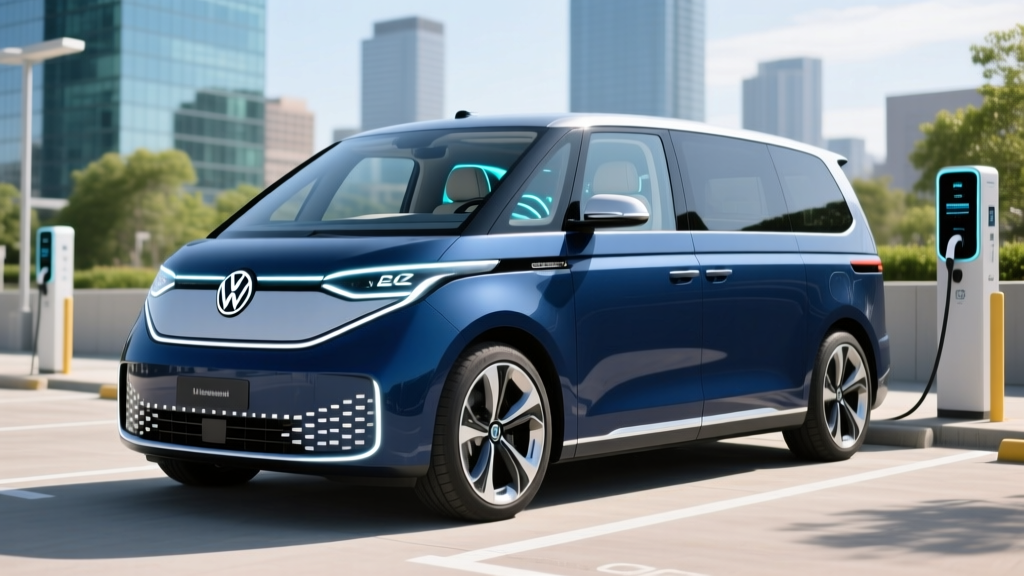
The 2026 Volkswagen ID. Buzz is the only dedicated Volkswagen electric minivan sold in the U.S., starting at $59,995 with an EPA-estimated 234 miles of range (Pro S trim, RWD). It seats up to seven, charges at up to 175 kW DC fast charging (10–80% in ~26 minutes), and delivers 282 horsepower. However, its real-world highway range drops to roughly 190–210 miles, and the base price positions it as a premium family hauler rather than a budget option. If you need three rows, all-electric drivetrain, and retro styling, it's compelling. If you regularly drive 300+ miles between charges or live in extreme cold without a garage, a plug-in hybrid minivan like the Chrysler Pacifica PHEV may serve you better.
2026 Volkswagen ID. Buzz: Specs at a Glance
Volkswagen revived the iconic Microbus nameplate on its MEB platform, but this is no stripped-down commuter. The U.S.-spec ID. Buzz is the long-wheelbase version with a 91 kWh usable battery pack (NMC chemistry) and available rear-wheel or all-wheel drive. Here are the numbers that matter for purchase decisions:
| Specification | ID. Buzz Pro S (RWD) | ID. Buzz 1st Edition (AWD) |
|---|---|---|
| EPA Range | 234 miles | 231 miles |
| Battery (Usable) | 91 kWh, NMC | 91 kWh, NMC |
| Horsepower | 282 hp | 330 hp |
| 0–60 mph | ~7.9 sec | ~6.5 sec |
| DC Fast Charge Peak | 175 kW | 175 kW |
| 10–80% DC Fast Charge | ~26 min | ~26 min |
| Level 2 AC Charge Rate | 11 kW | 11 kW |
| Seating | 7 passengers | 7 passengers |
| Cargo (Behind 3rd Row) | 18.2 cu ft | 18.2 cu ft |
| Base MSRP | $59,995 | $65,495 |
| Battery Warranty | 8 yr / 100,000 mi | 8 yr / 100,000 mi |
Sources: EPA Fueleconomy.gov, Volkswagen of America press materials.
Real-World Range: What the EPA Sticker Doesn't Tell You
EPA Estimate: 234 miles (Pro S RWD)
Real-World Highway (70 mph, moderate climate): ~195–215 miles
Cold Weather (below 32°F, highway): ~160–185 miles
The ID. Buzz's boxy shape creates substantial aerodynamic drag compared to sleeker EVs like the Hyundai Ioniq 5 or Tesla Model Y. At highway speeds above 65 mph, that drag penalty compounds quickly. Expect combined efficiency around 87 MPGe (roughly 3.5–3.8 miles per kWh) in mixed driving, which is respectable for a 5,500-pound vehicle but means you'll use more energy per mile than a crossover.
In cold weather, the NMC battery loses 15–25% of usable capacity, and cabin heating draws additional power. The ID. Buzz uses a resistive PTC heater rather than a heat pump in the U.S. market, which means cold-weather range loss is more pronounced than in heat-pump-equipped rivals. If you live in the upper Midwest or Northeast and lack a heated garage, plan your winter routes around 170 miles of usable range to maintain a safety buffer.
Preconditioning the battery before DC fast charging is essential. Navigate to a charger using the built-in navigation, and the thermal management system will warm the pack to optimal temperature. Without preconditioning, peak charge rates can drop from 175 kW to under 80 kW, adding 15–20 minutes to your stop.
Charging the ID. Buzz: Home Setup and Public Networks
The ID. Buzz uses the CCS1 connector for DC fast charging and a J1772 inlet for Level 2 AC charging. Volkswagen has announced future NACS (Tesla Supercharger) compatibility via adapter, but as of early 2026, the native port remains CCS1.
| Charging Level | Power | Approx. Miles Added per Hour | Best Use Case |
|---|---|---|---|
| Level 1 (120V outlet) | ~1.4 kW | ~4–5 mi/hr | Emergency top-off only |
| Level 2 (240V, 48A home charger) | 11.5 kW | ~33–36 mi/hr | Daily overnight charging (~7 hr for full charge) |
| DC Fast Charge | Up to 175 kW | ~180+ mi in 26 min (10–80%) | Road trips |
Home charging reality: Most ID. Buzz owners will need a Level 2 home charger installed on a 240V / 60A circuit to get the full 11 kW onboard charger rate. A typical home Level 2 installation runs $800–$2,200 depending on panel proximity and local permit costs. If your home has a 100A electrical panel, you may need a panel upgrade ($1,500–$3,000) to support a 48A EV charger alongside existing loads.
On public networks like Electrify America, the ID. Buzz sustains roughly 150–170 kW up to about 50% state of charge, then tapers to 80–100 kW through 80%. This is a typical NMC charge curve — don't expect the full 175 kW for the entire session. Plan road-trip stops at 25–30 minutes for a 10–80% charge, not the 20 minutes some competitors achieve.
ID. Buzz vs. Gas and Hybrid Minivans: The Cost Comparison
The ID. Buzz doesn't compete in a vacuum. Families cross-shopping a Volkswagen electric minivan are also looking at the Toyota Sienna (hybrid-only), Honda Odyssey (gas), and Chrysler Pacifica (gas and PHEV). Here's how the numbers stack up:
| Factor | VW ID. Buzz (EV) | Toyota Sienna (HEV) | Chrysler Pacifica PHEV |
|---|---|---|---|
| Base MSRP | $59,995 | $38,085 | $51,095 |
| EPA Efficiency | 87 MPGe | 36 MPG combined | 30 MPG / 82 MPGe (elec) |
| Electric-Only Range | 234 mi (full EV) | N/A | 32 mi |
| Fuel/Energy Cost per Mile* | $0.04–$0.06 | $0.10–$0.12 | $0.05–$0.11 |
| Annual Fuel/Energy (15k mi) | $600–$900 | $1,500–$1,800 | $750–$1,650 |
| Federal Tax Credit (§30D) | Up to $7,500** | $0 | Up to $7,500** |
| Estimated 5-Yr Maintenance | $1,200–$1,800 | $2,800–$3,500 | $2,500–$3,200 |
*Energy costs assume $0.14/kWh home charging and $3.40/gal gas. Actual costs vary by region and utility rate.
**§30D tax credit eligibility depends on MSRP caps (vans capped at $80,000), buyer income limits ($300k MFJ / $150k single), and battery component/critical mineral sourcing requirements. Confirm current-year eligibility at IRS.gov before purchasing.
The math favors the ID. Buzz on running costs, but the upfront premium is significant. Even after a potential $7,500 tax credit, you're paying $15,000–$20,000 more than a Sienna at purchase. The fuel and maintenance savings recover roughly $1,000–$1,500 per year, meaning the break-even point arrives around year 10–12 for most drivers. If you plan to keep the vehicle 8+ years and drive 15,000+ miles annually, the EV math works. If you trade every 5 years, the Sienna's lower entry price wins on total cost.
Ownership Considerations: What First-Time EV Buyers Should Know
Home Charging Access Is Non-Negotiable for Minivan Duty
Minivans are daily-driver family vehicles: school runs, grocery trips, soccer practice. If you can install a Level 2 charger at home, the ID. Buzz refuels overnight for $3–$5 per full charge (depending on your utility rate). If you rely exclusively on public charging, expect to pay $0.30–$0.48/kWh at DC fast chargers — roughly doubling your per-mile cost to $0.08–$0.12/mi, erasing much of the EV savings advantage. Renters and condo dwellers without dedicated parking should carefully evaluate charging access before committing.
Insurance Costs Run Higher
EV insurance premiums typically run 15–25% above comparable gas vehicles due to higher repair costs and battery replacement exposure. For the ID. Buzz at $60,000+, expect annual premiums in the $2,200–$3,200 range depending on your state, driving record, and coverage level. Get quotes before signing a purchase agreement.
The Third Row and Cargo Trade-Off
The ID. Buzz offers genuine three-row seating for seven, but the 18.2 cu ft of cargo behind the third row is tight compared to the Sienna's 33.5 cu ft. For families that regularly haul strollers, sports gear, and groceries simultaneously, you'll fold the third row frequently. If seven-passenger seating with maximum cargo is your priority, the Sienna and Odyssey still win on interior volume.
Common Misconceptions About the ID. Buzz
| Myth | Fact |
|---|---|
| "It qualifies for the full $7,500 tax credit automatically." | Credit eligibility depends on battery sourcing, buyer income, and MSRP caps. As of 2026, verify at IRS.gov — rules tighten annually on critical mineral and component sourcing. |
| "234 miles of range is enough for any road trip." | Real-world highway range is ~200 miles. On a 600-mile trip, expect 3 charging stops of 25–30 minutes each. Plan routes around Electrify America or compatible CCS1 stations. |
| "EVs don't need any maintenance." | The ID. Buzz still requires cabin air filter changes, brake fluid checks, tire rotations (EVs wear tires faster due to weight and torque), and coolant system service. Budget $300–$500/year. |
| "The battery will need replacing in 5 years." | VW warranties the battery for 8 years/100,000 miles against degradation below 70% capacity. Industry data shows NMC packs typically retain 85–90% capacity at 100,000 miles under normal use. |
| "I can charge it on any Tesla Supercharger." | As of 2026, the ID. Buzz uses CCS1 natively. A NACS adapter is required for Tesla Supercharger access, and not all Supercharger stalls have been opened to non-Tesla vehicles. |
Decision Framework: Should You Buy the Volkswagen ID. Buzz?
Choose the ID. Buzz if:
- You have home Level 2 charging and drive under 200 miles daily
- You want a distinctive, retro-styled EV that stands out in the school drop-off line
- You plan to own the vehicle 8+ years to recoup the upfront premium through fuel savings
- Your typical trips are under 180 miles one-way (comfortable single-charge territory)
- You value zero tailpipe emissions for urban/suburban family driving
Choose the Toyota Sienna Hybrid or Pacifica PHEV instead if:
- You regularly drive 300+ miles between stops and don't want to plan charging
- You need maximum cargo volume behind the third row
- You lack reliable home charging access
- Your budget is under $45,000 (Sienna starts $22K lower)
- You live in extreme cold (below 0°F regularly) and lack a heated garage
Frequently Asked Questions
Does the Volkswagen ID. Buzz qualify for the federal EV tax credit?
It may, but eligibility under §30D depends on multiple factors: your adjusted gross income must be below $300,000 (married filing jointly) or $150,000 (single), the vehicle MSRP must be under $80,000 (the van cap), and the battery must meet critical mineral and component sourcing thresholds that tighten each year. As of 2026, the ID. Buzz Pro S at $59,995 clears the MSRP cap, but sourcing requirements change annually. Check the IRS clean vehicle credit page and confirm with your tax professional before relying on the credit.
How long does it take to charge the ID. Buzz at home?
On a Level 2 home charger (240V, 48A), a full 0–100% charge takes approximately 9–10 hours. Most owners charge from 20–80% overnight, which takes about 5–6 hours and provides roughly 170 miles of range — more than enough for daily driving. A standard 120V outlet adds only 4–5 miles per hour and is not practical for daily minivan use.
Is the ID. Buzz good for road trips?
It's workable but requires planning. With ~200 miles of real-world highway range, you'll stop every 2.5–3 hours for 25–30 minutes of DC fast charging. The CCS1 connector works on Electrify America, EVgo, and other major networks. The boxy cabin is comfortable and quiet at highway speeds, and the available Travel Assist (Level 2 ADAS) reduces fatigue on long drives. Just don't expect Tesla Model X-style 340-mile range between stops.
What's the difference between the ID. Buzz Pro S and 1st Edition?
The Pro S ($59,995) is the volume trim with rear-wheel drive, 282 hp, and 234 miles of range. The 1st Edition ($65,495) adds dual-motor AWD, 330 hp, unique two-tone paint, and premium interior finishes, but sacrifices 3 miles of EPA range (231 miles) due to the added weight and drivetrain losses. For most families, the Pro S offers the better value unless you need all-wheel drive for snow or traction.
Will the ID. Buzz battery need to be replaced?
Unlikely during typical ownership. Volkswagen warranties the high-voltage battery for 8 years or 100,000 miles against capacity loss below 70%. Real-world data from MEB-platform vehicles (ID.4, ID.5) shows degradation of roughly 5–10% over the first 100,000 miles with normal charging habits. A full battery replacement, if ever needed out of warranty, is estimated at $15,000–$22,000 based on current VW parts pricing — but most packs outlast the vehicle itself.