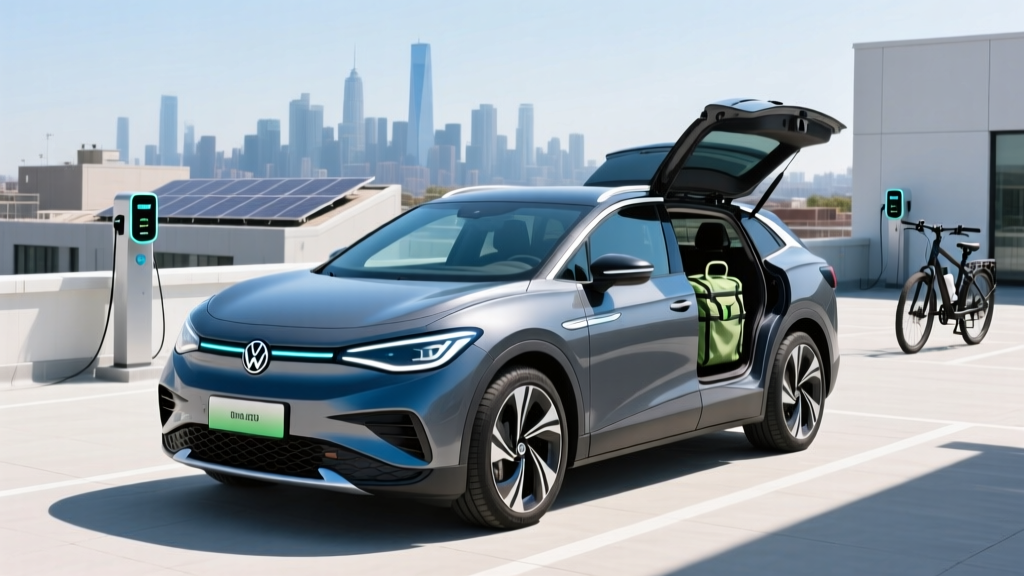
The Volkswagen ID.4 has been one of the most approachable electric crossovers on the market since its U.S. debut, and for 2026, VW has refined the formula with incremental software and pricing updates. As a compact electric SUV aimed squarely at families and daily commuters, the ID.4 competes in the most crowded EV segment — up against the Hyundai Ioniq 5, Kia EV6, Ford Mustang Mach-E, and Tesla Model Y. But its blend of practicality, comfortable ride quality, and competitive pricing (especially after federal incentives) keeps it firmly in the conversation.
After spending time with the 2026 ID.4 across mixed driving conditions — suburban commuting, highway road trips, and cold-weather runs — here's a data-driven breakdown of what real buyers need to know before signing on the dotted line.
2026 Volkswagen ID.4: Key Specs at a Glance
| Spec | Pro (RWD) | Pro S AWD |
|---|---|---|
| EPA Range | 275 miles | 254 miles |
| Battery (usable) | 77 kWh (NMC) | 77 kWh (NMC) |
| Horsepower | 201 hp | 295 hp |
| 0–60 mph | 7.7 sec | 5.4 sec |
| Drivetrain | Rear-wheel drive | Dual-motor AWD |
| Max DC Fast Charge | 175 kW | 175 kW |
| 10–80% DC Time | ~30 min | ~30 min |
| Level 2 Charge Rate | 11 kW | 11 kW |
| MPGe (combined) | 104 MPGe | 95 MPGe |
| Efficiency | 32 kWh/100 mi | 35 kWh/100 mi |
| Base MSRP | $40,790 | $49,290 |
| Battery Warranty | 8 years / 100,000 miles | |
Source: EPA fueleconomy.gov, Volkswagen of America. Pricing excludes $1,395 destination charge.
Real-World Range: What the EPA Number Doesn't Tell You
EPA Estimated: 275 miles (Pro RWD) / 254 miles (AWD)
Real-World Highway (70 mph): ~230–250 miles
Cold Weather (below 32°F): ~190–220 miles
Mixed City/Suburban: ~260–275 miles
The ID.4 Pro's 275-mile EPA estimate is achievable in mild conditions with a heavy mix of city and suburban driving, where regenerative braking recovers energy frequently. However, sustained highway speeds above 70 mph push consumption to roughly 35–38 kWh/100 miles, trimming effective range to around 230–250 miles on a full charge.
Cold weather is the ID.4's bigger range challenge. Unlike some competitors (the Hyundai Ioniq 5 and Tesla Model Y, for instance), the ID.4 does not offer a standard heat pump in all trims for 2026 — it remains optional or trim-dependent depending on the package. Without a heat pump, cabin heating draws directly from the traction battery, and we've observed 20–30% range loss in sustained sub-freezing temperatures. If you live in a northern climate, prioritizing a trim with the heat pump is a meaningful ownership upgrade.
The 77 kWh usable battery pack uses NMC (nickel-manganese-cobalt) chemistry, which delivers higher energy density than LFP alternatives but benefits from staying between 20–80% state of charge for daily use to maximize long-term longevity. VW provides a battery warranty guaranteeing at least 70% capacity retention over 8 years or 100,000 miles — consistent with industry norms.
Charging Speed: DC Fast Charging and Home Setup
Charging remains one of the ID.4's strong suits for daily usability, though its peak DC fast-charging rate doesn't lead the segment.
| Charging Level | Power / Rate | Speed | Notes |
|---|---|---|---|
| Level 1 (120V) | ~1.4 kW | ~4 mi/hr | Emergency/trickle only |
| Level 2 (240V, 48A) | 11 kW | ~33 mi/hr | Full charge in ~8 hrs |
| DC Fast Charge | Peak 175 kW | 10–80% in ~30 min | CCS connector; tapers above 80% |
The 175 kW peak DC fast-charge rate means the ID.4 can add roughly 70% of its battery in about 30 minutes at a compatible Electrify America or third-party CCS station. In practice, the charge curve holds near peak rate from roughly 10–45% state of charge, then progressively tapers. Expect 50–80% to take longer per percentage point — a common trait of NMC packs but worth understanding for road-trip planning.
For home charging, the 11 kW onboard charger is competitive. On a 48-amp Level 2 circuit (the most common residential installation), you'll recover about 33 miles of range per hour of charging, meaning an overnight session from 20% to 80% takes roughly 4.5 hours. VW includes a complimentary Electrify America charging plan with new ID.4 purchases — typically 3 years of discounted or free public charging sessions — which helps offset public charging costs during the early ownership period.
The ID.4 uses the CCS1 connector standard for DC fast charging. While VW has announced future adoption of the NACS (Tesla-style) connector for upcoming models, the 2026 ID.4 retains CCS, meaning you'll need an adapter (sold separately or provided by networks) to access Tesla Supercharger stalls that have opened to non-Tesla vehicles.
Performance and Driving Dynamics
The rear-wheel-drive ID.4 Pro delivers 201 horsepower from its single rear-mounted APP550 electric motor, achieving a 0–60 mph time of 7.7 seconds. That's adequate for merging and passing but noticeably relaxed compared to the dual-motor AWD variant's 5.4-second sprint (295 hp combined).
Where the ID.4 earns consistent praise is ride quality. VW has tuned the suspension for comfort over sportiness — it absorbs potholes and expansion joints with a composure that rivals more expensive crossovers. The steering is light and precise, though not communicative. Body roll is well-controlled for a vehicle with a tall battery floor, and the turning circle (31.5 feet) makes it surprisingly maneuverable in parking lots.
Regenerative braking in the ID.4 is conservative by default. The "B" mode on the gear selector increases regen but still falls short of true one-pedal driving — you'll need the friction brakes to come to a complete stop. This is a deliberate VW design choice but frustrates EV veterans accustomed to stronger regen from a Tesla or Nissan Leaf.
Towing capacity is rated at 2,700 pounds for AWD models (2,200 for RWD), enough for a small utility trailer or a pair of dirt bikes, but not a camper. This trails the Ford Mustang Mach-E (up to 3,500 lbs with the California Route 1 package) and isn't a strength of the ID.4 platform.
Interior, Cargo, and Technology
The ID.4 cabin is minimalist and spacious. Front headroom is generous at 41.1 inches, and rear legroom measures 37.6 inches — enough for two adults on long trips without complaint. The flat floor (no transmission tunnel) makes the rear middle seat genuinely usable, a practical advantage over many gas-powered crossovers.
Cargo volume is 30.3 cubic feet behind the rear seats and 64.2 cubic feet with the 60/40 rear seats folded. There is no front trunk (frunk) — the space under the hood houses electronics and the cabin HVAC components. This is a notable omission versus the Hyundai Ioniq 5 and Ford Mustang Mach-E, both of which offer modest frunk storage.
The 12.9-inch infotainment touchscreen runs VW's ID.Software 4.0, which has improved substantially since the ID.4's rocky launch. Response times are quicker, the menu hierarchy is more logical, and wireless Apple CarPlay and Android Auto are standard. However, the touch-sensitive slider controls for volume and climate remain a common complaint — they're imprecise and unlit, making adjustments while driving frustrating.
Driver assistance comes via VW's IQ.DRIVE suite, which includes adaptive cruise control with stop-and-go, lane-centering assist, automatic emergency braking, and blind-spot monitoring. This is an SAE Level 2 system, meaning the driver must remain fully engaged with hands on the wheel and eyes on the road at all times. It is not autonomous or "self-driving." The system is competent for highway cruising but less assertive than Ford's BlueCruise or GM's Super Cruise on compatible roads.
Pricing, Trims, and Federal Tax Credit Eligibility
| Trim | MSRP | Drivetrain | Est. After §30D Credit* |
|---|---|---|---|
| Standard Range | $37,290 | RWD | ~$29,790 |
| Pro | $40,790 | RWD | ~$33,290 |
| Pro S | $45,290 | RWD | ~$37,790 |
| Pro S Plus AWD | $52,290 | AWD | ~$44,790 |
*Estimated prices assume full $7,500 federal tax credit. Actual eligibility depends on buyer income, battery sourcing, and MSRP caps per IRS §30D rules. Prices exclude destination charge.
- MSRP Cap: SUVs/vans must be ≤ $80,000 (all ID.4 trims qualify)
- Income Cap: Modified AGI ≤ $150,000 (single) / $300,000 (joint filers)
- Battery Sourcing: Critical minerals and battery components must meet escalating domestic/free-trade-partner thresholds — verify current-year compliance on the IRS Clean Vehicle Provisions page
- Point-of-Sale Transfer: Eligible buyers can transfer the credit to the dealer for an upfront price reduction at purchase
- VIN Verification: Confirm eligibility at fueleconomy.gov before purchase — sourcing rules change annually
The ID.4's pricing positions it as one of the more affordable compact electric SUVs, particularly the Standard Range and Pro RWD trims. When the full $7,500 federal credit applies (and can be transferred at point of sale), the Pro RWD drops to roughly $33,290 — a compelling price for a 275-mile electric crossover with this level of interior refinement. However, battery-sourcing requirements under §30D tighten each year, and VW's supply chain compliance should be verified at the time of purchase rather than assumed.
How It Stacks Up: ID.4 vs. the Competition
| Spec | VW ID.4 Pro | Hyundai Ioniq 5 SEL | Tesla Model Y LR | Ford Mach-E Premium |
|---|---|---|---|---|
| EPA Range | 275 mi | 303 mi | 320 mi | 290 mi |
| Peak DC Charge | 175 kW | 240 kW | 250 kW | 150 kW |
| 10–80% Time | ~30 min | ~18 min | ~20 min | ~35 min |
| 0–60 mph | 7.7 sec | 7.2 sec | 5.0 sec | 6.1 sec |
| Cargo (rear up) | 30.3 cu ft | 27.2 cu ft | 30.2 cu ft | 29.7 cu ft |
| Base MSRP | $40,790 | $43,500 | $46,630 | $44,995 |
The ID.4 trades segment-leading range and charging speed for a lower entry price and superior ride comfort. The Hyundai Ioniq 5 charges dramatically faster (18 vs. 30 minutes to 80%) thanks to its 800V architecture — a real advantage on road trips. The Tesla Model Y leads in range and performance but costs more and carries brand-controversy baggage for some buyers. The ID.4's sweet spot is buyers who value comfort, straightforward controls, and price over maximum range or quickest charging.
Pros, Cons, and Final Verdict
- Comfortable, compliant ride quality
- Spacious rear seat and cargo area
- Competitive pricing after tax credit
- Standard IQ.DRIVE safety suite
- Improved infotainment software (ID.Software 4.0)
- 3 years of Electrify America charging included
- DC charging slower than Ioniq 5 / Model Y
- No front trunk (frunk)
- Touch-sensitive climate/volume sliders are frustrating
- Heat pump not standard on all trims
- Regen braking lacks one-pedal capability
- AWD towing limited to 2,700 lbs
Who Should Buy the 2026 Volkswagen ID.4?
- You commute 30–60 miles daily and charge at home overnight
- Ride comfort and quiet cabin matter more than sporty handling
- You want a practical family EV under $35,000 (after credit)
- You rarely road-trip more than 250 miles without a planned stop
- You road-trip frequently and need the fastest DC charging (→ Ioniq 5)
- You need maximum range per charge (→ Model Y Long Range)
- You tow more than 2,500 lbs regularly (→ Mach-E or a PHEV truck)
- You want one-pedal driving with strong regen (→ Tesla or Nissan Ariya)
Frequently Asked Questions
What is the real-world range of the 2026 Volkswagen ID.4?
The EPA rates the ID.4 Pro RWD at 275 miles. In real-world mixed driving, expect 250–270 miles in mild weather and 190–220 miles in sustained cold (below freezing). Highway-only driving at 70+ mph reduces range to approximately 230–250 miles.
How fast does the ID.4 charge at home and on the road?
At home on a Level 2 (240V/48A) charger, the ID.4 charges at 11 kW, adding roughly 33 miles per hour — a full overnight session covers most daily needs. On a DC fast charger, it peaks at 175 kW and reaches 10–80% in about 30 minutes, tapering noticeably above 80%.
Does the 2026 ID.4 qualify for the $7,500 federal EV tax credit?
It can, but eligibility depends on your income (≤ $150K single / $300K joint), the vehicle's MSRP (all trims are under the $80K SUV cap), and current-year battery-sourcing compliance. Check fueleconomy.gov and consult a tax professional before relying on the credit. The credit can be transferred to the dealer at point of sale for an upfront price reduction.
Is the ID.4 worth buying over the Hyundai Ioniq 5 or Tesla Model Y?
If your priorities are ride comfort, interior space, and a lower after-credit price, the ID.4 is a strong pick. If fast DC charging (road-trip convenience) and longer range are paramount, the Ioniq 5 and Model Y have clear advantages. The ID.4 wins on value and daily livability; it trails on charging speed and maximum range.
What is the ID.4's battery warranty?
Volkswagen covers the ID.4's high-voltage battery for 8 years or 100,000 miles, whichever comes first, guaranteeing at least 70% capacity retention. The basic vehicle warranty is 4 years/50,000 miles.
Does the ID.4 have a heat pump for cold weather?
A heat pump is available on the ID.4 but is not standard on every 2026 trim — it depends on the package. If you live in a cold climate, confirm the heat pump is included in your specific build, as it significantly reduces winter range loss by heating the cabin more efficiently.