Quick Verdict: The Sensible Electric Crossover
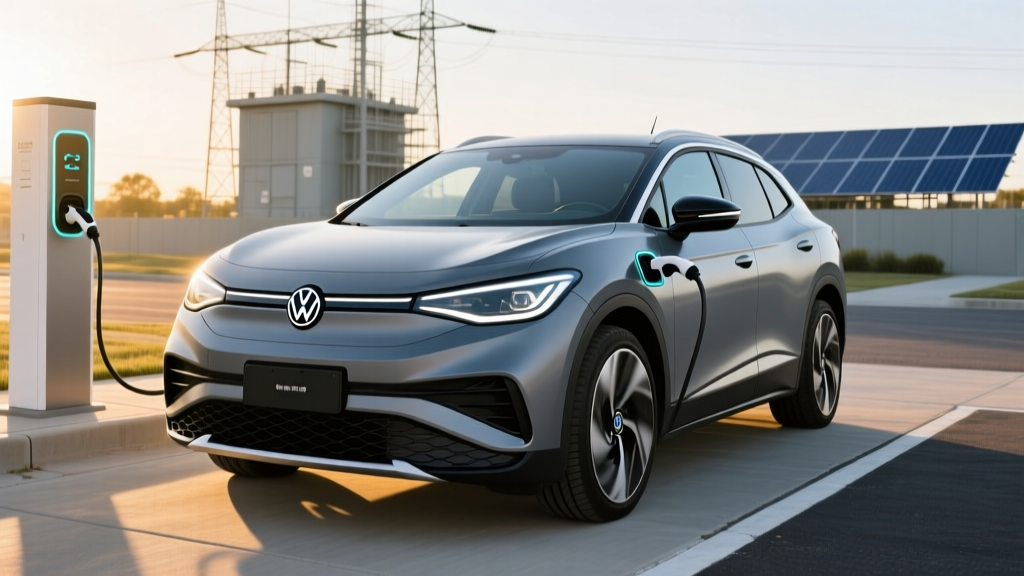
The Volkswagen ID.4 has always positioned itself as the rational choice in the compact electric SUV segment — not the flashiest, not the quickest, but a practical, spacious daily driver that gets the fundamentals right. The 2026 Volkswagen ID.4 Pro RWD continues that tradition, offering 291 miles of EPA-estimated range, competitive DC fast-charging speeds, and a cabin that prioritizes comfort and cargo utility over sporty pretensions. For buyers who want a no-drama EV that slots into a one-car household without compromise on space, the ID.4 Pro RWD makes a strong case.
But it's not without trade-offs. The infotainment system remains a sore point for some owners, acceleration is adequate rather than thrilling, and the competitive landscape has only gotten tougher with refreshed rivals from Hyundai, Kia, and Tesla. This review breaks down every spec that matters — from real-world range expectations to the nuances of the charging curve — so you can decide whether the ID.4 Pro RWD earns a spot in your driveway.
Full Specifications at a Glance
| Specification | Value |
|---|---|
| EPA Range | 291 miles |
| Battery (usable / gross) | 77 kWh usable / 82 kWh gross |
| Battery Chemistry | NMC (Nickel Manganese Cobalt) |
| Drivetrain | Rear-Wheel Drive (single motor) |
| Horsepower | 282 hp |
| 0–60 mph | 7.3 seconds |
| Max DC Fast Charge Rate | 175 kW |
| 10–80% DC Charge Time | ~28 minutes |
| Level 2 Home Charge Rate | 11 kW (AC) |
| MPGe (combined / city / hwy) | 107 / 112 / 100 MPGe |
| Efficiency | 32 kWh / 100 miles |
| Cargo Volume (rear seats up / down) | 30.3 / 64.2 cu ft |
| Rear Legroom | 37.6 inches |
| Base MSRP (Pro RWD) | $43,990 (before destination) |
| Battery Warranty | 8 years / 100,000 miles |
| Vehicle Warranty | 4 years / 50,000 miles (bumper-to-bumper) |
Range and Efficiency: EPA Sticker vs. Real-World Miles
The 2026 ID.4 Pro RWD carries a 77 kWh usable battery pack (82 kWh gross) using NMC (nickel manganese cobalt) cell chemistry. Volkswagen rates it at 291 miles of EPA-estimated range, placing it solidly in the middle of the compact electric SUV pack — behind the Hyundai Ioniq 5's 303-mile Long Range variant but ahead of several base-trim competitors.
EPA estimate: 291 miles.
Highway driving (70–75 mph): Expect 235–260 miles. The ID.4's boxy crossover shape creates more aerodynamic drag at speed than sleeker rivals, and the EPA highway rating of 100 MPGe reflects this.
City / mixed commuting: 270–290 miles is achievable with regenerative braking doing heavy lifting in stop-and-go traffic.
Cold weather (below 32°F): Range drops to roughly 200–230 miles. The ID.4's heat pump (standard on Pro trims) helps mitigate cabin heating draw, but battery chemistry inherently loses efficiency in freezing temperatures. Preconditioning while plugged in is essential for preserving range in winter.
Efficiency lands at 107 MPGe combined (112 city / 100 highway), which translates to about 32 kWh per 100 miles. That's competitive but not class-leading — the Ioniq 5 and Tesla Model Y both extract more miles per kWh thanks to lighter weight or more aerodynamic profiles. On a road trip, plan for charging stops every 200–220 miles to stay above 10% state of charge (SoC) and avoid the steep taper at the top of the battery.
Charging Speed: DC Fast, Level 2, and the Curve Reality
Volkswagen rates the ID.4 Pro RWD at a peak 175 kW DC fast-charging rate, a meaningful improvement over earlier model years that topped out at 135 kW. On a compatible 350 kW charger (such as those at Electrify America stations — VW's included free-charging partner), you'll see peak speeds near 170–175 kW in the 10–30% SoC window.
But as any experienced EV road-tripper knows, peak kW is not sustained kW. The charging curve tapers progressively:
- 10–30% SoC: ~170–175 kW (peak)
- 30–50% SoC: ~145–160 kW
- 50–70% SoC: ~110–130 kW
- 70–80% SoC: ~85–100 kW
- 80%+: Drops sharply to ~50 kW and below — avoid charging past 80% on road trips unless necessary
The result is a 10–80% charge time of approximately 28 minutes under ideal conditions (warm battery, preconditioning active, high-power charger available). In cold weather without adequate preconditioning, add 5–10 minutes to that figure.
At home, the onboard AC charger accepts up to 11 kW on Level 2 (240V), meaning a full 0–100% charge takes roughly 8.5 hours. With a typical 48-amp home wallbox (such as the ChargePoint Home Flex or Enel X Way JuiceBox), you'll add approximately 30–33 miles of range per hour of charging — more than enough to replenish a day's commute overnight.
| Charging Level | Power (kW) | Speed / Time |
|---|---|---|
| Level 1 (120V) | ~1.4 kW | ~4–5 miles/hour |
| Level 2 (240V, 48A) | 11 kW (max) | ~30–33 miles/hour; full charge ~8.5 hrs |
| DC Fast Charge (peak) | 175 kW | 10–80% in ~28 min |
Connector note: The 2026 ID.4 uses the NACS (North American Charging Standard) port, following Volkswagen's transition from CCS1 for North American models. This grants native access to Tesla's Supercharger network without an adapter — a significant practical advantage for road-trip charging reliability. At Electrify America stations, NACS connectors are also available.
Performance and Driving Dynamics
The single rear-mounted electric motor produces 282 horsepower and sends all of it to the rear wheels. The 0–60 mph sprint takes 7.3 seconds, which is respectable for a 4,700-pound crossover but noticeably behind dual-motor AWD competitors and sportier options like the Tesla Model Y Long Range (4.8 seconds). The ID.4 Pro RWD was never designed to win drag races — it was designed to be a comfortable, composed daily driver.
And in that role, it succeeds. The rear-drive layout gives the ID.4 a tighter turning circle (31.5 feet curb-to-curb) than many AWD competitors, making it genuinely easy to maneuver in parking lots and urban streets. Ride quality is tuned toward comfort, absorbing highway imperfections with composure. Steering is light and accurate, if not particularly communicative. Regenerative braking offers multiple levels via steering-wheel paddles, though true one-pedal driving (full stop without touching the brake pedal) is available in the strongest regen mode.
For buyers who prioritize a smooth, quiet ride over sporty engagement, the ID.4 Pro RWD delivers. If you want punchy acceleration or carving canyon roads, look to the ID.4 AWD Pro S (0–60 in 5.4 seconds) or a rival with a performance orientation.
Interior, Cargo, and Technology
Step inside and the ID.4's crossover packaging pays dividends. 30.3 cubic feet of cargo space behind the second row is generous for the segment, expanding to 64.2 cubic feet with the 60/40 split rear seats folded. Rear-seat passengers get 37.6 inches of legroom, which is genuinely comfortable for adults on longer trips. The flat floor (no transmission tunnel) makes the middle seat more usable than in many gas-powered crossovers.
However, there is no front trunk (frunk) — the space under the hood houses electronics and HVAC components, a missed opportunity for stowing charging cables or a small bag.
Infotainment: The 12.9-inch touchscreen runs VW's latest ID. Software 4.0, which represents a substantial improvement over the laggy, menu-heavy interface that plagued early ID.4 model years. Response times are quicker, the layout is more intuitive, and wireless Apple CarPlay and Android Auto are standard. Physical shortcut buttons remain frustratingly absent — climate controls are integrated into the touchscreen via capacitive-touch sliders that are imprecise while driving.
Driver assistance: The ID.4 Pro RWD comes equipped with VW's IQ.DRIVE suite, a SAE Level 2 system that bundles adaptive cruise control, lane-centering assist, blind-spot monitoring, rear cross-traffic alert, and automatic emergency braking. It works well on highways but requires continuous driver supervision — hands must remain on the wheel, and the system will issue escalating warnings if you don't respond. This is not autonomous driving; it's a competent driver-assist that reduces fatigue on long trips.
Pricing, Trims, and Federal Tax Credit Eligibility
The 2026 Volkswagen ID.4 Pro RWD starts at $43,990 (MSRP before the $1,395 destination charge). The Pro sits as the mid-range trim, above the Standard Range and S trims in equipment but below the Pro S and AWD variants.
| Trim | Drivetrain | MSRP (before destination) |
|---|---|---|
| Standard Range | RWD | $38,990 |
| Pro | RWD | $43,990 |
| Pro S | RWD | $47,490 |
| AWD Pro | AWD | $47,790 |
| AWD Pro S Plus | AWD | $53,490 |
Does the ID.4 Pro RWD Qualify for the Federal EV Tax Credit?
The ID.4 Pro RWD is assembled at Volkswagen's Chattanooga, Tennessee plant, which helps it satisfy the North American final assembly requirement under IRS §30D. However, the full $7,500 federal tax credit depends on meeting several criteria that shift year to year:
- MSRP cap: The ID.4 (classified as an SUV) must have an MSRP at or below $80,000. All trims qualify.
- Buyer income cap: Modified adjusted gross income must not exceed $300,000 (joint filers), $225,000 (head of household), or $150,000 (single). Check your prior-year or current-year MAGI against IRS §30D guidelines.
- Battery component and critical mineral sourcing: A percentage of battery components must be manufactured or assembled in North America, and a percentage of critical minerals must be sourced from the U.S. or free-trade-agreement countries. These thresholds increase annually. Volkswagen has worked to localize battery supply, but confirm current-year sourcing compliance with your dealer or tax professional before assuming the full $7,500.
- Point-of-sale transfer: Eligible buyers can transfer the credit to the dealer at purchase, reducing the upfront price by up to $7,500 rather than waiting to claim it on their tax return.
If the full credit applies, the effective price of the ID.4 Pro RWD drops to approximately $36,490 before destination — a compelling value for a 291-mile electric crossover with this much space. Consult a tax professional and verify eligibility at fueleconomy.gov before finalizing your purchase.
Pros, Cons, and Who Should Buy the ID.4 Pro RWD
- Spacious cabin with 30.3 cu ft cargo and 37.6" rear legroom
- Comfortable ride quality tuned for daily commuting and road trips
- NACS port provides native Tesla Supercharger access
- 175 kW DC fast charging with ~28 min 10–80%
- Heat pump standard on Pro trim (cold-weather efficiency)
- Competitive pricing after federal tax credit
- Strong 8-year/100,000-mile battery warranty
- U.S.-assembled (Chattanooga, TN)
- No front trunk (frunk) for cable storage
- Capacitive-touch climate controls are distracting while driving
- 0–60 time (7.3 sec) trails sportier competitors
- Highway efficiency (100 MPGe) lags behind more aerodynamic rivals
- Infotainment improved but still behind Hyundai/Kia UX polish
- Real-world highway range drops noticeably vs. EPA sticker
Who Is the ID.4 Pro RWD Best For?
Daily commuters and suburban families will get the most from this EV. If your typical drive is 30–60 miles round-trip with home Level 2 charging, you'll rarely visit a public charger and the 291-mile range provides a comfortable buffer. The spacious rear seat handles car seats and adult passengers alike, and the cargo area swallows strollers, groceries, and weekend luggage without complaint.
Frequent road-trippers will appreciate the NACS Supercharger access and 175 kW charging speed, though the highway efficiency means slightly more stops than a Model Y on a 500-mile journey. If you regularly tow (the ID.4 Pro RWD is rated for 2,200 pounds with the factory hitch), range will drop further — plan accordingly.
Performance-oriented buyers should look elsewhere. The ID.4 Pro RWD prioritizes comfort over corner-carving, and the single-motor powertrain won't satisfy drivers who want instant, neck-snapping torque. Consider the AWD Pro S or the Hyundai Ioniq 5 N if driving engagement matters.
Competitive Comparison: ID.4 Pro RWD vs. Key Rivals
| Spec | VW ID.4 Pro RWD | Hyundai Ioniq 5 SEL RWD | Tesla Model Y Long Range RWD | Kia EV6 Wind RWD |
|---|---|---|---|---|
| EPA Range | 291 mi | 303 mi | 320 mi | 310 mi |
| Battery (usable) | 77 kWh | 77.4 kWh | 75 kWh | 77.4 kWh |
| DC Fast Charge (peak) | 175 kW | 240 kW | 250 kW | 240 kW |
| 10–80% Time | ~28 min | ~18 min | ~22 min | ~18 min |
| 0–60 mph | 7.3 sec | 7.0 sec | 5.8 sec | 7.2 sec |
| Cargo (seats up) | 30.3 cu ft | 27.2 cu ft | 30.2 cu ft | 24.4 cu ft |
| Base MSRP | $43,990 | $44,650 | $44,990 | $43,900 |
The ID.4's primary advantage is cargo volume — it ties the Model Y and handily beats the Ioniq 5 and EV6 for practical hauling. Its DC charging speed, while improved, still trails the 800V architectures of the Hyundai/Kia E-GMP platform and Tesla. On range, it sits at the lower end of the group, though the gap narrows in real-world cold-weather driving where all competitors lose 20–30% of their EPA estimates.
Where the ID.4 wins is in the total package: U.S. assembly, NACS Supercharger access, a comfortable ride, generous space, and a strong battery warranty. If charging speed is your top priority, the Ioniq 5 or EV6 will serve you better on road trips. If range and efficiency matter most, the Model Y leads. But as a balanced, practical family EV, the ID.4 Pro RWD holds its ground.
Ownership Costs and Warranty Coverage
Volkswagen backs the ID.4's battery pack with an 8-year / 100,000-mile warranty covering defects and capacity loss below 70% of original capacity. The bumper-to-bumper warranty runs 4 years / 50,000 miles. VW also includes 2 years of complimentary scheduled maintenance and 3 years of included Electrify America charging (with a kWh cap), which helps offset public charging costs during the early ownership period.
On electricity costs, the ID.4's 32 kWh/100 mi efficiency translates to roughly $0.05–0.06 per mile when charging at home on a national-average residential rate of $0.17/kWh. Compare that to a 27 MPG gas crossover at $3.40/gallon ($0.13/mile), and the ID.4 saves approximately $800–$1,000 per year on fuel for a driver covering 12,000 miles annually — assuming mostly home charging. Public DC fast charging at $0.35–0.50/kWh narrows the gap significantly, reinforcing the economic importance of reliable home charging access.
Insurance premiums for the ID.4 tend to run 10–20% higher than a comparable gas-powered compact SUV, reflecting higher repair costs and parts pricing for EVs. Get quotes from your insurer before purchasing to factor this into your total cost of ownership.
Frequently Asked Questions
What is the real-world range of the 2026 VW ID.4 Pro RWD?
The EPA estimates 291 miles, but real-world results depend heavily on driving conditions. Expect 235–260 miles on the highway at 70–75 mph, 270–290 miles in city and mixed driving, and 200–230 miles in freezing weather. Preconditioning the battery while plugged in helps preserve range in cold climates.
How fast does the ID.4 Pro RWD charge at home and on the road?
At home on a 240V Level 2 charger (48A), the ID.4 accepts up to 11 kW and adds roughly 30–33 miles per hour, fully charging overnight in about 8.5 hours. On a DC fast charger, it peaks at 175 kW and reaches 10–80% in approximately 28 minutes under ideal conditions. Cold batteries or lower-power chargers will add time.
How much does the ID.4 Pro RWD cost after the federal tax credit?
If you qualify for the full $7,500 §30D credit and transfer it at point of sale, the effective price drops to approximately $36,490 before destination. Eligibility depends on your income, the vehicle's battery sourcing compliance, and MSRP caps. Confirm with a tax professional and your dealer before finalizing.
Does the 2026 ID.4 qualify for the federal EV tax credit?
It qualifies for consideration under §30D — it is assembled in the U.S. and falls under the $80,000 SUV MSRP cap. However, the critical-mineral and battery-component sourcing requirements tighten each year. Verify current-year compliance on irs.gov or through your dealer's tax-credit desk.
Is the VW ID.4 Pro RWD worth buying over the Tesla Model Y or Hyundai Ioniq 5?
It depends on your priorities. The ID.4 offers the most cargo space (tied with Model Y), a comfortable ride, and NACS Supercharger access. The Ioniq 5 charges significantly faster (240 kW peak, ~18 min 10–80%), and the Model Y delivers more range and efficiency. If interior space and ride comfort top your list, the ID.4 is a strong pick. If road-trip charging speed or maximum range matters more, test-drive the Ioniq 5 and Model Y as well.
What are the biggest drawbacks of the ID.4 Pro RWD?
The capacitive-touch climate controls are a persistent annoyance, there's no frunk for cable storage, highway efficiency trails rivals, and the 175 kW peak charge rate — while improved — doesn't match 800V competitors. The infotainment system has improved substantially with ID. Software 4.0, but some owners still find it less intuitive than Hyundai's or Tesla's interfaces.
Sources: EPA Fuel Economy — 2026 Volkswagen ID.4, IRS New Clean Vehicle Credit (§30D), Volkswagen USA — ID.4 Specifications.