Quick Verdict: The ID.4 Pro as a Lease Candidate
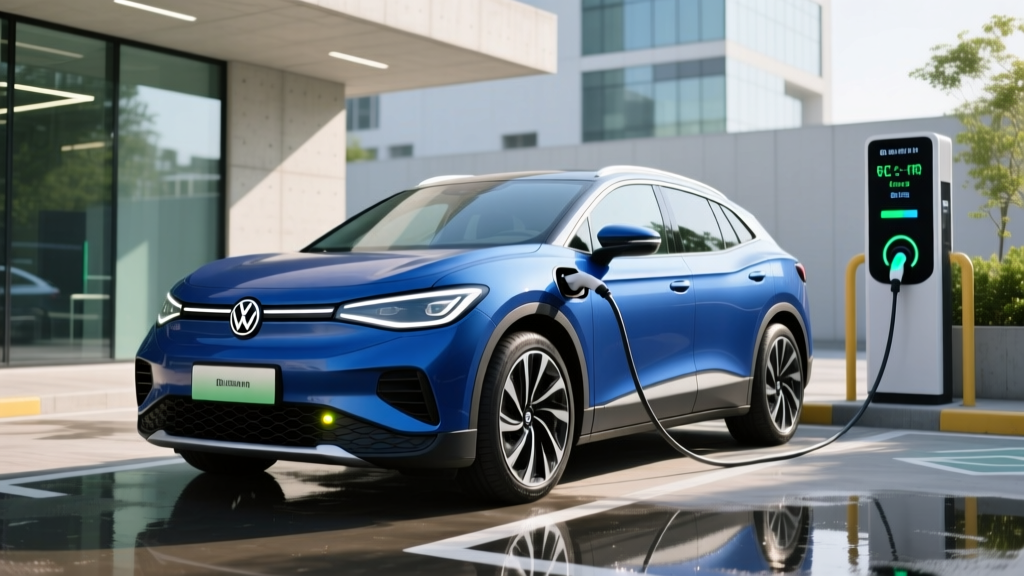
The 2026 Volkswagen ID.4 Pro occupies a specific niche in the electric crossover segment: a practical, no-drama family hauler with competitive range and Volkswagen's strong dealer network behind it. For buyers eyeing a Volkswagen ID.4 Pro lease, the math often works out favorably thanks to aggressive lease incentives Volkswagen has historically layered on top of federal credit pass-throughs — a structure that can drop effective monthly payments well below what a purchase would demand.
But before you sign, you need the full picture: real-world range that falls short of the EPA sticker on highway runs, a DC fast-charging curve that peaks briefly then tapers hard, and infotainment software that still frustrates owners who've upgraded from the 2023-2024 models. This review gives you every number you need to decide.
Range and Efficiency: EPA Sticker vs. Reality
The 2026 ID.4 Pro (rear-wheel-drive, single motor) carries an EPA-estimated range of 291 miles on its 82 kWh usable battery pack. The all-wheel-drive Pro S variants drop to approximately 263 miles due to the additional front motor and weight. Efficiency for the RWD Pro lands at 104 MPGe combined (32 kWh/100 mi).
| Condition | Expected Range | Notes |
|---|---|---|
| EPA Sticker | 291 mi | Mixed city/highway lab test |
| City / Suburban Driving | 280–300 mi | Regen braking helps; closest to EPA |
| Highway (70-75 mph) | 240–260 mi | Aero drag reduces range ~10-15% |
| Cold Weather (below 32°F) | 200–230 mi | Cabin heating + battery resistance; heat pump standard on Pro |
| Towing (2,700 lb max) | 160–190 mi | Expect ~40% range loss under load |
The ID.4 Pro uses an NMC (nickel manganese cobalt) lithium-ion battery — not the LFP chemistry found in some base-trim Tesla and Rivian models. NMC offers higher energy density (more range in a smaller pack) but is more sensitive to sustained 100% charges. For daily driving, set your charge limit to 80% and reserve full charges for road trips. The battery's thermal management system is liquid-cooled and liquid-heated, which helps preserve long-term State of Health (SoH) and supports preconditioning for DC fast charging.
Charging Speed: DC Fast, Level 2, and Level 1
Charging performance is where the ID.4 Pro reveals both strengths and compromises. The 2026 RWD Pro peaks at 175 kW on a DC fast charger (AWD models bump to 185 kW). Volkswagen quotes a 10-80% charge time of approximately 28 minutes under ideal conditions. In practice, the charge curve tells a more nuanced story: the ID.4 sustains near-peak power only between roughly 10-30% SoC, then tapers progressively. From 50-80%, expect speeds closer to 80-100 kW, which is why the back half of the charge takes nearly as long as the front half.
| Charge Level | Power | Speed (mi/hr added) | Full Charge Time |
|---|---|---|---|
| Level 1 (120V, 12A) | 1.4 kW | ~4 mi/hr | ~58 hours (0-100%) |
| Level 2 (240V, 32A) | 7.7 kW | ~24 mi/hr | ~10.5 hours (0-100%) |
| Level 2 (240V, 48A) | 11.5 kW | ~36 mi/hr | ~7 hours (0-100%) |
| DC Fast (peak) | 175 kW | ~520 mi/hr (peak) | 10-80% in ~28 min |
The ID.4 Pro comes with a CCS1 connector as standard. Volkswagen has committed to adopting the Tesla NACS connector on future models, but the 2026 ID.4 still ships with CCS. For Tesla Supercharger access, VW includes a complimentary adapter or provides access through the Electrify America network (typically 2-3 years of free 30-minute charging sessions, depending on current promotions). At home, a 48-amp Level 2 wall connector on a 60-amp circuit is the sweet spot — it'll replenish a full day's driving overnight in about 3-4 hours.
Performance and Driving Dynamics
The 2026 ID.4 Pro RWD produces 282 horsepower and 339 lb-ft of torque from its rear-mounted permanent-magnet synchronous motor. The 0-60 mph sprint takes approximately 7.3 seconds — adequate for highway merging but not thrilling. The AWD Pro S variant adds a front induction motor for a combined 335 hp and a 0-60 time around 5.4 seconds.
| Spec | ID.4 Pro (RWD) | ID.4 Pro S (AWD) |
|---|---|---|
| EPA Range | 291 mi | 263 mi |
| Battery (usable) | 82 kWh, NMC | 82 kWh, NMC |
| Horsepower | 282 hp | 335 hp |
| 0-60 mph | 7.3 sec | 5.4 sec |
| DC Fast Charge (peak) | 175 kW | 185 kW |
| 10-80% DC Time | ~28 min | ~28 min |
| Level 2 Onboard Charger | 11.5 kW | 11.5 kW |
| MPGe (combined) | 104 MPGe | 94 MPGe |
| Towing Capacity | 2,700 lb | 2,700 lb |
| Cargo Volume (rear seats up) | 30.3 cu ft | 30.3 cu ft |
| Cargo Volume (rear seats folded) | 64.2 cu ft | 64.2 cu ft |
| Rear Legroom | 37.6 in | 37.6 in |
Ride quality is a genuine strength. The ID.4's MEB platform delivers a compliant, quiet ride that absorbs highway imperfections well. Steering is light and predictable — tuned for comfort rather than engagement. Regenerative braking offers a "B" mode for stronger regen, but Volkswagen still does not offer true one-pedal driving to a complete stop, which frustrates EV veterans accustomed to the Nissan Leaf or Chevrolet Bolt approach. You'll still need to use the brake pedal at low speeds.
Pricing, Lease Economics, and Tax Credit Eligibility
The 2026 ID.4 Pro starts at an MSRP of approximately $43,990 (including destination). The Pro S AWD steps up to around $48,990, and a fully loaded Pro S Plus with the Gradient package can push past $55,000. These prices place the ID.4 squarely against the Hyundai Ioniq 5, Kia EV6, and Tesla Model Y.
| Trim | Base MSRP | Federal Credit (§30D) | Effective Price |
|---|---|---|---|
| Pro (RWD) | $43,990 | Up to $7,500* | ~$36,490 |
| Pro S (RWD) | $46,990 | Up to $7,500* | ~$39,490 |
| Pro S (AWD) | $48,990 | Up to $7,500* | ~$41,490 |
| Pro S Plus (AWD) | $54,490 | Up to $7,500* | ~$46,990 |
*Federal IRS §30D tax credit eligibility depends on multiple requirements: buyer AGI must not exceed $150,000 (single) / $300,000 (joint); vehicle MSRP must be under $80,000 for SUVs; and the battery must meet critical-mineral and battery-component sourcing thresholds that tighten annually. As of 2026, the ID.4's battery sourcing has historically qualified, but verify current-year compliance at the IRS site or with your tax professional before committing. The credit can now be transferred to the dealer at point of sale, reducing your purchase price directly.
Lease-specific advantage: Under the commercial clean vehicle credit (§45W), vehicles leased through a financial institution technically qualify the lessor for a credit — and many automakers pass this savings through as a "lease cash" incentive. This has historically allowed the ID.4 to sidestep some of the strict battery-sourcing rules that apply to purchases. Volkswagen has offered $5,000-$7,500 in lease cash on the ID.4 in recent years, which, combined with a point-of-sale credit pass-through, can produce monthly lease payments in the $250-$350 range for 36 months with $3,000-$4,000 due at signing. Always confirm current incentives with your local dealer — these change monthly.
Tech, Interior, and Driver Assistance
Volkswagen upgraded the ID.4's infotainment system for the 2025 model year, carrying over into 2026 with a 12.9-inch center touchscreen running VW's ID. Software 4.0. Response times are markedly improved over the laggy 2023-2024 units, and wireless Apple CarPlay and Android Auto are standard. However, the capacitive-touch climate controls below the screen remain a frustration point — they're unlit, lack tactile feedback, and are easy to mis-tap while driving. Physical volume and tuning sliders would be a welcome fix.
The IQ.DRIVE suite of driver-assistance features comes standard and includes:
- Travel Assist (adaptive cruise + lane centering) — SAE Level 2, requires hands on wheel
- Front Assist with automatic emergency braking and pedestrian detection
- Blind-spot monitor with rear traffic alert
- Lane Assist (lane-keeping)
- Park Assist Plus with memory parking
Interior space is generous for the compact crossover class. Rear legroom of 37.6 inches beats the Hyundai Ioniq 5 and rivals midsize sedans. The flat floor (thanks to the dedicated MEB EV platform) makes the middle rear seat genuinely usable. Cargo space of 30.3 cubic feet behind the second row is competitive, though the ID.4 lacks a front trunk (frunk) — the space under the hood houses the 12V battery and electronics.
Warranty and Long-Term Ownership
Volkswagen backs the ID.4 with a solid warranty package that addresses the primary concern of EV buyers — battery longevity:
- Battery: 8 years / 100,000 miles (capacity retention threshold: 70% of original capacity)
- Powertrain: 8 years / 100,000 miles
- Bumper-to-bumper: 4 years / 50,000 miles
- Corrosion perforation: 7 years / 100,000 miles
- Roadside assistance: 3 years / 36,000 miles
The 70% capacity retention threshold is standard across the industry (Tesla, Hyundai/Kia, and Ford use the same benchmark). Real-world NMC degradation data from 2021-2024 ID.4 owners suggests most packs retain 90-93% capacity after 3 years and 40,000-60,000 miles when owners follow best practices (80% daily charge limit, avoiding frequent DC fast charging in extreme heat). Long-term 8-year data is still maturing for the MEB platform, but VW's liquid thermal management system is a positive indicator.
- 291-mile EPA range is competitive in the segment
- Comfortable, quiet ride quality on highway and city roads
- Generous rear legroom and flat floor for passengers
- Strong lease incentive history reduces effective cost
- Standard IQ.DRIVE suite with no subscription required
- Large VW dealer network for service access
- DC fast-charging curve tapers significantly above 50% SoC
- Capacitive-touch climate controls are hard to use while driving
- No true one-pedal driving (vehicle creeps at low speed)
- No frunk (front trunk) for additional storage
- CCS-only connector requires adapter for Tesla Superchargers
- Infotainment, while improved, still lags behind Hyundai/Tesla UX
How It Compares: ID.4 Pro vs. Key Rivals
| Spec | VW ID.4 Pro (RWD) | Hyundai Ioniq 5 SEL (RWD) | Tesla Model Y (RWD) | Kia EV6 Light (RWD) |
|---|---|---|---|---|
| EPA Range | 291 mi | 303 mi | 320 mi | 232 mi (std) / 310 mi (LR) |
| Battery | 82 kWh NMC | 84 kWh NMC | ~60 kWh LFP | 77.4 kWh NMC |
| Peak DC Charge | 175 kW | 240 kW | 170 kW | 240 kW |
| 10-80% Time | ~28 min | ~18 min | ~30 min | ~18 min |
| 0-60 mph | 7.3 sec | 7.0 sec | 6.6 sec | 7.2 sec |
| Starting MSRP | $43,990 | $44,500 | $44,990 | $42,900 |
| Connector | CCS1 | CCS1/NACS | NACS | CCS1/NACS |
The Hyundai Ioniq 5 and Kia EV6 (both on the E-GMP platform) charge significantly faster than the ID.4 — an 18-minute 10-80% stop versus 28 minutes adds up on road trips. The Tesla Model Y leads on range and Supercharger network access, plus its LFP battery tolerates 100% daily charges without degradation concern. Where the ID.4 wins is ride comfort (softer than the Ioniq 5 and Model Y), rear-seat space, and the strength of Volkswagen's lease programs, which have consistently undercut rivals on monthly cost.
Who Should Lease the ID.4 Pro?
- You prioritize ride comfort and cabin quietness over sporty handling
- Your daily commute is under 80 miles round-trip (home Level 2 charging covers it easily)
- You want a mainstream dealer network for service rather than Tesla's direct model
- Lease incentives in your area bring the monthly payment below $350/mo
- You need generous rear-seat space for child seats or adult passengers
- You take frequent road trips and need the fastest DC charging (Ioniq 5 / EV6 are better)
- You want Supercharger network access without an adapter (Model Y, or wait for VW's NACS transition)
- You prefer one-pedal driving (Bolt EUV, Nissan Ariya, or most Tesla models)
- You need a frunk for gear storage (F-150 Lightning, Rivian R1S, Ioniq 5)
Frequently Asked Questions
What is the real-world range of the 2026 Volkswagen ID.4 Pro?
The EPA rates the ID.4 Pro RWD at 291 miles. In real-world mixed driving, expect 270-285 miles. Highway-only driving at 70-75 mph drops that to 240-260 miles. In freezing temperatures (below 32°F), plan for 200-230 miles due to cabin heating demands and battery resistance, even with the standard heat pump.
How fast does the ID.4 Pro charge at home and on the road?
On a DC fast charger, the ID.4 Pro peaks at 175 kW and charges from 10-80% in approximately 28 minutes — but the charge curve tapers hard above 50%, so real-world stops often stretch to 35 minutes. At home on a 48-amp Level 2 charger (11.5 kW), you'll add about 36 miles of range per hour, fully recharging overnight in roughly 7 hours.
Does the 2026 ID.4 qualify for the $7,500 federal tax credit?
The ID.4 has historically qualified for the full §30D federal credit, but eligibility depends on your income (under $150K single / $300K joint), the vehicle's MSRP (under $80K for SUVs — all ID.4 trims qualify), and current-year battery sourcing rules that tighten annually. The credit can be applied at point of sale through the dealer. For leases, Volkswagen has historically passed through lease cash incentives that mirror the credit value. Always verify with your dealer and tax advisor.
Is the ID.4 Pro worth leasing versus buying?
Leasing the ID.4 Pro is often the more cost-effective path. Volkswagen has consistently offered $5,000-$7,500 in lease cash, which — combined with favorable money factors — can produce monthly payments $100-$150 lower than equivalent loan payments. You also sidestep long-term battery depreciation risk and can upgrade to newer tech (including VW's upcoming NACS connector) at lease end. The downside: you won't build equity and must stay within mileage limits (typically 10,000-15,000 mi/year).
What are the biggest drawbacks of the ID.4?
The three most-cited owner complaints are: (1) DC fast-charging speeds that trail the Hyundai/Kia E-GMP platform by ~10 minutes per stop, (2) capacitive-touch climate controls that are difficult to operate while driving, and (3) the lack of true one-pedal driving — the ID.4 creeps at low speeds even in "B" regen mode. The absence of a frunk and CCS-only connector (requiring an adapter for Superchargers) round out the list.
How reliable is the ID.4's battery long-term?
Volkswagen warranties the battery for 8 years / 100,000 miles against degradation below 70% capacity. Early data from 2021-2024 ID.4 owners shows most NMC packs retaining 90-93% capacity after 40,000-60,000 miles when following best practices (80% daily limit, moderate DC fast charging). The liquid-cooled thermal management system is a positive factor for longevity. Full 8-year data on the MEB platform is still being collected.