The Quick Answer
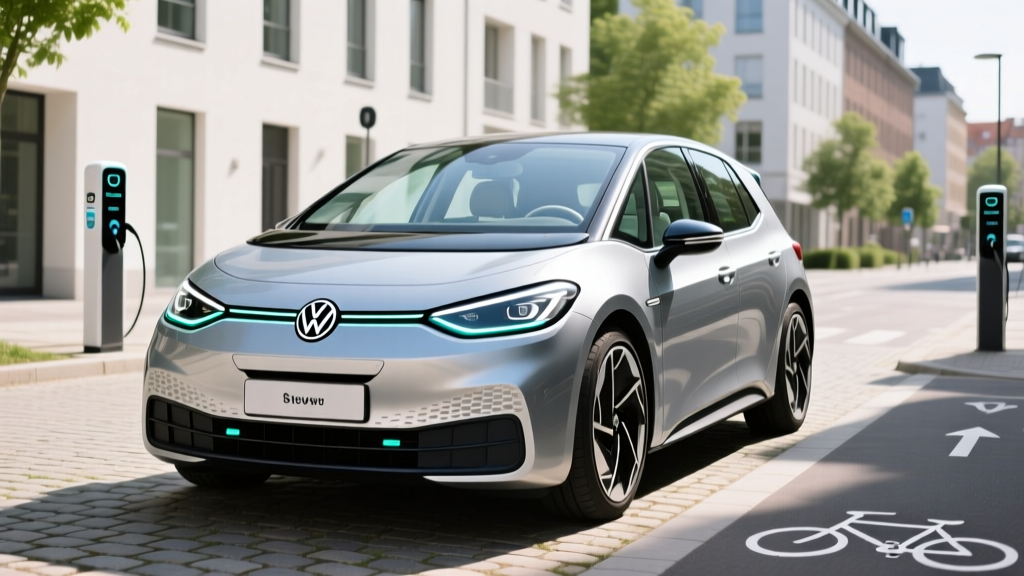
Volkswagen has revealed the ID.2all, a compact electric hatchback targeting a sub-€25,000 price point in Europe with an estimated WLTP range of up to 450 km (~280 miles). Built on VW's new MEB-entry platform, it slots below the ID.3 and ID.4 in the lineup. For US buyers: Volkswagen of America has not confirmed plans to import the ID.2all. If it arrives stateside, expect a starting MSRP near $28,000–$32,000 before incentives, an EPA range closer to 230–260 miles (EPA testing is stricter than WLTP), and eligibility questions around the §30D federal tax credit depending on battery sourcing. As of early 2026, this remains a Europe-first model.
What the VW ID.2all Actually Is
The ID.2all is Volkswagen's answer to the growing demand for budget-friendly electric transportation in Europe. Positioned as the spiritual successor to the e-Golf — and the electric equivalent of the Polo in VW's hierarchy — it's designed to bring EV ownership to buyers who find the ID.4 and ID.5 too large and too expensive.
VW previewed the production-intent concept in 2023, and the near-production model has now been revealed with confirmed specifications for the European market. Volume production is expected to begin at VW's Navarra, Spain plant, with European deliveries targeted for late 2026.
Key Specifications (European Market, Preliminary)
| Spec | ID.2all (Estimated) |
|---|---|
| Platform | MEB Entry (MEB21) |
| Battery Chemistry | LFP (Lithium Iron Phosphate) |
| Battery Capacity (Usable) | ~58 kWh |
| WLTP Range | Up to 450 km (~280 mi) |
| Estimated EPA Range (if US-spec) | ~230–260 mi |
| Motor Output | ~150 kW (~201 hp) front-wheel drive |
| DC Fast Charge (Peak) | ~120–130 kW |
| 10–80% DC Charge Time | ~25–28 minutes (est.) |
| Level 2 AC Charge Rate | 11 kW (onboard charger) |
| 0–100 km/h (0–62 mph) | ~7.0 seconds |
| Starting Price (Europe) | Sub-€25,000 (~$27,000) |
| Connector (Europe) | CCS2 |
Note: Specs above are based on VW's preliminary disclosures and industry analysis. Final production figures may differ. Source: Volkswagen Newsroom
LFP Battery: The Right Chemistry for an Affordable EV
The ID.2all's use of an LFP (lithium iron phosphate) battery is a deliberate cost and durability strategy. LFP cells are cheaper to produce than the NMC (nickel manganese cobalt) chemistry used in longer-range EVs like the ID.4 Pro S, and they offer distinct ownership advantages:
| Factor | LFP (ID.2all) | NMC (ID.4, typical) |
|---|---|---|
| Cost per kWh | Lower (~$80–95/kWh cell-level) | Higher (~$110–130/kWh) |
| Cycle Life | 3,000–5,000+ cycles | 1,500–2,500 cycles |
| Thermal Stability | Excellent (less prone to thermal runaway) | Good (requires more active cooling) |
| Energy Density | Lower (heavier pack for same range) | Higher (lighter, more range per kg) |
| Cold-Weather Performance | Greater range loss in freezing temps (~25–35%) | Moderate loss (~15–25%) |
| Recommended Charge Habit | Can charge to 100% daily without degradation concern | Best kept 20–80% for daily use |
For a city-oriented hatchback, LFP makes sense. You get a battery that will likely outlast the car itself, can be charged to full every night on a home Level 2 charger, and avoids the cobalt supply-chain issues that complicate §30D tax credit eligibility in the US.
Real-World Range Reality Check
WLTP sticker: 450 km (~280 miles)
Expected EPA (if US-spec): ~230–260 miles
Real-world highway (70 mph, 72°F): ~210–235 miles
Real-world winter (32°F, mixed driving): ~165–195 miles (LFP chemistry amplifies cold-weather loss)
If your daily commute is under 40 miles round-trip and you have home charging, even the winter figure means charging every 3–4 days. For road trips beyond 180 miles, plan one DC fast-charge stop.
Charging Speed: Adequate for the Segment, Not Class-Leading
The ID.2all's estimated peak DC fast-charge rate of 120–130 kW is modest compared to the 175–200+ kW rates of premium EVs, but it's appropriate for a ~58 kWh battery. Here's why the numbers matter:
A 130 kW peak rate on a 58 kWh pack equates to roughly a 2.2C charge rate — solid but not aggressive. Expect the charge curve to peak briefly in the 15–40% state-of-charge window, then taper progressively. The 10–80% time of approximately 25–28 minutes is competitive with rivals like the Renault 5 E-Tech and slightly behind the BYD Dolphin.
| Charging Level | Power (kW) | Approx. Miles Added per Hour |
|---|---|---|
| Level 1 (120V household) | ~1.4 kW | ~4–5 miles |
| Level 2 (240V, 48A home charger) | 11 kW (onboard limit) | ~35–40 miles |
| DC Fast Charge (peak) | ~130 kW | ~200+ miles in 30 min (tapering) |
At home on a Level 2 charger, a full overnight charge (8 hours) replenishes roughly 280 miles of WLTP range — more than enough to wake up with a full battery every morning. On a standard 120V outlet (Level 1), expect about 35–40 miles of range added overnight, which covers most daily commutes but won't fully recharge a depleted pack quickly.
How It Compares: EV vs Gas Hatchback Ownership Costs
The ID.2all's value proposition only works if total ownership costs beat the gas-powered alternatives. Here's a five-year comparison against a typical European B-segment gasoline hatchback (e.g., VW Polo 1.0 TSI) assuming 12,000 miles/year:
| Cost Factor (5 Years / 60,000 mi) | ID.2all (Electric) | Gas Hatchback (Polo-class) |
|---|---|---|
| Purchase Price (est.) | ~€25,000 ($27,000) | ~€22,000 ($23,800) |
| Fuel / Electricity | ~€2,400 (home charging at €0.25/kWh) | ~€6,600 (gasoline at €1.75/L, 40 MPG) |
| Maintenance | ~€800 (cabin filter, brake fluid, tires) | ~€2,800 (oil, filters, brakes, spark plugs) |
| Insurance (avg.) | ~€4,500 | ~€3,800 |
| 5-Year Total | ~€32,700 | ~€35,200 |
| Cost per Mile | ~€0.13/mi fuel+maintenance | ~€0.26/mi fuel+maintenance |
European cost assumptions. US figures would differ based on local electricity rates ($0.12–$0.30/kWh typical) and gasoline prices ($3.00–$4.50/gal). Source: fueleconomy.gov EV cost tools
The EV wins on operating costs by a wide margin — roughly half the per-mile fuel and maintenance expense. The gap widens further if you have access to cheap off-peak electricity or free workplace charging. Insurance remains the one area where EVs still carry a premium, typically 10–20% higher due to repair costs and parts pricing.
Will the ID.2all Come to the United States?
This is the question American buyers are asking, and the honest answer is: it's uncertain. Several factors work against a US launch:
- Market positioning: VW of America has focused on the ID.4 (and upcoming ID.7 and ID.Buzz) for the US market. Subcompact hatchbacks have historically struggled stateside — VW discontinued the Golf in the US after 2021.
- Price pressure: Even at $28,000–$32,000, the ID.2all would compete against the Chevrolet Bolt EV/EUV (if reintroduced), Nissan Leaf, and aggressively priced Chinese-market EVs that haven't entered the US.
- §30D tax credit complications: The LFP battery likely uses Chinese-sourced cathode materials, which would disqualify it from the $7,500 federal tax credit under current IRS §30D critical-mineral and battery-component rules. Without the credit, the effective price rises substantially.
- NACS transition: VW has committed to adopting the Tesla NACS connector for North American models. A US-spec ID.2all would need NACS hardware, adding engineering cost for a low-volume import.
If VW does bring it, expect a 2027 or 2028 model year debut with NACS charging, US-specific crash-test certification, and pricing likely in the $29,990–$34,990 range depending on trim.
Common Misconceptions About Affordable EVs
| Myth | Fact |
|---|---|
| "Affordable EVs have terrible range" | The ID.2all targets 280 mi WLTP (~250 mi EPA real-world). That covers 95%+ of American daily driving on a single charge. |
| "LFP batteries degrade quickly" | LFP chemistry actually offers superior cycle life (3,000–5,000+ cycles). At one full cycle per day, that's 8–13+ years before meaningful degradation. |
| "You need a $2,000 home charger install" | A basic Level 2 install on an existing 240V circuit (like a dryer outlet) can cost $300–$600. A new 50A circuit with hardwired charger runs $800–$1,500 depending on panel proximity. |
| "Small EVs can't handle winter" | LFP packs do lose more range in cold (25–35% vs 15–25% for NMC), but preconditioning the battery while plugged in recovers much of that loss. A heat pump (expected on the ID.2all) further reduces cabin-heating energy draw. |
| "All EVs qualify for the $7,500 tax credit" | Under current §30D rules, the vehicle must meet MSRP caps ($55,000 cars), buyer income limits ($150K single / $300K joint), AND battery-sourcing requirements. Many affordable EVs with Chinese-sourced LFP batteries do not qualify. |
Who Should Buy an Affordable Electric Hatchback (and Who Shouldn't)
Decision Framework
Choose an affordable EV hatchback like the ID.2all if:
- Your daily driving is under 60 miles round-trip
- You have access to home Level 2 charging (garage, driveway, or installed apartment charger)
- You want the lowest possible per-mile operating cost
- You primarily drive in urban and suburban environments
- You don't regularly tow or carry more than 4 passengers
- You plan to keep the car 5+ years (LFP battery longevity pays off over time)
Look at a PHEV, larger EV, or gas car instead if:
- You frequently drive 200+ miles between charging opportunities
- You live in an apartment without any charging access and public chargers are scarce
- You experience sustained sub-20°F winters AND have a long highway commute (LFP cold-weather loss compounds)
- You need towing capability or regularly carry 5+ passengers with cargo
- Your budget is under $20,000 (the used EV market or a gas hatchback is more realistic)
What First-Time EV Buyers Should Know Before Purchasing
If the ID.2all or a similar affordable EV is your entry into electric ownership, here are the practical realities no brochure will tell you:
Home Charging Is Non-Negotiable for Most Owners
Public DC fast charging costs $0.30–$0.50/kWh (sometimes more), which erodes the fuel-cost advantage over gasoline. At home on a Level 2 charger at the US average of ~$0.15/kWh, you'll spend roughly $0.04–$0.05 per mile on electricity vs. $0.12–$0.15/mile on gas. Budget $500–$1,500 for a proper Level 2 home installation — it's the single best investment in EV ownership.
The Charge Curve Matters More Than Peak kW
A "130 kW peak" charge rate doesn't mean you sustain 130 kW from 10–80%. Expect the ID.2all to hold peak rate roughly from 15–45% SoC, then taper to ~80 kW through 65%, and drop further to ~40 kW approaching 80%. This is normal battery physics, not a flaw. Plan road-trip stops to charge from 10–65% for the fastest average rate.
Tax Credits Are Not Guaranteed
The §30D federal credit has income caps ($150K single / $300K joint AGI), MSRP caps ($55K for cars), and battery-sourcing requirements that change annually. Many imported EVs with LFP batteries fail the critical-minerals test. Always check the latest IRS clean vehicle credit page before counting on $7,500 off your purchase. Point-of-sale transfer is available if you qualify, letting you apply the credit as a down-payment reduction at the dealer.
Frequently Asked Questions
What is Volkswagen's cheapest electric car?
For Europe, the ID.2all is positioned as VW's most affordable EV at a sub-€25,000 starting price. In the US, the ID.4 remains VW's entry-level electric vehicle, starting around $39,990 for the 2026 model year before incentives. The ID.2all has not been confirmed for the US market.
How far can the VW ID.2all go on a single charge?
VW targets up to 450 km (280 miles) under the WLTP testing cycle. If a US version arrives, expect an EPA rating closer to 230–260 miles, with real-world highway range around 210–235 miles in mild weather and 165–195 miles in freezing temperatures due to LFP battery characteristics.
Does the ID.2all use LFP or NMC battery chemistry?
The ID.2all is expected to use LFP (lithium iron phosphate) chemistry to keep costs low and maximize cycle life. LFP batteries can be charged to 100% daily without the degradation concerns associated with NMC packs, making them ideal for daily commuting.
Will the VW ID.2all qualify for the US federal EV tax credit?
Unlikely under current rules. The §30D credit requires battery components and critical minerals to be sourced from the US or free-trade-agreement countries. LFP cathode materials are predominantly sourced from China, which would disqualify the vehicle. Rules may evolve — consult a tax professional and the IRS §30D guidance before purchasing.
How long does it take to charge the ID.2all at home?
On a Level 2 home charger (240V, 48A), the 11 kW onboard charger replenishes the ~58 kWh battery in approximately 5.5–6 hours from empty. Most owners plug in overnight and wake up fully charged. On a standard 120V outlet, expect 35–40+ hours for a full charge — viable for topping up but not practical as a primary charging method.
Is the ID.2all smaller than the VW ID.4?
Yes, significantly. The ID.2all is a B-segment hatchback (similar footprint to a VW Polo), while the ID.4 is a compact crossover SUV. Expect roughly 12–14 cubic feet of cargo space in the ID.2all vs. 30.3 cu ft behind the rear seats in the ID.4. The ID.2all is a city car; the ID.4 is a family vehicle.