Why Volkswagen EV Leases Deserve a Hard Look in 2026
If you've been scanning Volkswagen electric vehicle lease deals online, the advertised monthly payments on the ID.4 and the newly expanded ID.7 lineup can look tempting — often undercutting comparably equipped gas Tiguan or Passat leases. But a lease payment only tells part of the story. To know whether a VW EV lease actually saves you money, you need to stack up the full 5-year cost of ownership: electricity versus gas, maintenance savings, insurance premiums, depreciation, and how the federal §30D tax credit interacts with a lease structure.
This guide breaks down every cost layer using real 2026 model-year pricing, current IRS rules, and EPA efficiency data so you can walk into a VW dealer knowing exactly what you're signing up for.
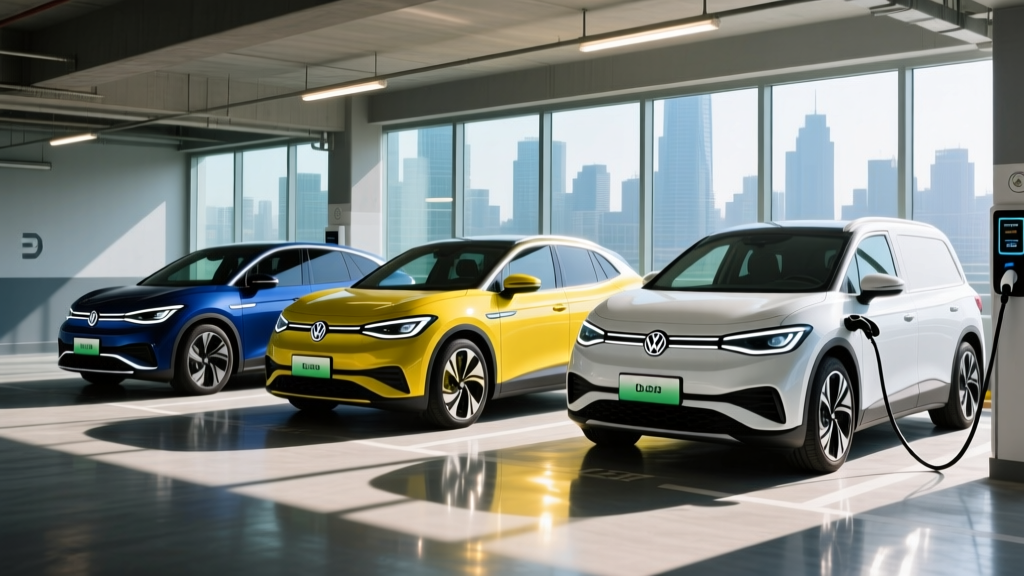
2026 Volkswagen EV Lineup: What's Leasable Right Now
Volkswagen's US electric lineup for 2026 centers on two core models, both built on the MEB platform with updated APP550 drive motors and improved thermal management:
| Spec | 2026 VW ID.4 Pro S AWD | 2026 VW ID.7 Pro S |
|---|---|---|
| Base MSRP | $46,290 | $52,290 |
| Battery (usable) | 82 kWh (NMC) | 82 kWh (NMC) |
| EPA Range | 275 mi | 340 mi (est.) |
| Real-World Highway Range | ~225–240 mi | ~280–300 mi |
| Peak DC Fast Charge | 175 kW | 200 kW |
| 10–80% DC Time | ~28 min | ~26 min |
| Level 2 Rate (kW) | 11 kW | 11 kW |
| 0–60 mph | 5.4 sec (AWD) | 6.5 sec (RWD) |
| Horsepower | 295 hp | 282 hp |
| MPGe (combined) | 104 MPGe | 115 MPGe (est.) |
| Drivetrain | Dual-motor AWD | Rear-motor RWD |
| Battery Warranty | 8 yr / 100,000 mi | 8 yr / 100,000 mi |
The Lease-vs-Buy Question: How the Federal Tax Credit Changes the Math
Here's where VW lease deals get interesting — and where most buyers get confused. The federal §30D Clean Vehicle Credit offers up to $7,500, but eligibility depends on several factors that can disqualify a buyer entirely.
- MSRP Cap: SUVs (ID.4) must be ≤$80,000; sedans (ID.7) must be ≤$55,000
- Income Cap: AGI ≤$150,000 (single), ≤$225,000 (head of household), ≤$300,000 (joint)
- Battery Sourcing: Critical minerals and battery components must meet escalating domestic/free-trade-partner thresholds — VW's supply chain compliance varies by build date
- Point-of-Sale Transfer: Eligible buyers can transfer the credit to the dealer at purchase, reducing the sale price directly
- Lease Loophole (Commercial Credit §45W): When you lease, the leasing company (VW Credit) technically owns the vehicle and may claim the commercial clean vehicle credit — many automakers pass this through as "lease cash" regardless of your personal income or the vehicle's sourcing compliance
What this means in practice: If you earn above the income cap or the specific ID.4/ID.7 build doesn't meet battery-sourcing thresholds, purchasing disqualifies you from the $7,500 credit. But leasing through VW Credit often sidesteps these restrictions entirely, because the lessor claims a separate commercial credit. VW has historically passed this through as $7,500 in lease cash, effectively lowering your capitalized cost. Always confirm current lease cash amounts with your dealer — they change monthly.
5-Year Total Cost of Ownership: VW ID.4 vs. Gas Tiguan
To make the comparison concrete, we're stacking a 2026 ID.4 Pro S AWD (leased at typical current terms) against a comparably priced 2026 Tiguan SE R-Line (MSRP ~$38,000). Both are driven 15,000 miles per year.
| Cost Category (5 Years) | VW ID.4 Pro S AWD | VW Tiguan SE R-Line (Gas) |
|---|---|---|
| Purchase/Lease Basis | $46,290 (–$7,500 lease cash = $38,790 cap cost) | $38,000 |
| Fuel / Electricity (75,000 mi) | $4,050 (home charging at $0.14/kWh) | $8,570 (at $3.50/gal, 26 MPG combined) |
| Maintenance | $1,200 | $3,800 |
| Insurance (avg) | $9,500 ($1,900/yr) | $7,500 ($1,500/yr) |
| Depreciation (est. 5-yr) | ~55% = ~$21,335 | ~45% = ~$17,100 |
| Total 5-Year Cost | ~$36,085 | ~$36,970 |
The ID.4 edges out the Tiguan over five years even before accounting for state incentives, primarily through fuel and maintenance savings. But the margin is thin — and it hinges on home charging at reasonable electricity rates. If you rely entirely on DC fast charging at $0.40–$0.50/kWh, your fuel cost jumps to roughly $8,100, erasing the advantage.
Charging vs. Gas: The Per-Mile Math That Matters
| Scenario | Cost per kWh / Gallon | $/Mile (ID.4) | $/Mile (Tiguan) |
|---|---|---|---|
| Home Level 2 (national avg) | $0.14/kWh | $0.054 | — |
| Home (CA/MA peak rates) | $0.28/kWh | $0.108 | — |
| Public DC Fast Charger | $0.45/kWh | $0.174 | — |
| Gasoline (national avg) | $3.50/gal | — | $0.135 |
The ID.4 consumes roughly 0.385 kWh per mile (based on its 104 MPGe combined rating). At the national average residential rate of $0.14/kWh, that's about 5.4 cents per mile — less than half the Tiguan's 13.5 cents. But notice what happens with public DC fast charging: at $0.45/kWh, the ID.4 costs more per mile than the gas Tiguan. Home charging access is the single biggest variable in EV ownership economics.
Maintenance Savings: Where EVs Quietly Win
| Service Item | ID.4 (5-yr cost) | Tiguan (5-yr cost) |
|---|---|---|
| Oil Changes | $0 | $600 (5 changes @ $120) |
| Brake Pads/Rotors | $200 (regen extends life) | $1,200 (2 replacements) |
| Transmission Fluid | $0 (single-speed reducer) | $300 |
| Cabin Air Filter | $250 | $250 |
| Tire Rotation/Replacement | $1,800 (heavier vehicle, EV tires wear faster) | $1,400 |
| Coolant/Other Fluids | $150 | $400 |
| Total Maintenance | ~$1,200 | ~$3,800 |
The EV maintenance advantage is real — about $2,600 saved over 75,000 miles — but it's not unlimited. EVs are heavier (the ID.4 AWD weighs ~4,680 lbs), which accelerates tire wear. Budget for EV-specific touring tires at $250–$350 per corner. Regenerative braking dramatically extends pad and rotor life; many EV owners reach 80,000+ miles on original brakes.
Insurance Costs: The Line Item Nobody Advertises
Here's the cost that catches most new EV lessees off guard. According to industry data, EV insurance premiums run 15–25% higher than equivalent gas vehicles. For the ID.4, expect national average premiums around $1,800–$2,100/year versus $1,400–$1,600 for the Tiguan.
Why EVs cost more to insure:
- Higher repair costs after collisions (specialized high-voltage safety procedures, aluminum/battery tray replacement)
- Greater total-loss likelihood from battery damage (insurers often total the vehicle if the traction battery casing is compromised)
- Higher vehicle MSRP at equivalent trim levels
- Fewer independent body shops certified for high-voltage repair, leading to higher labor rates
Before signing a lease, get an insurance quote for the specific VIN. Rates vary enormously by zip code, driving record, and insurer — some carriers now offer EV-specific discounts that narrow the gap.
Depreciation and Resale: The Evolving Reality
EV depreciation has historically been steeper than gas vehicles, driven by rapid technology improvement, battery health uncertainty in the used market, and Tesla's aggressive price cuts pulling down the entire segment. For a 2026 ID.4, expect roughly 50–55% value retention after 5 years / 75,000 miles, compared to 55–60% for a Tiguan.
However, if you're leasing, depreciation is the lessor's problem. Your lease payment already bakes in VW Credit's residual value estimate. If they set the residual too high, you get a better deal (lower monthly payments relative to the vehicle's actual depreciation). If they set it too low, your payments are higher but your lease-end purchase option is a bargain. Always check the residual percentage on the lease disclosure — anything above 50% on a 36-month VW EV lease is favorable in the current market.
The 8-year/100,000-mile battery warranty (covering capacity below 70% of original) provides a floor under used EV values, and VW's NMC chemistry has shown solid long-term degradation curves in European ID.3/ID.4 fleets — typically 8–12% capacity loss over 100,000 miles.
State, Local, and Utility Incentives: Stacking the Savings
- California: Up to $2,000 CVRP rebate (income-dependent) + utility rebates ($500–$1,500 for home charger install)
- Colorado: $5,000 state tax credit for vehicles under $80,000 MSRP
- New York: Up to $2,000 Drive Clean Rebate (point-of-sale)
- Utility Rebates: Many utilities offer $250–$1,000 for Level 2 charger purchase and off-peak charging rate programs that cut your per-kWh cost by 30–50%
- HOV Lane Access: Several states grant solo carpool-lane access to EVs — a non-monetary perk worth real time
Check your state energy office and local utility for current programs. These can stack with federal credits and lease cash.
Should You Lease or Buy a Volkswagen EV?
- Your income exceeds §30D caps but the lease commercial-credit pass-through is available
- You want to avoid long-term battery degradation risk
- You upgrade vehicles every 3–4 years anyway
- Battery-sourcing rules make purchase credit eligibility uncertain
- You qualify for the full $7,500 §30D credit at point of sale
- You plan to keep the vehicle 7+ years
- You drive under 12,000 miles/year (lease mileage penalties add up)
- You want to build equity and avoid perpetual car payments
Frequently Asked Questions
How much does it really cost to own a VW ID.4 over 5 years?
Approximately $36,000–$38,000 over five years / 75,000 miles when you include the effective lease cost (after lease cash), home charging, insurance, and maintenance. This is roughly comparable to a gas Tiguan, with savings on fuel and maintenance offset by higher insurance and steeper depreciation.
Do I qualify for the federal tax credit if I lease?
When you lease, you personally don't claim the §30D credit — the leasing company does, often via the §45W commercial credit. VW Credit has historically passed this through as lease cash, reducing your monthly payment regardless of your income level or the vehicle's battery sourcing. Confirm current pass-through amounts with your dealer.
How much do I save on fuel and maintenance versus gas?
At national average electricity and gas prices, expect roughly $4,500 in fuel savings and $2,600 in maintenance savings over 75,000 miles — about $7,100 combined. These savings shrink significantly if you rely on expensive public DC fast charging.
Are Volkswagen EVs more expensive to insure?
Yes, typically 15–25% more than equivalent gas VW models. The ID.4 averages $1,800–$2,100/year nationally. Get a VIN-specific quote before signing — rates vary widely by insurer and location.
How well do VW electric vehicles hold their value?
Current projections show 45–50% value retention after 5 years, slightly below gas equivalents. However, in a lease, residual risk belongs to VW Credit. If you're buying, the 8-year/100,000-mile battery warranty provides downside protection.
What home charging setup do I need for an ID.4 or ID.7?
Both accept 11 kW on Level 2 (48-amp circuit recommended). A full charge from 10–100% takes about 7.5 hours — easily overnight. Budget $800–$2,000 for a quality Level 2 charger and electrician installation (more if your panel needs a 200-amp upgrade). Always have a licensed electrician assess your panel capacity before committing.
Does the ID.4 support NACS (Tesla Supercharger) charging?
Starting with the 2025 model year, VW began offering NACS-equipped vehicles and adapter access to the Tesla Supercharger network. Confirm connector type with your dealer for the specific 2026 build — CCS1 vehicles can use a VW-provided NACS adapter at Superchargers.