If you have been browsing Volkswagen EV deals at your local dealer or online, the sticker price is only the beginning of the financial story. Volkswagen's electric lineup—anchored by the ID.4 compact SUV and the ID.7 sedan—offers compelling entry points into electric ownership, but the real question is what happens after you drive off the lot. Between shifting federal tax credit rules, volatile EV depreciation curves, and the ongoing tug-of-war between fuel savings and higher insurance premiums, the true cost of owning a VW electric vehicle requires a hard look at the numbers.
This guide breaks down the 5-year total cost of ownership for Volkswagen's current EV lineup, explains exactly who qualifies for the federal §30D tax credit (and who doesn't), and gives you the per-mile math to decide whether a VW EV deal actually saves you money compared to a gas alternative.
Volkswagen's 2026 EV Lineup: What You Can Actually Buy
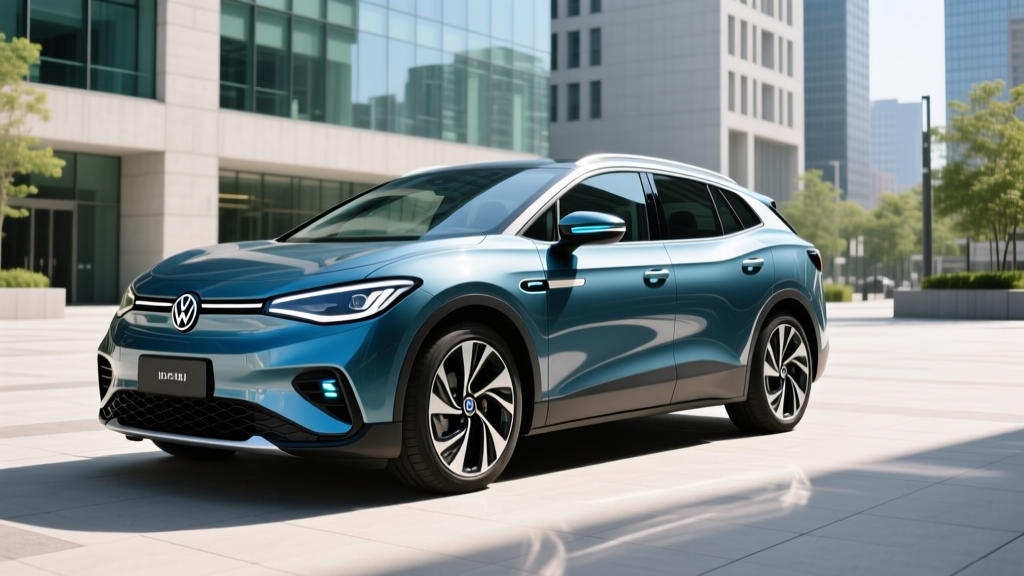
Volkswagen's US electric portfolio centers on two production models for the 2026 model year, both built on the MEB platform:
| Spec | 2026 VW ID.4 (Pro S AWD) | 2026 VW ID.7 (Pro S) |
|---|---|---|
| Base MSRP | $44,995 | $52,995 |
| EPA Range | 275 mi (real-world ~230-250 mi highway/cold) | 340 mi (real-world ~285-310 mi highway/cold) |
| Battery (usable) | 82 kWh, NMC chemistry | 82 kWh, NMC chemistry |
| Peak DC Fast Charge | 175 kW (10-80% in ~30 min) | 200 kW (10-80% in ~26 min) |
| Level 2 Charge Rate | 11 kW (~33 mi/hr) | 11 kW (~38 mi/hr) |
| Horsepower | 295 hp (AWD) | 282 hp (RWD) |
| 0-60 mph | 5.4 sec | 6.2 sec |
| MPGe (combined) | 104 MPGe | 115 MPGe |
| Battery Warranty | 8 yr / 100,000 mi (70% capacity retention) | 8 yr / 100,000 mi (70% capacity retention) |
A few notes for deal-shoppers: The ID.4 remains VW's volume electric seller and the model most likely to carry dealer incentives or lease specials. The ID.7, positioned as an electric Passat successor, commands a premium but delivers meaningfully better efficiency and range. Both models use NMC (nickel manganese cobalt) battery chemistry, which offers higher energy density than LFP but requires more careful long-term state-of-charge management to minimize degradation.
The Federal Tax Credit: Do You Actually Qualify?
The federal EV tax credit under IRS §30D can reduce your effective purchase price by up to $7,500, but eligibility is anything but automatic. The rules have tightened considerably since the Inflation Reduction Act reshaped the program, and many buyers who assume they qualify are surprised to learn they don't.
§30D Federal Tax Credit Requirements (2026)
- Income caps: Modified AGI must not exceed $300,000 (married filing jointly), $225,000 (head of household), or $150,000 (single filers). The cap applies to the year of purchase or the prior year—whichever is lower.
- MSRP caps: The vehicle's manufacturer's suggested retail price cannot exceed $55,000 for sedans (ID.7) or $80,000 for SUVs/trucks/vans (ID.4).
- Battery sourcing: A percentage of critical minerals and battery components must be sourced from the US or free-trade-agreement partners. The required percentages increase annually. The ID.4 (built in Chattanooga, TN) has historically qualified for the full $7,500, but verify current-year sourcing compliance on the fueleconomy.gov tax credit page before signing.
- Point-of-sale transfer: Since 2024, you can transfer the credit to the dealer at purchase, reducing your out-of-pocket cost immediately rather than waiting to claim it on your tax return. The dealer must be IRS-registered.
- One credit per vehicle, once per buyer: You cannot claim the credit for the same VIN twice, and there is a per-buyer limit of one new EV credit every three years.
Bottom line for VW buyers: The ID.4 Pro S AWD at $44,995 clears the $80,000 SUV MSRP cap with room to spare. The ID.7 Pro S at $52,995 sits under the $55,000 sedan cap, but higher trims or option packages could push it over—always confirm the final MSRP on the window sticker, not the dealer-advertised price. If you exceed the income cap, the credit is gone entirely; there is no phase-out, just a hard cutoff.
For the most current rules and qualifying vehicle list, check the IRS clean vehicle credit page before committing to a purchase.
5-Year Total Cost of Ownership: VW ID.4 vs. Gas Compact SUV
To evaluate whether Volkswagen EV deals deliver genuine savings, we modeled a 5-year ownership scenario comparing the ID.4 Pro S AWD against a comparably priced gas compact SUV (priced around $38,000, averaging 28 MPG combined). The model assumes 15,000 miles driven per year (75,000 miles total), home charging at $0.14/kWh (national average), and gas at $3.50/gallon.
| Cost Category | 2026 VW ID.4 Pro S AWD | Gas Compact SUV (AWD) |
|---|---|---|
| Purchase Price (MSRP) | $44,995 | $38,000 |
| Federal Tax Credit | −$7,500 | $0 |
| Effective Purchase Price | $37,495 | $38,000 |
| Fuel / Charging (5 yr) | $3,850 | $9,375 |
| Maintenance (5 yr) | $1,500 | $3,750 |
| Insurance (5 yr) | $11,250 | $8,500 |
| Estimated Depreciation (5 yr) | $18,500 | $14,000 |
| Total 5-Year Cost | $72,595 | $73,625 |
The ID.4 edges out the gas alternative by roughly $1,000 over five years in this scenario, but the margin is thin and highly sensitive to your personal variables. If you lack home charging and rely on public DC fast charging at $0.40-$0.55/kWh, your fuel costs could double or triple, erasing the advantage. Conversely, if your utility offers off-peak EV rates below $0.10/kWh, the ID.4's fuel savings widen substantially.
Charging vs. Gas: The Per-Mile Math
VW ID.4 at home ($0.14/kWh): The ID.4 consumes roughly 33 kWh per 100 miles (derived from its 104 MPGe rating). At $0.14/kWh, that's $0.046 per mile, or about $4.62 per 100 miles.
Gas SUV at 28 MPG ($3.50/gal): At 28 MPG combined, fuel costs $0.125 per mile, or $12.50 per 100 miles.
Savings: The ID.4 saves approximately $0.079 per mile when charging at home—roughly $5,925 over 75,000 miles.
Public DC fast charging caveat: At $0.48/kWh (a typical Electrify America rate), the ID.4 costs $0.158/mile—more expensive than the gas SUV. Home charging access is the single biggest variable in EV ownership economics.
Maintenance Savings: Where EVs Quietly Win
Electric vehicles eliminate several routine maintenance items that gas-car owners take for granted. The ID.4 has no engine oil, no transmission fluid, no spark plugs, no timing belt, and no exhaust system. Regenerative braking dramatically reduces brake pad wear—many EV owners report original brake pads at 80,000+ miles.
| Maintenance Item | Gas SUV (5 yr / 75k mi) | VW ID.4 (5 yr / 75k mi) |
|---|---|---|
| Oil Changes (6-8 over 5 yr) | $450-$800 | $0 |
| Transmission Fluid | $150-$300 | $0 |
| Spark Plugs | $200-$400 | $0 |
| Brake Pads (1-2 replacements) | $400-$800 | $0-$200 (regen extends life) |
| Cabin Air Filter | $100-$200 | $100-$200 |
| Tire Rotation / Replacement | $800-$1,600 | $1,000-$2,000 (EVs are heavier, wear tires faster) |
| Coolant / Misc. | $200-$400 | $100-$200 |
| Total Estimated | $2,300-$4,500 | $1,200-$2,600 |
The tire cost line deserves attention. EVs are heavier than comparable gas vehicles (the ID.4 AWD weighs roughly 4,700 lbs) and deliver instant torque, both of which accelerate tire wear. Budget for a tire replacement around 35,000-45,000 miles rather than the 50,000-60,000 miles typical for gas crossovers.
Insurance Costs: The Uncomfortable Reality
EV insurance premiums are typically 15-30% higher than equivalent gas vehicles, and the ID.4 is no exception. Several factors drive this:
- Higher repair costs: EV battery packs and power electronics are expensive to replace after a collision. Even minor rear-end damage can total a vehicle if the battery enclosure is compromised.
- Specialized labor: High-voltage system repairs require certified technicians, and fewer shops have this capability, driving up labor rates.
- Vehicle value: The ID.4's higher MSRP (before credits) means higher comprehensive and collision premiums.
- Parts availability: EV-specific body panels and structural components can have longer lead times, increasing rental-car costs during repairs.
Based on national averages, expect to pay $2,000-$2,500 per year for full-coverage insurance on an ID.4, compared to $1,500-$1,900 for a gas compact SUV. That's roughly $2,500-$3,000 more over five years. Always get quotes from your insurer before purchasing—rates vary enormously by ZIP code, driving record, and carrier. Some insurers (like Progressive and GEICO) have begun offering EV-specific policies that partially close the gap.
Depreciation and Resale Value: The Wildcard
EV depreciation has been turbulent. In 2023-2024, a wave of Tesla price cuts cascaded through the used EV market, depressing resale values industry-wide. By 2026, the market has largely stabilized, but EVs still depreciate faster on average than gas vehicles—primarily because of rapid technology advancement and buyer uncertainty about long-term battery health.
For the ID.4 specifically, expect roughly 45-55% depreciation over 5 years (from effective purchase price after credits), compared to 35-45% for a mainstream gas compact SUV. On a $37,495 effective purchase, that translates to approximately $17,000-$20,500 in value lost. However, several factors can improve this outlook:
- Battery health documentation: Keeping the battery between 20-80% state of charge and avoiding frequent DC fast charging preserves capacity and supports resale value.
- Remaining warranty: A 5-year-old ID.4 still has 3 years of battery warranty remaining, which reassures used buyers.
- NACS adoption: Volkswagen's transition to the NACS charging connector (compatible with Tesla Superchargers) improves the used-market appeal of newer models.
- Leasing as a hedge: If depreciation concerns you, VW's lease deals effectively transfer that risk to the lessor. Many of the best VW EV deals are structured as 36-month leases with the $7,500 credit applied as a capitalized cost reduction.
State, Local, and Utility Incentives: Check Your ZIP Code
Federal credits are just one layer. Depending on where you live, additional incentives can meaningfully reduce your cost:
- State rebates: States like California (CVRP), Colorado, Massachusetts, New York, and others offer $1,000-$5,000+ in additional rebates, often stackable with the federal credit. Some states offer enhanced rebates for lower-income buyers.
- Utility rebates: Many electric utilities offer $500-$1,500 rebates for purchasing an EV, plus discounted off-peak charging rates that can cut your per-mile cost to $0.03 or less. Check with your local utility's EV program page.
- Home charging installation: Some utilities and states offer rebates of $250-$1,000 toward Level 2 home charger purchase and installation. The federal Alternative Fuel Vehicle Refueling Property Credit (30C) covers up to $1,000 (30% of cost) for home charger installation in eligible census tracts.
- HOV lane access: Several states grant EVs solo access to carpool lanes—a non-monetary incentive with real daily value in congested metro areas.
These programs vary enormously by jurisdiction and change frequently. Check your state energy office, utility website, and the AFDC state incentive database for current programs in your area before purchasing.
Who Should Buy a VW EV—and Who Shouldn't
Choose the VW ID.4 if:
- You have reliable home Level 2 charging access (garage or driveway with a 240V outlet).
- Your household income falls under the §30D caps and the vehicle qualifies for the full $7,500 credit.
- You drive 10,000-18,000 miles per year (enough to recoup fuel savings).
- You value a practical, spacious compact SUV with competitive range for daily driving and regional road trips.
- You can take advantage of a strong lease deal that neutralizes depreciation risk.
Look elsewhere (or wait) if:
- You rely exclusively on apartment or street parking with no home charging option.
- Your income exceeds the §30D caps, making the effective price gap harder to close.
- You regularly drive 300+ miles in a single day in cold weather—real-world range drops 20-30% below freezing.
- You plan to keep the vehicle 10+ years and are risk-averse about out-of-warranty battery replacement costs ($15,000-$20,000 estimated).
Frequently Asked Questions
How much does it really cost to own a Volkswagen ID.4 over 5 years?
With the federal tax credit applied, home charging, and average insurance, our model estimates roughly $72,000-$74,000 in total 5-year cost for the ID.4 Pro S AWD, including purchase, fuel, maintenance, insurance, and depreciation. That's competitive with a gas compact SUV, but the breakdown shifts heavily depending on your charging access, insurance rates, and actual depreciation.
Do I qualify for the $7,500 federal EV tax credit on a Volkswagen?
You qualify if your modified AGI is under the income caps ($150K single / $300K joint), the vehicle MSRP is under the applicable cap ($80K for SUVs like the ID.4, $55K for sedans like the ID.7), and the battery meets critical-mineral and component sourcing requirements. Verify the specific VIN's eligibility on fueleconomy.gov before purchasing. The credit can be transferred to the dealer at point of sale for an immediate price reduction.
How much do I save on fuel and maintenance with a VW EV?
With home charging at $0.14/kWh, the ID.4 costs about $0.046/mile in electricity versus $0.125/mile for a 28-MPG gas SUV at $3.50/gallon. Over 75,000 miles, that's roughly $5,900 in fuel savings. Maintenance savings add another $1,500-$2,000 over 5 years from eliminated oil changes, fewer brake replacements, and no spark plugs or transmission fluid. Combined, expect $7,000-$8,000 in operating savings over 5 years.
Are Volkswagen EVs more expensive to insure?
Yes, typically 15-30% more than a comparable gas vehicle. Expect $2,000-$2,500/year for full coverage on an ID.4 versus $1,500-$1,900 for a gas compact SUV. Higher repair costs, specialized high-voltage labor, and the vehicle's MSRP all contribute. Get personalized quotes before committing—variance between insurers is significant.
How well do Volkswagen EVs hold their value?
EV depreciation has been steeper than gas vehicles, with the ID.4 expected to lose roughly 45-55% of its effective purchase price over 5 years. Battery health, remaining warranty, and market conditions all influence this. Leasing is a practical strategy to transfer depreciation risk. VW's shift to the NACS connector and growing Supercharger compatibility should support used-market demand going forward.
What about state and local incentives beyond the federal credit?
Many states, municipalities, and electric utilities offer additional rebates ranging from $500 to $5,000+, plus discounted charging rates and home charger installation rebates. These vary by ZIP code and change frequently. Check the AFDC state incentive database and your utility's EV programs for current offers in your area.