What the Volkswagen Electric Tiguan Spy Shots Tell Us
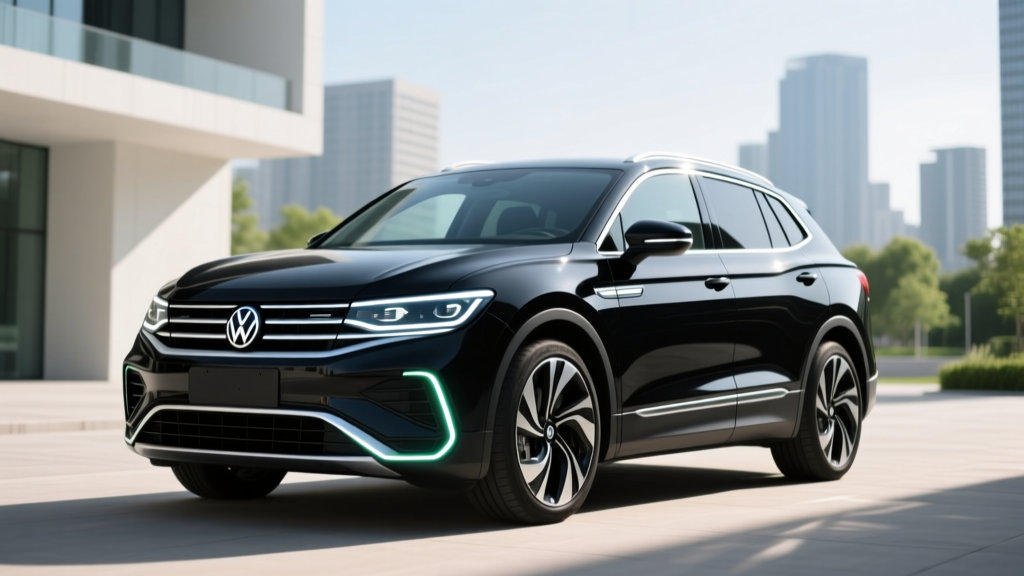
The latest Volkswagen electric Tiguan spy photos and industry reports point to a compact electric SUV positioned as the battery-electric successor to the gas Tiguan, likely branded the ID. Tiguan (or ID.4 successor) for the North American market. Based on VW's MEB platform evolution and the ID.2all concept previewed in Europe, the production model is expected to feature a ~77 kWh usable battery, an EPA-estimated range near 270–300 miles, peak DC fast charging around 175 kW, and a starting MSRP in the $38,000–$42,000 range when it reaches U.S. dealers, likely for the 2027 model year. This vehicle is not yet on sale; all specs below are preliminary estimates based on spy imagery, VW's published platform data, and comparable MEB-based models.
Decoding the Spy Photos: What We Can See
Recent camouflaged prototypes spotted testing in Europe and North America reveal a compact crossover with proportions closely mirroring the current gas Tiguan — upright greenhouse, short overhangs, and a wheelbase stretched to accommodate a floor-mounted battery pack. Key design cues visible through the camouflage include:
- Flush door handles and a sealed front fascia (no grille), confirming a dedicated EV platform rather than a converted ICE chassis.
- Rear-mounted charge port on the passenger side, consistent with VW's MEB architecture (the ID.4 uses the same placement).
- Slightly lower roofline than the ID.4, suggesting a sportier, more car-like profile aimed at Tiguan buyers who want an EV without the ID.4's taller crossover stance.
- Thinner headlamp and taillamp signatures, previewing VW's next-generation ID. design language introduced on the ID.7 sedan.
The test mules appear to ride on an updated version of VW's MEB platform — sometimes referred to internally as MEB+ or MEB Evo — which supports 800-volt architecture for faster charging on higher trims, though base models are expected to retain the 400-volt system used in the current ID.4.
Preliminary Specs: Range, Battery, and Charging
Because Volkswagen has not published official EPA figures, the table below compiles estimated specifications based on the ID.4's known architecture, VW's European ID. family trajectory, and the physical constraints visible in spy shots. Treat these as informed projections, not confirmed data.
| Specification | Estimated (Base RWD) | Estimated (AWD Pro) |
|---|---|---|
| Battery (usable capacity) | ~77 kWh (NMC) | ~77 kWh (NMC) |
| EPA Range (est.) | 280–300 mi | 260–275 mi |
| Real-World Highway Range | ~235–260 mi | ~220–240 mi |
| Cold-Weather Range (20°F) | ~200–225 mi | ~185–210 mi |
| Peak DC Fast Charge | ~175 kW (400V) | ~175–200 kW |
| 10–80% DCFC Time (est.) | ~28–32 min | ~26–30 min |
| Level 2 AC Charge Rate | 11 kW (~37 mi/hr) | 11 kW (~37 mi/hr) |
| Horsepower | ~201 hp | ~295 hp |
| 0–60 mph (est.) | ~7.8 sec | ~5.5 sec |
| Towing Capacity (est.) | ~2,200 lbs | ~2,700 lbs |
Real-World Range Reality Check
The EPA sticker may say 290 miles, but sustained highway driving at 75 mph typically reduces that by 12–18%. In winter conditions (20–30°F), expect a 20–30% reduction due to cabin heating and battery thermal management demands. If your commute is 60+ miles round trip in a cold climate, plan around ~200 miles of usable winter range and charge more frequently.
Understanding the Charge Curve
The "175 kW peak" figure only applies between roughly 10–30% State of Charge (SoC). Like all NMC lithium-ion batteries, the ID. Tiguan's charge rate will taper progressively — likely dropping to ~80 kW by 60% SoC and ~40 kW above 80%. A 10–80% session will average closer to 110–130 kW, not the peak figure. This is normal physics, not a defect, but it's why 10–80% times matter more than peak kW marketing claims.
Estimated Pricing and Federal Tax Credit Eligibility
Volkswagen has not announced U.S. pricing. Based on the current ID.4's MSRP structure and VW's stated goal of making the ID.2/ID. Tiguan family more affordable, here is a projected pricing framework:
| Trim (Projected) | Estimated MSRP | After Est. §30D Credit |
|---|---|---|
| Base RWD (S) | $38,000–$40,000 | ~$30,500–$32,500 |
| Mid RWD (SE) | $42,000–$44,000 | ~$34,500–$36,500 |
| AWD Pro S | $46,000–$48,000 | ~$38,500–$40,500 |
Federal Tax Credit: §30D Rules to Watch
Under current IRS §30D rules, the $7,500 federal credit is split into two $3,750 halves: one for battery-component sourcing and one for critical-minerals sourcing. Eligibility depends on:
- MSRP cap: SUVs must be under $80,000 (the ID. Tiguan clears this easily).
- Buyer income cap: AGI ≤ $150,000 (single) or ≤ $300,000 (joint).
- Battery sourcing: Components and critical minerals must meet escalating domestic/free-trade-agreement thresholds that tighten each year. VW's battery supply chain for U.S.-market MEB vehicles currently relies on SK On cells, and sourcing compliance varies by model year.
- Point-of-sale transfer: Eligible buyers can apply the credit as a down-payment reduction at the dealer rather than waiting for a tax refund.
Key caveat: Sourcing rules are tightening annually. By the time the ID. Tiguan launches, it may qualify for the full $7,500, a partial $3,750, or potentially $0 depending on VW's supply-chain adjustments. Always verify eligibility on the IRS website or with a tax professional before purchase.
Electric Tiguan vs. Gas Tiguan: Cost and Practicality
The gas Tiguan remains Volkswagen's compact SUV volume seller. Here's how the anticipated electric version compares on the metrics that matter to buyers:
| Metric | 2026 Gas Tiguan (2.0T AWD) | ID. Tiguan AWD (Est.) |
|---|---|---|
| Base MSRP | ~$31,000 | ~$46,000 |
| After Fed. Credit | $31,000 | ~$38,500 |
| EPA Range / Tank | ~380 mi (14.5 gal) | ~270 mi (est.) |
| Fuel/Energy Cost per Mile | ~$0.16/mi (gas at $3.50/gal, 24 MPG) | ~$0.05/mi (home charging at $0.14/kWh) |
| Annual Fuel/Energy (12,000 mi) | ~$1,920 | ~$600 (home) / ~$1,320 (public DCFC) |
| Maintenance (5-yr est.) | ~$3,200 | ~$1,400 |
| 5-Year Total Fuel + Maint. | ~$12,800 | ~$4,400 (home) / ~$8,000 (public) |
The electric Tiguan carries a higher upfront cost, but the operating-cost gap is significant — especially for buyers with home charging access. Over five years and 60,000 miles, the EV could save $4,800–$8,400 in combined fuel and maintenance costs, partially offsetting the higher purchase price even before accounting for any state incentives or utility off-peak charging rates.
Real-World Ownership: What First-Time EV Buyers Must Know
Spy shots and spec tables are exciting, but daily ownership hinges on practical logistics. Here are the non-negotiable factors to evaluate before committing to the ID. Tiguan (or any EV):
Home Charging Access Is the Deciding Factor
If you can install a Level 2 (240V) home charger, EV ownership is seamless — you wake up to a full battery every morning, and your "fuel" cost drops to ~$0.04–0.06 per mile depending on your utility rate. A typical Level 2 installation runs $800–$2,500 including the charger unit, electrician labor, and permits, assuming your electrical panel has capacity. If a panel upgrade (to 200A) is needed, add $1,500–$3,500.
If you cannot charge at home (apartment, street parking, no garage), you will rely on public DC fast charging and workplace charging. This raises your per-mile energy cost to $0.10–0.15/mi and adds 25–40 minutes of charging time per week. It's doable, but it erodes much of the cost advantage and convenience that make EVs appealing.
Climate and Driving Pattern Considerations
- Cold climates (Upper Midwest, Northeast): Expect 20–30% range loss in sustained sub-freezing temperatures. A heat pump (expected to be standard or optional on the ID. Tiguan) mitigates this by ~5–10 percentage points but does not eliminate it.
- Highway-heavy commutes: At 75+ mph, aerodynamic drag reduces range by 12–18% vs. the EPA combined figure. A 290-mile EPA rating becomes ~240–255 miles at sustained highway speed.
- Mountain driving: Regenerative braking recovers some energy on descents, but net consumption on mountain passes can spike 25–40% above rated efficiency.
Common Misconceptions About the Electric Tiguan
| Myth | Fact |
|---|---|
| "It's just an ID.4 with a Tiguan badge." | While both use the MEB platform, the ID. Tiguan is expected to feature a redesigned exterior, updated interior architecture, and potentially the MEB Evo platform with improved battery chemistry and faster charging. It is a distinct model, not a rebadge. |
| "I'll get the full $7,500 tax credit automatically." | The §30D credit depends on battery sourcing, your income, and the vehicle's MSRP. By the ID. Tiguan's launch year, sourcing thresholds will be stricter. You may qualify for $7,500, $3,750, or $0. Verify on IRS.gov at time of purchase. |
| "175 kW charging means 175 kW the whole session." | Peak rate applies only at low SoC. The average rate over a 10–80% session will be roughly 110–130 kW. Plan stops based on the 10–80% time (~28–32 min), not the peak number. |
| "EV batteries need replacing every 5 years." | VW covers its EV batteries with an 8-year/100,000-mile warranty against degradation below 70% capacity. Industry data shows modern NMC packs retaining 85–92% capacity at 100,000 miles under normal use. |
| "It will be self-driving." | The ID. Tiguan will feature VW's IQ.DRIVE suite — a Level 2 driver-assistance system with adaptive cruise, lane centering, and automated lane changes. Per SAE definitions, Level 2 requires continuous driver supervision. It is not autonomous. |
SAE Automation Level: What IQ.DRIVE Actually Does
VW's IQ.DRIVE is a Level 2 system. It can manage steering, acceleration, and braking on highways, but you must keep your hands on or near the wheel and monitor the road at all times. It will not navigate construction zones, unmapped roads, or complex urban scenarios without intervention. Only Level 4 services (Waymo, Zoox) operate without a human driver — and those are limited to geofenced areas.
Decision Framework: Should You Wait for the ID. Tiguan?
If X, Then Y
- If you need an EV now and want a VW electric SUV → Buy the current ID.4 (EPA 275 mi, ~$39,735 base). It's available today, may qualify for partial or full §30D credit, and shares the same fundamental MEB platform.
- If you can wait 12–18 months and prefer Tiguan styling proportions → The ID. Tiguan is worth waiting for. Expect updated tech, potentially faster charging, and a more car-like driving position.
- If you lack home charging → Consider a PHEV (plug-in hybrid) like the Toyota RAV4 Prime or VW's own upcoming PHEV models. You get 30–40 miles of electric range for daily commuting with a gas engine for longer trips — no charging-desert anxiety.
- If your budget is under $35,000 → The ID. Tiguan's base MSRP will likely exceed $38,000 even before the credit. Look at the Chevy Equinox EV (~$33,000 base) or a certified pre-owned ID.4 or Tesla Model Y.
- If you regularly tow or haul → The ID. Tiguan's estimated ~2,200–2,700 lb towing capacity is adequate for a small trailer or bike rack, but not a boat or camper. For heavier towing, consider the Ford F-150 Lightning or Rivian R1S.
- If you live in a charging desert (rural areas with sparse DCFC infrastructure) → Verify that EPA-estimated range covers your typical round trips with a 20% buffer, and map Electrify America, Tesla Supercharger (via adapter), or ChargePoint stations along your common routes before committing.
Release Timeline: When Can You Buy It?
Volkswagen has confirmed an expanded EV lineup for North America through 2027–2028, and European-market ID. Tiguan equivalents are in advanced development. Based on typical VW product cycles and spy-shot maturity (prototypes are in mid-stage testing with partial camouflage), the most likely timeline is:
- Official reveal: Late 2026 or early 2027
- U.S. market launch: As a 2027 or 2028 model year, arriving at dealers in mid-to-late 2027
- First deliveries: Q3–Q4 2027 (optimistic) or Q1 2028 (conservative)
Reservations have not opened. VW typically allows dealer-level interest lists before official order banks go live. Contact your local VW dealer if you want to be notified, but do not place deposits until official pricing and specs are published.
What We Don't Know Yet
Until Volkswagen publishes official specifications, the following remain unconfirmed: exact battery capacity and chemistry supplier, final EPA range certification, DC charging curve validation, trim-level pricing, §30D tax credit eligibility at launch, and whether an 800V architecture will be offered on any trim. All figures in this article are estimates subject to change.
Frequently Asked Questions
Will the electric Tiguan replace the gas Tiguan?
Not immediately. Volkswagen is expected to sell the gas Tiguan alongside the ID. Tiguan for at least one to two model years, allowing the market to transition. VW has committed to a largely electric lineup by 2030 in Europe, but U.S. timelines are more gradual and depend on charging infrastructure growth and consumer demand.
Will it use the Tesla NACS charging connector?
Volkswagen has announced that future North American EVs will adopt the NACS (North American Charging Standard) connector, granting access to Tesla Supercharger stations. Whether the ID. Tiguan launches with NACS natively or ships with a CCS-to-NACS adapter will depend on its exact launch date and VW's transition timeline. Expect NACS compatibility one way or another.
How does it compare to the Hyundai Ioniq 5 or Tesla Model Y?
The Ioniq 5 offers 303 miles of EPA range, 800V architecture (10–80% in ~18 min), and a starting price around $42,000. The Model Y Long Range delivers 310 miles, 250 kW peak charging, and access to the Supercharger network natively. The ID. Tiguan will need to compete on price (likely undercutting both), interior quality, and VW's dealer-service network to stand out in an increasingly crowded segment.
What battery chemistry will it use?
VW's MEB platform currently uses NMC (nickel manganese cobalt) lithium-ion cells supplied primarily by SK On for North American models. Some global-market VW EVs are adopting LFP (lithium iron phosphate) for base trims — LFP offers longer cycle life and lower cost but sacrifices ~10–15% energy density. Whether the U.S. ID. Tiguan gets an LFP option is unconfirmed.
Is it eligible for state EV incentives?
State incentives vary widely and change frequently. California, Colorado, New York, and several other states offer additional rebates or tax credits ranging from $1,000 to $7,500 on top of the federal §30D credit. Check your state's energy or environmental agency website for current programs, and confirm eligibility before purchase — some state incentives have income caps, MSRP caps, or residency requirements.