Quick Answer: Are Volkswagen Electric Car Specials Worth It in 2026?
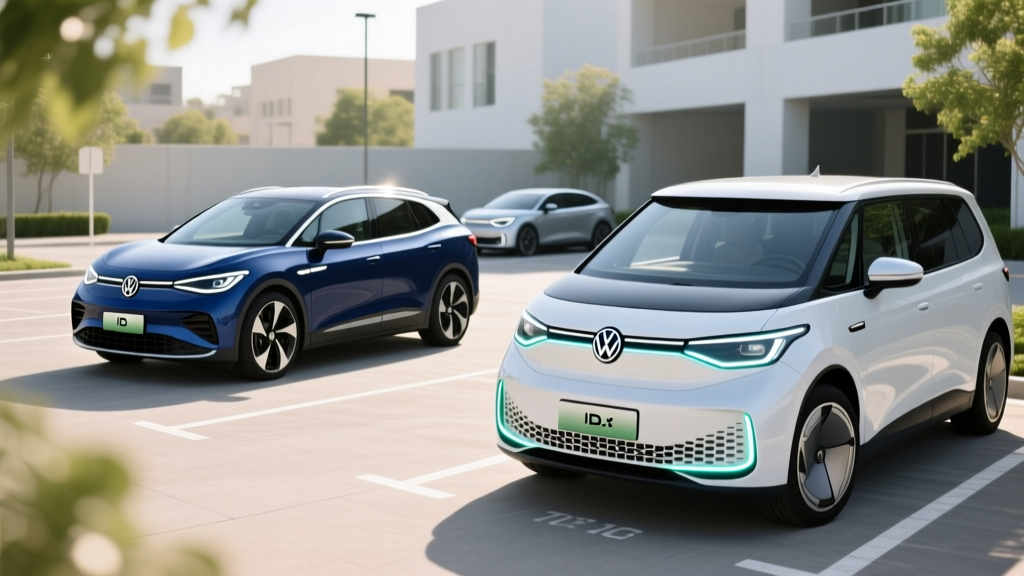
Volkswagen's current EV lineup — anchored by the ID.4 crossover and the newly expanded ID.7 sedan — is among the most aggressively discounted in the mainstream EV market. As of early 2026, VW dealers are offering lease deals as low as $299/month on the ID.4 Pro (36 months, $3,499 due at signing), and cash-back incentives of $2,000–$4,500 on purchases, often stackable with the federal §30D tax credit (up to $7,500, subject to income and battery-sourcing rules). The ID.4 starts at $39,735 MSRP and delivers an EPA-estimated 291 miles of range (Pro trim, RWD). For buyers who can charge at home and drive under 40 miles daily, these specials make the ID.4 one of the most cost-effective electric crossovers available.
Current Volkswagen EV Lineup: What's Available in 2026
Volkswagen's U.S. electric vehicle portfolio has matured significantly. Here's what you can actually buy or lease right now:
| Model | Trim | EPA Range | Battery (kWh) | Peak DC Charge | 10–80% Time | 0–60 mph | MSRP |
|---|---|---|---|---|---|---|---|
| ID.4 | Pro (RWD) | 291 mi | 82 kWh (NMC) | 175 kW | ~28 min | 7.7 sec | $39,735 |
| ID.4 | Pro S (RWD) | 291 mi | 82 kWh (NMC) | 175 kW | ~28 min | 7.7 sec | $44,735 |
| ID.4 | Pro S AWD | 263 mi | 82 kWh (NMC) | 175 kW | ~28 min | 5.4 sec (335 HP) | $48,735 |
| ID.7 | Pro S | 340 mi | 86 kWh (NMC) | 200 kW | ~26 min | 6.5 sec | $49,995 |
The ID.4 remains VW's volume electric seller, built at the Chattanooga, Tennessee plant. The ID.7 sedan, now in its second U.S. model year, targets buyers who want a Tesla Model 3 alternative with a more traditional cabin layout. Both use VW's MEB platform with NMC (nickel manganese cobalt) battery chemistry, prioritizing energy density over the extreme cycle life of LFP packs.
Real-World Range Reality Check
EPA sticker: 291 miles (ID.4 Pro RWD). Expect in practice: ~240–260 miles on highway trips at 70+ mph; ~200–220 miles in sub-freezing winter conditions. The ID.4's thermal management system includes a heat pump (standard on Pro S trims), which mitigates cold-weather cabin-heating drain but doesn't fully eliminate range loss. If your commute is under 50 miles round-trip, range will rarely be a concern. For frequent 300+ mile road trips, plan one DC fast-charge stop every 2.5–3 hours.
Breaking Down Volkswagen Electric Car Specials: Lease vs. Purchase
VW's incentive strategy in 2026 leans heavily on lease deals, but purchase incentives are also available. Here's how the numbers stack up:
Lease Specials (Typical Current Offers)
- ID.4 Pro: $299/month, 36 months, $3,499 due at signing (money factor ~0.00125, equivalent to ~3% APR)
- ID.4 Pro S AWD: $399/month, 36 months, $3,999 due at signing
- ID.7 Pro S: $449/month, 36 months, $4,499 due at signing
Key lease advantage: VW often applies a $7,500 lease cash incentive (structured as a capitalized cost reduction), which effectively passes through the commercial clean vehicle credit (§45W) that the leasing company qualifies for. This means you benefit from the full federal incentive regardless of your personal income level or the vehicle's battery-sourcing compliance. This is a significant loophole advantage over purchasing.
Purchase Incentives
- Customer cash: $2,000–$4,500 depending on trim and region (varies monthly)
- Federal §30D tax credit: Up to $7,500, available as a point-of-sale transfer to the dealer (reduces your purchase price directly), but subject to:
§30D Federal Tax Credit Eligibility Checklist (2026)
- Buyer income cap: AGI ≤ $150,000 (single) / ≤ $300,000 (joint) — per IRS guidelines
- MSRP cap: ≤ $80,000 for SUVs/pickups/vans (ID.4 qualifies); ≤ $55,000 for sedans (ID.7 qualifies)
- Battery sourcing: Critical minerals and battery components must meet escalating domestic-content thresholds; verify with your dealer for the specific VIN
- Point-of-sale transfer: You can assign the credit to the dealer at purchase, reducing your out-of-pocket cost immediately rather than waiting for tax filing
- Annual limit: One new EV credit per taxpayer per calendar year
Cost of Ownership: Volkswagen ID.4 vs. Gas Compact SUV
The real question isn't the sticker price — it's what you'll spend over five years. Let's compare the ID.4 Pro (RWD) against a popular gas alternative, the Tiguan 2.0T SE (MSRP ~$33,000), over 5 years and 75,000 miles.
| Cost Category | ID.4 Pro (EV) | Tiguan SE (Gas) |
|---|---|---|
| Purchase Price (MSRP) | $39,735 | $33,000 |
| Federal Tax Credit | −$7,500 (if eligible) | $0 |
| Effective Purchase Price | $32,235 | $33,000 |
| Fuel/Energy (75k mi) | $3,375 (home L2, $0.135/kWh avg) | $9,375 (25 MPG combined, $3.75/gal) |
| Maintenance (5 yr) | $1,200 (cabin filter, tire rotation, fluid top-off) | $3,500 (oil changes, brakes, filters) |
| Insurance (5 yr avg) | $9,500 | $7,500 |
| Estimated Depreciation | $14,000 | $12,500 |
| 5-Year Total Cost | $60,310 | $65,875 |
Net savings with the ID.4: ~$5,565 over 5 years, assuming you qualify for the full federal credit and charge primarily at home. If you rely exclusively on public DC fast charging (averaging $0.40–$0.50/kWh), your energy cost jumps to ~$8,000–$10,000 over 75,000 miles, erasing much of the advantage. Home charging access is the single biggest variable in EV ownership economics.
According to EPA fuel economy data, the ID.4 Pro achieves 107 MPGe combined (31 kWh/100 miles), while the Tiguan returns 26 MPG combined. At current national average electricity and gas prices, the ID.4 costs roughly $0.045 per mile to fuel at home versus $0.125 per mile for the Tiguan.
Real-World Ownership Considerations Before You Buy
Home Charging: The Make-or-Break Factor
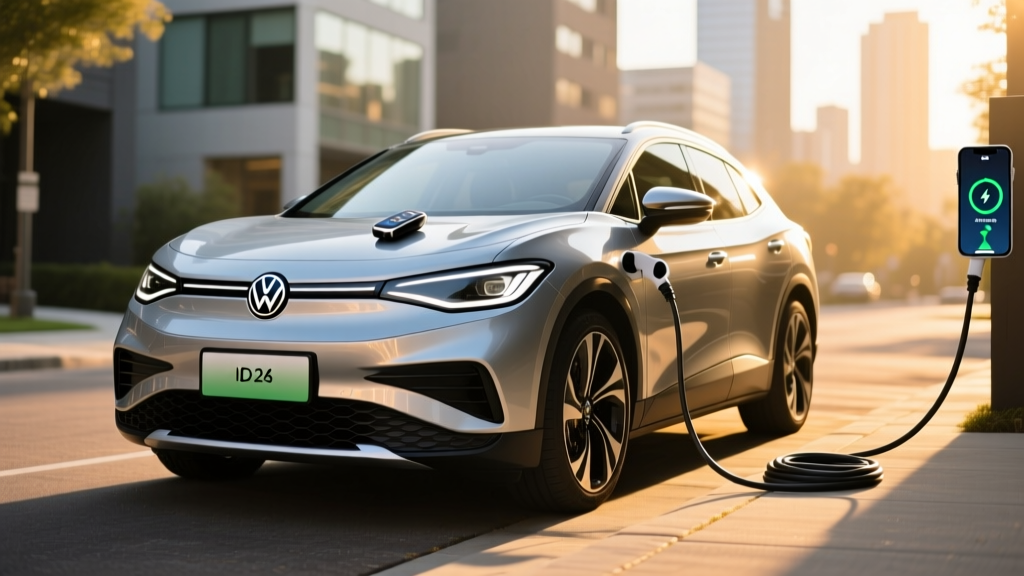
The ID.4 supports Level 2 AC charging at up to 11 kW (48 amps), which adds roughly 35–40 miles of range per hour. A full overnight charge (8–10 hours) easily replenishes the 82 kWh battery. However, installing a Level 2 home charger requires:
- A 240V circuit (NEMA 14-50 outlet or hardwired) on a 50- or 60-amp breaker
- Electrical panel capacity: most homes need 100–200 amp service; older homes with 100A panels may need a $1,500–$3,000 panel upgrade
- Installation cost: $500–$2,500 depending on panel proximity, conduit run length, and local permitting
| Charging Level | Power | Miles Added/Hour | Typical Use Case |
|---|---|---|---|
| Level 1 (120V) | 1.4 kW | ~4–5 mi/hr | Emergency/trickle; not practical for daily use |
| Level 2 (240V) | 7.2–11 kW | 25–40 mi/hr | Home daily charging; overnight full charge |
| DC Fast Charge | 50–175 kW | ~150–250 mi in 30 min | Road trips; 10–80% in ~28 minutes |
Climate and Driving Patterns
If you live in a region with harsh winters (sustained temps below 30°F), expect 20–30% range reduction due to battery chemistry limitations and cabin heating demand. The ID.4's available heat pump (standard on Pro S and above) recovers some efficiency by scavenging waste heat from the drivetrain, but it doesn't eliminate cold-weather losses entirely. Preconditioning the cabin and battery while plugged in — using the VW Car-Net app — mitigates this significantly.
For drivers in Sun Belt states or mild coastal climates, the ID.4's range holds much closer to its EPA estimate year-round. If your typical drive is stop-and-go city traffic, regenerative braking actually improves efficiency versus highway cruising.
Common Misconceptions About Volkswagen EVs
| Myth | Fact |
|---|---|
| "VW EV batteries degrade quickly and cost $20K to replace" | VW's 82 kWh NMC pack carries an 8-year/100,000-mile warranty guaranteeing ≥70% capacity retention. Real-world data from European ID.4 fleets shows ~5–7% degradation at 60,000 miles. Full replacement (rarely needed) costs $12,000–$16,000, but individual module repair is possible for less. |
| "The ID.4 can't road-trip because charging is too slow" | At 175 kW peak DC charging, the ID.4 adds ~150 miles in 15 minutes. The charge curve tapers above 80% SoC (common to all NMC batteries), so plan 10–80% stops rather than 10–100%. On Electrify America's 350 kW stations, the ID.4 charges at its maximum supported rate without bottleneck. |
| "I need a Tesla to use Superchargers" | Tesla's NACS connector is opening to non-Tesla EVs. VW has announced that 2026+ ID.4 models will ship with a NACS charge port, granting native access to Tesla Supercharger stations (now over 25,000 in North America). Current CCS-equipped ID.4s can use a NACS adapter. |
| "EV insurance is unreasonably expensive" | EV insurance premiums run 15–25% higher than gas equivalents, primarily due to higher repair costs after collisions (specialized labor, battery safety protocols). However, the gap has narrowed as body shops gain EV certification. Shop quotes from GEICO, Progressive, and EV-specialty insurers like Lemonade or Root. |
Decision Framework: Is a Volkswagen Electric Car Special Right for You?
Choose the ID.4 If:
- You have access to home Level 2 charging (garage, driveway, or employer-installed charger)
- Your daily driving is under 80 miles round-trip, with occasional 200–300 mile road trips
- You want a mainstream-brand EV with a physical dealer network for service, not a direct-to-consumer-only brand
- You qualify for the §30D tax credit (or can leverage the lease loophole) and the effective price drops below $33,000
- You value a comfortable, quiet ride over sporty handling — the ID.4 is tuned for comfort, not corner-carving
Choose the ID.7 If:
- You want 340+ miles of EPA range for frequent longer commutes or road trips
- You prefer a sedan profile with a lower drag coefficient and slightly better highway efficiency
- You're cross-shopping the Tesla Model 3, Hyundai Ioniq 6, or BMW i4 and want a more traditional interior
Look Elsewhere If:
- You cannot charge at home or work and your area has sparse public charging infrastructure — public DC charging at $0.40–$0.50/kWh erases most fuel savings
- You regularly tow more than 2,700 lbs (the ID.4's max tow rating) or need three-row seating
- You live in an extreme cold climate and regularly drive 200+ miles in sub-zero temperatures — consider a PHEV like the Toyota RAV4 Prime as a bridge
- You prioritize the latest ADAS features — VW's Travel Assist is a competent SAE Level 2 system, but it doesn't match Tesla's FSD (Supervised) or GM's Super Cruise in hands-free highway capability
Driver-Assist Clarity
Volkswagen's Travel Assist combines adaptive cruise control and lane-centering into a single SAE Level 2 driver-assistance system. This means the car can manage steering, acceleration, and braking on marked highways — but you must keep your hands on the wheel and eyes on the road at all times. It is not autonomous driving. The system will alert you and gradually decelerate if it detects inattention.
Frequently Asked Questions
Are Volkswagen electric car specials stackable with the federal tax credit?
Yes, in most cases. VW's dealer cash incentives and customer cash offers are typically stackable with the §30D federal tax credit (up to $7,500). When you use the point-of-sale transfer option, the dealer reduces your purchase price by the credit amount at signing. Lease deals often include a separate $7,500 lease cash incentive applied as a cap cost reduction, which works independently of your personal tax situation. Always confirm stackability with your specific dealer, as regional offers vary.
What's the real-world charging cost for the ID.4 vs. filling up a gas Tiguan?
At the U.S. average residential electricity rate of ~$0.16/kWh (per EIA data), fully charging the ID.4's 82 kWh battery costs approximately $13.12, yielding 291 miles of range — about $0.045 per mile. Filling the Tiguan's 15.3-gallon tank at $3.50/gallon costs ~$53.55 for roughly 370 miles — about $0.145 per mile. Over 15,000 annual miles, the ID.4 saves roughly $1,500 per year in energy costs when charging at home.
Does the ID.4 qualify for the full $7,500 federal tax credit in 2026?
The ID.4 is assembled in Chattanooga, TN, which satisfies the North American final assembly requirement. However, the full $7,500 credit depends on two sub-requirements: critical minerals sourcing (must meet escalating percentage thresholds from qualifying trade partners) and battery component manufacturing (must not contain components from a "foreign entity of concern"). For the 2026 model year, VW has stated that most ID.4 trims qualify for the full $7,500, but you should verify with the dealer for the specific VIN and consult IRS guidance or a tax professional for your personal eligibility.
How does the ID.4 compare to the Hyundai Ioniq 5 or Tesla Model Y?
The ID.4 prioritizes ride comfort and cabin quietness over the Ioniq 5's retro-futuristic design and 800V ultra-fast charging architecture (10–80% in ~18 min at 350 kW vs. the ID.4's ~28 min at 175 kW). The Tesla Model Y offers superior Supercharger network access (for now), faster acceleration, and more cargo volume, but its ride quality is firmer and its service model lacks traditional dealerships. The ID.4's advantage is its combination of dealer-network support, competitive range, and aggressive pricing when VW specials are active. See EPA side-by-side comparison data for efficiency figures.
What happens if the ID.4 battery fails outside the warranty period?
VW's high-voltage battery warranty covers 8 years or 100,000 miles (whichever comes first), guaranteeing at least 70% of original capacity. Complete battery failure after warranty is uncommon — most degradation is gradual. If replacement is needed, expect $12,000–$16,000 for a new pack, though third-party refurbishers are emerging with options in the $6,000–$9,000 range. Individual module replacement (the ID.4 pack contains 12 modules) can address localized cell failures for $1,000–$2,500 per module. By the time most ID.4s exit warranty, aftermarket and refurbished battery options should be more widely available and affordable.