The Quick Answer
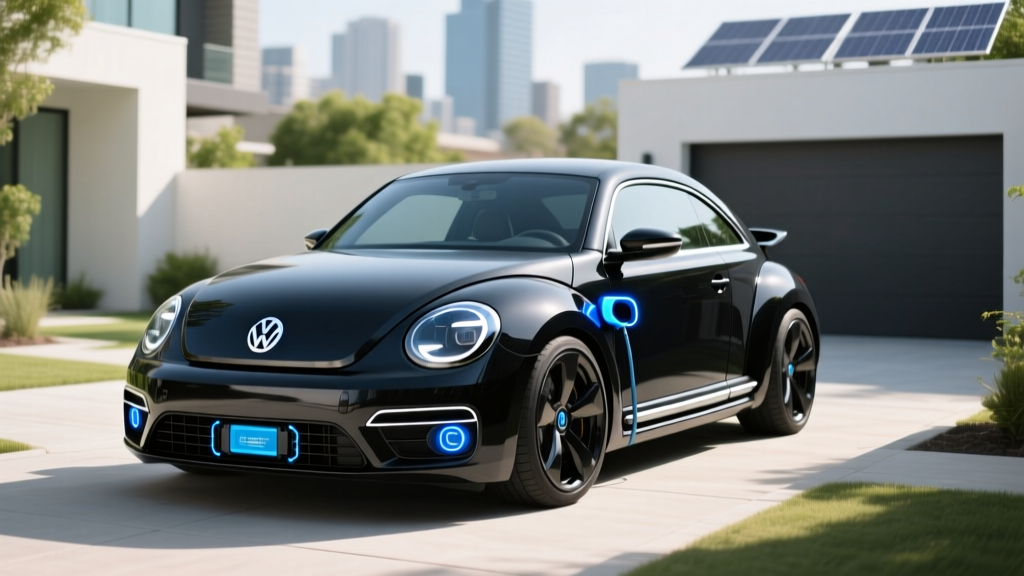
A Volkswagen Bug electric conversion typically costs between $15,000 and $40,000+ on top of the donor vehicle price, depending on battery capacity, motor choice, and whether you go DIY or hire a shop. Most conversions yield 60–150 miles of real-world range with a 20–40 kWh battery pack, charge on Level 2 (3.3–7.2 kW) in 4–10 hours, and produce 80–200+ horsepower — a massive upgrade from the original 40–60 HP flat-four. The biggest ownership considerations are the lack of federal tax credits for conversions, limited DC fast-charging capability, and the need for reliable home Level 2 charging access.
Why Convert a Classic VW Beetle to Electric?
The air-cooled Volkswagen Beetle (Type 1, produced 1938–2003 globally) is one of the most popular donor vehicles for EV conversions worldwide. The reasons are mechanical and cultural:
- Lightweight platform: A classic Beetle weighs roughly 1,800–2,000 lbs curb, meaning even a modest 20 kWh battery pack and 100 kW motor deliver lively performance.
- Simple drivetrain: The rear-engine, rear-wheel-drive layout with a transaxle makes it straightforward to mate an electric motor to the existing transmission or swap in a direct-drive unit.
- Parts availability: Decades of Beetle production mean donor cars and replacement parts are abundant and affordable.
- Reliability upgrade: The original air-cooled engine is charming but slow, thirsty for its size (~25 MPG combined), and maintenance-intensive. An EV swap eliminates oil changes, carburetor tuning, valve adjustments, and exhaust work.
For owners who love the Beetle's design but want daily-driver practicality — especially in urban areas with low-emission zones or congested commuting — a Volkswagen Bug electric conversion bridges nostalgia and modern drivability.
How a VW Beetle EV Conversion Works: Components & Specs
Every conversion replaces the internal combustion engine and fuel system with an electric powertrain. Here's what goes in and what typical specs look like in 2026:
| Component | Budget Build | Mid-Range Build | Premium Build |
|---|---|---|---|
| Battery Capacity | 15–20 kWh (LFP or salvaged NMC) | 25–35 kWh (NMC modules) | 40–60 kWh (new NMC/LFP pack) |
| Motor Output | 60–80 kW (~80–107 HP) | 100–150 kW (~134–201 HP) | 150–200+ kW (~201–268+ HP) |
| Motor Type | Brushed DC or salvaged AC induction | AC induction or permanent magnet (e.g., NetGain, HPEVS) | OEM-sourced PMSM (Tesla drive unit, Cascadia Motion) |
| Estimated Range (Real-World) | 50–70 miles | 80–120 miles | 120–180 miles |
| Level 2 Charge Rate | 1.9–3.3 kW | 3.3–6.6 kW | 6.6–7.2 kW |
| Level 2 Charge Time (0–100%) | 6–10 hours | 5–8 hours | 6–10 hours |
| DC Fast Charging | Not available | Rare / aftermarket add-on | Available on select premium builds (CCS, 25–50 kW) |
| 0–60 mph | ~10–14 seconds | ~6–9 seconds | ~4–6 seconds |
| Regenerative Braking | Minimal or none | Single-mode regen | Adjustable regen, one-pedal capable |
Key distinction — kW vs kWh: The battery capacity is measured in kilowatt-hours (kWh), which is the energy stored — think of it as the "tank size." The motor output and charge rate are measured in kilowatts (kW), which is the power — the rate of energy delivery or acceptance. A 30 kWh battery charged at 6.6 kW takes roughly 4.5 hours from empty to full (30 ÷ 6.6 ≈ 4.5).
The Real Cost Breakdown: Conversion, Charging, and Ownership
This is where most prospective converters underestimate the investment. Here's a realistic 2026 cost breakdown:
| Category | Gas Beetle (Original) | Budget EV Conversion | Mid-Range EV Conversion |
|---|---|---|---|
| Donor Vehicle | $5,000–$15,000 | $5,000–$10,000 | $8,000–$15,000 |
| Conversion Cost (Parts + Labor) | N/A | $12,000–$18,000 | $22,000–$35,000 |
| Total Build Cost | $5,000–$15,000 | $17,000–$28,000 | $30,000–$50,000 |
| Home Level 2 Charger Install | $0 | $500–$2,000 | $500–$2,000 |
| Annual "Fuel" Cost (12,000 mi/yr) | ~$1,680 (25 MPG @ $3.50/gal) | ~$480 (3.5 mi/kWh @ $0.14/kWh) | ~$480 |
| Annual Maintenance | ~$800–$1,500 | ~$200–$400 | ~$200–$400 |
| Insurance (Annual) | ~$600–$900 | ~$900–$1,400 (specialty/classic) | ~$900–$1,400 |
| 5-Year Operating Cost | $12,400–$16,500 | $6,900–$11,000 | $6,900–$11,000 |
The bottom line: The EV conversion saves roughly $1,000–$1,500 per year in fuel and maintenance. Over five years, that's $5,000–$7,500 in savings — not enough to recoup the conversion premium unless you plan to keep the car long-term and value the driving experience, reliability, and emissions reduction. This is a passion project, not a pure financial play.
Federal Tax Credits and Incentives: What Applies to Conversions?
Here's a critical point that catches many converters off guard: the federal §30D Clean Vehicle Credit does not apply to EV conversions of existing vehicles. According to IRS guidelines, the credit is reserved for new or previously-owned qualified plug-in electric vehicles purchased from a manufacturer or dealer — not custom-converted vehicles.
Additionally:
- State incentives vary widely. Some states (California, Colorado, New York) offer rebates for EV purchases, but most exclude conversions. Check your state's energy or DMV website for specifics.
- Alternative Fuel Vehicle Refueling Property Credit (§30C) may apply to your home Level 2 charger installation — up to $1,000 for residential charging equipment, subject to income and location requirements. This is one credit that conversion owners can typically claim.
- Utility rebates: Many electric utilities offer $250–$500 rebates for installing a Level 2 home charger. Check with your local provider.
EV Conversion vs. Buying a Modern EV: The Honest Comparison
If your goal is simply "drive an electric car," a new or used production EV will outperform a conversion in nearly every measurable spec. The conversion path only makes sense if the Beetle itself is the point.
| Attribute | VW Beetle EV Conversion (Mid-Range) | 2026 Chevrolet Bolt EV | 2026 Hyundai Kona Electric |
|---|---|---|---|
| Total Cost | $30,000–$50,000 | ~$28,000 (MSRP, before credit) | ~$34,000 (MSRP, before credit) |
| Federal Tax Credit Eligible | No | Up to $7,500 (subject to §30D rules) | Up to $7,500 (subject to §30D rules) |
| EPA-Certified Range | Not EPA-certified (~80–120 mi est.) | 259 mi (EPA) | 261 mi (EPA) |
| Battery Warranty | Varies by installer (1–3 yr typical) | 8 yr / 100,000 mi | 10 yr / 100,000 mi |
| DC Fast Charging | Rare (25–50 kW if equipped) | 55 kW (CCS), 10–80% in ~45 min | 100+ kW, 10–80% in ~40 min |
| Safety Features | 1960s structure, no airbags (pre-1990s), no ADAS | Full ADAS suite, airbags, IIHS-rated | Full ADAS suite, airbags, IIHS-rated |
| Resale Market | Niche, value depends on build quality | Established used-EV market | Established used-EV market |
A mid-range Beetle conversion at $35,000–$45,000 total cost delivers half the range, no fast charging, no warranty safety net, and no federal credit compared to a new Bolt or Kona Electric. The conversion wins on character, style, and the satisfaction of driving a hand-built machine — intangibles that don't show up in spec sheets.
Real-World Ownership: What First-Time EV Converters Must Know
Home Charging Is Essentially Mandatory
With 60–120 miles of range and no DC fast charging on most builds, you must have reliable home charging. A Level 2 home charger (240V, 32–48 amp circuit) is the standard. Expect to pay $500–$1,200 for the charger unit (e.g., Emporia Vue, ChargePoint Home Flex, Grizzl-E) and $500–$2,000 for professional installation by a licensed electrician, depending on whether your panel needs a 200-amp upgrade. Without home charging, a conversion with limited range becomes impractical for daily use.
Cold Weather Hits Range Hard
Most conversion battery packs lack the sophisticated thermal management systems found in production EVs. In sub-40°F weather, expect 20–40% range loss depending on whether the pack has any active heating. A 100-mile summer range can drop to 60–75 miles in January. If you live in a cold climate, oversize your battery by at least 30% beyond your daily driving needs.
Insurance Requires a Specialty Provider
Standard auto insurers often struggle to properly value a converted vehicle. You'll likely need a classic/specialty car insurer (Hagerty, Grundy, American Collectors) that offers agreed-value policies. Get a quote before starting the build — premiums of $900–$1,400/year are typical, but some insurers may decline coverage or require specific documentation of the conversion components.
Safety Is the Biggest Compromise
A classic Beetle's structure was designed in the 1930s. There are no crumple zones by modern standards, no electronic stability control, no airbags (on pre-1990s models), and no ADAS features. Adding 300–600 lbs of batteries changes the weight distribution and braking dynamics. Upgrading to disc brakes, reinforced suspension, and a proper roll bar is strongly recommended. This is not a family car for highway commuting in mixed traffic.
Common Misconceptions About VW Beetle EV Conversions
| Myth | Fact |
|---|---|
| "Conversions are cheap — you can do it for $5,000." | A bare-bones DIY build with salvaged components might approach $10,000–$12,000 in parts alone. A safe, reliable conversion with a quality battery pack, BMS, and proper wiring starts around $15,000 and goes up from there. |
| "You'll get 200+ miles of range." | Only premium builds with 40+ kWh packs achieve 150+ miles. Most conversions in the $20K–$30K range deliver 60–120 miles — enough for city driving, not road trips. |
| "I can fast-charge it at any public station." | Most conversions use Level 2 (J1772) charging only. DC fast charging requires additional hardware (CCS or CHAdeMO inlet, high-voltage contactors, compatible BMS) that adds $2,000–$5,000 and is still limited to 25–50 kW on most builds. |
| "The $7,500 federal tax credit applies." | It does not. The §30D credit applies only to qualifying new or used production EVs, not custom conversions. See IRS §30D guidelines. |
| "It'll be as safe as a modern EV." | A 1960s–1970s Beetle chassis cannot match modern crash structures. The EV drivetrain adds weight and torque that the original brakes and suspension weren't designed for. Safety upgrades are essential. |
Decision Framework: Is a Volkswagen Bug Electric Conversion Right for You?
Choose the EV Conversion If:
- You already own (or have access to) a Beetle you love and want to preserve as a daily driver
- Your daily driving is under 50 miles round-trip, mostly urban/suburban
- You have home charging (garage or driveway with 240V access)
- You value the project experience and customization as much as the end result
- You accept the safety trade-offs and will invest in brake/suspension upgrades
- You plan to keep the car 5+ years and aren't counting on resale value
Buy a Modern Production EV Instead If:
- You need 200+ miles of range for commuting or road trips
- You want DC fast charging for travel beyond your local area
- You need a full safety suite (airbags, ADAS, crash-tested structure)
- You want federal tax credit eligibility ($7,500 under current §30D rules, income and sourcing permitting)
- You want a manufacturer warranty on the battery and powertrain (8–10 years, 100,000 mi)
- Your priority is the lowest total cost of ownership, not the driving experience of a classic
Frequently Asked Questions
How long does a VW Beetle EV conversion take?
A professional shop typically takes 3–6 months from start to finish, depending on the build complexity and parts availability. A DIY conversion by an experienced builder can take 200–400 hours spread over several months. First-time DIYers should budget a full year.
Can I do a Volkswagen Bug electric conversion myself?
Yes, if you have solid electrical knowledge, fabrication skills, and comfort working with high-voltage systems (typically 96V–400V DC). Companies like EV West, HPEVS, and Thunderstruck Motors sell conversion kits specifically designed for the Beetle platform. However, improper high-voltage wiring can be lethal — if you're not confident, hire a professional.
What battery chemistry is best for a Beetle conversion?
For most builds, LFP (lithium iron phosphate) is the recommended chemistry due to its superior thermal stability, longer cycle life (3,000–5,000+ cycles), and lower fire risk compared to NMC. LFP cells are slightly heavier and less energy-dense, but in a lightweight Beetle, the weight penalty is manageable. NMC packs offer more range per pound but require more careful thermal management.
Will my converted Beetle need to pass emissions testing?
In most US states, once a vehicle is converted to full electric, it is exempt from emissions testing. However, you must update your vehicle registration to reflect the electric powertrain. Contact your state DMV for the specific process — some states require a special inspection or affidavit.
How does the conversion affect resale value?
Resale is highly variable and depends on build quality, documentation, component brands, and the buyer market. Well-documented conversions by reputable shops (e.g., Zelectric, Icon) can command $40,000–$80,000+ from collectors. Undocumented DIY builds may sell for less than the sum of their parts. Keep every receipt, wiring diagram, and component spec sheet.
Can I still drive my converted Beetle on the highway?
Technically yes, but most conversions with 80–120 miles of range and top speeds of 70–90 mph are better suited to surface streets. Highway driving also consumes significantly more energy (expect 20–30% less range at 65+ mph vs. city driving). The lack of modern safety features makes extended highway use inadvisable.
Sources: IRS Clean Vehicle Tax Credits, fueleconomy.gov (EPA), NHTSA