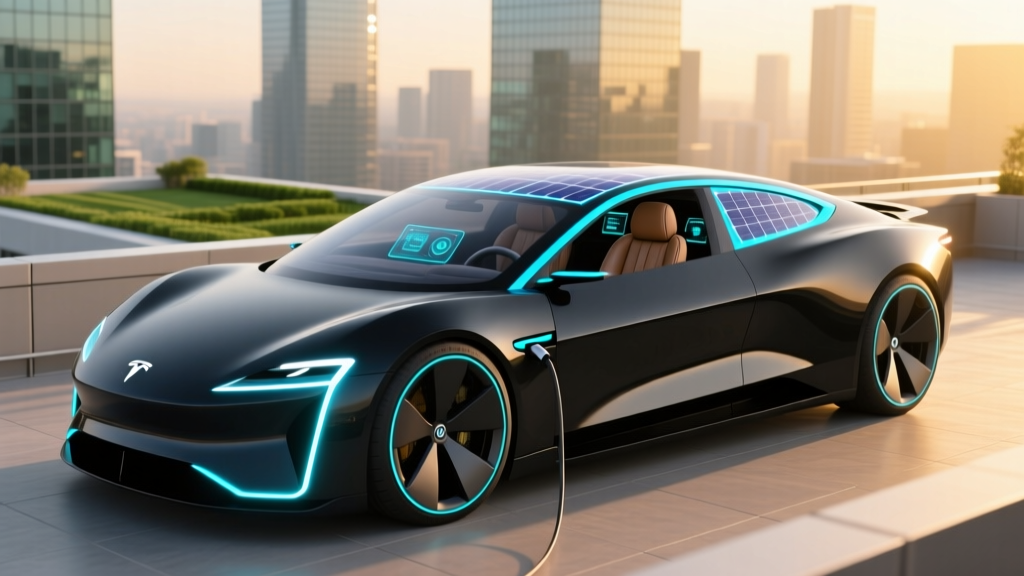
Searches for the Viptoria Tesla leak have surged across EV forums and Reddit threads over the past several weeks, with users pointing to a cache of alleged internal documents and supply-chain manifests that describe a compact, sub-$30,000 Tesla — widely referred to in industry circles as the "Model 2" or "Redwood" project. Before we go further: no Tesla compact EV has been officially announced, priced, or listed for sale as of early 2026. What follows is a data-driven analysis of the rumored specifications surfaced by the Viptoria leak, cross-referenced against Tesla's known battery roadmap, the competitive sub-$35K EV market, and current federal tax-credit rules.
If even half of these leaked specs hold true at launch, this vehicle would directly challenge the Chevrolet Bolt EV (reintroduced for 2026), the Hyundai Kona Electric, and the base Nissan Leaf. Here is what we know, what we can reasonably project, and what buyers should watch for before making any purchase decisions.
What the Viptoria Tesla Leak Actually Claims
The documents attributed to the Viptoria leak outline a next-generation Tesla compact built on a heavily revised version of the Model 3/Y platform, with key manufacturing cost reductions driven by Tesla's "unboxed" production process. The rumored specifications include:
- Projected EPA range: 275–310 miles (single-motor RWD variant)
- Battery capacity: ~50–55 kWh usable, CATL-supplied LFP (lithium iron phosphate) cells
- Peak DC fast-charge rate: ~170 kW
- 10–80% DC fast-charge time: ~25 minutes (estimated)
- Drivetrain: Rear-wheel drive (single motor), ~250 hp
- 0–60 mph: ~5.8 seconds
- Target base MSRP: ~$25,000–$28,000 (before incentives)
These figures are unconfirmed and preliminary. Tesla has not published official specs, and the company has a history of adjusting pre-announcement targets before production. However, the numbers align closely with Tesla's public statements about next-generation cost reductions and the company's known CATL supply agreements.
Projected Range & Efficiency: Real-World Expectations
If the leaked 50–55 kWh LFP battery pack and ~275–310 mile EPA target are accurate, this compact Tesla would achieve an efficiency rating in the neighborhood of 130–140 MPGe (roughly 24–26 kWh per 100 miles). That would place it among the most efficient EVs on the market, comparable to the Hyundai Kona Electric's 129 MPGe and the Tesla Model 3 RWD's 132 MPGe as reported by fueleconomy.gov.
EPA estimated range (projected): 275–310 miles
Highway driving (70+ mph): Expect ~230–265 miles — highway speeds reduce efficiency by 15–20% compared to mixed driving.
Cold-weather impact (below 32°F): LFP chemistry is more susceptible to cold-weather range loss than NMC. Expect a 20–30% reduction in extreme cold, potentially dropping usable range to ~190–220 miles without preconditioning.
Bottom line: For daily commuting under 60 miles round-trip, this range is more than adequate. For road trips over 250 miles, you'll need at least one DC fast-charging stop.
The use of LFP chemistry is a strategic trade-off. LFP cells are cheaper to produce, have longer cycle life (often rated for 3,000+ cycles vs ~1,000–1,500 for NMC), and avoid cobalt and nickel sourcing issues — all factors that help Tesla hit a sub-$30K price point. The downside is lower energy density (heavier pack for the same kWh) and more pronounced cold-weather performance loss. Tesla already uses LFP in the Model 3 RWD, so this is proven technology in their lineup.
Charging Speed: DC Fast & Home Level 2
Charging speed is arguably the most important spec for EV buyers who lack reliable home charging or plan regular road trips. The Viptoria leak suggests a peak DC fast-charge rate of approximately 170 kW, which would be modest by 2026 standards but adequate for a 50–55 kWh pack.
| Level | Power / Rate | Speed | Notes |
|---|---|---|---|
| Level 1 (120V) | ~1.4 kW | ~3–4 mi/hr | Emergency only; full charge in 35+ hours |
| Level 2 (240V, 48A) | ~11.5 kW | ~30–35 mi/hr | Full charge in ~5–6 hours (overnight) |
| DC Fast Charge | ~170 kW peak | 10–80% in ~25 min | Charge curve tapers significantly above 80%; 80–100% may add 20+ min |
A 170 kW peak rate on a ~52 kWh pack translates to roughly a 3.3C charge rate — aggressive enough for quick stops but not class-leading. For context, the Hyundai Ioniq 5 can peak at 240 kW on its 77 kWh pack. However, a smaller battery means you need fewer kWh to reach 80%, so the actual time spent charging may be comparable. The critical detail is the charge curve: LFP packs typically sustain peak rates to around 55–60% SoC before tapering, meaning the 10–80% time is the practical benchmark, not the peak kW number alone.
At home on a Level 2 charger (the realistic daily-charging scenario for most owners), an 11.5 kW onboard charger would replenish roughly 30–35 miles of range per hour. Most owners charging overnight from 20% to 100% would wake up to a full battery — this is the scenario where EV ownership is most convenient and where the compact Tesla would excel.
Performance, Platform & Projected Specs
| Attribute | Projected Spec |
|---|---|
| EPA Range | 275–310 mi (est.) |
| Battery (Usable) | ~50–55 kWh, LFP |
| Drivetrain | Single-motor RWD |
| Horsepower | ~250 hp (est.) |
| 0–60 mph | ~5.8 sec (est.) |
| DC Fast Charge (Peak) | ~170 kW |
| 10–80% DCFC Time | ~25 min (est.) |
| Level 2 Rate | ~11.5 kW / ~30–35 mi/hr |
| Efficiency | ~130–140 MPGe (est.) |
| Connector | NACS (native Tesla) |
| Cargo Volume | ~15–18 cu ft (est., hatchback) |
| Target Base MSRP | $25,000–$28,000 |
| Battery Warranty (Expected) | 8 yr / 100,000 mi (min. 70% retention) |
Tesla's single-motor RWD setup has proven reliable across the Model 3 and Model Y lineups. A ~250 hp output in a lighter compact platform would deliver brisk acceleration — the Model 3 RWD produces 271 hp and hits 60 mph in 5.8 seconds on a significantly larger battery. A smaller, lighter car with similar power would feel genuinely quick around town.
On the platform side, the leaked documents reference Tesla's "unboxed" manufacturing approach — building major vehicle sub-assemblies independently and joining them late in the process. This is intended to reduce factory floor space by ~40% and cut production costs substantially. If implemented at scale, it's the primary mechanism by which Tesla could achieve a sub-$28K MSRP while maintaining margins.
Pricing, Tax Credits & the Real Cost to Buy
The headline number from the Viptoria leak is a base MSRP in the $25,000–$28,000 range. If Tesla hits even the upper end of that target, it would undercut virtually every competing EV on the US market in 2026.
| Trim (Projected) | Est. MSRP | After §30D Credit* |
|---|---|---|
| Base RWD | ~$25,000 | ~$17,500 |
| Mid (Long Range / AWD option) | ~$30,000–$33,000 | ~$22,500–$25,500 |
| Performance (if offered) | ~$35,000–$38,000 | ~$27,500–$30,500 |
*Federal tax credit figures assume full $7,500 eligibility under IRS §30D. Eligibility depends on multiple factors — see checklist below.
- MSRP cap: Vehicle must have an MSRP at or below $55,000 (sedans/hatchbacks) — a ~$25K Tesla compact clears this easily.
- Buyer income cap: Modified AGI must not exceed $150,000 (single), $225,000 (head of household), or $300,000 (joint).
- Battery sourcing: Critical minerals and battery components must meet phased-in domestic/free-trade sourcing thresholds that increase annually. CATL-supplied LFP cells may face scrutiny under current sourcing rules — this is the biggest eligibility wildcard.
- Final assembly: Must occur in North America. Tesla's US factories (likely Austin or a new facility) would satisfy this.
- Point-of-sale transfer: As of 2024+, buyers can transfer the credit to the dealer at purchase, reducing the out-of-pocket price immediately rather than waiting for tax filing.
Consult a tax professional and check the latest IRS guidance before relying on credit eligibility. Rules change and are subject to legislative updates.
The battery-sourcing requirement is the real question mark. Tesla's use of CATL (a Chinese manufacturer) for LFP cells in the standard-range Model 3 has already created credit-eligibility complications. If the compact Tesla relies heavily on CATL-supplied cells, the full $7,500 credit may not be available — potentially reducing it to $3,750 or zero, depending on how sourcing rules are applied at launch. Tesla may mitigate this by sourcing from alternative LFP suppliers or by increasing North American cell production.
Interior, Tech & Driver Assistance (Projected)
Tesla's interior philosophy — minimalist, screen-centric, software-defined — would almost certainly carry over to a compact model. Expect:
- Central display: 15.4-inch touchscreen (similar to refreshed Model 3) handling all vehicle controls, navigation, and media
- Infotainment: Tesla OS with streaming, gaming, and over-the-air updates
- Driver assistance: Tesla Autopilot standard (SAE Level 2); Full Self-Driving (Supervised) available as a paid add-on
- Seating: Likely 5-passenger, with ~38–40 inches of rear legroom (compact hatchback class)
- Cargo: ~15–18 cu ft behind rear seats, expanding to ~40–45 cu ft with seats folded; possible small front trunk (frunk)
Tesla Autopilot and FSD (Supervised) are SAE Level 2 driver-assistance systems. They require the driver to remain fully engaged, hands on or near the wheel, and eyes on the road at all times. They are not self-driving systems. Only Level 4 services like Waymo operate without a human driver in defined areas. Never treat any Tesla driver-assist feature as autonomous.
Notable drawbacks to anticipate: Tesla has drawn criticism for eliminating physical controls (stalks, buttons) in favor of touchscreen-only operation. The refreshed Model 3 moved some functions back to physical controls, but a cost-optimized compact may revert to touchscreen-heavy design to save on parts. Rear-seat comfort and visibility in a smaller footprint are also unknowns until production vehicles can be evaluated.
Competitive Comparison: Is It Worth the Wait?
If you're considering buying an EV in the $25K–$35K range now, you don't need to wait for an unconfirmed Tesla. Here's how the rumored compact stacks up against confirmed, purchasable alternatives available in 2026:
| Spec | Tesla Compact (Est.) | 2026 Chevy Bolt EV | 2026 Hyundai Kona Electric |
|---|---|---|---|
| EPA Range | 275–310 mi | 259 mi | 261 mi |
| Battery | ~52 kWh LFP | 65 kWh NMC | 65 kWh NMC |
| DCFC Peak | ~170 kW | ~115 kW | ~100 kW |
| 10–80% Time | ~25 min | ~35 min | ~43 min |
| 0–60 mph | ~5.8 sec | ~7.0 sec | ~7.5 sec |
| Base MSRP | $25,000–$28,000 | ~$28,000 | ~$33,000 |
| Supercharger Access | Native NACS | NACS adapter | NACS adapter |
| Availability | Not yet announced | On sale now | On sale now |
The projected Tesla compact wins on range, charging speed, and performance — but only on paper. The Bolt and Kona are real vehicles you can test-drive, purchase, and charge today. The Bolt in particular, at ~$28,000 with 259 miles of range and NACS Supercharger compatibility (via adapter), already occupies the value niche Tesla's compact aims to fill.
Wait for the Tesla compact if:
- You're not in urgent need of a vehicle and can wait 12–24 months for confirmed specs and availability
- Tesla's Supercharger network integration and software ecosystem are top priorities
- You want the best possible range and charging speed in the sub-$30K segment
- You need a vehicle within the next 6 months
- You want to lock in current §30D tax-credit eligibility (sourcing rules may tighten)
- You prefer traditional controls, dealer service networks, or proven long-term reliability data
Warranty & Long-Term Ownership Outlook
Tesla's current battery and drive-unit warranty covers 8 years / 100,000 miles (whichever comes first) with a minimum 70% capacity retention threshold for LFP-equipped vehicles. There's no reason to expect the compact model would ship with less coverage — federal warranty expectations and competitive pressure from Hyundai's 10-year/100,000-mile powertrain warranty would make any reduction a liability.
LFP chemistry is a longevity positive: these cells degrade more slowly than NMC, with laboratory testing showing 80%+ capacity retention after 2,000+ full charge cycles. For an owner driving 12,000 miles per year and charging a 52 kWh pack, that translates to roughly 250,000+ miles before hitting 80% State of Health — well beyond the warranty period. Tesla also allows (and recommends) charging LFP packs to 100% regularly, which simplifies daily ownership compared to NMC packs that benefit from an 80% daily charge limit.
Pros, Cons & Bottom Line
- Sub-$30K MSRP would be the most affordable Tesla ever
- 275–310 mi projected range leads the budget EV segment
- Native NACS / Supercharger access — no adapter needed
- LFP battery longevity and 100% daily charging capability
- Tesla software, OTA updates, and Supercharger network
- Quick acceleration (~5.8 sec 0–60) for the price class
- Not officially announced — specs, pricing, and timeline are all unconfirmed
- CATL LFP sourcing may jeopardize full $7,500 federal tax credit
- LFP cold-weather range loss (20–30% in extreme cold)
- Likely touchscreen-heavy interior with minimal physical controls
- Tesla service-center availability remains a concern in some markets
- Compact cargo/passenger space vs. crossover alternatives
- 170 kW peak DCFC is adequate but not class-leading for 2026+
Frequently Asked Questions
What is the real-world range of the rumored Tesla compact?
Based on the leaked 275–310 mile EPA target, expect approximately 230–265 miles in real-world highway driving at 70+ mph, and as low as 190–220 miles in extreme cold weather (below 32°F) due to LFP chemistry's sensitivity to low temperatures. City driving with regenerative braking would be closer to or slightly above the EPA estimate.
How fast does it charge on DC fast chargers and at home?
The leaked specs suggest ~170 kW peak DC fast charging, achieving a 10–80% charge in approximately 25 minutes. At home on a Level 2 charger (240V, 48A), the ~11.5 kW onboard charger would add roughly 30–35 miles of range per hour, fully charging the ~52 kWh pack in about 5–6 hours.
How much would it cost after the federal EV tax credit?
If the base MSRP lands at ~$25,000 and the vehicle qualifies for the full $7,500 §30D credit, the effective price could be as low as ~$17,500. However, eligibility depends on buyer income limits, battery-sourcing requirements (CATL LFP cells are a wildcard), and MSRP caps. The credit is not guaranteed — consult IRS guidelines and a tax professional.
Is it worth waiting for instead of buying a Bolt or Kona Electric?
If you can wait 12–24 months and the Tesla compact delivers on its projected specs, it would offer more range, faster charging, and native Supercharger access at a competitive price. But if you need a vehicle now, the 2026 Bolt EV (~$28K, 259 mi range, NACS-compatible) is a proven, available alternative with confirmed tax-credit eligibility.
Does the Tesla compact qualify for the federal EV tax credit?
It's too early to confirm. The vehicle would easily clear the MSRP cap ($55K for sedans/hatchbacks) and would likely be assembled in North America. The key uncertainty is battery-component and critical-mineral sourcing — CATL-supplied LFP cells may not meet the phased domestic-sourcing thresholds under current IRS §30D rules. Final eligibility will depend on Tesla's supply chain at the time of launch.
When will the Tesla compact be available?
Tesla has not announced an official timeline. Industry analysts have projected a possible 2027 production start, but Tesla's timelines have historically slipped. The Viptoria leak documents do not include a confirmed launch date. We recommend monitoring Tesla's official investor relations communications for confirmed announcements.
Sources: EPA fuel-economy data via fueleconomy.gov; IRS §30D clean vehicle credit rules via irs.gov; Tesla battery warranty terms via Tesla's official owner documentation. All projected specs are based on unconfirmed leaked documents and industry analysis — not manufacturer-confirmed data.