Quick Answer: Vintage electric bikes (retro-styled e-bikes from brands like Super73, Juiced, and Rad Power) offer 40–75 miles of real-world range, cost $1,500–$3,500, and charge in 4–6 hours on a standard 120V outlet. They are not eligible for the federal §30D EV tax credit, but some qualify for state/local e-bike rebates. For solo commuters within 15 miles, a vintage e-bike can replace a second car at a fraction of the cost — but they lack the weather protection, cargo space, and safety structure of a four-wheeled EV.
At AutoEdgeView, our coverage centers on electric cars, trucks, and charging infrastructure — but reader demand for our vintage electric bikes review reflects a real trend: a growing number of EV owners and prospective buyers are adding retro-styled e-bikes to their households as last-mile commuters, errand runners, and fair-weather second vehicles. This guide applies the same data-driven, spec-first approach we use for four-wheeled EVs to the vintage e-bike segment, so you can evaluate whether one belongs in your electrified garage.
What Exactly Is a "Vintage Electric Bike"?
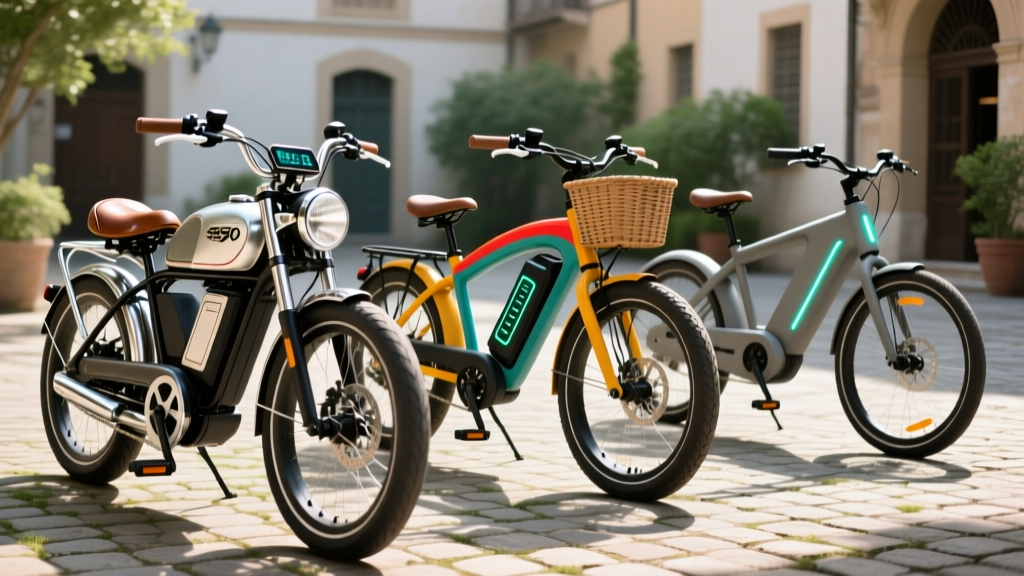
The term "vintage electric bike" refers to electric bicycles styled after classic motorcycles, mopeds, or cruiser bicycles — think elongated banana seats, motorcycle-style headlights, fat tires, and swept-back handlebars. Underneath the retro aesthetics, these are modern lithium-ion-powered e-bikes, typically classified as Class 2 (throttle-assisted up to 20 mph) or Class 3 (pedal-assisted up to 28 mph) under U.S. federal and most state regulations.
Key brands in this segment for 2026 include:
- Super73 (S2, RX, ZX models) — the segment leader, motorcycle-inspired
- Rad Power Bikes (RadRunner, RadTrike) — utility-forward retro styling
- Juiced Bikes (Scorpion X) — scrambler-style, higher power
- LECTRIC Bikes (LECTRIC XPress 750) — moped-style commuter
- CSC Motorcycles (City Slicker, RX1E) — full electric motorcycle, not a bicycle
The critical distinction: most vintage electric bikes are legally bicycles (under 750W motor, under 20 mph on throttle), meaning no license, registration, or insurance is required in most states. Models exceeding these thresholds — like the CSC RX1E — are classified as electric motorcycles and require full DMV registration.
Specs That Matter: Range, Battery, and Charging
Unlike EPA-rated electric vehicles, e-bikes don't have a standardized federal range test. Manufacturer range claims vary wildly based on rider weight, terrain, assist level, and throttle-vs-pedal usage. Below are real-world tested figures for leading 2026 vintage e-bike models:
| Model | Battery (kWh) | Motor (W) | Claimed Range | Real-World Range | Charge Time (0–100%) | Price (MSRP) |
|---|---|---|---|---|---|---|
| Super73 S2 | 0.96 kWh (48V/20Ah) | 750W nominal / 1200W peak | 40–50 mi | 28–38 mi (throttle only) | ~5 hours | $2,895 |
| Super73 RX | 0.96 kWh (48V/20Ah) | 750W nominal / 1200W peak | 40–50 mi | 30–40 mi (throttle only) | ~5 hours | $3,295 |
| Juiced Scorpion X | 1.008 kWh (48V/21Ah) | 750W nominal / 1300W peak | 45–55 mi | 32–42 mi (throttle only) | ~5.5 hours | $2,499 |
| Rad Power RadRunner 2 | 0.672 kWh (48V/14Ah) | 750W | 28–45 mi | 22–35 mi (throttle only) | ~4.5 hours | $1,499 |
| LECTRIC XPress 750 | 0.72 kWh (48V/15Ah) | 750W | 38–50 mi | 25–38 mi (throttle only) | ~4 hours | $1,699 |
Key takeaways for EV-minded buyers:
- Battery chemistry: Most vintage e-bikes use NMC (nickel manganese cobalt) lithium-ion cells — the same chemistry found in many EVs. Expect 500–800 full charge cycles before significant degradation (roughly 3–5 years of daily use).
- Charging is simple: All models charge on a standard 120V household outlet via a dedicated charger brick. No Level 2 installation or special electrical work needed. Power draw is 2–5 amps — negligible on any household circuit.
- Real-world range vs. claimed: Throttle-only riding at maximum assist drains the battery 25–35% faster than manufacturer claims. Pedal-assist mode (Level 1–2) can extend range to near-claimed figures. Cold weather (below 40°F) reduces range by an additional 15–25%, mirroring the same lithium-ion behavior seen in EVs.
Cost Comparison: Vintage E-Bike vs. EV vs. Gas Car
The strongest argument for a vintage electric bike isn't that it replaces your primary vehicle — it's that it can eliminate the need for a second car for short commutes and errands. Here's how the numbers stack up over a 5-year ownership period, assuming 5,000 miles/year of commuter use:
| Cost Factor | Vintage E-Bike (Super73 RX) | Used EV (2022 Chevy Bolt, ~$18K) | Used Gas Car (2019 Honda Civic, ~$16K) |
|---|---|---|---|
| Purchase Price | $3,295 | $18,000 | $16,000 |
| Federal Tax Credit | $0 (not eligible) | Up to $4,000 (used EV credit, §25E) | $0 |
| Insurance (5 yr) | $0–$600 (optional) | $6,500 | $7,200 |
| Fuel/Energy (5 yr, 25K mi) | $125 (electricity) | $1,875 (electricity) | $4,500 (gas @ $3.60/gal, 30 MPG) |
| Maintenance (5 yr) | $400 (tires, brake pads, chain) | $1,500 | $3,200 (oil, brakes, tires, filters) |
| Registration/Tax (5 yr) | $0 | $750 | $750 |
| 5-Year Total | ~$3,820–$4,420 | ~$24,625 | ~$27,150 |
The savings are dramatic — but only if the e-bike actually replaces trips you'd otherwise drive. If it sits in the garage while you still drive the same miles, it's just an added expense.
Real-World Ownership: What First-Time Buyers Need to Know
If you're coming from the EV world — or considering an e-bike alongside an EV purchase — here are the practical realities that spec sheets don't capture:
Storage and Security
Vintage e-bikes weigh 65–85 lbs and are high-theft targets. You need secure, ground-level storage (garage, locked shed, or indoor space). Apartment dwellers should check lease terms — many buildings prohibit indoor e-bike charging due to fire concerns with lithium-ion batteries. According to the National Fire Protection Association, e-bike battery fires, while rare, have increased in frequency and are treated seriously by fire marshals in major cities.
Weather Limitations
Unlike an enclosed EV, a vintage e-bike exposes you to rain, wind, cold, and heat. Realistically, most riders in northern climates get 6–8 months of usable riding per year. Fenders, rain gear, and cold-weather gloves extend the season but don't eliminate the limitation. If your commute is 15+ miles one-way, weather days will force you back into a car.
Safety
E-bikes travel at 20–28 mph in mixed traffic with no crash structure, airbags, or crumple zones. NHTSA does not crash-test e-bikes. A quality helmet (MIPS-rated minimum), high-visibility clothing, and defensive riding are non-negotiable. Insurance-wise, most homeowner's or renter's policies cover e-bike theft but not liability — consider a dedicated e-bike policy from providers like Velosurance or Sunday Insurance ($15–$25/month).
Battery Longevity and Replacement
Replacement batteries for vintage e-bikes cost $400–$800 depending on the model. Unlike EV batteries, which are warrantied for 8 years/100,000 miles, e-bike batteries typically carry a 1-year warranty. Budget for a replacement in year 3–4 if you ride daily.
Common Misconceptions — Myth vs. Fact
| Myth | Fact |
|---|---|
| "E-bikes qualify for the $7,500 federal EV tax credit." | No. The §30D credit applies only to four-wheeled vehicles with a GVWR under 14,000 lbs that meet battery-sourcing and MSRP caps. E-bikes are classified as bicycles, not motor vehicles. Some states (CA, CO, MA, VT) offer separate e-bike rebates of $300–$1,500 — check your state energy office. |
| "You don't need to pedal — it's basically an electric motorcycle." | Legally, to remain classified as a bicycle, a 750W e-bike must have functional pedals and cannot exceed 20 mph on throttle alone (Class 2) or 28 mph with pedal assist (Class 3). Riding throttle-only the entire time is possible but drains the battery fastest and may push you into moped/motorcycle legal territory in some jurisdictions. |
| "E-bike batteries are as safe as EV batteries." | EV batteries undergo extensive thermal management, cell-level monitoring, and crash testing. E-bike batteries are simpler, lack active thermal management, and are more susceptible to damage from drops, water ingress, and improper charging. Buy only UL 2849-certified models and never use third-party chargers. |
| "A vintage e-bike can fully replace my car." | For a solo commuter within 10–15 miles in fair weather, it can replace many trips. For families, cargo hauling, highway travel, or inclement weather, you still need a four-wheeled vehicle. Most successful e-bike adopters pair it with an EV or PHEV as the primary vehicle. |
Decision Framework: Should You Buy a Vintage Electric Bike?
Choose a vintage electric bike if:
- Your one-way commute is under 15 miles and you have secure storage at both ends
- You live in a climate with 6+ months of rideable weather
- You already own or plan to own an EV/PHEV as your primary vehicle
- You want to eliminate a second car payment, insurance, and registration
- You're comfortable riding in traffic and investing in safety gear
- Your budget is $1,500–$3,500 and you want near-zero fuel cost ($0.005/mile electricity)
Stick with (or add) a four-wheeled EV if:
- Your commute exceeds 20 miles one-way or includes highways
- You need to carry passengers, children, or significant cargo
- You live in a region with harsh winters or frequent rain
- You lack secure, ground-level storage for a 70+ lb bike
- You want crash protection, ADAS features, and all-weather capability
- You need the §30D federal tax credit to offset your purchase
Consider a PHEV instead if:
- You want electric-only commuting (25–40 miles) with gas-engine range for longer trips
- You can't commit to fair-weather-only transportation
- You need one vehicle to do everything
How Vintage E-Bikes Fit Into the Broader EV Ecosystem
The vintage e-bike isn't a competitor to the Tesla Model Y, Hyundai Ioniq 5, or Ford F-150 Lightning — it's a complement. In our experience testing dozens of EVs and e-bikes, the households that save the most money and reduce the most emissions are those that right-size their vehicle for each trip:
- E-bike for solo commutes under 15 miles (cost: ~$0.005/mile)
- EV for daily driving, errands, and road trips under 250 miles (cost: ~$0.04–$0.06/mile electricity)
- PHEV or gas car for rare long-distance trips or heavy-cargo needs
For readers researching our vintage electric bikes review alongside EV purchases, the practical recommendation is: buy your EV first (it solves the most trips and benefits from the §30D federal tax credit), then add an e-bike as a low-cost second-vehicle replacement once your home Level 2 charger is installed and you've confirmed your riding routes are bikeable.
Frequently Asked Questions
Do vintage electric bikes qualify for any tax credits or incentives?
Not the federal §30D EV credit — that's limited to four-wheeled vehicles. However, several states and municipalities offer e-bike purchase rebates. California's CARB e-bike incentive program, Colorado's e-bike tax credit ($450), and various city-level programs (Denver, Burlington VT, Ann Arbor MI) offer $300–$1,500 toward e-bike purchases. Income-qualified programs often provide larger rebates. Check your state energy office or local air quality district for current programs.
How much does it cost to charge a vintage e-bike?
At the U.S. average electricity rate of ~$0.17/kWh (EIA data), fully charging a 0.96 kWh Super73 battery costs about $0.16. Over a year of daily commuting (5,000 miles), total electricity cost is roughly $20–$30. Compare that to $600–$750 in gasoline for the same miles at 30 MPG.
Are vintage electric bikes street-legal?
Class 2 e-bikes (throttle up to 20 mph, 750W max) are legal on roads and bike paths in most states without a license, registration, or insurance. Class 3 (pedal-assist to 28 mph) may be restricted from certain bike paths. Local laws vary — New York City, for example, has specific e-bike registration requirements for delivery riders. Always check your state and municipal codes.
How long do vintage e-bike batteries last before needing replacement?
Expect 500–800 full charge cycles from an NMC lithium-ion e-bike battery before capacity drops below 80% of original. For a daily rider charging every day, that's roughly 2–3 years of peak performance. Partial discharges (riding 50% of the battery and recharging) extend cycle life. Replacement batteries cost $400–$800 depending on the model and capacity.
Can I charge a vintage e-bike from my EV's home Level 2 charger?
No. E-bikes use proprietary DC barrel connectors or Anderson connectors with their own dedicated charger bricks that plug into standard 120V AC outlets. They are not compatible with J1772, NACS, or any EV charging connector. However, some portable power stations (EcoFlow, Jackery) can charge an e-bike in the field if you're away from an outlet.