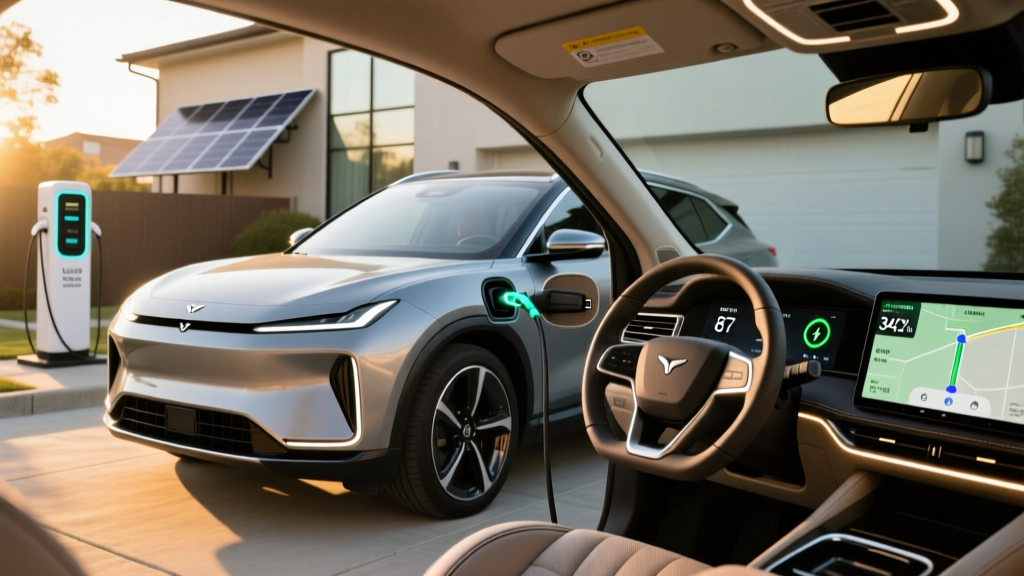
The VinFast VF8 occupies a strange space in the American EV market. The Vietnamese automaker's midsize electric SUV undercuts rivals on sticker price, packs dual-motor all-wheel drive as standard, and offers one of the longest battery warranties in the segment. But early-build quality issues, middling efficiency, and a charging curve that tapers hard past 70% state of charge mean buyers need to look past the brochure numbers. Here's the full data-driven breakdown for the 2026 model year.
2026 VinFast VF8 at a Glance
| Spec | VF8 Eco (AWD) | VF8 Plus (AWD) |
|---|---|---|
| EPA Range | 264 miles | 243 miles |
| Battery (usable) | 82 kWh, NMC | 82 kWh, NMC |
| Horsepower | 349 hp / 369 lb-ft | 402 hp / 457 lb-ft |
| 0–60 mph | 5.3 sec | 4.6 sec |
| Max DC Fast Charge | 155 kW | 155 kW |
| 10–80% DCFC Time | ~31 min | ~31 min |
| Level 2 Charge Rate | 11 kW (~33 mi/hr) | 11 kW (~33 mi/hr) |
| MPGe (combined) | 80 MPGe (36 kWh/100mi) | 77 MPGe (38 kWh/100mi) |
| Cargo (rear seats up) | 26.1 cu ft | 26.1 cu ft |
| Cargo (rear seats folded) | 58.3 cu ft | 58.3 cu ft |
| Base MSRP | $44,900 | $51,900 |
| Battery Warranty | 10 yr / 125,000 mi | 10 yr / 125,000 mi |
Real-World Range: What the EPA Sticker Doesn't Tell You
Real-World Highway Expectation: ~215–230 miles at 70 mph, 65°F
Cold-Weather (below 32°F): Expect 20–30% reduction — roughly 180–210 miles in the Eco trim
The VF8's 82 kWh usable battery is sized competitively against the Hyundai Ioniq 5 and Tesla Model Y, but the SUV's 4,600-pound curb weight and bluff frontal area hurt highway efficiency. In mixed suburban driving, you'll see figures close to the EPA sticker. On sustained interstate runs at 75 mph, efficiency drops to roughly 38–40 kWh/100mi, cutting practical range to the low 220s. Cold weather compounds this: NMC chemistry loses more capacity in freezing temps than LFP cells, and the VF8's heat pump helps but doesn't eliminate the penalty.
For a daily commuter charging at home, 264 miles is more than adequate. For road-trippers planning 300-mile legs between DC fast-charger stops, the VF8 will require more conservative planning — expect to stop at 180–200 miles in winter or at sustained highway speeds.
Charging Speed: DC Fast Charge and Home Level 2
The VF8 uses a CCS1 connector (NACS adapter availability varies by model year — confirm with your dealer) and accepts a peak DC fast-charge rate of 155 kW. That peak only holds between roughly 15% and 55% state of charge, after which the charge curve tapers significantly. By 80% SoC, you're pulling closer to 60–70 kW.
| Charging Level | Power (kW) | Speed (mi/hr added) | Notes |
|---|---|---|---|
| Level 1 (120V outlet) | ~1.4 kW | ~4 mi/hr | Emergency/top-up only |
| Level 2 (240V home) | 11 kW | ~33 mi/hr | Full charge in ~8 hr |
| DC Fast Charge (peak) | 155 kW | ~170 mi/hr (sustained ~20–55% SoC) | 10–80% in ~31 min |
At a home Level 2 wallbox on a 48-amp circuit, the VF8 adds roughly 33 miles of range per hour, recovering from 20% to full overnight in about seven to eight hours. That's competitive with most midsize EVs, though rivals like the Ioniq 5 and EV6 — with their 800V architectures — offer faster DC charging at 240+ kW.
The charge-curve taper above 70% is the VF8's biggest charging weakness. On a road trip, charging from 80% to 100% at a DC fast charger is painfully slow — plan your stops to stay in the 10–80% sweet spot whenever possible.
Performance, Drivetrain, and Ride Quality
Every 2026 VF8 ships with dual-motor all-wheel drive — there is no single-motor, rear-drive variant. The Eco trim produces 349 hp and 369 lb-ft of torque, reaching 60 mph in 5.3 seconds. The Plus trim bumps output to 402 hp and 457 lb-ft, dropping the 0–60 to 4.6 seconds. Both are brisk by midsize-SUV standards, though neither threatens the Tesla Model Y Performance's sub-4-second sprint.
Ride quality has improved meaningfully since the VF8's troubled 2023 launch. The 2026 model's suspension tuning is firmer and more controlled, though it still transmits more road imperfections than a Hyundai Ioniq 5 or Kia EV6. Steering is light and numb — fine for parking lots, less confidence-inspiring on mountain roads. Regenerative braking offers multiple levels adjustable via steering-wheel paddles, and one-pedal driving mode brings the SUV to a complete stop, though the transition from regen to friction braking isn't as seamless as in the best competitors.
Interior, Tech, and Cargo Space
The VF8's cabin is a mixed bag. Material quality in the Plus trim is respectable — soft-touch surfaces on the dash and door uppers, synthetic leather seats — but some lower panels and the center console feel cost-reduced. The Eco trim uses more hard plastics throughout.
The 15.6-inch center touchscreen runs VinFast's proprietary infotainment system. Response times have improved with recent OTA updates, but the interface still lacks the polish of Tesla's, Hyundai's, or BMW's systems. Wireless Apple CarPlay and Android Auto are standard, which mitigates the native software for most buyers. A head-up display is standard on Plus and available on Eco.
Driver assistance falls under VinFast's ADAS umbrella and includes adaptive cruise control, lane-keeping assist, blind-spot monitoring, and automatic emergency braking. This is an SAE Level 2 system — the driver must remain fully engaged with hands on the wheel and eyes on the road. It is not autonomous driving.
Cargo space is a weak point: 26.1 cubic feet behind the rear seats trails the Model Y (30.2 cu ft) and Ioniq 5 (27.2 cu ft). Fold the 60/40 split rear seats and you get 58.3 cubic feet — adequate but not class-leading. There is a small front trunk (frunk) for storing charging cables, but it's shallow compared to the Ford Mustang Mach-E's.
Pricing, Trims, and Federal Tax Credit Eligibility
The 2026 VF8 comes in two trims:
- VF8 Eco: $44,900 MSRP (before destination)
- VF8 Plus: $51,900 MSRP (before destination)
VinFast no longer offers the battery-subscription program that complicated early pricing — the battery is included in the purchase price.
Does the VF8 Qualify for the §30D Federal EV Tax Credit?
The federal EV tax credit under IRS §30D offers up to $7,500, but eligibility depends on multiple factors that change frequently:
- MSRP cap: SUVs must be at or below $80,000 — both VF8 trims qualify.
- Buyer income cap: Modified AGI must not exceed $150,000 (single), $225,000 (head of household), or $300,000 (joint).
- Battery sourcing: Critical minerals and battery components must meet phased-in domestic/free-trade-partner thresholds. VinFast's Samsung SDI cells have faced scrutiny under these rules.
- Point-of-sale transfer: Eligible buyers can apply the credit as a down-payment reduction at the dealer rather than waiting for tax filing.
Important: Battery-component and critical-mineral sourcing requirements tighten annually. Confirm the VF8's current-year eligibility on fueleconomy.gov or with your tax professional before relying on the credit in your purchase math.
| Trim | MSRP | Est. with Max §30D Credit | Notes |
|---|---|---|---|
| VF8 Eco | $44,900 | ~$37,400 | Credit eligibility varies — verify sourcing rules |
| VF8 Plus | $51,900 | ~$44,400 | Credit eligibility varies — verify sourcing rules |
Pros and Cons: The Honest Take
Pros
- Standard dual-motor AWD at a competitive price
- 10-year/125,000-mile battery warranty — among the best in the segment
- Comfortable ride quality (improved over 2023–2024 models)
- Competitive 0–60 times, especially in Plus trim
- Below the $80,000 MSRP cap for §30D credit eligibility
Cons
- Below-average efficiency (36–38 kWh/100mi) hurts real-world range
- DC fast-charge curve tapers hard above 70% SoC
- Cargo space trails key rivals (26.1 cu ft vs Model Y's 30.2)
- Infotainment system still lags competitors in responsiveness
- Resale value uncertainty — VinFast's US market presence is still young
Who Should Buy the VinFast VF8?
Best for: AWD-motivated commuters in moderate climates who want a dual-motor EV under $50,000 and prioritize warranty coverage. The VF8 Eco at $44,900 (potentially ~$37,400 after the federal credit) is one of the most affordable AWD electric SUVs available, and the 10-year battery warranty provides long-term peace of mind.
Think twice if: You regularly road-trip more than 250 miles between charging stops, need maximum cargo space, or live in a region with harsh winters where the range penalty compounds. The Hyundai Ioniq 5, Kia EV6, and Tesla Model Y all offer faster DC charging, better efficiency, and more mature software — though typically at a higher starting price for AWD configurations.
Frequently Asked Questions
What is the real-world range of the VinFast VF8?
The Eco trim is EPA-rated at 264 miles, but expect 215–230 miles on sustained highway drives at 70 mph and 180–210 miles in freezing temperatures. The Plus trim's EPA rating is 243 miles, with similar real-world reductions.
How fast does the VF8 charge at home and on DC fast chargers?
On a Level 2 home charger (11 kW), the VF8 adds ~33 miles per hour and fully charges overnight. On DC fast chargers, it peaks at 155 kW and charges 10–80% in roughly 31 minutes, but the rate tapers significantly above 70% SoC.
Does the 2026 VinFast VF8 qualify for the $7,500 federal tax credit?
Both trims are under the $80,000 MSRP cap. However, eligibility also depends on your income, the battery's critical-mineral and component sourcing compliance, and current-year IRS rules. Check irs.gov and fueleconomy.gov for the latest status before purchasing.
Is the VF8 worth buying over the Tesla Model Y or Hyundai Ioniq 5?
If price is the deciding factor and you want standard AWD, the VF8 Eco is compelling — especially if you qualify for the full tax credit. But the Model Y and Ioniq 5 offer faster charging, better efficiency, more cargo room, and more proven software. Test-drive all three before deciding.
What battery chemistry does the VF8 use?
The VF8 uses an NMC (nickel manganese cobalt) lithium-ion battery supplied by Samsung SDI, with 82 kWh of usable capacity. NMC offers higher energy density than LFP but is more sensitive to cold-weather range loss and typically degrades slightly faster over very high cycle counts.
What is the VinFast VF8's battery warranty?
VinFast covers the battery and powertrain for 10 years or 125,000 miles, whichever comes first. The warranty guarantees the battery will retain a minimum percentage of its original capacity (typically 70%) over that period — confirm the exact retention threshold with your dealer.