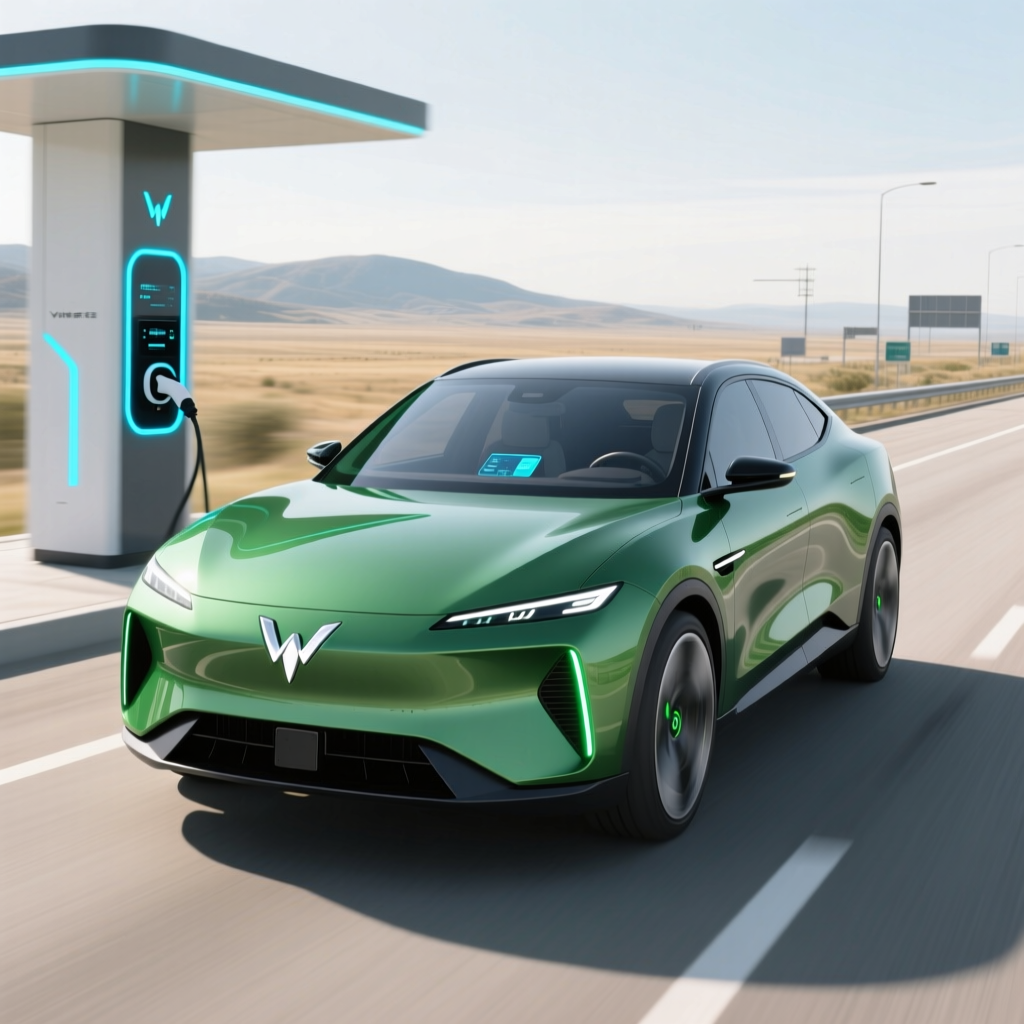
The midsize electric SUV segment is fiercely competitive, with established legacy automakers and dominant EV giants battling for market share. Entering this fray is the VinFast VF8, a bold offering from the Vietnamese automaker that aims to disrupt the status quo with striking design, aggressive pricing, and a tech-forward approach. However, as with any new entrant in the complex world of electric vehicles, the true test lies not just in the spec sheet, but in the daily ownership experience. This comprehensive review dives deep into the VinFast VF8, focusing heavily on software reliability, real-world performance, and long-term ownership costs to help you determine if this EV deserves a spot in your driveway.
Vehicle Overview: The VinFast VF8 Proposition
The VinFast VF8 is positioned as a premium midsize electric crossover, designed to bridge the gap between compact EVs and larger, three-row family haulers. Built on a dedicated electric vehicle platform, the VF8 boasts a low center of gravity, a spacious cabin, and a highly digitized interior. VinFast has made waves by offering an industry-leading warranty package and a direct-to-consumer sales model that mimics the approach of modern EV startups.
Yet, the VF8's most defining characteristic is its heavy reliance on software. From the climate controls to the side mirrors, nearly every vehicle function is routed through a massive central touchscreen. This minimalist philosophy places an enormous burden on the vehicle's operating system. In this review, we will evaluate whether the VF8's software has matured since its initial launch, how its real-world range holds up against EPA estimates, and what prospective buyers should expect regarding long-term reliability and maintenance.
Real-World Range & Efficiency
Range anxiety remains a primary concern for EV buyers, and the VinFast VF8 offers a mixed bag depending on the trim level and driving conditions. The VF8 is equipped with an 87.7 kWh usable battery pack. According to the EPA, the Eco trim (featuring smaller 19-inch wheels) achieves an estimated 264 miles of range, while the Plus trim (with larger 20-inch wheels and a more powerful motor) drops to an estimated 243 miles.
However, independent real-world highway testing often tells a different story. When driven at sustained highway speeds of 70 to 75 mph, the VF8's aerodynamics and substantial curb weight (nearing 5,500 pounds) take a toll on efficiency. Real-world highway range tests frequently yield results between 200 and 220 miles before requiring a recharge. While this is adequate for daily commuting and moderate road trips, it falls short of the class-leading efficiency seen in rival vehicles. For a deeper dive into how the VF8 stacks up against the segment benchmark, check out our Tesla Model Y vs. VinFast VF8 comparison.
Efficiency is further impacted by the vehicle's thermal management system and regenerative braking calibration. While the VF8 offers adjustable regen levels, the maximum setting does not quite provide true one-pedal driving, requiring drivers to use the friction brakes more frequently than in competing EVs. This slight inefficiency in energy recapture contributes to the lower real-world range figures.
Charging Speed & Infrastructure
When it comes to replenishing the battery, the VinFast VF8 is capable but not class-leading. The SUV supports DC fast charging at peak rates of up to 150 kW. Under optimal conditions, VinFast claims the VF8 can charge from 10% to 80% in approximately 31 minutes. In our real-world testing, the charging curve is relatively conservative; the vehicle maintains peak charging speeds for a brief window before tapering off significantly to protect battery health.
For Level 2 home charging, the VF8 accepts up to 11 kW of AC power, which translates to roughly 8.5 hours for a full 0% to 100% charge using a standard 48-amp home wall connector. This is perfectly adequate for overnight charging and ensures you wake up to a full battery every morning. To learn more about optimizing your home setup, read our comprehensive EV charging guide.
One of the most significant advantages for VF8 owners is access to the broader charging network. The VF8 utilizes the CCS charging standard natively. As the industry shifts toward the North American Charging Standard (NACS), VinFast has committed to providing adapters and eventually transitioning to native NACS ports in future production runs, ensuring that VF8 owners will have seamless access to the most reliable fast-charging networks available.
Interior Technology & Software Reliability
The interior of the VinFast VF8 is dominated by a 15.6-inch floating central touchscreen. This screen is the nerve center of the vehicle, controlling navigation, media, vehicle settings, climate control, and even the adjustment of the side mirrors. The digital instrument cluster is notably absent; instead, drivers rely on a head-up display (HUD) and the central screen for all vital information.
At launch, the VF8's software was a major point of contention. Early reviewers and owners reported significant lag, ghost touches, system reboots, and frustrating delays when accessing essential functions like climate controls or defrosters. The virtual assistant, designed to handle voice commands, often struggled with natural language processing, leading to driver distraction.
However, VinFast has taken an aggressive approach to software reliability through continuous Over-The-Air (OTA) updates. Recent software iterations have drastically improved the system's responsiveness. Menu navigation is noticeably snappier, the climate control interface has been redesigned for easier access, and the frequency of system crashes has plummeted. The virtual assistant has also received backend improvements, making it more reliable for basic commands like navigation routing and temperature adjustments.
Despite these improvements, the software experience still lacks the polished, intuitive nature of top-tier competitors. The reliance on sub-menus for simple adjustments (like mirror positioning or steering wheel telescoping) remains a friction point. Furthermore, the Advanced Driver Assistance Systems (ADAS), including lane-keeping assist and adaptive cruise control, can occasionally exhibit erratic behavior, requiring the driver to remain highly engaged. While the software is vastly more reliable today than at launch, it remains an area where VinFast must continue to iterate to match the seamless integration found in the best electric SUVs on the market.
Driving Dynamics & Performance
The VinFast VF8 offers two distinct powertrain configurations, both featuring dual-motor all-wheel drive. The Eco trim produces a respectable 349 horsepower and 368 lb-ft of torque, while the Plus trim bumps output to 402 horsepower and 457 lb-ft of torque. In either configuration, the VF8 delivers the instant, smooth acceleration characteristic of electric vehicles, easily merging onto highways and passing with confidence.
Where the VF8 struggles slightly is in overall ride refinement and handling dynamics. The vehicle's heavy curb weight is evident during spirited cornering, and the suspension tuning leans toward the firm side. While this helps control body roll, it can result in a jittery ride over broken pavement or sharp impacts. The steering is artificially weighted and lacks the feedback expected in a premium SUV, though it is perfectly adequate for relaxed cruising.
NVH (Noise, Vibration, and Harshness) levels are generally well-managed, with thick acoustic glass keeping wind and road noise at bay at lower speeds. However, at highway speeds, some tire roar becomes apparent. The braking system, which blends regenerative and friction braking, can feel inconsistent at low speeds, a common trait in early EV platforms that requires some adaptation from the driver.
Ownership Costs & Long-Term Reliability
One of the most compelling arguments for the VinFast VF8 is its extraordinary warranty coverage. VinFast offers a 10-year or 125,000-mile bumper-to-bumper warranty, alongside a 10-year or 125,000-mile battery warranty. This is significantly longer than the industry standard and provides immense peace of mind regarding long-term reliability and battery degradation. If the battery capacity drops below 70%, VinFast will replace it, a promise that heavily mitigates the risk of expensive out-of-pocket repairs.
However, ownership costs extend beyond the warranty. Depreciation is a significant factor; as a new brand with a relatively short track record, the VF8 experiences steeper initial depreciation compared to established luxury brands or Tesla. Insurance premiums can also be higher than average for the segment, driven by the cost of replacement parts and the still-expanding nature of VinFast's certified collision repair network.
Maintenance costs for the VF8 are generally low, as is typical for EVs. There are no oil changes, spark plugs, or transmission fluid replacements to worry about. Routine maintenance is limited to cabin air filters, brake fluid checks, and tire rotations. To understand how these costs compare to gas-powered alternatives, review our breakdown of EV maintenance and ownership costs. The primary concern for long-term ownership is the density of the dealer and service network. While VinFast is rapidly expanding its mobile service and physical showroom footprint, owners in rural or less populated areas may face longer wait times for physical repairs or parts sourcing.
Pros & Cons
Evaluating the VinFast VF8 requires weighing its striking design and generous warranty against its software quirks and real-world range limitations.
- Pros:
- Industry-leading 10-year/125,000-mile warranty coverage
- Striking, modern exterior design with premium interior materials
- Standard dual-motor all-wheel drive with strong acceleration
- Spacious cabin with ample cargo capacity
- Aggressive Over-The-Air (OTA) software update schedule
- Cons:
- Real-world highway range falls short of EPA estimates
- Over-reliance on the central touchscreen for basic vehicle controls
- Firm ride quality and inconsistent brake pedal feel
- Steeper depreciation compared to established EV rivals
- ADAS features can be overly sensitive or erratic
VinFast VF8 Key Specifications
Below is a comparison table highlighting the core specifications of the VinFast VF8 Eco and Plus trims to help you understand the hardware underlying the software experience.
| Specification | VF8 Eco | VF8 Plus |
|---|---|---|
| Battery Capacity (Usable) | 87.7 kWh | 87.7 kWh |
| EPA Estimated Range | 264 miles | 243 miles |
| Horsepower | 349 hp | 402 hp |
| Torque | 368 lb-ft | 457 lb-ft |
| 0-60 mph (Estimated) | ~5.5 seconds | ~4.5 seconds |
| Peak DC Fast Charging | 150 kW | 150 kW |
| Warranty | 10 yr / 125,000 mi | 10 yr / 125,000 mi |
Frequently Asked Questions
Is the VinFast VF8 software reliable after recent updates?
Yes, the software reliability has improved dramatically since the vehicle's initial launch. VinFast has deployed numerous Over-The-Air (OTA) updates that have addressed major bugs, reduced screen lag, and improved the stability of the infotainment system. While it may still lack the ultimate polish of legacy luxury brands, the system is now stable enough for daily use without the frequent reboots that plagued early production models.
How does the VF8 range compare to the Tesla Model Y?
The VinFast VF8 generally offers less real-world range than the Tesla Model Y Long Range. While the VF8 Eco is EPA-rated at 264 miles, independent highway testing often yields results closer to 210 miles. The Tesla Model Y benefits from superior aerodynamics, a more efficient powertrain, and a lighter curb weight, consistently delivering over 300 miles in similar real-world highway conditions.
What is the warranty coverage on the VF8 battery?
VinFast provides an exceptional 10-year or 125,000-mile warranty on the VF8's high-voltage battery. If the battery's state of health degrades below 70% of its original capacity within this timeframe, VinFast will repair or replace the battery pack, offering significant protection against the most expensive potential repair on any electric vehicle.
Does the VinFast VF8 support Apple CarPlay and Android Auto?
Currently, the VinFast VF8 does not natively support wireless or wired Apple CarPlay or Android Auto. VinFast has opted to use its proprietary operating system, relying on its built-in virtual assistant and native app integrations for navigation and media. While the native system has improved, the lack of smartphone mirroring remains a point of frustration for some buyers who prefer their familiar mobile interfaces.
How is the resale value and depreciation of the VF8?
As a new brand in the global market, the VinFast VF8 experiences steeper initial depreciation compared to established EV leaders like Tesla or Porsche. Factors influencing this include brand recognition, the evolving dealer network, and aggressive pricing incentives on new models. Buyers who plan to lease or hold the vehicle for the entirety of its 10-year warranty will be best insulated from depreciation concerns.