If you've seen ads for a VinFast lease $199 per month and wondered whether the deal is legitimate — and whether the vehicle behind it is worth driving — you're not alone. The Vietnamese automaker has aggressively subsidized lease pricing on the VF 8 midsize electric SUV to move metal in the U.S. market. But a cheap monthly payment only matters if the EV underneath actually fits your life. Here's the full picture: range, charging, tax-credit math, and whether the VF 8 holds up against rivals like the Tesla Model Y, Hyundai Ioniq 5, and Ford Mustang Mach-E.
The $199 Lease Deal: What You're Actually Signing
The headline VinFast lease $199/month promotion typically applies to the VF 8 Eco base trim on a 24- or 36-month term with around 10,000 miles per year. Here's what that usually requires:
- Due at signing: Approximately $3,000–$4,500 (first month, acquisition fee, security deposit, and any applicable dealer fees)
- Term: 24 or 36 months
- Mileage allowance: 10,000 miles/year (excess mileage penalties around $0.20–$0.25/mile)
- Residual value: Set by VinFast — often lower than segment norms, which is why the manufacturer subsidizes the payment
VinFast frequently stacks lease cash incentives (sometimes $5,000–$7,500 from the factory) to bring the monthly payment down. These incentives shift quarterly, so confirm current terms with your local dealer. The $199 figure is real, but it's a promotional lease — not available on every trim, and not without money down.
| Spec | VF 8 Eco (Base) | VF 8 Plus |
|---|---|---|
| EPA Range | 264 miles | 243 miles |
| Battery (usable) | ~82 kWh, NMC | ~82 kWh, NMC |
| Drivetrain | Dual-motor AWD | Dual-motor AWD |
| Horsepower | 348 hp | 402 hp |
| 0–60 mph | ~5.5 sec | ~4.8 sec |
| Max DC Fast Charge | ~155 kW (peak) | ~155 kW (peak) |
| 10–80% DC Charge | ~31 min | ~31 min |
| Level 2 Charge Rate | 11 kW (~35 mi/hr) | 11 kW (~35 mi/hr) |
| MPGe (combined) | 87 MPGe | 82 MPGe |
| Cargo (rear seats up) | ~22.7 cu ft | ~22.7 cu ft |
| Cargo (rear seats folded) | ~58.4 cu ft | ~58.4 cu ft |
| Base MSRP | $46,000 | $51,800 |
| Battery/Powertrain Warranty | 10 yr / 125,000 mi | 10 yr / 125,000 mi |
Real-World Range: What the EPA Sticker Doesn't Tell You
The VF 8 Eco carries an EPA-estimated 264 miles of range, while the heavier, more powerful Plus trim drops to 243 miles. For a midsize SUV with an ~82 kWh usable NMC battery, those numbers land in the middle of the pack — behind the Tesla Model Y Long Range (320+ mi) but comparable to the Ford Mustang Mach-E Extended Range AWD.
- EPA sticker: 264 miles
- Mixed city/suburban driving (65–75°F): ~240–260 miles achievable
- Sustained highway (70–75 mph): ~210–230 miles (aerodynamic drag and higher consumption)
- Cold weather (below 32°F, highway): ~170–200 miles (NMC chemistry + cabin heating losses; heat pump helps but doesn't eliminate the hit)
Source: fueleconomy.gov
The VF 8 uses a heat pump for cabin climate, which mitigates cold-weather range loss compared to resistive heating — but physics still wins. If your daily commute is under 60 miles round-trip, the VF 8's real-world range is a non-issue. If you regularly drive 200+ mile highway stretches in winter, plan your charging stops accordingly.
Charging Speed: DC Fast and Home Level 2
Charging speed is where the VF 8 falls behind the segment leaders. The 800V architectures in the Hyundai Ioniq 5 and Kia EV6 enable 240+ kW peak charging. The VF 8 peaks at roughly 155 kW on a DC fast charger, which is adequate but not class-leading.
| Charging Level | Power | Speed | Notes |
|---|---|---|---|
| Level 1 (120V household) | ~1.4 kW | ~4–5 mi/hr | Emergency/top-up only |
| Level 2 (240V home) | 11 kW | ~35 mi/hr (full in ~8 hr) | Standard overnight charging |
| DC Fast Charge | Peak ~155 kW | 10–80% in ~31 min | Charge curve tapers above 80%; expect 45+ min to 100% |
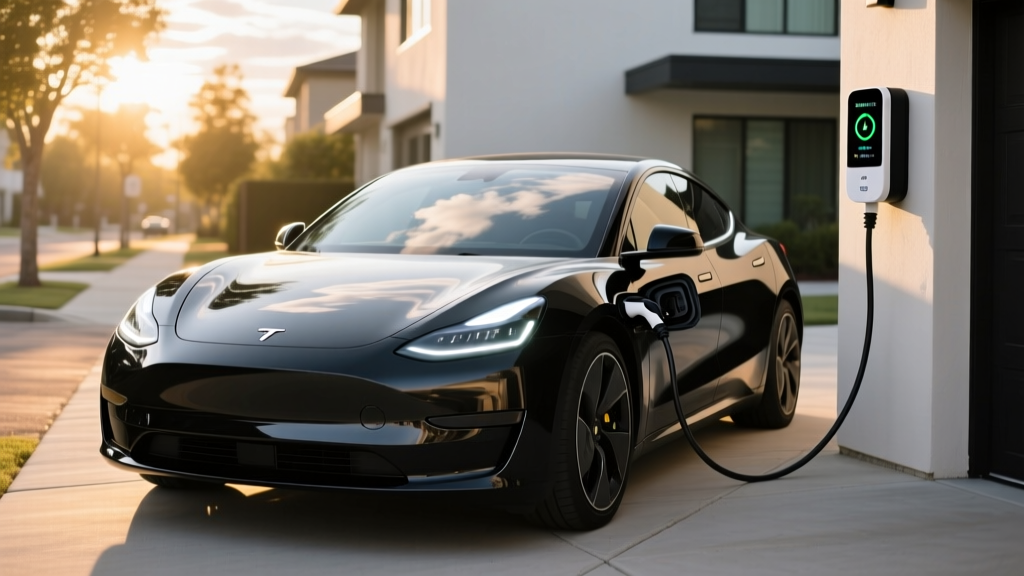
On a 150 kW Electrify America or Tesla Supercharger (via adapter/NACS compatibility as applicable), the VF 8 will charge from 10% to 80% in roughly 31 minutes. That's fine for a sit-down lunch stop but noticeably slower than an Ioniq 5's 18-minute 10–80% sprint. For home Level 2 charging, the onboard 11 kW charger is solid — a full overnight replenishment on a 48-amp circuit is straightforward.
Performance, Interior, and Tech
Both VF 8 trims come standard with dual-motor all-wheel drive. The Eco's 348 hp delivers a 5.5-second 0–60 mph time — plenty quick for daily driving and highway merging. The Plus trim bumps output to 402 hp and drops 0–60 to about 4.8 seconds.
Inside, the VF 8 offers:
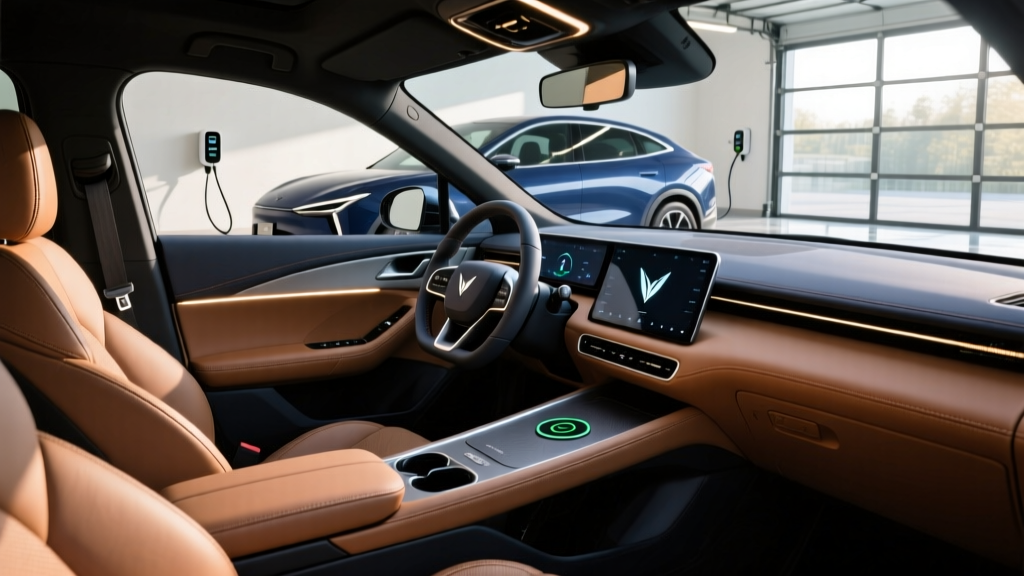
- 15.6-inch center touchscreen with integrated navigation and voice assistant
- 12.3-inch digital instrument cluster
- Panoramic glass roof (Plus trim)
- ADAS suite: Adaptive cruise control, lane-keeping assist, automatic emergency braking, blind-spot monitoring — this is SAE Level 2 driver assistance, not autonomous driving; hands must stay on the wheel
- Rear-seat legroom: ~38 inches — adequate for adults, though the sloping roofline cuts into headroom for taller passengers
- No front trunk (frunk): All cargo space is in the rear
The cabin materials in the Eco trim are acceptable but not premium. The Plus trim upgrades to more soft-touch surfaces, ventilated front seats, and a head-up display. Infotainment responsiveness has improved over the VF 8's initial 2023 launch, but some reviewers still note occasional lag compared to Tesla or Hyundai's systems.
Pricing, Tax Credit Eligibility, and Total Cost
Here's where the math gets interesting — and where the VinFast lease $199 deal either shines or disappoints, depending on your tax situation.
| Item | VF 8 Eco | VF 8 Plus |
|---|---|---|
| Base MSRP | $46,000 | $51,800 |
| Destination Fee | ~$1,395 | ~$1,395 |
| As-Tested (typical) | $47,395 | $54,000+ |
| Federal §30D Tax Credit | Up to $7,500* | Up to $7,500* |
| Effective Price (after credit)* | ~$39,895 | ~$46,500 |
| Promotional Lease Payment | $199/mo** | $299–$349/mo** |
*Federal tax credit caveats (IRS §30D, 2026 rules):
- MSRP cap: SUVs must be at or below $80,000 MSRP — the VF 8 qualifies
- Buyer income cap: AGI must not exceed $150,000 (single), $225,000 (head of household), or $300,000 (joint)
- Battery sourcing: Critical minerals and battery component requirements phase in annually; confirm current-year compliance on irs.gov or with your dealer before purchase
- Point-of-sale transfer: Eligible buyers can transfer the credit to the dealer at purchase, reducing the sale price directly — or apply it on their tax return
- Lease loophole (§45W): Commercial clean vehicle credit may apply to leased vehicles regardless of battery sourcing rules — this is often how VinFast achieves the $199 lease; confirm with your tax professional
Who Should Lease the VF 8 — And Who Shouldn't
- You want a dual-motor AWD electric SUV for under $200/month and can put ~$3,500 down
- Your daily driving is under 80 miles and you charge at home overnight
- You value the 10-year/125,000-mile battery warranty — one of the longest in the segment
- You're leasing (not buying), so depreciation risk stays with VinFast
- You need 300+ miles of EPA range for frequent road trips (consider Tesla Model Y, Hyundai Ioniq 5)
- Fast DC charging speed is a priority (Ioniq 5/EV6 at 240 kW, or Model Y at 250 kW)
- You want best-in-class cargo space (Model Y offers ~76 cu ft with seats folded)
- You prefer an established dealer/service network — VinFast's U.S. footprint is still growing
Pros, Cons, and the Competition
- Aggressively low lease pricing ($199/mo Eco)
- Standard dual-motor AWD on all trims
- 10-year / 125,000-mile battery & powertrain warranty
- Heat pump standard (better cold-weather efficiency)
- Competitive 0–60 performance for the price
- EPA range (264/243 mi) trails Model Y and Ioniq 5
- DC fast-charge speed (~155 kW peak) is below class leaders
- No frunk; cargo volume modest for the segment
- VinFast U.S. dealer/service network still limited
- Infotainment still catching up to rivals in responsiveness
FAQ: VinFast VF 8 Lease and Ownership
What is the real-world range of the VinFast VF 8?
The EPA rates the VF 8 Eco at 264 miles and the Plus at 243 miles. In real-world mixed driving, expect 240–260 miles in moderate weather. Highway-only driving at 70+ mph drops that to roughly 210–230 miles, and cold winter conditions can reduce range to 170–200 miles.
How fast does the VF 8 charge at home and on the road?
At home on a 240V Level 2 charger, the VF 8 charges at 11 kW, adding about 35 miles of range per hour — a full charge takes roughly 8 hours overnight. On a DC fast charger, it peaks at ~155 kW and charges from 10–80% in about 31 minutes.
How much does the VF 8 cost after the federal tax credit?
If you qualify for the full $7,500 federal credit under IRS §30D (income limits, MSRP caps, and battery-sourcing rules apply), the VF 8 Eco drops from ~$47,395 to roughly $39,895. On a lease, the commercial credit (§45W) may apply regardless of sourcing — consult your tax professional.
Does the VinFast VF 8 qualify for the $7,500 federal EV tax credit?
The VF 8's MSRP is under the $80,000 SUV cap, so it clears that hurdle. However, eligibility also depends on your adjusted gross income, and the battery must meet critical-mineral and component sourcing requirements that tighten annually. Verify current-year rules at irs.gov. On a lease, the §45W commercial credit may bypass sourcing restrictions.
Is the VF 8 worth it compared to the Tesla Model Y or Hyundai Ioniq 5?
If your priority is the lowest possible monthly payment on a new AWD electric SUV, the VF 8's $199 lease is hard to beat. If you prioritize range (Model Y: 320+ mi), charging speed (Ioniq 5: 10–80% in ~18 min), or a mature service network, the competitors are stronger overall EVs. The VF 8 is a value play, not a segment leader.
What is the battery warranty on the VF 8?
VinFast covers the battery and powertrain for 10 years or 125,000 miles, whichever comes first. This is among the most generous warranties in the EV segment and provides meaningful peace of mind for a newer brand.