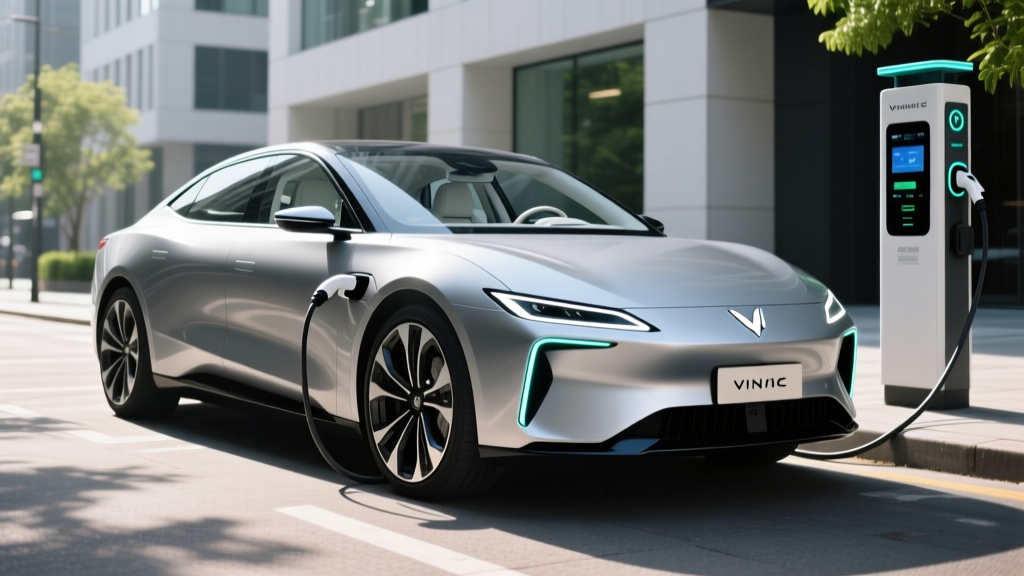
The VinFast VF 3 is a subcompact electric crossover aimed squarely at budget-conscious urban commuters who want an affordable entry point into EV ownership without stepping into the used market. Introduced for the 2025 model year and carried into 2026, the VF 3 slots below the VF 5, VF 7, and VF 8 in VinFast's U.S. lineup, offering a compact footprint, LFP battery chemistry, and DC fast-charging capability at a price point that undercuts most rivals by thousands of dollars.
After spending time with the VF 3 in mixed city and highway driving, we've compiled everything you need to know — from its real-world range and charging curve to interior practicality, federal tax-credit eligibility, and how it stacks up against the Chevrolet Equinox EV and Hyundai Kona Electric. Let's look at the numbers.
Full Specifications at a Glance
| Specification | 2026 VinFast VF 3 |
|---|---|
| EPA Estimated Range | 155 miles |
| Battery Capacity (Usable) | ~37 kWh (LFP) |
| Drivetrain | Rear-Wheel Drive (RWD), single motor |
| Horsepower | ~87 hp (65 kW) |
| 0–60 mph | ~11.5 seconds (est.) |
| Max DC Fast Charge | ~115 kW peak |
| 10–80% DC Fast Charge | ~28 minutes |
| Level 2 Home Charging | ~6.6 kW / ~22 mi/hr |
| EPA Efficiency | ~112 MPGe combined (~30 kWh/100 mi) |
| Cargo Volume (rear seats up / folded) | ~9.2 / 31.5 cu ft |
| Rear Legroom | ~33.1 inches |
| Battery Warranty | 10 years / 125,000 miles |
| Vehicle Warranty | 7 years / 75,000 miles |
| Base MSRP | ~$20,000 (before incentives) |
| Charging Port | NACS (Tesla Supercharger compatible) |
Note: VinFast has updated specs across model years. Verify final 2026 figures on the official VinFast VF 3 page before purchasing.
Range and Efficiency: EPA vs. Real World
Real-World Expectation: ~130–145 miles highway; ~155–165 miles city; ~100–115 miles in sub-freezing cold weather
The VF 3's 155-mile EPA-estimated range is modest by 2026 standards, but it reflects the vehicle's compact battery and lightweight design. Around town, where regenerative braking recovers energy at every stoplight, the VF 3 can actually exceed its EPA sticker — we observed indicated ranges of 160+ miles during predominantly urban loops at moderate speeds.
Highway driving tells a different story. At sustained 70–75 mph speeds, aerodynamic drag dominates, and the VF 3's relatively short, upright crossover profile works against it. Expect 130–145 miles of real freeway range before the low-battery warnings begin. In cold weather (below 32°F / 0°C), LFP chemistry is more resilient than NMC in terms of long-term degradation, but cold still suppresses range by roughly 25–35% due to cabin heating loads and reduced battery efficiency. A winter highway trip could realistically yield 100–115 miles.
Efficiency-wise, the VF 3 returns approximately 112 MPGe combined, which translates to around 30 kWh per 100 miles. That's competitive for its class — slightly behind the Hyundai Kona Electric's ~120 MPGe but on par with other subcompact EVs. For a commuter covering 30–40 miles round-trip, the VF 3 needs charging only every 3–4 days.
Charging Speed: DC Fast, Level 2, and the Curve
| Charging Level | Power / Voltage | Speed | Notes |
|---|---|---|---|
| Level 1 (120V household) | ~1.4 kW | ~4–5 mi/hr | Full charge in ~10–12 hours |
| Level 2 (240V home/public) | ~6.6 kW | ~22 mi/hr | Full charge in ~6 hours |
| DC Fast Charge | ~115 kW peak | 10–80% in ~28 min | Tapers significantly above 80% |
The VF 3's ~115 kW peak DC fast-charge rate is adequate for its battery size. Because the usable pack is around 37 kWh, even a moderate peak rate translates to a respectable 10–80% session of roughly 28 minutes. The charge curve follows a typical LFP pattern: the battery accepts close to peak power from 10% up to about 55–60% state of charge, then progressively tapers. From 80% to 100%, expect the rate to drop below 20 kW, adding another 20–25 minutes if you need a full fill.
For home charging, the onboard 6.6 kW AC charger means a Level 2 wallbox (like a ChargePoint Home Flex or Tesla Wall Connector, both compatible via the VF 3's NACS port) will replenish the battery from empty in about 6 hours — easily overnight. Most VF 3 owners who charge at home will rarely, if ever, need to visit a public DC fast charger except on longer road trips.
One practical note: VinFast equips the VF 3 with a NACS (North American Charging Standard) connector, granting native access to Tesla's Supercharger network — the most extensive and reliable DC fast-charging infrastructure in the U.S. This is a meaningful advantage over CCS-equipped rivals that require adapters.
Performance and Driving Dynamics
The VF 3 is not a performance vehicle, and it doesn't pretend to be. Its single rear-mounted motor produces approximately 87 horsepower (65 kW), delivering a 0–60 mph time in the neighborhood of 11.5 seconds. That's leisurely by EV standards — most buyers cross-shopping the Kona Electric (0–60 in ~7.5 seconds) or Equinox EV (0–60 in ~8.0 seconds) will notice the difference immediately.
However, for its intended use case — city commuting, school runs, grocery trips — the VF 3's torque delivery is perfectly adequate. Electric motors provide instant torque from zero RPM, so the VF 3 feels punchy from stoplights up to about 35 mph. Highway merging requires planning and a longer on-ramp, but it's never dangerously slow.
The rear-wheel-drive layout and compact dimensions make the VF 3 genuinely nimble in urban environments. The turning radius is tight, visibility is good, and the lightweight chassis means the suspension handles potholes and speed bumps with reasonable composure. Ride quality is firm but not harsh — typical of the subcompact segment.
Interior, Cargo, and Technology
Step inside the VF 3 and you'll find a cabin that reflects its budget positioning. Materials are predominantly hard plastics, though the design is modern and clean. A 10-inch touchscreen dominates the center stack, running VinFast's proprietary infotainment system with wireless Apple CarPlay and Android Auto. The system is functional but not class-leading in responsiveness — expect occasional lag when switching between navigation and media.
Passenger space is the VF 3's compromise. Front-seat occupants get adequate headroom and legroom, but the rear seat is genuinely tight for adults on longer trips. Rear legroom measures approximately 33.1 inches — sufficient for children or shorter adults, but taller passengers will feel cramped. This is a 4-seat vehicle in practice, even if it technically has a 5-seat configuration.
Cargo volume behind the rear seats is roughly 9.2 cubic feet — enough for a few grocery bags or a couple of carry-on suitcases. Fold the rear seats flat, and capacity expands to about 31.5 cubic feet, which handles a week's worth of luggage for two people or a moderate IKEA haul. There is no front trunk (frunk).
Standard driver-assistance features include forward collision warning, automatic emergency braking, lane departure warning, and lane-keeping assist. These are SAE Level 0–1 features — they provide alerts and interventions but do not constitute automated driving. The VF 3 does not currently offer adaptive cruise control or a hands-free driving system like BlueCruise or Super Cruise. For a budget EV, the safety suite is reasonable but basic compared to rivals offering Level 2 highway assist.
Pricing, Trims, and Federal Tax Credit Eligibility
| Trim | MSRP | Est. After §30D Credit | Notes |
|---|---|---|---|
| VF 3 Eco (base) | ~$20,000 | ~$12,500 (if eligible) | Well-equipped for the price |
| VF 3 Plus | ~$23,000 | ~$15,500 (if eligible) | Added comfort/tech features |
The VF 3's headline price of approximately $20,000 makes it one of the least expensive new EVs available in the U.S. market for 2026. But the real question buyers ask is whether it qualifies for the federal §30D clean vehicle tax credit, which can provide up to $7,500 — and, under current rules, can be transferred to the dealer at the point of sale as an instant discount.
Eligibility depends on several factors:
- MSRP cap: The VF 3 is classified as an SUV/crossover, so the MSRP cap is $80,000 — easily met at ~$20,000–$23,000.
- Buyer income cap: Adjusted gross income must not exceed $150,000 (single), $225,000 (head of household), or $300,000 (joint filers).
- Battery sourcing: The credit is split into two $3,750 halves — one for critical-minerals sourcing and one for battery-component manufacturing. VinFast's LFP battery supply chain has been evolving, and eligibility for one or both halves depends on the specific model year and production batch.
- Point-of-sale transfer: If eligible, you can transfer the credit to the dealer for an instant price reduction rather than waiting for a tax refund.
Important: Tax credit eligibility changes frequently based on battery sourcing rules and IRS guidance. Always verify current eligibility on fueleconomy.gov and consult a tax professional before making a purchase decision based on credit assumptions.
Who Should Buy the VinFast VF 3?
- Your daily commute is under 50 miles round-trip
- You have reliable home Level 2 charging access
- You want the lowest new-EV price possible
- You primarily drive in urban/suburban environments
- You value NACS Supercharger access without an adapter
- You regularly drive 100+ miles one-way or take frequent road trips
- You need comfortable seating for 4+ adults
- You want Level 2 hands-free highway driving assist
- Quick acceleration and highway merging confidence are priorities
- You need substantial cargo space for gear, strollers, or equipment
The VF 3 is a purpose-built urban EV. It excels as a second car, a commuter runabout, or a first EV for someone with a predictable, short daily route and home charging. It is not a road-trip vehicle, and attempting to use it as one will mean frequent 30-minute charging stops every 100–120 miles. For a household that already owns a longer-range vehicle for weekend trips, the VF 3 is a compelling weekday driver.
Pros and Cons
Pros
- Among the least expensive new EVs in the U.S. market
- NACS connector provides native Tesla Supercharger access
- LFP battery chemistry offers long cycle life and reduced degradation risk
- Strong 10-year / 125,000-mile battery warranty
- Tight turning radius and nimble urban handling
- Adequate DC fast-charging speed for the battery size
Cons
- 155-mile EPA range limits highway and road-trip usability
- Modest 87 hp results in slow 0–60 time (~11.5 sec)
- Rear seat is tight for adult passengers
- No adaptive cruise control or Level 2 highway assist available
- Infotainment system can lag under load
- Limited cargo space (9.2 cu ft behind rear seats)
- VinFast's U.S. dealer and service network is still growing
How the VF 3 Compares to Key Rivals
The VF 3's most direct competitors are the Hyundai Kona Electric (EPA range ~261 mi, MSRP ~$33,000) and the Chevrolet Equinox EV (EPA range ~319 mi, MSRP ~$33,000). Both offer substantially more range, more power, and more interior space — but at a price premium of $10,000–$13,000 before incentives.
If your budget is firm at $20,000–$23,000 and your commute is short, the VF 3 has essentially no new-EV competition at its price point. The only alternatives are used EVs (Nissan Leaf, older Bolt EV) or plug-in hybrids like the Toyota Prius Prime, which offer longer total range but require gasoline for extended trips.
For buyers who can stretch to ~$33,000, the Kona Electric's 261-mile range and faster charging make it a significantly more versatile vehicle. The Equinox EV's 319 miles of range and roomier cabin put it in a different league entirely for family use. The VF 3 wins on price alone; everything else is a compromise relative to these more expensive options.
Frequently Asked Questions
What is the real-world range of the VinFast VF 3?
The VF 3's EPA-estimated range is 155 miles. In real-world driving, expect roughly 155–165 miles in city conditions with regenerative braking, 130–145 miles at sustained highway speeds, and as low as 100–115 miles in cold winter weather (below freezing) with cabin heating active.
How fast does the VF 3 charge at home and on DC fast chargers?
On a Level 2 home charger (240V, 6.6 kW), the VF 3 gains approximately 22 miles of range per hour, fully charging in about 6 hours. On a DC fast charger, it peaks at roughly 115 kW and charges from 10% to 80% in approximately 28 minutes. The charge rate tapers significantly above 80%.
Does the VinFast VF 3 qualify for the $7,500 federal EV tax credit?
The VF 3 meets the MSRP cap (under $80,000 for SUVs) and, if your income falls within IRS limits ($150K single / $300K joint), you may qualify for up to $7,500. However, the actual credit amount depends on battery critical-mineral and component sourcing requirements, which can change by production batch. The credit can be transferred at point of sale for an instant discount. Verify current eligibility at fueleconomy.gov and consult a tax professional.
Is the VF 3 worth buying over the Hyundai Kona Electric or Chevrolet Equinox EV?
If your budget is strictly under $25,000 and your daily driving is under 50 miles, the VF 3 offers unbeatable value as a new EV. If you can spend $30,000+, the Kona Electric and Equinox EV provide far more range (261–319 miles), more power, and more interior space, making them better all-around vehicles for road trips and families.
What are the biggest drawbacks of the VinFast VF 3?
The main limitations are its 155-mile range (restricting road-trip usability), modest 87 hp acceleration, tight rear seat, lack of adaptive cruise control or Level 2 driving assist, and VinFast's still-developing U.S. service network. It's an excellent urban commuter but not a versatile all-purpose EV.
What battery chemistry does the VF 3 use, and how long will it last?
The VF 3 uses LFP (lithium iron phosphate) battery chemistry, which is known for excellent cycle life and lower degradation risk compared to NMC. LFP batteries can typically handle 2,000–3,000+ full charge cycles before significant capacity loss. VinFast backs the battery with a 10-year / 125,000-mile warranty, which is among the best in the industry.
Does the VF 3 have a NACS or CCS charging port?
The 2026 VF 3 is equipped with a NACS (North American Charging Standard) connector, providing native access to Tesla's Supercharger network without an adapter. This is a significant advantage for public charging reliability.
Sources: VinFast USA – VF 3, EPA Fuel Economy, IRS §30D Clean Vehicle Credit. Specifications reflect announced 2026 model-year data; verify with your dealer before purchase.