Quick Verdict: A Bold Three-Row EV With Growing Pains
The VinFast VF 9 is the Vietnamese automaker's flagship electric SUV — a large, three-row family hauler aiming to compete with the Rivian R1S, Tesla Model X, and Kia EV9 in the premium EV SUV segment. For 2026, the VF 9 arrives with a 291-mile EPA-estimated range, dual-motor all-wheel drive, and a starting MSRP around $59,990. It offers genuinely spacious third-row seating and an industry-leading warranty, but its charging speeds, software maturity, and limited service network remain real considerations for buyers.
If you need three usable rows, want an EV, and live near a VinFast service center, the VF 9 deserves a serious look. If fast DC charging and a polished software experience are your top priorities, competitors may serve you better.
Range, Battery, and Real-World Efficiency
| Specification | Value |
|---|---|
| EPA-Estimated Range | 291 miles (Eco trim, 123 kWh pack) |
| Battery Capacity (Usable) | ~123 kWh |
| Battery Chemistry | NMC (Nickel Manganese Cobalt) |
| EPA Efficiency | ~75 MPGe combined / ~43 kWh/100 mi |
| Drivetrain | Dual-motor AWD |
| Horsepower | 402 hp |
| Torque | 457 lb-ft |
| 0-60 mph | ~6.5 seconds |
| Base MSRP (Eco) | $59,990 |
| As-Tested (Plus) | ~$69,990 |
| Battery/Powertrain Warranty | 10 years / 125,000 miles |
The 123 kWh usable capacity is among the largest in the segment, but the VF 9's heavy curb weight (approximately 5,900 lbs) and boxy aerodynamics mean efficiency trails more streamlined competitors. At roughly 43 kWh per 100 miles, the VF 9 consumes more energy per mile than a Tesla Model X or even the Kia EV9, which translates to higher electricity costs on long road trips and slower effective charging in terms of miles added per minute.
Charging Speed: DC Fast Charge and Home Level 2
| Charging Level | Power / Rate | Time or Miles Added |
|---|---|---|
| DC Fast Charge (Peak) | ~200 kW | |
| DC Fast Charge 10-80% | ~31 minutes | |
| Level 2 (240V, 48A) | ~11.5 kW / ~25 mi/hr | |
| Level 1 (120V, 12A) | ~1.4 kW / ~3 mi/hr | |
| Connector (US) | NACS (Tesla Supercharger compatible) |
VinFast equips the VF 9 with a peak DC fast-charge rate of approximately 200 kW. That's competitive with the Kia EV9 but trails the Hyundai Ioniq 5 and Tesla Model X, which can sustain higher peak rates. The 10-80% charge time of roughly 31 minutes is acceptable for road-trip stops but not class-leading. Importantly, the charge curve tapers noticeably above 80% state of charge — topping from 80-100% can add another 25-30 minutes, so plan accordingly on longer trips.
For 2026, VinFast has adopted the NACS (North American Charging Standard) connector on US-market VF 9 models, granting native access to Tesla's Supercharger network — the most reliable and extensive DC fast-charging network in the country. This is a significant advantage over CCS-equipped vehicles that still rely on Electrify America or other networks with more variable uptime.
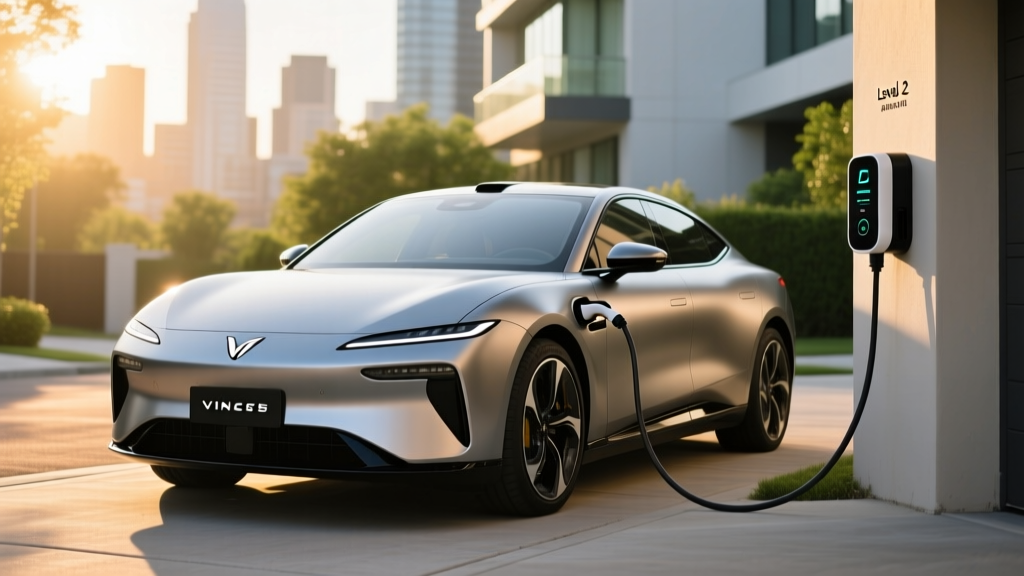
At home, a Level 2 charger (240V, 48-amp hardwired unit) delivers approximately 11.5 kW, adding roughly 25 miles of range per hour. A full 0-100% charge takes about 11-12 hours, which is manageable for overnight charging. We recommend a 48-amp hardwired Level 2 unit (such as the ChargePoint Home Flex or Emporia Level 2) paired with a dedicated 60-amp circuit installed by a licensed electrician. Expect installation costs of $800-$2,000 depending on your electrical panel capacity and run length.
Performance and Driving Dynamics
The VF 9's dual-motor all-wheel-drive powertrain produces 402 horsepower and 457 lb-ft of torque, yielding a 0-60 mph time of approximately 6.5 seconds. That's adequate for a three-row family SUV but noticeably slower than the Rivian R1S (which hits 60 in around 4.5 seconds in dual-motor form) and the Tesla Model X (3.8 seconds). The VF 9 prioritizes comfort over sportiness — the suspension tuning is soft, body roll is present in corners, and the steering is light and numb.
Where the VF 9 shines is ride quality. The air suspension (standard on Plus trim, available on Eco) absorbs road imperfections well, and the cabin remains quiet at highway speeds. Towing capacity is rated at approximately 4,000 pounds with the factory tow package — sufficient for a small boat or lightweight trailer but below the Rivian R1S's 7,700-pound rating.
Interior, Cargo, and Passenger Space
The VF 9 is a genuinely large SUV, measuring 201.4 inches long with a 122.4-inch wheelbase. That translates to legitimate three-row usability:
- First-row legroom: ~41.3 inches
- Second-row legroom: ~39.4 inches
- Third-row legroom: ~33.1 inches
- Cargo (behind 3rd row): ~15.7 cu ft
- Cargo (3rd row folded): ~46.2 cu ft
- Cargo (all rear rows folded): ~92.8 cu ft
The second row offers captain's chairs (Plus trim) or a bench (Eco trim), and both configurations provide generous space for adults. The third row accommodates adults on shorter trips — a rarity in the segment — though ingress and egress require some flexibility. Cargo space behind the third row is tight at 15.7 cu ft; most families will fold the third row for daily use and deploy it only when needed.
The interior materials are a mixed bag. Soft-touch surfaces and synthetic leather are present on upper surfaces, but some lower door panels and trim pieces feel hard and plasticky for the price point. The 15.6-inch center touchscreen dominates the dashboard, and physical buttons are almost entirely absent — climate controls, mirror adjustments, and even the glovebox release are buried in the touchscreen menus. This is a frequent frustration point noted by owners and reviewers alike.
Pricing, Trims, and Federal Tax Credit Eligibility
| Trim | MSRP | Est. After §30D Credit* |
|---|---|---|
| Eco (19" wheels, cloth/leatherette) | $59,990 | ~$52,490 |
| Plus (21" wheels, air susp., captain's chairs) | $69,990 | ~$62,490 |
*Federal tax credit eligibility is subject to IRS §30D rules. The VF 9 as an SUV qualifies under the $80,000 MSRP cap. However, the full $7,500 credit depends on battery component and critical mineral sourcing requirements, buyer income caps ($300K joint / $150K single), and point-of-sale transfer availability. VinFast's battery supply chain sourcing has been under scrutiny — verify current eligibility at IRS.gov before purchase. The credit may be $3,750, $7,500, or $0 depending on the specific model year's battery compliance.
VinFast also offers a battery-subscription model in some markets, which lowers the upfront vehicle price by removing the battery from the purchase. In the US, this program has seen limited adoption, and most buyers purchase the vehicle with the battery included. The subscription model could theoretically reduce the Eco trim below $45,000 upfront, but monthly battery lease fees ($100-$200+) must be factored into total cost of ownership.
Technology, Driver Assistance, and Software
The VF 9 comes equipped with a comprehensive ADAS (Advanced Driver Assistance System) suite that VinFast calls "Advanced Driver Assistance." This includes adaptive cruise control, lane-keeping assist, automatic emergency braking, blind-spot monitoring, and a 360-degree camera system. The system operates at SAE Level 2 — meaning the driver must remain fully engaged, with hands on the wheel and eyes on the road at all times. This is not autonomous or self-driving capability.
The infotainment system runs on a 15.6-inch portrait-oriented touchscreen. Wireless Apple CarPlay and Android Auto are standard. However, the software experience has been one of the VF 9's most criticized aspects. Early 2024-2025 models suffered from slow response times, translation errors, and buggy navigation. VinFast has issued multiple over-the-air (OTA) updates through 2026, and the system has improved noticeably — but it still lags behind the polish of Tesla's UI, Hyundai's Bluelink, or Google Built-in found in the Kia EV9.
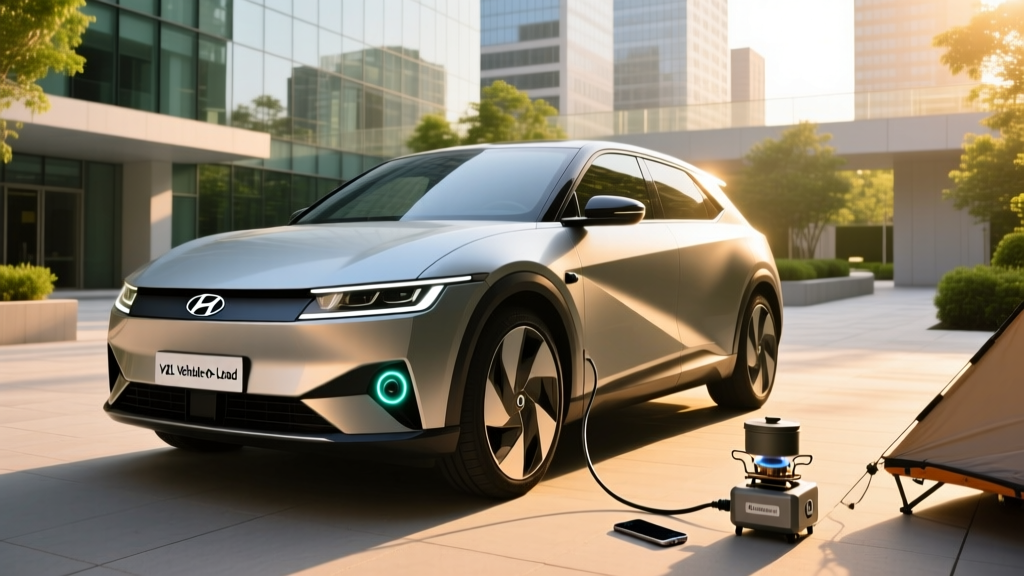
Unique features include a large panoramic glass roof (with an electrochromic dimming option on Plus trim), a virtual assistant with voice control, and vehicle-to-load (V2L) capability that allows you to power external devices from the vehicle's battery — useful for camping or emergency backup power.
Warranty and Ownership Considerations
VinFast backs the VF 9 with one of the most generous warranties in the EV industry:
- Battery & Powertrain: 10 years / 125,000 miles
- Bumper-to-Bumper: 7 years / 75,000 miles
- Roadside Assistance: 7 years / 75,000 miles
This significantly exceeds the industry-standard 8-year/100,000-mile battery warranty offered by most competitors. VinFast also guarantees battery capacity retention above 70% during the warranty period — if degradation drops below that threshold, the battery will be repaired or replaced.
However, the service network remains a concern. As of 2026, VinFast operates approximately 30-40 showrooms and service centers across the US, concentrated in California, Texas, Florida, and the Northeast. If you live outside these regions, service access may require significant travel. VinFast has partnered with some third-party service providers and offers mobile service for minor issues, but major battery or powertrain work requires a VinFast-certified facility.
Pros and Cons
Pros
- Genuinely usable third row for adults
- Industry-leading 10-year/125,000-mile battery warranty
- NACS connector — native Tesla Supercharger access
- Comfortable ride quality with available air suspension
- Large 123 kWh battery pack for strong range buffer
- V2L capability for external power
Cons
- DC charging peaks at 200 kW — slower than some rivals
- Software and infotainment still maturing
- Limited US service network (~30-40 locations)
- Low efficiency (~43 kWh/100 mi) means higher charging costs
- Minimal physical controls — everything via touchscreen
- Federal tax credit eligibility uncertain due to battery sourcing
- Resale value and brand longevity remain unproven
Who Should Buy the VinFast VF 9?
Choose the VF 9 if: You need a three-row EV SUV with real adult-capable third-row seating, you value the longest battery warranty available, you live near a VinFast service center, and you want native Supercharger access without an adapter.
Look elsewhere if: You prioritize the fastest DC charging speeds (consider the Kia EV9 or Hyundai Ioniq 5), you want the most polished software experience (Tesla Model X), you need heavy towing capacity (Rivian R1S), or you live far from VinFast's service footprint.
How It Stacks Up Against Competitors
The VF 9 occupies a competitive space. Here's how it compares on key metrics:
- Kia EV9: Lower starting price (~$54,900), similar range (~279 mi), faster DC charging (236 kW peak), but smaller third row and less cargo space.
- Rivian R1S: More powerful, better towing (7,700 lbs), superior off-road capability, more polished software, but starts around $75,900 and has a shorter 10-80% charge time advantage only on the newer Max pack.
- Tesla Model X: Fastest charging and performance, best Supercharger integration, but aging interior design, higher price (~$80,000+), and falcon-wing doors are polarizing.
The VF 9's best value proposition is its combination of interior space, warranty coverage, and NACS charging access at a sub-$60,000 starting price. It won't win every spec-sheet category, but for a family that needs three rows and values peace of mind on battery longevity, it's a compelling option.
Frequently Asked Questions
What is the real-world range of the VinFast VF 9?
The EPA rates the VF 9 Eco at 291 miles. In real-world highway driving at 70-75 mph, expect 240-260 miles. Cold weather (below 32°F) can reduce that to 200-220 miles. City driving with regenerative braking may slightly exceed the EPA estimate.
How fast does the VF 9 charge?
DC fast charging peaks at approximately 200 kW, achieving a 10-80% charge in about 31 minutes. Home Level 2 charging (240V, 48A) adds roughly 25 miles per hour, with a full charge taking 11-12 hours.
Does the VinFast VF 9 qualify for the federal EV tax credit?
It may. The VF 9's MSRP is under the $80,000 SUV cap, but the full $7,500 credit depends on battery critical-mineral and component sourcing requirements under IRS §30D, as well as buyer income limits. Verify current eligibility at IRS.gov before purchasing. The credit may be partial ($3,750) or unavailable depending on the model year's compliance.
How much does the VF 9 cost after tax credits?
If you qualify for the full $7,500 federal credit, the Eco trim drops to approximately $52,490 and the Plus to approximately $62,490. State incentives may further reduce cost — check your local programs. Note that the credit can now be transferred at point of sale, reducing your upfront payment rather than waiting for a tax refund.
Is the VF 9 worth buying versus the Kia EV9 or Rivian R1S?
The VF 9 is worth considering if third-row space and battery warranty are your top priorities and you live near a VinFast service center. The Kia EV9 is more affordable and charges faster. The Rivian R1S is more capable and refined but significantly more expensive. Test-drive all three before deciding.
What is the VF 9's towing capacity?
The VF 9 is rated for approximately 4,000 pounds of towing with the factory tow package. This handles a small boat, utility trailer, or lightweight camper but falls short of the Rivian R1S's 7,700-pound rating.
Is the VF 9 self-driving?
No. The VF 9's driver-assistance features are SAE Level 2, meaning the driver must remain fully engaged with hands on the wheel and eyes on the road. It is not autonomous or self-driving.
Sources: EPA fuel economy data via fueleconomy.gov, IRS clean vehicle credit rules via irs.gov, VinFast US specifications. Always verify current pricing, specs, and credit eligibility with the manufacturer and your tax professional before purchase.