If you've heard the name VinFast but aren't sure what the brand actually offers in the U.S., you're not alone. The Vietnamese automaker has had a turbulent entry into the American EV market, launching with the midsize VF 8 crossover amid heavy scrutiny over early software quality and aggressive pricing moves. For 2026, VinFast has recalibrated its approach: simplified trims, improved over-the-air software stability, and a more competitive price structure. But does the product itself hold up against established rivals like the Tesla Model Y, Hyundai IONIQ 5, and Ford Mustang Mach-E?
This review breaks down everything a prospective buyer needs to know about what a VinFast car actually is in practice — from real-world range and charging behavior to total cost of ownership and federal tax credit eligibility under current IRS §30D rules.
What Is VinFast and What Cars Does It Sell?
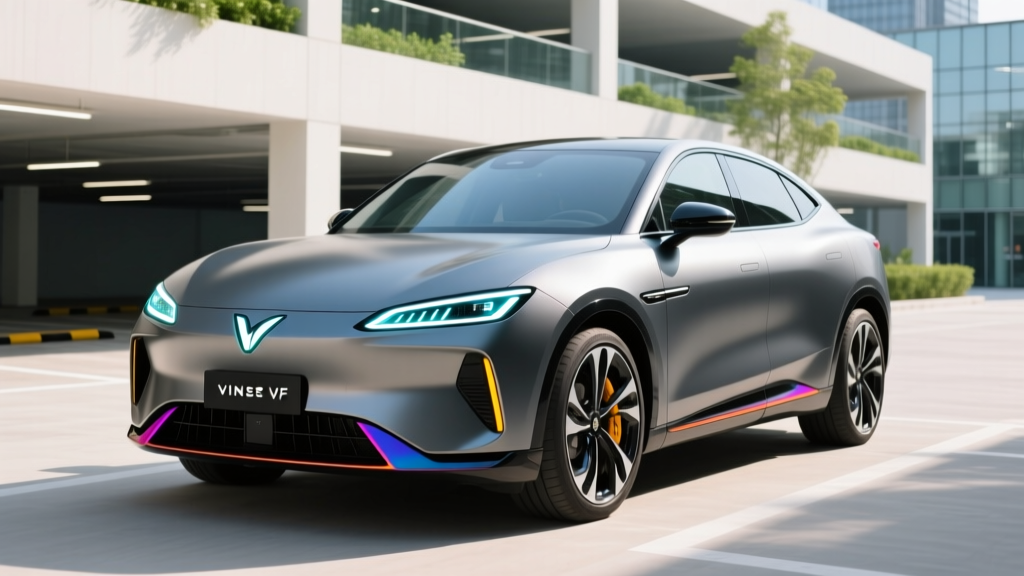
VinFast is the automotive division of Vingroup, Vietnam's largest private conglomerate. Founded in 2017, the brand initially sold gasoline vehicles domestically before pivoting entirely to battery-electric vehicles (BEVs) for global export. In the U.S., VinFast currently sells the VF 8, a midsize two-row electric crossover positioned against the Tesla Model Y and Hyundai IONIQ 5. The larger three-row VF 9 is also available in limited markets. Earlier plans for a subscription-only battery leasing model have been dropped in favor of conventional purchase with the battery included.
VinFast assembles vehicles at its factory in Hai Phong, Vietnam, with a planned North Carolina manufacturing facility that has faced repeated delays. As of 2026, all U.S.-spec VinFast vehicles are still imported, which affects federal tax credit eligibility (more on that below).
2026 VinFast VF 8: Core Specifications
| Attribute | Value |
|---|---|
| EPA Range (combined) | 264 miles |
| Battery Capacity (usable) | 77 kWh (gross ~82 kWh) |
| Battery Chemistry | NMC (Nickel Manganese Cobalt) |
| Drivetrain | Dual-motor AWD |
| Horsepower | 349 hp (Eco) / 402 hp (Plus) |
| 0–60 mph | 5.5 sec (Eco) / 4.8 sec (Plus) |
| Max DC Fast Charge | 180 kW (peak) |
| 10–80% DC Charge Time | ~31 minutes (claimed) |
| Level 2 Home Charge Rate | 11 kW (~33 miles/hr) |
| EPA Efficiency | 84 MPGe combined (2.5 kWh/mi) |
| Cargo Volume (rear seats up) | 26.4 cu ft |
| Cargo Volume (rear seats folded) | 54.1 cu ft |
| Rear Legroom | 38.2 inches |
| Battery/Powertrain Warranty | 10 years / 125,000 miles |
| Base MSRP (Eco AWD) | $43,990 (incl. destination) |
| Plus Trim MSRP | $48,490 |
Real-World Range: What the EPA Sticker Doesn't Tell You
EPA Estimated Range: 264 miles (VF 8 Eco AWD, combined)
Real-World Expectation: Expect approximately 210–230 miles on sustained highway driving at 70+ mph. In cold weather (below 32°F), range can drop to 170–190 miles without preconditioning. City driving with regenerative braking recovers closer to the EPA figure, around 245–260 miles.
The VF 8's 264-mile EPA rating trails key competitors. The Tesla Model Y Long Range AWD achieves 308 miles from a similar battery size, while the Hyundai IONIQ 5 Long Range AWD delivers 290 miles. The gap comes down to efficiency: the VF 8 consumes roughly 2.5 kWh per mile (400 Wh/mi), which is notably higher than the IONIQ 5's ~3.0 kWh/mi (340 Wh/mi). The VF 8's heavier curb weight (~5,500 lbs) and less aerodynamic profile contribute to this deficit.
In practical terms, 210 miles of real-world highway range means the VF 8 is viable for daily commuting and moderate road trips, but you'll need to plan charging stops more carefully on drives exceeding 180 miles. VinFast includes a heat pump on all trims, which helps mitigate cold-weather losses compared to resistive cabin heating, but the vehicle's mass still works against it in freezing temperatures.
Charging Performance: DC Fast and Home Level 2
| Charging Level | Power | Speed / Time | Notes |
|---|---|---|---|
| Level 1 (120V household) | ~1.4 kW | ~4 miles/hr | Emergency/trickle only |
| Level 2 (240V home/public) | 11 kW | ~33 miles/hr; full charge ~8 hrs | Requires 48A circuit |
| DC Fast Charge (CCS) | 180 kW peak | 10–80% in ~31 min | Sustained rate drops above 60% SoC |
The VF 8 uses the CCS1 (Combined Charging System) connector standard. With the U.S. industry shifting toward NACS (Tesla's connector), VinFast has confirmed that future models will adopt NACS, but current VF 8 owners will need a CCS-to-NACS adapter to access Tesla Supercharger stations. VinFast has provided adapters to early owners, but availability and compatibility should be verified before relying on Supercharger access.
The 180 kW peak DC charge rate is adequate but not class-leading. The Hyundai IONIQ 5 peaks at 240 kW (with its 800V architecture enabling 10–80% in ~18 minutes), and the Tesla Model Y sustains high rates on V3 Superchargers. In real-world DC charging, the VF 8's charge curve tapers noticeably after 60% State of Charge. You'll see the full 180 kW only briefly between 10–30% SoC; from 60–80%, expect rates closer to 60–80 kW. This means the 31-minute 10–80% claim assumes optimal battery temperature and a charger capable of sustained output.
For home charging, the 11 kW onboard charger is competitive. A full charge from empty takes roughly 8 hours on a Level 2 wallbox, which is practical for overnight charging. Installation of a 48A Level 2 circuit typically costs $800–$2,500 depending on your electrical panel capacity and run length — factor this into your purchase budget.
Pricing, Trims, and Federal Tax Credit Eligibility
| Trim | Base MSRP | Est. Federal Credit (§30D) | Effective Price (if eligible) |
|---|---|---|---|
| Eco AWD | $43,990 | Up to $3,750 | ~$40,240 |
| Plus AWD | $48,490 | Up to $3,750 | ~$44,740 |
Federal tax credit eligibility is the VF 8's most significant financial complication. Under current IRS §30D rules, the full $7,500 credit requires that a vehicle meet both critical-mineral sourcing and battery-component manufacturing requirements. Because the VF 8 is assembled in Vietnam with battery cells sourced outside North America, it does not qualify for the full $7,500. Depending on the specific model year's sourcing certifications, it may qualify for a partial credit of $3,750 (the critical-minerals half) — but this is subject to change as the Treasury Department updates Foreign Entity of Concern (FEOC) rules.
Additionally, §30D has buyer income caps ($150,000 modified AGI for single filers, $300,000 for joint filers) and an MSRP cap of $80,000 for SUVs — the VF 8 clears the MSRP cap comfortably. Always verify current eligibility on the fueleconomy.gov tax credit database before purchasing, and consult a tax professional for your specific situation. The credit can now be transferred to the dealer at point of sale, reducing your purchase price directly rather than waiting for a tax refund.
Driving Experience, Tech, and Interior
The VF 8 drives like a vehicle from a company still refining its craft. The dual-motor AWD powertrain delivers strong acceleration (5.5 seconds to 60 mph in the Eco trim), and the ride quality is composed on smooth surfaces. However, the suspension tuning struggles on broken pavement — impacts are transmitted more sharply than in a Model Y or IONIQ 5, and body roll is noticeable in spirited cornering. Steering feel is light and somewhat detached, which is fine for commuting but uninspiring on back roads.
Inside, the VF 8 features a 15.6-inch center touchscreen running VinFast's proprietary infotainment system. Early software versions were plagued by lag, phantom inputs, and missing features; multiple OTA updates through 2025 and into 2026 have improved responsiveness significantly, though the interface still feels a generation behind Tesla's or Hyundai's systems. Wireless Apple CarPlay and Android Auto are now standard, which largely bypasses the native system for most drivers.
The VF 8 includes a suite of Level 2 driver-assistance features branded as "ADAS" — adaptive cruise control, lane-keeping assist, blind-spot monitoring, and automatic emergency braking. These function adequately on highways but lack the refinement of Ford's BlueCruise or GM's Super Cruise. The system requires hands-on-wheel engagement and can be overly sensitive with lane-centering corrections. This is firmly SAE Level 2: the driver must remain fully attentive at all times.
Interior materials are a mixed bag. The Plus trim adds synthetic leather and soft-touch surfaces that feel premium, but lower dash and door-panel plastics in the Eco trim feel cost-cut. Rear-seat space is generous (38.2 inches of legroom), and the 26.4 cu ft cargo area behind the second row is competitive, though the shallow frunk (front trunk) adds only minimal storage.
Pros, Cons, and How It Compares
Pros
- Strong 10-year/125,000-mile battery and powertrain warranty — among the longest in the segment
- Standard dual-motor AWD on all trims (no base RWD model)
- Competitive Level 2 home charging speed (11 kW / ~33 mi/hr)
- Heat pump included standard for better cold-weather efficiency
- Generous rear-seat legroom and cargo volume
Cons
- Below-average EPA range (264 mi) and high energy consumption (2.5 kWh/mi)
- DC fast-charging peak of 180 kW trails rivals; charge curve tapers early
- Limited or partial federal tax credit due to overseas assembly and battery sourcing
- Infotainment system improved but still lags behind segment leaders
- Resale value uncertainty — VinFast's long-term U.S. commitment remains unproven
- Ride quality on rough roads is firmer than competitors
VF 8 vs. Tesla Model Y Long Range AWD: The Model Y offers 308 miles of range, access to the Supercharger network (native NACS), and a more mature software experience. The VF 8's warranty is longer, but the Model Y's efficiency and charging infrastructure advantage are hard to overcome for road-trip-heavy buyers.
VF 8 vs. Hyundai IONIQ 5 AWD: The IONIQ 5's 800V architecture enables significantly faster DC charging (10–80% in ~18 minutes), and its 290-mile EPA range beats the VF 8 by 26 miles. The IONIQ 5 also qualifies for more of the federal credit under current sourcing rules. The VF 8's advantage is its longer warranty and slightly larger cargo area.
VF 8 vs. Ford Mustang Mach-E Extended Range AWD: The Mach-E offers up to 312 miles (with the extended-range battery) and a more engaging driving experience. Ford's dealer network provides stronger service accessibility than VinFast's limited U.S. retail footprint.
Who Should Buy the VinFast VF 8?
Choose the VF 8 if:
- You value an industry-leading battery warranty and plan to own the vehicle 8+ years
- You primarily commute under 80 miles round-trip and charge at home nightly
- You want standard AWD without paying for a top-tier trim
- You can verify partial tax credit eligibility and the effective price works for your budget
Look elsewhere if:
- You take frequent road trips over 200 miles and need fast, reliable DC charging
- Maximizing federal tax credits ($7,500) is a priority
- Resale value predictability matters to you
- You want access to the Tesla Supercharger network without adapter dependency
Frequently Asked Questions
What is the real-world range of the VinFast VF 8?
The EPA rates the VF 8 Eco AWD at 264 miles combined. In real-world highway driving at 70 mph, expect 210–230 miles. Cold weather (below freezing) can reduce this to 170–190 miles. City driving with regenerative braking yields closer to the EPA estimate.
How fast does the VF 8 charge?
On a DC fast charger, the VF 8 peaks at 180 kW and claims 10–80% in approximately 31 minutes, though real-world charge curves taper after 60% SoC. At home on a Level 2 (240V, 48A) charger, it adds about 33 miles per hour, filling the battery in roughly 8 hours.
Does the VinFast VF 8 qualify for the federal EV tax credit?
Under current IRS §30D rules, the VF 8 likely qualifies for a partial credit of $3,750 (critical-minerals portion only) because its battery components are not North American-sourced and the vehicle is assembled in Vietnam. Eligibility depends on buyer income (under $150K single / $300K joint AGI) and can change as Treasury updates sourcing rules. Always verify on fueleconomy.gov before purchasing.
Is the VinFast VF 8 worth buying vs. competitors?
The VF 8 is a competent but not class-leading electric crossover. Its strengths are the long warranty, standard AWD, and decent interior space. Its weaknesses — lower range, slower charging, limited tax credit, and uncertain resale value — make it hard to recommend over the Tesla Model Y, Hyundai IONIQ 5, or Ford Mustang Mach-E unless the warranty and AWD standard pricing align with your priorities.
What are the biggest pros and cons?
Top pros: 10-year/125,000-mile battery warranty, standard AWD, heat pump, competitive home charging speed. Top cons: 264-mile EPA range (below average), 180 kW peak charging (slower than rivals), partial tax credit eligibility, infotainment still maturing, uncertain long-term brand stability in the U.S.
Does VinFast still offer battery subscriptions?
No. VinFast discontinued its battery-leasing subscription model in the U.S. in 2023. All current VF 8 purchases include the battery in the purchase price, and the battery is covered under the 10-year/125,000-mile warranty.