The VinFast VF 8 at a Glance
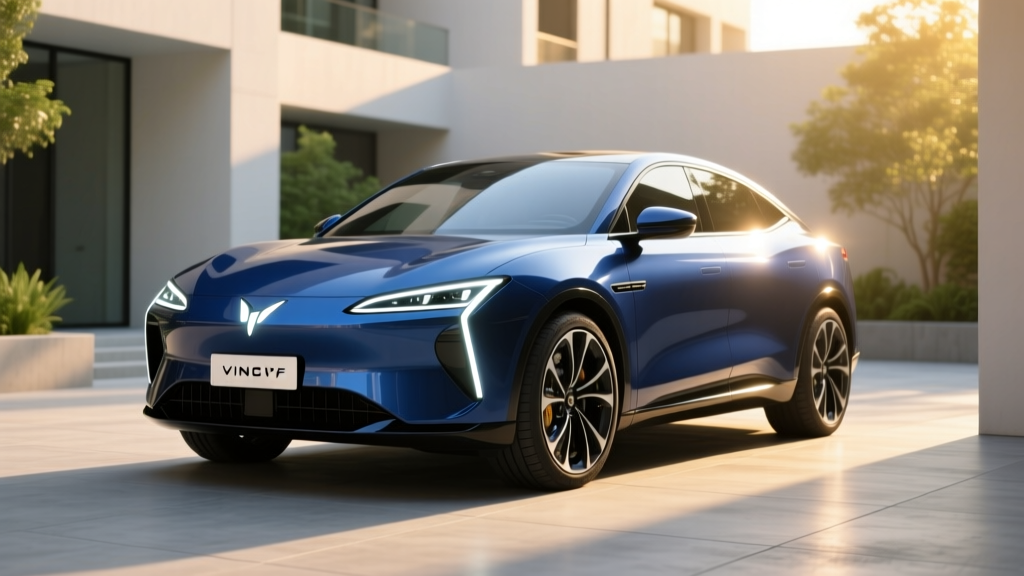
VinFast entered the U.S. market with the VF 8, a midsize electric SUV positioned between the Tesla Model Y and Hyundai Ioniq 5 in price but closer to the Ford Mustang Mach-E in size. After a rocky 2023 launch plagued by software bugs, the Vietnamese automaker has iterated aggressively on over-the-air updates, and the 2025–2026 VF 8 is a meaningfully different product than early reviewers encountered. This profile covers the VF 8 in its current U.S. configuration, including the Eco and Plus trims, with a focus on the data points that actually drive purchase decisions: real-world range, charging behavior, total cost after incentives, and where it fits against entrenched competitors.
| Spec | VF 8 Eco (RWD) | VF 8 Plus (AWD) |
|---|---|---|
| EPA Range | ~264 mi (est.) | ~243 mi (est.) |
| Battery (usable) | 87.7 kWh, NMC | 87.7 kWh, NMC |
| Horsepower | 348 hp | 402 hp |
| 0–60 mph | ~5.5 sec | ~4.5 sec |
| Drivetrain | Rear-wheel drive | Dual-motor AWD |
| DC Fast Charge (peak) | ~190 kW | ~190 kW |
| 10–80% DC Time | ~31 min | ~31 min |
| Level 2 (AC) Charge | 11 kW (~33 mi/hr) | 11 kW (~33 mi/hr) |
| MPGe (combined) | ~98 MPGe | ~89 MPGe |
| Cargo (rear seats up) | ~28.3 cu ft | ~28.3 cu ft |
| Cargo (rear seats folded) | ~61.0 cu ft | ~61.0 cu ft |
| Base MSRP | $46,000 | $51,800 |
| Battery Warranty | 10 yr / 125,000 mi | 10 yr / 125,000 mi |
Note: Specs reflect VinFast's latest published figures and EPA estimates as of early 2026. Always confirm with fueleconomy.gov for certified numbers before purchasing.
Range and Efficiency: EPA Sticker vs. Real World
The VF 8 carries an 87.7 kWh usable NMC (nickel-manganese-cobalt) battery pack — one of the larger batteries in the midsize EV SUV segment. That capacity gives it a theoretical advantage, but the vehicle's weight (over 5,500 lbs for the AWD Plus trim) and aerodynamic profile keep EPA numbers moderate rather than class-leading.
Real-World Range Expectations
EPA Estimated: ~264 miles (Eco RWD) / ~243 miles (Plus AWD)
Highway driving (70–80 mph, moderate temps): Expect 210–230 miles (Eco) and 195–215 miles (Plus). The VF 8's boxy crossover shape and heavy curb weight penalize highway efficiency more than city driving, where regenerative braking recovers energy.
Cold weather (below 32°F): Plan for 25–35% range reduction without preconditioning. NMC chemistry loses more capacity in deep cold than LFP packs. With the heat pump engaged and battery preconditioned, expect ~175–200 miles on the Eco and ~165–185 miles on the Plus in freezing conditions.
Efficiency: Roughly 34–36 kWh/100 mi (Eco) and 38–41 kWh/100 mi (Plus) in mixed driving. For context, the Hyundai Ioniq 5 AWD achieves about 34 kWh/100 mi, so the VF 8 Plus is noticeably less efficient due to its heavier platform.
Charging: DC Fast-Charge Curve and Home Setup
Charging speed is where the VF 8 delivers adequate but not exceptional performance. The 800-volt architecture is absent here — the VF 8 runs on a 400V platform, which caps its peak DC charge rate below rivals like the Ioniq 5, Kia EV6, and Porsche Macan Electric.
| Charging Level | Power | Speed | Notes |
|---|---|---|---|
| Level 1 (120V household) | ~1.4 kW | ~4 mi/hr | Emergency/trickle only |
| Level 2 (240V home) | 11 kW | ~33 mi/hr | Full charge in ~9 hours |
| DC Fast Charge (peak) | ~190 kW | 10–80% in ~31 min | 400V platform; tapers sharply above 80% |
| DC Fast (80–100%) | ~40–60 kW avg | 80–100% in ~25–30 min | Typical NMC taper behavior |
Charging curve reality: The VF 8 hits its ~190 kW peak only between roughly 10–30% state of charge. By 50%, you'll see ~140–150 kW. By 80%, it drops to roughly 50–60 kW. This means the published 10–80% time of ~31 minutes is achievable under ideal conditions (warm battery, preconditioned, functioning 350 kW stall), but real-world sessions at Electrify America or EVgo stations may stretch to 35–40 minutes depending on ambient temperature and stall power sharing.
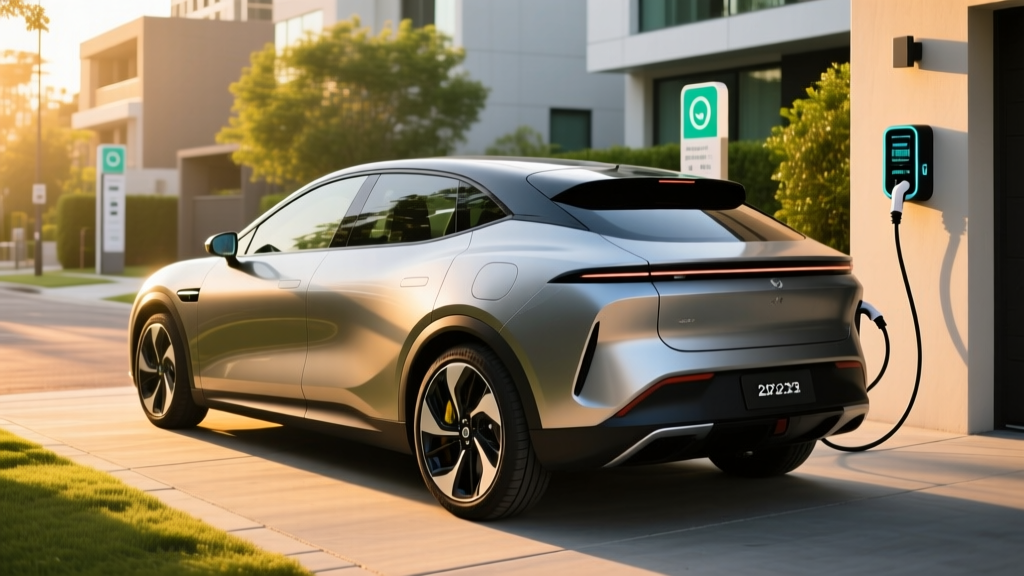
Home charging: The onboard charger accepts up to 11 kW on Level 2 AC. On a 48-amp Level 2 home charger (the most common hardwired installation), you'll add roughly 33 miles of range per hour — enough to fully replenish the 87.7 kWh battery overnight in about 9 hours. If your home has a 40-amp circuit (common for NEMA 14-50 outlets), expect ~9.6 kW and roughly 28 mi/hr.
Performance and Driving Dynamics
The VF 8 Plus with dual-motor AWD delivers 402 horsepower and a 0–60 mph time of approximately 4.5 seconds — quick enough to merge confidently and overtake without drama, though not in the same league as the Tesla Model Y Performance (3.5 seconds) or the Ford Mustang Mach-E GT (3.5 seconds). The Eco trim's 348 hp and ~5.5-second sprint is adequate for daily driving but feels merely brisk rather than exciting given the vehicle's heft.
Ride quality has improved markedly since the 2023 model year. VinFast recalibrated the adaptive dampers (standard on Plus, optional on Eco) and revised the steering map. The result is a compliant, slightly soft ride that absorbs highway expansion joints well but exhibits noticeable body roll in aggressive cornering. This is a comfort-tuned family hauler, not a sport crossover.
Driver assistance: The VF 8 comes with VinFast's ADAS suite, which includes adaptive cruise control with stop-and-go, lane centering, automatic emergency braking, and blind-spot intervention. This is an SAE Level 2 system — the driver must keep hands on the wheel and eyes on the road at all times. It does not offer hands-free driving like GM's Super Cruise or Ford's BlueCruise on mapped highways. The lane-centering function is competent on well-marked interstates but can hunt in faded lane markings, a common issue across the segment.
Interior, Tech, and Practicality
The VF 8's cabin is where the vehicle tries hardest to punch above its price point. Standard features include a 15.6-inch center touchscreen, an 8-inch digital driver display, head-up display (Plus trim), ventilated front seats (Plus), and a panoramic glass roof. The infotainment system runs on a custom VinFast OS that has improved substantially since launch but still lacks the polish and third-party app ecosystem of Tesla's interface or the Google Built-In platform in the Ioniq 5.
Passenger space:
- Front headroom: ~39.0 inches
- Front legroom: ~41.3 inches
- Rear headroom: ~38.0 inches
- Rear legroom: ~38.6 inches
Rear legroom is competitive with the Model Y and Mach-E. Three adults across the rear bench is tight but feasible for short trips. The flat floor (no transmission tunnel) helps the middle passenger.
Cargo: 28.3 cu ft behind the rear seats expands to ~61.0 cu ft with the 60/40 split folded. There is no front trunk (frunk) — the space under the hood houses HVAC and power electronics. This is a notable omission; the Ioniq 5, Mach-E, and Model Y all offer frunks ranging from 0.9 to 4.7 cu ft.
Standout tech:
- Standard 15.6" touchscreen with wireless Apple CarPlay and Android Auto
- Head-up display with navigation overlay (Plus)
- Vehicle-to-load (V2L) capability via adapter — power devices up to ~2.2 kW
- Over-the-air software updates (major improvements shipped since 2024)
- 10-speaker audio system (Plus)
Notable drawbacks:
- No frunk
- Infotainment still lags competitors in responsiveness and app selection
- Limited dealer/service network compared to legacy brands (roughly 30 U.S. showrooms as of 2026)
- No hands-free highway driving assist
- Panel gaps and paint quality inconsistent on early builds (improving on 2025–2026 production)
Pricing, Trims, and Federal Tax Credit Eligibility
The VF 8 is offered in two trims for the U.S. market:
| Trim | Base MSRP | As-Tested (typical) | Est. Federal Credit (§30D) | Effective Price |
|---|---|---|---|---|
| VF 8 Eco (RWD) | $46,000 | $47,500 (w/ packages) | Up to $7,500* | ~$38,500–$40,000 |
| VF 8 Plus (AWD) | $51,800 | $54,000 (w/ packages) | Up to $7,500* | ~$44,300–$46,500 |
*Federal tax credit caveats (IRS §30D): The $7,500 credit is not automatic. Eligibility depends on multiple requirements that change periodically. As of 2026, the key rules include:
- MSRP cap: SUVs must have an MSRP at or below $80,000. Both VF 8 trims qualify.
- Buyer income cap: Adjusted gross income must not exceed $150,000 (single), $225,000 (head of household), or $300,000 (joint filers).
- Battery sourcing: A percentage of critical minerals and battery components must be sourced from the U.S. or free-trade-agreement countries. VinFast's battery supply chain (sourced from Gotion and other suppliers) has been evolving to meet these thresholds. Check the latest IRS guidance on fueleconomy.gov for the current credit amount for the VF 8, as partial credits ($3,750) are possible if only one of the two sourcing requirements is met.
- Point-of-sale transfer: Since 2024, buyers can transfer the credit to the dealer at purchase, reducing the out-of-pocket price immediately rather than waiting for a tax refund. Confirm with your VinFast dealer that they support POS transfers.
Warranty and Ownership Costs
VinFast backs the VF 8 with one of the most competitive warranty packages in the EV segment:
- Battery & Powertrain: 10 years / 125,000 miles (whichever comes first)
- Battery capacity retention: Guaranteed to retain at least 70% of original capacity during the warranty period
- Bumper-to-bumper: 7 years / 75,000 miles
- Roadside assistance: 7 years / 75,000 miles
The 10-year battery warranty exceeds the federal minimum of 8 years / 100,000 miles and matches or beats most competitors (Tesla offers 8 yr / 120,000 mi on Model Y; Hyundai offers 10 yr / 100,000 mi on the Ioniq 5). The 70% capacity retention threshold is industry-standard for NMC packs.
Insurance: Expect premiums 15–25% higher than a comparably priced ICE crossover. VinFast's limited service network and parts availability contribute to higher collision-repair estimates, which insurers factor in. Get quotes before purchasing.
Depreciation: The VF 8 has experienced steeper depreciation than the Model Y or Ioniq 5 due to brand uncertainty and early quality issues. Early 2023 models have depreciated 40–50% as of late 2025. If buying new, factor in a potentially larger depreciation hit than established-brand EVs. If buying used, this steep drop makes 2023–2024 models a relative bargain — though verify the software-update status and battery health report.
How the VF 8 Stacks Up Against Competitors
| Spec | VinFast VF 8 Plus | Tesla Model Y LR AWD | Hyundai Ioniq 5 AWD | Ford Mach-E ER AWD |
|---|---|---|---|---|
| EPA Range | ~243 mi | ~320 mi | ~290 mi | ~290 mi |
| Battery (usable) | 87.7 kWh | ~78 kWh | 77.4 kWh | 91 kWh |
| Peak DC Charge | ~190 kW | ~250 kW | ~240 kW | ~150 kW |
| 10–80% Time | ~31 min | ~25 min | ~18 min | ~41 min |
| 0–60 mph | ~4.5 sec | ~4.8 sec | ~5.1 sec | ~5.1 sec |
| Base MSRP (AWD) | $51,800 | ~$48,990 | ~$50,850 | ~$49,995 |
| Battery Warranty | 10 yr / 125k mi | 8 yr / 120k mi | 10 yr / 100k mi | 8 yr / 100k mi |
| Frunk | No | Yes (4.1 cu ft) | Yes (0.9 cu ft) | Yes (4.7 cu ft) |
The VF 8 Plus is the most powerful in this group but also the shortest on range and the slowest to charge (tied roughly with the Mach-E). The Ioniq 5's 800V architecture gives it a decisive fast-charging advantage. The Model Y remains the efficiency and range benchmark. The VF 8's edge lies in its warranty coverage and standard equipment density — features that cost extra on competitors often come standard here.
Pros
- Class-leading 10-year / 125,000-mile battery warranty
- Strong standard equipment (HUD, ventilated seats, V2L on Plus)
- Comfortable ride quality after 2024+ suspension revisions
- Competitive 0–60 time for the segment (4.5 sec, Plus AWD)
- Spacious rear-seat legroom (~38.6 in)
- MSRP qualifies for full §30D credit (subject to sourcing rules)
Cons
- EPA range trails most competitors by 40–70+ miles
- 400V platform limits DC fast-charge speed vs. 800V rivals
- No front trunk (frunk)
- Thin U.S. dealer and service network (~30 locations)
- Infotainment system still maturing
- Steep depreciation hurts new-buyer resale value
- No hands-free Level 2+ highway driving feature
Who Should Buy the VinFast VF 8?
Buy the VF 8 If:
- You prioritize warranty coverage and want the longest battery protection in the segment
- You mostly drive in urban and suburban settings where the 243-mile range is sufficient for 4–5 days between charges
- You can charge at home (Level 2) and rarely rely on DC fast charging for daily use
- You want a well-equipped AWD EV SUV near $45,000 after the federal credit
- You're buying used and can take advantage of steep depreciation on 2023–2024 models
Look Elsewhere If:
- You regularly take road trips exceeding 250 miles and need maximum range (choose Model Y or Ioniq 5)
- You depend on public DC fast charging and want the quickest pit stops (Ioniq 5's 18-min 10–80% is hard to beat)
- You live far from a VinFast service center and need robust dealer support
- You want hands-free highway driving (GM Super Cruise or Ford BlueCruise vehicles)
- Frunk storage is important for your use case
Frequently Asked Questions
What is the real-world range of the VinFast VF 8?
The EPA estimates ~264 miles for the Eco RWD and ~243 miles for the Plus AWD. In real-world mixed driving at moderate temperatures, expect 220–245 miles (Eco) and 200–225 miles (Plus). Highway-only driving at 75+ mph drops this by another 10–15%. In freezing weather, plan for 175–200 miles without preconditioning.
How fast does the VF 8 charge at home and on the road?
On a Level 2 home charger (240V, 48A), the VF 8 charges at up to 11 kW, adding about 33 miles of range per hour — a full charge takes roughly 9 hours. On a DC fast charger, it peaks at ~190 kW and can go from 10–80% in about 31 minutes under ideal conditions. Real-world sessions often stretch to 35–40 minutes due to the charge curve taper and station conditions.
Does the VinFast VF 8 qualify for the $7,500 federal EV tax credit?
The VF 8's MSRP falls under the $80,000 SUV cap, making it potentially eligible. However, the actual credit amount depends on battery-critical-mineral and component sourcing requirements that change periodically. Check the current status on fueleconomy.gov or consult the IRS §30D guidance. Buyer income caps ($150K single / $300K joint) also apply. The credit can be transferred at the point of sale to reduce your purchase price immediately.
Is the VF 8 worth buying vs. the Tesla Model Y or Hyundai Ioniq 5?
It depends on your priorities. The Model Y wins on range (~320 mi), charging speed, and Supercharger network access. The Ioniq 5 dominates on DC fast-charge time (18 min, 10–80%). The VF 8 counters with a longer battery warranty (10 yr / 125k mi), more standard luxury features, and a lower effective price after credits. If range and road-trip convenience are paramount, the VF 8 is the weaker choice. If you want a feature-rich, warrantied daily driver with home charging, it's a legitimate option — especially on the used market.
What are the biggest complaints from VF 8 owners?
Early 2023 owners reported software glitches, abrupt regenerative braking behavior, panel-gap inconsistencies, and slow infotainment response. Most of these issues have been addressed through OTA updates and production changes for 2025–2026 models, but the brand's reputation still carries the weight of those early reviews. The limited service network remains a practical concern for owners outside major metro areas.
Does the VF 8 have a frunk?
No. The VF 8 does not have a front trunk. The under-hood area is occupied by power electronics and HVAC components. All cargo must go in the rear compartment (28.3 cu ft behind rear seats, ~61.0 cu ft folded).
What battery chemistry does the VF 8 use?
The VF 8 uses an NMC (nickel-manganese-cobalt) lithium-ion battery. NMC offers higher energy density than LFP (lithium iron phosphate), which is why VinFast can fit 87.7 kWh into the pack. The trade-off is slightly faster degradation in extreme heat and greater cold-weather range loss compared to LFP packs. VinFast's 10-year / 70% capacity-retention warranty provides a safety net.