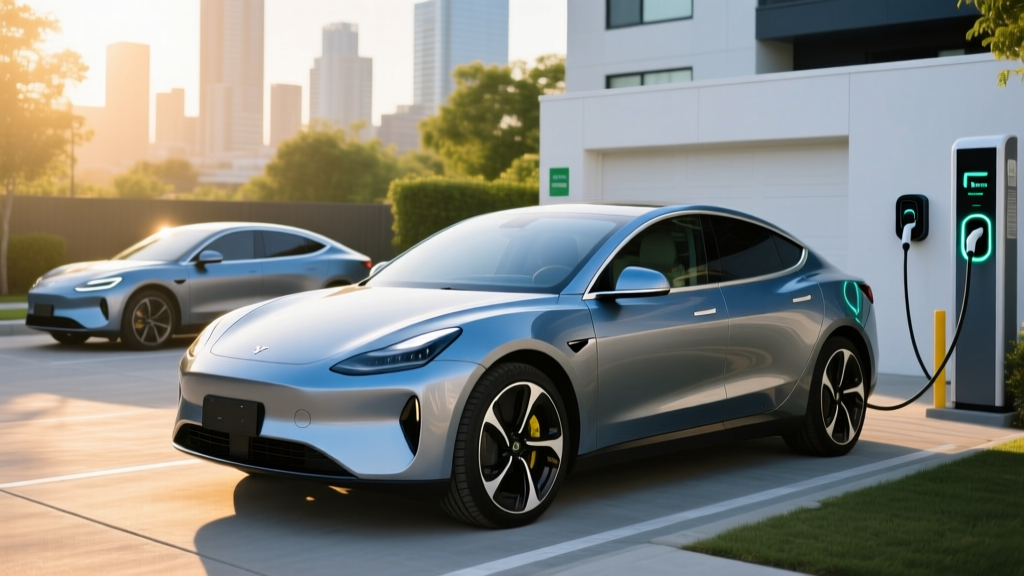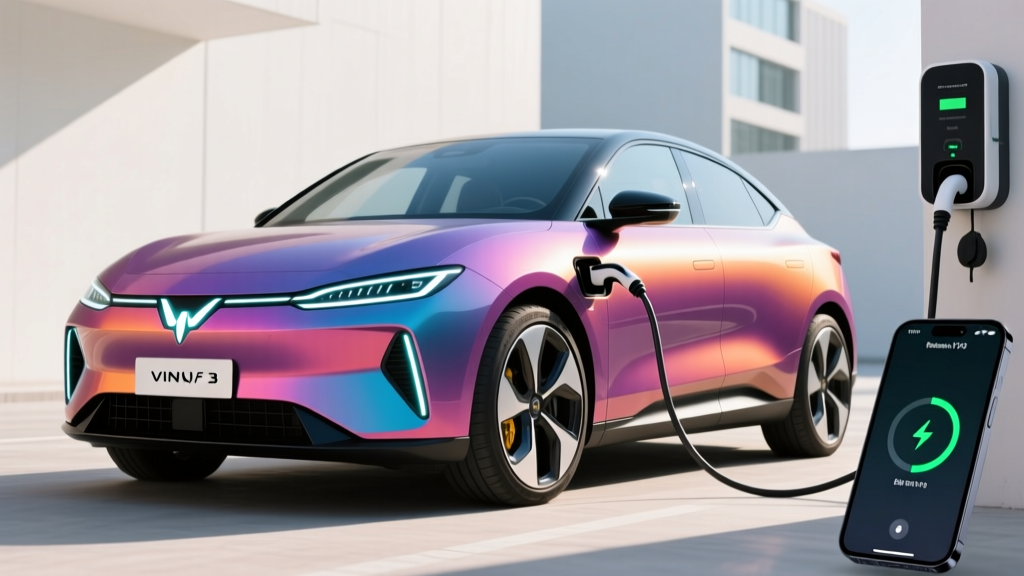
The VinFast VF 3 is a compact electric crossover aimed squarely at urban commuters and budget-conscious EV shoppers. With an EPA-estimated range of 160 miles, an 18-kWh LFP battery, and a starting MSRP under $25,000, it positions itself as one of the most affordable new electric vehicles available in the U.S. market. But affordability only matters if the vehicle delivers on daily usability, charging convenience, and long-term reliability. This review examines the VF 3's real-world range expectations, charging performance, ownership costs, and how it stacks up against competitors like the Chevrolet Equinox EV, Nissan Leaf, and Hyundai Kona Electric.
Range and Efficiency: What to Expect Beyond the EPA Sticker
The VinFast VF 3 carries an 18-kWh usable battery pack using lithium iron phosphate (LFP) chemistry. LFP batteries are known for their thermal stability, longer cycle life, and lower degradation compared to NMC (nickel manganese cobalt) chemistries — making them well-suited for daily drivers who charge frequently. The EPA estimates the VF 3 at 160 miles of range on a full charge, with an efficiency rating of approximately 115 MPGe combined (or roughly 29 kWh per 100 miles).
Real-World Range Expectations
EPA Estimate: 160 miles
City Driving: Expect 150–165 miles in stop-and-go traffic where regenerative braking recovers energy efficiently.
Highway Driving (70+ mph): Range drops to approximately 120–135 miles due to aerodynamic drag and sustained speeds.
Cold Weather (below 32°F): Plan for 110–130 miles. LFP batteries experience greater cold-weather range loss than NMC, and the VF 3's smaller battery offers less buffer.
For most urban commuters driving 30–40 miles round-trip, the VF 3's range is more than adequate. However, if your commute includes extended highway segments or you live in a region with harsh winters, you'll need to plan charging more carefully. The smaller battery also means less margin for error on longer trips — a 160-mile EPA rating leaves little room for detours or unexpected traffic.
Charging Performance: DC Fast Charging and Home Setup
Charging speed is critical for EV usability, especially for drivers without reliable home charging access. The VF 3 supports DC fast charging at up to 45 kW, which is modest by 2026 standards but acceptable given the small battery size. A 10–80% charge takes approximately 35 minutes at a compatible DC fast charger. The charge curve tapers significantly above 80% to protect battery health, so plan for longer stops if you need a full charge.
| Charging Level | Power (kW) | Time | Miles Added |
|---|---|---|---|
| Level 1 (120V household) | 1.4 kW | 14–16 hours (0–100%) | ~4 miles per hour |
| Level 2 (240V home/public) | 7.2 kW | 3 hours (0–100%) | ~22 miles per hour |
| DC Fast Charging | 45 kW peak | 35 minutes (10–80%) | ~90 miles in 35 min |
For home charging, the VF 3 accepts up to 7.2 kW on Level 2, which fully replenishes the battery in about 3 hours. This is practical for overnight charging and means you'll rarely need to use public chargers if you have home access. However, the 45-kW DC fast-charging capability is a limitation for road trips. At that rate, a 200-mile journey would require at least one 45-minute stop, and longer trips become increasingly time-consuming compared to EVs with 150–250 kW charging capabilities.
Performance and Drivetrain
The VinFast VF 3 is powered by a single electric motor driving the front wheels, producing 67 horsepower and 100 lb-ft of torque. The 0–60 mph time is approximately 12 seconds, which is leisurely by modern EV standards but adequate for city driving and merging onto highways. The VF 3 is not designed for performance — it's optimized for efficiency and affordability.
The front-wheel-drive layout and compact dimensions make the VF 3 easy to maneuver in tight urban environments. The turning radius is tight, and visibility is good thanks to the upright seating position and large windows. However, the modest power output means highway passing requires planning, and the VF 3 feels strained at sustained speeds above 75 mph. This is a city car that can handle occasional highway use, not a cruiser for long-distance travel.
Interior Space, Cargo, and Practicality
The VF 3 is a subcompact crossover, and interior space reflects that classification. Front-seat passengers enjoy adequate headroom and legroom, with 41 inches of front legroom. The rear seat is tighter, offering 33 inches of legroom — sufficient for children or occasional adult passengers on short trips, but cramped for taller adults on longer journeys.
Cargo capacity is 12 cubic feet behind the rear seats, which is enough for groceries, a couple of carry-on bags, or a small dog crate. Folding the rear seats expands cargo space to approximately 38 cubic feet, making the VF 3 surprisingly practical for larger items like a bicycle (with the front wheel removed) or flat-pack furniture. There is no front trunk (frunk), which is a missed opportunity for additional storage in an EV.
Pricing, Trim Levels, and Federal Tax Credit Eligibility
The VinFast VF 3 starts at an MSRP of $23,900 for the base Eco trim, making it one of the least expensive new EVs available in the U.S. A higher-spec Plus trim adds features like heated front seats, a larger infotainment screen, and advanced driver-assistance systems for approximately $26,500.
| Trim | MSRP | Federal Tax Credit (§30D) | Effective Price |
|---|---|---|---|
| Eco | $23,900 | Up to $7,500* | ~$16,400* |
| Plus | $26,500 | Up to $7,500* | ~$19,000* |
*Federal tax credit eligibility depends on multiple factors under IRS §30D rules for 2026. The vehicle must meet MSRP caps (under $80,000 for SUVs, under $55,000 for sedans — the VF 3 qualifies), buyer income limits (modified adjusted gross income cannot exceed $150,000 for single filers, $300,000 for joint filers), and battery component and critical mineral sourcing requirements. The credit can be transferred to the dealer at point of sale, reducing the purchase price directly. Consult IRS guidelines and a tax professional to confirm eligibility.
Even without the full tax credit, the VF 3's pricing is compelling. A $23,900 starting price undercuts competitors like the Chevrolet Equinox EV ($33,000), Hyundai Kona Electric ($32,675), and Nissan Leaf ($28,140). However, those vehicles offer significantly more range (250–320 miles EPA), faster charging, and more interior space, which justifies their higher prices for many buyers.
Warranty Coverage and Long-Term Ownership
VinFast provides a 10-year/125,000-mile battery warranty for the VF 3, guaranteeing that the battery will retain at least 70% of its original capacity during that period. The powertrain warranty covers 10 years/125,000 miles, and the basic vehicle warranty is 5 years/60,000 miles. This is competitive with industry leaders like Hyundai and Kia, and it reflects confidence in the LFP battery chemistry's longevity.
LFP batteries typically degrade more slowly than NMC chemistries, with many retaining 85–90% capacity after 100,000 miles of use. However, VinFast is a relatively new brand in the U.S. market, and long-term reliability data is still limited. The company's dealer network and service infrastructure are also smaller than established automakers, which could impact repair turnaround times and parts availability in some regions.
Technology and Driver-Assistance Features
The VF 3 comes standard with a 10-inch touchscreen infotainment system supporting wireless Apple CarPlay and Android Auto. The interface is straightforward, with physical buttons for climate control and volume — a practical choice that avoids the frustration of touchscreen-only controls. Higher trims add navigation, a premium audio system, and over-the-air software updates.
Driver-assistance technology includes SAE Level 2 features such as adaptive cruise control, lane-keeping assist, automatic emergency braking, and blind-spot monitoring. These systems are competent for highway driving and traffic jams, but they require continuous driver attention and are not autonomous. The VF 3 does not offer advanced features like Tesla's Autopilot or GM's Super Cruise, but at this price point, the included safety tech is comprehensive.
Driver-Assistance Limitations
The VF 3's driver-assistance features are SAE Level 2, meaning the driver must remain engaged and ready to take control at all times. These systems assist with steering, acceleration, and braking but do not make the vehicle self-driving. Always keep your hands on the wheel and eyes on the road.
Who Should Buy the VinFast VF 3?
The VF 3 is best suited for urban commuters with short daily drives (under 50 miles round-trip) and access to home charging. It's an excellent second car for households that already own a larger vehicle for longer trips. The low purchase price, especially after the federal tax credit, makes it accessible to buyers who might otherwise consider a used EV or a gasoline-powered subcompact.
However, the VF 3 is not ideal for:
- Long-distance travelers: The 160-mile range and 45-kW charging make road trips time-consuming.
- Large families: Rear-seat space and cargo capacity are limited.
- Cold-climate drivers: LFP batteries lose more range in freezing temperatures, and the small battery offers less buffer.
- Performance-oriented buyers: The 67-hp motor and 12-second 0–60 time are adequate but uninspiring.
Competitive Comparison: VF 3 vs. Key Rivals
| Vehicle | EPA Range | Battery (kWh) | DC Fast Charge (kW) | Base MSRP |
|---|---|---|---|---|
| VinFast VF 3 | 160 mi | 18 kWh (LFP) | 45 kW | $23,900 |
| Nissan Leaf S | 149 mi | 40 kWh (NMC) | 50 kW | $28,140 |
| Hyundai Kona Electric | 261 mi | 65 kWh (NMC) | 100 kW | $32,675 |
| Chevrolet Equinox EV | 319 mi | 85 kWh (NMC) | 150 kW | $33,000 |
The VF 3's primary advantage is price. It undercuts every competitor by at least $4,000, and the gap widens to $9,000–$10,000 when comparing similarly equipped trims. However, the trade-offs are significant: less range, slower charging, and less interior space. The Nissan Leaf is the closest competitor in terms of range and price, but it's being discontinued after the 2025 model year. The Kona Electric and Equinox EV are more practical for most buyers, offering 250+ miles of range and faster charging for road trips.
Pros and Cons
Pros
- Exceptionally low starting price, especially after tax credit
- LFP battery offers long cycle life and thermal stability
- Compact size makes it easy to park and maneuver in cities
- Comprehensive 10-year/125,000-mile battery warranty
- Standard wireless Apple CarPlay and Android Auto
- Adequate cargo space for a subcompact (12 cu ft, 38 cu ft with seats folded)
Cons
- 160-mile EPA range limits road-trip practicality
- 45-kW DC fast charging is slow by 2026 standards
- Modest 67-hp motor results in leisurely acceleration (12-sec 0–60)
- Rear-seat legroom is tight for adult passengers
- LFP battery loses more range in cold weather than NMC
- VinFast's U.S. dealer network and service infrastructure are still developing
Final Verdict
The VinFast VF 3 fills a specific niche: affordable urban electric mobility. If your daily driving stays under 50 miles, you have reliable home charging, and you prioritize low purchase price over range and performance, the VF 3 is a compelling choice. The LFP battery and strong warranty provide peace of mind for long-term ownership, and the federal tax credit can reduce the effective price to under $17,000.
However, if you need more range for highway commuting, frequent road trips, or live in a cold climate, the VF 3's limitations become significant. In those cases, spending an additional $8,000–$10,000 for a Hyundai Kona Electric or Chevrolet Equinox EV provides substantially more usability. The VF 3 is not a compromise-free EV — it's a budget-conscious solution for a specific use case. For the right buyer, that's exactly what makes it worthwhile.
Frequently Asked Questions
What is the real-world range of the VinFast VF 3?
The EPA estimates 160 miles, but real-world range varies significantly. Expect 150–165 miles in city driving, 120–135 miles on the highway, and 110–130 miles in cold weather below freezing. The small 18-kWh battery offers less buffer than larger EVs, so range planning is essential.
How fast does the VF 3 charge at home and on DC fast chargers?
At home on a 240V Level 2 charger (7.2 kW), the VF 3 charges from 0–100% in about 3 hours. On a DC fast charger, it peaks at 45 kW and charges from 10–80% in approximately 35 minutes. The charge rate slows significantly above 80% to protect battery health.
Does the VinFast VF 3 qualify for the federal EV tax credit?
The VF 3 is eligible for up to $7,500 under IRS §30D, but eligibility depends on your income (under $150,000 single / $300,000 joint), the vehicle's MSRP (under $80,000 for SUVs), and battery component and critical mineral sourcing requirements. The credit can be transferred to the dealer at point of sale. Consult IRS guidelines and a tax professional to confirm your eligibility.
Is the VF 3 worth buying compared to competitors?
If your priority is the lowest possible purchase price and your driving stays within the 160-mile range, the VF 3 is worth serious consideration. However, if you need more range, faster charging, or more interior space, competitors like the Hyundai Kona Electric and Chevrolet Equinox EV offer better overall value despite their higher prices.
What are the biggest drawbacks of the VF 3?
The main limitations are the 160-mile EPA range, slow 45-kW DC fast charging, modest 67-hp performance, and tight rear-seat space. Additionally, VinFast's U.S. dealer network is still growing, which could impact service availability in some regions.
How long will the VF 3's battery last?
VinFast warranties the battery for 10 years or 125,000 miles, guaranteeing at least 70% capacity retention. LFP chemistry typically degrades more slowly than NMC, and many LFP batteries retain 85–90% capacity after 100,000 miles. Real-world longevity will depend on charging habits, climate, and usage patterns.
Can I take the VF 3 on road trips?
You can, but it requires planning. The 160-mile range and 45-kW charging mean longer trips will involve frequent 35–45-minute stops. For occasional road trips, it's manageable, but if you frequently drive 200+ miles, a longer-range EV is more practical.