The Short Answer on Vespa Scooters Electric
If you're researching Vespa scooters electric options, the current model is the Vespa Elettrica (2026 carryover). It offers an EPA-estimated 62 miles of range from a 4.2 kWh lithium-ion battery, a top speed of 31 mph (50 km/h) in Eco mode, and starts at approximately $8,499. It charges from 0–100% in about 4 hours on a standard 120V household outlet. The Elettrica is best suited for short urban commutes under 25 miles round-trip with reliable home or garage charging access. It does not qualify for the federal §30D EV tax credit because it is classified as a low-speed vehicle/motorcycle with a battery below the 4 kWh threshold required for the full credit and does not meet critical-mineral sourcing documentation requirements.
What the Vespa Elettrica Actually Is (and Isn't)
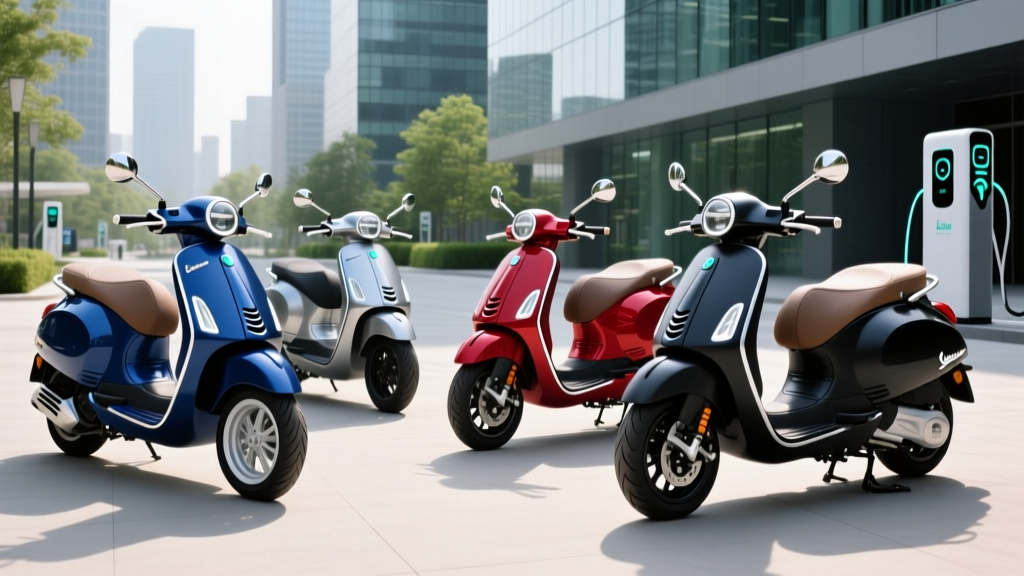
The Vespa Elettrica is Piaggio's fully electric interpretation of the iconic steel-body scooter. It is not a motorcycle and it is not a car — it sits in the low-speed electric scooter/moped category. That classification matters for three reasons: licensing requirements in your state, where you can legally ride it, and what federal or state incentives apply.
Here's what the 2026-carryover Elettrica delivers in hard specs:
| Specification | Value |
|---|---|
| Battery Capacity | 4.2 kWh (lithium-ion, NMC chemistry) |
| EPA-Estimated Range | 62 miles (Eco mode) |
| Real-World Range Expectation | 40–50 miles (mixed riding, moderate temps) |
| Motor Output | 4 kW continuous / 3.5 kW nominal (~5.4 hp) |
| Top Speed | 31 mph (Eco) / 28 mph (standard limiter) |
| Charge Time (120V Level 1) | ~4 hours (0–100%) |
| DC Fast Charging | Not available |
| Level 2 (240V) Charging | Not supported — onboard charger only accepts 120V AC |
| Weight | ~290 lbs (132 kg) |
| Riding Modes | Eco, Power, Reverse, plus "Push" walk mode |
| Base MSRP (2026 carryover) | ~$8,499 |
| Federal §30D Tax Credit | Not eligible (motorcycle classification, sourcing) |
| Warranty | 2 years unlimited mileage (vehicle); battery warranted for 10 years at 80% capacity |
That 4.2 kWh battery is small by car standards — a Tesla Model 3 packs roughly 60 kWh — but for a 290-pound scooter it provides adequate energy density. The NMC (nickel manganese cobalt) chemistry gives decent energy density at the cost of slightly faster long-term degradation compared to LFP, though at this pack size, the 10-year battery warranty provides meaningful coverage.
Real-World Range: What 62 EPA Miles Actually Means
Piaggio quotes the 62-mile figure under Eco mode, which limits power delivery and top speed. Here's how real-world conditions reshape that number:
- EPA Eco-mode estimate: 62 miles
- Mixed city riding (Power mode, 70°F): ~42–50 miles
- Hilly terrain or sustained 30 mph: ~35–40 miles
- Cold weather (below 40°F): ~30–38 miles (battery chemistry loses efficiency; no active thermal management)
- Two-up riding (passenger): Subtract ~15–20% from any figure above
The Elettrica lacks active battery thermal management — no liquid cooling or heating. In cold climates, expect meaningful range loss because lithium-ion cells have higher internal resistance at low temperatures. Riders in Phoenix or Miami will see figures closer to the EPA sticker; riders in Chicago or Minneapolis in January should plan around 30 usable miles.
For context, the average one-way commute in U.S. urban areas is roughly 12–15 miles according to Census Bureau data. A 30-mile round trip is achievable on a single charge in temperate weather, but leaves minimal buffer. If your daily riding exceeds 25 miles round-trip, you'll need mid-day charging access or should consider a different vehicle.
Vespa Elettrica vs. Gas Vespa: Cost and Ownership Comparison
The most common comparison shoppers make is against a gasoline Vespa — typically the Vespa Primavera 150 or Vespa Sprint 150, which start around $4,699–$5,199. Let's run a 3-year ownership cost model assuming 3,000 miles per year (urban scooter usage):
| Cost Factor (3 Years / 9,000 mi) | Vespa Elettrica ($8,499) | Vespa Primavera 150 (~$4,899) |
|---|---|---|
| Purchase Price | $8,499 | $4,899 |
| Fuel/Energy Cost | ~$162 (at $0.16/kWh avg) | ~$972 (at $3.60/gal, 75 mpg) |
| Oil Changes | $0 | ~$180 (every 2,000 mi) |
| Air Filter / Belt Service | $0 | ~$220 |
| Brake Pads (est.) | ~$120 | ~$120 |
| Tires (1 set) | ~$200 | ~$200 |
| Insurance (avg 3 yr) | ~$1,350 | ~$1,200 |
| Estimated 3-Year Total | ~$10,331 | ~$7,791 |
| Cost Per Mile | ~$1.15/mi | ~$0.87/mi |
The verdict: The Elettrica saves roughly $810 in fuel and maintenance over three years, but the $3,600 higher purchase price means it takes over 13 years of typical riding to break even on operating savings alone. You buy the Elettrica for the silent, zero-tailpipe-emission riding experience, lower vibration, and minimal maintenance — not for financial payback versus a gas Vespa.
Energy cost math: At the U.S. average residential electricity rate of roughly $0.16/kWh per EIA data, fully charging the 4.2 kWh battery costs about $0.67. That yields roughly $0.018 per mile in electricity. A gas Primavera at 75 mpg and $3.60/gallon costs about $0.048 per mile in fuel — a meaningful per-mile difference, but small in absolute dollars at scooter mileage volumes.
Charging Reality: What First-Time Buyers Need to Know
The Elettrica's charging setup is simultaneously its greatest convenience and its biggest limitation.
How it works: A built-in charging cable (stored under the seat) plugs directly into a standard 120V household outlet. There is no separate charger to buy, no Level 2 hardware, and no public DC fast-charging capability. The onboard charger draws approximately 1 kW from the wall, meaning a full 0–100% charge takes roughly 4 hours.
What this means practically:
- Apartment dwellers: You need access to a standard outlet in a garage, carport, or ground-floor area. Extension cords are not recommended by Piaggio for sustained charging due to voltage drop and fire risk. If your building lacks an accessible outlet near your parking spot, the Elettrica is not viable.
- Homeowners: Any standard 15A/120V outlet on a dedicated circuit works. No electrical panel upgrade or special installation is needed. This is a genuine advantage over electric cars, which often require 240V Level 2 installations costing $800–$2,000+.
- Public charging: The Elettrica cannot use any public EV charging infrastructure (no CCS, NACS, or CHAdeMO port). You are entirely dependent on standard wall outlets.
- Regenerative braking: The Elettrica does offer regen in Eco mode, which recovers some energy during deceleration and extends range slightly in stop-and-go city riding. It is not true one-pedal driving — you still need the brakes — but it reduces brake wear.
Common Misconceptions About Electric Vespas
| Myth | Fact |
|---|---|
| "I can charge it at any EV charging station" | No. The Elettrica uses a standard 120V plug only — no CCS, NACS, or public charger compatibility. |
| "It qualifies for the $7,500 federal tax credit" | No. It's classified as a motorcycle/low-speed vehicle, and the battery is under the §30D threshold. Check IRS §30D guidelines for current rules. |
| "62 miles of range means I can ride 62 miles" | Only in Eco mode under ideal conditions. Expect 40–50 miles in real-world Power-mode riding; as low as 30 in cold weather. |
| "Electric means zero maintenance" | Brakes, tires, suspension, and the 12V auxiliary battery still require service. But oil changes, spark plugs, belts, and air filters are eliminated. |
| "The battery will need expensive replacement in 3 years" | Piaggio warranties the battery for 10 years at 80% capacity retention. NMC degradation at this pack size and usage is typically 10–15% over 5 years. |
Tax Credits, Incentives, and Registration: The Fine Print
The IRS §30D clean vehicle credit is designed primarily for four-wheeled vehicles meeting specific battery capacity, critical-mineral sourcing, MSRP caps, and buyer income limits. The Vespa Elettrica does not qualify because:
- Its battery capacity (4.2 kWh) falls below the 7 kWh minimum for motorcycles under §30D
- Piaggio has not published critical-mineral and battery-component sourcing documentation meeting 2026 thresholds
- It is classified as a motor-driven cycle in most states, not a highway-capable motorcycle
State and local incentives may differ. Some states offer rebates for electric two-wheelers or low-speed vehicles. California's CVRP program, for instance, has at times included electric motorcycle/scooter rebates. Check your state energy office or department of environmental quality for current programs. Some utilities also offer off-peak charging rebates that apply broadly to EVs including scooters.
Registration varies by state: in most jurisdictions, the Elettrica requires a motorcycle endorsement (or moped license, depending on engine-equivalent classification), registration, insurance, and a plate. It is generally not legal on highways or interstates due to its 31 mph top speed.
Decision Framework: Is the Vespa Elettrica Right for You?
Choose the Vespa Elettrica If:
- Your daily round-trip riding is under 25 miles in temperate weather
- You have reliable access to a 120V outlet at home or work (garage, covered parking)
- You value silent operation, zero tailpipe emissions, and minimal vibration
- You want the Vespa aesthetic and build quality without gasoline maintenance
- You ride primarily on surface streets at speeds under 35 mph
- You accept the higher upfront cost as a lifestyle/experience premium, not a financial investment
Look at Alternatives If:
- Your commute exceeds 30 miles round-trip or includes highway segments
- You lack access to a standard outlet near your parking spot
- You live in a cold climate and need reliable winter range (consider the gas Primavera instead)
- You need to carry a passenger frequently (range drops significantly two-up)
- You want public charging flexibility or faster refueling — the Elettrica has neither
- Budget is the primary concern — a gas Vespa Primavera costs ~$3,600 less upfront
Consider These Alternatives:
- Vespa Primavera 150 (gas): $4,899, 75 mpg, 150-mile range, highway-capable to ~59 mph
- NIU MQI+ Sport (electric): ~$3,499, dual removable batteries, 40–50 mile range, lighter and more affordable
- Zero S (electric motorcycle): ~$12,995, 152-mile city range, 90+ mph capable, Level 2 chargeable
- Super73-RX or similar e-bike: $2,000–$3,500, 40-mile range, no license/registration in many states, removable battery
First-Time Electric Scooter Buyer Checklist
If you've never owned an electric scooter, here's what to verify before purchasing:
- Outlet access: Confirm you have a 120V outlet within reach of the Elettrica's built-in cable (approximately 6 feet). Test the outlet — it should be on a circuit that won't trip with sustained 1 kW draw for 4 hours.
- Insurance quote: Call your insurer before buying. Electric scooter insurance is often slightly higher than gas equivalents due to the replacement cost of the battery pack. Expect $350–$500/year depending on your state and riding history.
- License endorsement: Verify with your state DMV whether the Elettrica requires a motorcycle endorsement or qualifies under moped/low-speed rules.
- Storage security: At $8,499, theft is a real concern. Budget for a disc lock ($50–$80), a cover, and ideally a GPS tracker. The Elettrica has an electronic immobilizer but no built-in GPS tracking.
- Winter plan: If you ride in sub-40°F weather, know that range will drop 30–40% and you'll need to store the scooter (or at least the battery) in a climate-controlled space to prevent accelerated degradation.
- Dealer support: Vespa/Piaggio's electric-scooter dealer network is smaller than its gas network. Confirm there's an authorized service center within reasonable distance for warranty work.
Frequently Asked Questions
Can I ride the Vespa Elettrica on the highway?
No. With a top speed of 31 mph, the Elettrica is not legal or safe on highways or interstates in virtually all U.S. jurisdictions. It is designed for surface streets and low-speed urban environments only.
How long does the Vespa Elettrica battery last before replacement?
Piaggio warranties the battery for 10 years at 80% capacity retention. Based on NMC chemistry degradation patterns, you can expect roughly 85–90% capacity after 5 years of daily charging, depending on climate and charge habits. Avoid leaving the battery at 100% or 0% for extended periods to maximize longevity.
Does the Vespa Elettrica qualify for any tax credits in 2026?
Not the federal §30D credit. Some state programs and utility rebates may apply to electric two-wheelers. Check your state energy office and local utility for current incentive programs. The IRS clean vehicle credit page details four-wheeled vehicle requirements.
How does the Elettrica compare to cheaper electric scooters like NIU or Gogoro?
The Elettrica costs 2–3x more than competitors like the NIU MQI+ or Gogoro VIVA. You're paying for Vespa's steel-body construction, brand prestige, and dealer network. Competitors often offer removable batteries (charge indoors), slightly longer range, and smartphone integration at lower prices — but without the Vespa's build quality or resale value.
What happens if I run out of charge on the road?
The Elettrica has no roadside charging option beyond finding a standard 120V outlet (and waiting 4 hours). Piaggio includes a "Push" walk mode that lets you move the scooter at walking speed with minimal effort. Your practical options are: push it to an outlet, call a tow truck, or have someone bring a portable generator. Plan your routes with the reduced real-world range in mind.
Is the Vespa Elettrica worth it compared to an electric car?
They serve entirely different purposes. If you need a primary vehicle for commuting, groceries, passengers, and all-weather driving, an EV like the Chevrolet Equus EV or Hyundai Kona Electric (both around $33,000–$36,000 with 250+ mile range and DC fast charging) is the right tool. The Elettrica is a secondary/tertiary vehicle for fair-weather urban errands and short rides. At $8,499, it's a lifestyle purchase, not a transportation solution.