Quick Answer: Should You Buy a Vespa Elettrica in 2026?
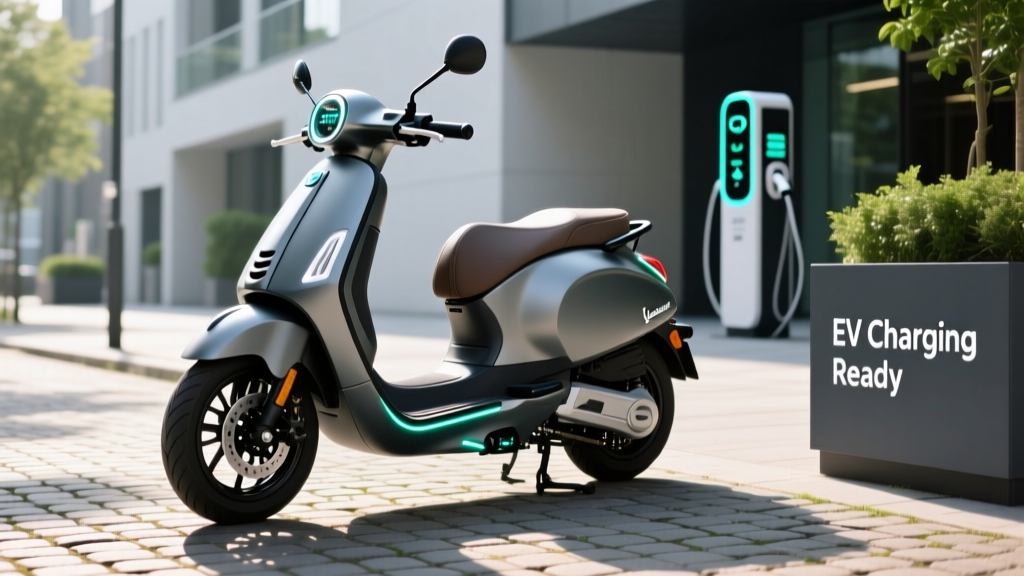
The 2026 Vespa Elettrica is a premium urban electric scooter priced at approximately $7,699 with an EPA-estimated range of 62 miles (100 km) from its 4.2 kWh lithium-ion battery. It charges from 0-100% in about 4 hours on a standard 120V household outlet. If you commute under 30 miles round-trip, have home charging access, and value iconic Italian styling over raw performance, it's a compelling choice. If you need highway speeds, longer range, or all-weather practicality, a gas Vespa or a higher-performance electric scooter will serve you better.
Vespa Elettrica at a Glance: 2026 Specs
Piaggio's electric Vespa has been on the market since 2019 with incremental updates. The current-generation Elettrica remains a niche product—part fashion statement, part urban commuter tool. Here's exactly what you're getting:
| Specification | 2026 Vespa Elettrica |
|---|---|
| Base MSRP | ~$7,699 (standard); ~$7,999 (45 mph version) |
| Battery Capacity | 4.2 kWh (lithium-ion) |
| EPA-Estimated Range | 62 miles (100 km) in ECO mode |
| Real-World Range | 40–55 miles (varies by speed, temperature, terrain) |
| Top Speed | 30 mph (standard) / 45 mph (45 version, where legal) |
| Motor Output | 3.5 kW peak (~4.7 hp) |
| Charge Time (120V) | ~4 hours (0–100%) |
| Charge Time (240V) | Not natively supported; requires optional adapter |
| Riding Modes | ECO, Power, Reserve (limp-home at 10% SoC) |
| Weight | ~287 lbs (130 kg) |
| Warranty | 2 years unlimited mileage; battery 10-year/62,000 mi capacity guarantee |
| Federal Tax Credit | Not eligible (§30D applies to 4-wheeled vehicles only) |
Range Reality: What 62 EPA Miles Actually Means
Vespa's claimed 62-mile range is measured under ideal conditions—flat terrain, moderate speed (around 20 mph), warm weather, and ECO mode engaged. Real-world riding tells a different story:
EPA Range: 62 miles
Real-World Expectation: 40–55 miles
Highway/Aggressive Riding: 30–40 miles
Cold Weather (below 40°F): 25–35 miles
At sustained 40+ mph speeds (available only on the 45 version), energy consumption spikes dramatically because aerodynamic drag scales with the square of velocity. A 15-mile round-trip commute at 35 mph in winter could leave you with fewer than 10 miles of buffer—tight for riders without mid-day charging access.
Piaggio's Reserve mode kicks in at 10% State of Charge, capping speed at roughly 18 mph to stretch remaining energy. It's a useful limp-home feature, but not something you want to rely on regularly.
Electric vs Gas Vespa: Cost and Practicality Compared
The Elettrica competes most directly with the gas-powered Vespa Primavera 50 and Vespa Sprint 50. Here's how they stack up on the metrics that matter:
| Metric | Vespa Elettrica (2026) | Vespa Primavera 50 (Gas) |
|---|---|---|
| MSRP | ~$7,699 | ~$4,399 |
| Top Speed | 30 mph (45 version available) | 39 mph (49cc, 50cc class) |
| Range per Fill/Charge | 40–55 miles (real-world) | 120–150 miles (~1.4 gal tank) |
| Fuel/Energy Cost per Mile | ~$0.01–0.03 (home charging) | ~$0.08–0.12 (premium gas at $3.80/gal, ~80 MPG) |
| Annual Fuel/Energy (5,000 mi) | $50–$150 | $400–$600 |
| Maintenance | Nearly zero (no oil, plugs, belts) | Oil changes, CVT belt, spark plug ($150–300/yr) |
| Refuel/Recharge Time | 4 hours (120V) | 2 minutes at a gas station |
| Cold-Weather Starting | Instant (reduced range) | May require choke; runs normally |
| Noise | Silent | Moderate engine buzz |
| Federal Tax Credit | Not eligible | N/A |
The Elettrica costs roughly $3,300 more upfront but saves about $400–$550 per year on fuel and maintenance for a typical 5,000-mile/year rider. That means a break-even period of approximately 6–8 years—longer than most EV vs gas car comparisons. The math only improves if gas prices rise significantly or if you ride more than 7,000 miles annually.
Real Ownership Costs: 5-Year Breakdown
Here's what owning a Vespa Elettrica actually costs over five years, assuming 5,000 miles per year and home charging on a standard 120V outlet:
| Cost Category | Vespa Elettrica (5 Years) | Vespa Primavera 50 (5 Years) |
|---|---|---|
| Purchase Price | $7,699 | $4,399 |
| Fuel/Energy | $500 (est. $0.02/mi) | $2,500 (est. $0.10/mi) |
| Maintenance | $200 (tires, brakes, misc.) | $1,250 (oil, belt, plug, valves) |
| Insurance | $1,500–$2,500 | $1,200–$2,000 |
| Registration | $500–$750 (varies by state) | $500–$750 |
| Total 5-Year Cost | $10,399–$11,649 | $9,849–$10,849 |
| Cost per Mile | $0.42–$0.47 | $0.39–$0.43 |
Electric scooter insurance premiums tend to run 10–25% higher than equivalent gas scooters, partly due to higher replacement costs for battery packs. Check quotes from Progressive or Geico before committing, as rates vary dramatically by zip code, age, and riding history.
One often-overlooked cost: battery replacement. Piaggio guarantees the battery will retain at least 80% capacity for 10 years or 62,000 miles. Out of warranty, a replacement pack currently costs approximately $1,800–$2,500 installed at a dealer. That's a meaningful expense if you plan to keep the scooter beyond a decade.
Charging: What First-Time EV Scooter Owners Need to Know
Unlike electric cars, the Elettrica doesn't use J1772, CCS, or NACS connectors. It charges via a built-in cable with a standard Schuko/Type F plug (or NEMA 5-15 in the US market) that plugs directly into a household 120V outlet.
Key charging facts:
- No Level 2 native support: The onboard charger is rated for 120V AC input only. Some third-party adapters claim 240V compatibility, but Piaggio does not officially support this and it may void the warranty.
- Charge rate: Approximately 1 kW draw from the wall, delivering roughly 15 miles of range per hour of charging.
- Public charging: Not practical. You won't find compatible connectors at Electrify America, EVgo, or ChargePoint stations. This is strictly a home/garage/office charging vehicle.
- Charging from 20% to 80%: Approximately 2.5 hours.
⚠️ No Home Garage? Think Twice. The Elettrica cannot use public DC fast chargers or Level 2 EV stations. If you live in an apartment without access to a standard outdoor outlet, or if your building doesn't allow scooters to be charged in common areas, you'll have no practical way to recharge. Unlike electric cars with growing public networks, electric scooters are almost entirely dependent on private charging access.
Common Misconceptions About the Vespa Elettrica
| Myth | Fact |
|---|---|
| "It qualifies for the $7,500 federal EV tax credit." | No. IRS §30D credits apply only to 4-wheeled motor vehicles. Two- and three-wheeled electric vehicles are excluded. Some states offer separate e-bike/scooter rebates—check your local programs. |
| "62 miles of range is enough for everyone." | Real-world range drops to 25–35 miles in cold weather or at top speed. Riders with 30+ mile commutes or no mid-day charging should consider the range insufficient. |
| "It's faster than a 50cc gas Vespa." | The standard Elettrica tops out at 30 mph. A gas Primavera 50 reaches 39 mph. Only the 45 version (45 mph, restricted in some US jurisdictions) comes close, and it sacrifices range. |
| "Electric means zero maintenance." | Brake pads, tires, suspension components, and the 12V auxiliary battery still need periodic replacement. Expect $40–$80/year in consumables. |
| "The battery will die in 3 years." | Piaggio's 10-year/62,000-mile battery guarantee and modern lithium-ion chemistry suggest a realistic lifespan of 8–12 years with normal use before significant degradation. |
Decision Framework: Is the Vespa Elettrica Right for You?
Choose the Vespa Elettrica if:
- Your daily round-trip commute is under 25 miles
- You have a garage, carport, or outdoor outlet for overnight charging
- You ride primarily in mild climates (above 40°F most of the year)
- You value silent operation and zero tailpipe emissions in your neighborhood
- You're willing to pay a premium for the Vespa brand and Italian design
- You want minimal maintenance (no oil changes, no spark plugs, no CVT belt)
Choose a gas Vespa (or another electric scooter) if:
- You commute more than 30 miles round-trip or ride in cold winters
- You lack access to a standard 120V outlet near where you park
- You need 40+ mph highway speeds regularly (consider the Piaggio BV 400 gas or a Zero SR/S electric motorcycle)
- Break-even economics matter more than style—you'll save thousands going gas
- You want public charging flexibility on longer rides
Frequently Asked Questions
Can I ride the Vespa Elettrica on the highway?
Not safely. The standard version tops out at 30 mph, and even the 45 version at 45 mph is well below typical highway speeds of 65–75 mph. Most US jurisdictions prohibit vehicles under 40–45 mph on limited-access highways. The Elettrica is designed for city streets and suburban roads only.
How does cold weather affect the battery?
Lithium-ion batteries lose 20–40% of usable capacity in freezing temperatures due to increased internal resistance. In testing below 32°F, expect real-world range to drop from 55 miles to approximately 25–35 miles. Piaggio's battery management system limits charging speed when the pack is cold, so winter top-ups may take 5+ hours instead of 4.
Does the Vespa Elettrica have regenerative braking?
Yes. The Elettrica uses a mild regenerative braking system that recovers energy during deceleration and extends range by roughly 5–10% in stop-and-go city riding. It's not strong enough for true one-pedal riding—you'll still use the mechanical brakes regularly.
What happens when the battery reaches end of life?
Piaggio guarantees 80% capacity retention for 10 years or 62,000 miles. Beyond that, the battery will continue to function but with reduced range. A dealer replacement currently costs $1,800–$2,500. Piaggio has a battery recycling program in partnership with authorized dealers.
Is the Vespa Elettrica street-legal in all 50 states?
The standard 30 mph version is classified as a moped or motor-driven cycle in most states, which may require a special endorsement (not always a full motorcycle license). The 45 mph version may be classified as a motorcycle in some jurisdictions, requiring a motorcycle endorsement. Check your state's DMV for specific licensing and registration requirements before purchasing.
Are there any state or local incentives for electric scooters?
Unlike the federal §30D credit (which excludes 2- and 3-wheelers), some states and municipalities offer e-mobility rebates. California's Clean Transportation Program and various city-level programs in Portland, Denver, and Austin have periodically offered $200–$500 rebates on electric scooters. These programs change frequently—check AFDC's state incentive database for current offerings in your area.