The Quick Answer
If you need the most versatile 7-seat electric SUV for active lifestyles in 2026, the Kia EV9 is the strongest all-around pick. It pairs a usable third row with up to 304 miles of EPA range, 5,000-lb towing, V2L power for gear and campsite use, and a starting MSRP around $54,900. For buyers who need more cargo length behind the third row and don't mind a premium price, the Rivian R1S (Dual-Motor, Standard+ battery) is the runner-up with 352 miles EPA, 7,700-lb towing, and a true gear-tunnel advantage for skis, boards, and long equipment. If budget is tight and you can live with 260-ish real-world highway miles, the Volkswagen ID.4 AWD with an optional third row is worth a test drive, though its 3-row packaging is tighter than the EV9's.
Why 7 Seats and Versatility Matter for Active Buyers
Active households aren't just hauling people — they're stacking mountain bikes, coolers, ski bags, kayaks, and dog crates. That means three metrics matter more than 0-60 bragging rights: cargo volume behind the third row, cargo length with seats folded, and towing capacity for a small trailer or boat. Range and charging speed are close seconds, because nobody wants to cut a weekend trip short for a 45-minute DC fast-charge detour.
The 2026 lineup of three-row EVs has matured enough that you no longer have to choose between space and efficiency. But there are real trade-offs between a dedicated EV platform (flat floor, frunk, V2L) and a converted architecture. Here's how the leading contenders stack up when you put numbers on the page.
Spec Showdown: 2026 Three-Row EV SUVs
| Model | EPA Range | Battery (usable kWh) | Peak DC kW | 10–80% Min | Cargo (cu ft, 3rd row up) | Max Tow (lb) | Base MSRP |
|---|---|---|---|---|---|---|---|
| Kia EV9 (LR RWD) | 304 mi | 99.8 kWh NMC | 236 kW | ~24 min | 20.2 | 5,000 | $54,900 |
| Kia EV9 (GT-Line AWD) | 270 mi | 99.8 kWh NMC | 236 kW | ~24 min | 20.2 | 5,000 | $63,900 |
| Rivian R1S Dual-Motor Standard+ | 352 mi | 106 kWh NMC | 220 kW | ~27 min | 11.6 | 7,700 | $79,900 |
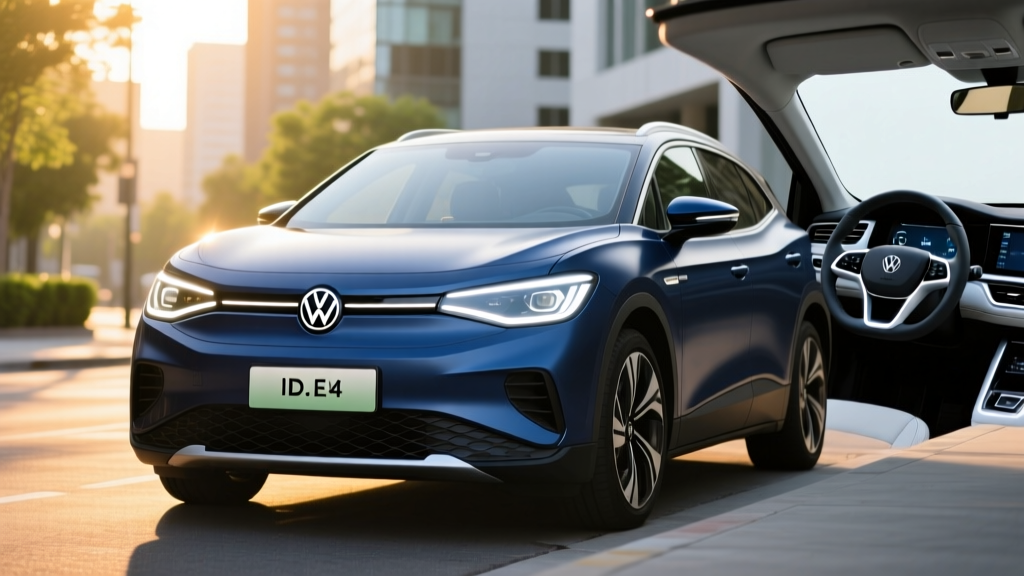
| VW ID.4 AWD (3-row option) | 263 mi | 77 kWh NMC | 175 kW | ~28 min | 12.3 | 2,700 | $52,000 |
| Tesla Model X (LR AWD) | 348 mi | 100 kWh NMC | 250 kW | ~22 min | 15.8 | 5,000 | $84,990 |
Sources: fueleconomy.gov, manufacturer 2026 spec sheets. Real-world highway range at 70–75 mph typically runs 10–15% below EPA; cold weather (sub-30°F) can cut range 20–30% without preconditioning.
Real-World Range Reality Check
The Kia EV9 LR RWD's 304-mile EPA sticker is strong on paper, but expect ~250–270 miles on a 70-mph highway run in mild weather, and ~210–230 miles in 20°F mountain passes where the heat pump is working hard. The Rivian R1S Standard+ holds up better on the highway due to its larger 106 kWh pack — figure ~300–315 real highway miles in fair conditions.
EV vs Gas vs Hybrid: The Active-Family Cost Picture
The most common comparison buyers run is against a gas three-row SUV like the Toyota Highlander or Kia Telluride, or a hybrid like the Highlander Hybrid. Here's how a 5-year ownership window looks at 15,000 miles/year, using national averages.
| Cost Factor (5 yr / 75k mi) | Kia EV9 LR RWD | Kia Telluride V6 AWD | Toyota Highlander Hybrid |
|---|---|---|---|
| Purchase (MSRP) | $54,900 | $40,000 | $46,000 |
| Federal Tax Credit (§30D est.) | Up to $7,500* | $0 | $0 |
| Fuel / Electricity | $4,300 (home L2 @ $0.14/kWh) | $10,100 (gas @ $3.40/gal, 21 mpg) | $6,600 (gas @ $3.40/gal, 35 mpg) |
| Maintenance | $1,400 | $3,800 | $3,400 |
| Insurance (avg) | $11,500 | $8,400 | $8,800 |
| 5-Year Total (est.) | $64,600 | $62,300 | $64,800 |
*§30D credit eligibility depends on buyer income caps, MSRP limits ($80k for SUVs), battery sourcing, and point-of-sale transfer. Verify current-year rules at IRS.gov. EV insurance premiums run 15–25% higher on average — get quotes before committing.
The EV9 and Highlander Hybrid nearly tie on 5-year cost, but the EV9 delivers a quieter cabin, instant torque for merging with a loaded trailer, and V2L capability that a gas SUV can't match. The Telluride wins on upfront price and depreciation predictability — a real factor if you plan to sell at year five.
Home Charging, Road Trips, and Real Ownership
Before you buy any 7-seat EV, answer these honestly: Can you install a Level 2 (240V) charger at home? If yes, daily ownership is effortless — plug in at night, wake up with 250+ miles, and rarely visit a public station except on road trips. A 40-amp Level 2 circuit adds roughly 25 miles per hour of charging; a 48-amp unit pushes ~30–35 mph on the EV9. Expect $800–$2,000 for a professional install if your panel has capacity, or $2,500–$5,000 if you need a service upgrade.
If you can't charge at home — apartment living, street parking, HOA restrictions — a 7-seat EV becomes a weekly chore. Public DC fast charging works, but 10–80% sessions take 24–30 minutes and cost $0.30–$0.50/kWh at networks like Electrify America or EVgo, roughly doubling your per-mile energy cost versus home charging. In that scenario, a hybrid like the Highlander Hybrid is the more practical choice.
For road trips, the EV9's 236 kW peak charge rate is legitimate on 350 kW-capable chargers, but the charge curve tapers sharply above 80% State of Charge. Plan stops around 10–80% to keep sessions under 25 minutes. The Rivian R1S uses the growing Tesla Supercharger network via NACS, which is a meaningful reliability advantage in rural areas where CCS stations are sparse.
Active-Lifestyle Features That Actually Matter
Spec sheets don't tell the whole story for kayaks, bikes, and weekend gear. Here's where each SUV earns its keep:
- Kia EV9: V2L (Vehicle-to-Load) provides up to 3.6 kW of AC power — enough to run a campsite fridge, power tools, or charge e-bikes. The flat floor and wide hatch opening fit two full-size bikes with front wheels removed. Roof rails rated for 220 lb dynamic load.
- Rivian R1S: The gear tunnel (available on some configurations) and standard roof rails with crossbars make it the best option for long items like skis and paddleboards. Built-in air compressor at each wheel well is ideal for airing up tires after trail runs. Camp Kitchen accessory available.
- Tesla Model X: Largest frunk in the class (6.5 cu ft) plus falcon-wing doors that open wide in tight parking spots — useful for loading kids in ski boots. However, third-row space is tighter than the EV9 for adults.
- VW ID.4 (3-row): Smallest cargo area with third row up; best suited for families where the third row is occasional and cargo needs are moderate.
Common Misconceptions, Corrected
| Myth | Fact |
|---|---|
| "EVs can't tow without destroying range." | Towing cuts range 30–50% depending on weight and speed. The EV9 at 5,000 lb towing will see ~160–190 real miles per charge with a loaded trailer — plan accordingly. |
| "Batteries need replacing every 5 years." | Modern NMC packs with active thermal management typically lose 8–12% capacity over 100,000 miles. Kia's battery warranty covers 10 years/100,000 miles at 70% capacity retention; Rivian covers 8 years/175,000 miles. |
| "All 7-seat EVs have a usable third row." | Third-row usability varies dramatically. The EV9 and R1S fit adults for short trips; the ID.4's third row is best for children only. |
| "The $7,500 tax credit applies to everyone." | §30D has income caps ($150k single / $300k joint), MSRP caps ($80k SUVs), and critical-mineral/battery-sourcing rules that change annually. Some trims qualify for $3,750 or $0. Check IRS guidance before purchasing. |
Decision Framework: Which 7-Seat EV Fits Your Life?
Choose the Kia EV9 if: You want the best balance of third-row space, cargo volume, V2L utility, and price. You charge at home and take 2–4 road trips per year under 500 miles.
Choose the Rivian R1S if: You need serious towing (boat, horse trailer), want Supercharger network access via NACS, and value off-road capability for trailhead access. Budget is flexible above $80,000.
Choose the Tesla Model X if: You prioritize Supercharger reliability, want the fastest DC charging, and value the frunk for gear separation. Accept that third-row space is secondary.
Choose a hybrid (Highlander Hybrid) instead if: You can't install home charging, regularly tow more than 5,000 lb, or live in a region with sparse DC fast-charging infrastructure. The EV math doesn't work without reliable home electrons.
Frequently Asked Questions
Do any 7-seat electric SUVs qualify for the full $7,500 federal tax credit in 2026?
Eligibility shifts as battery sourcing rules tighten. The Kia EV9 (built in Georgia) has qualified for partial or full credit depending on the production month and mineral-sourcing compliance. Always confirm the specific VIN's eligibility via the IRS portal and your dealer's point-of-sale transfer paperwork before signing. Income caps ($300k joint AGI) and the $80k SUV MSRP cap apply.
How much does it cost to charge a 7-seat EV at home versus gas?
At the national average of $0.14/kWh, fully charging the EV9's 99.8 kWh battery costs roughly $14 for 300 miles — about 4.7 cents per mile. A gas Telluride at 21 mpg and $3.40/gal costs 16.2 cents per mile. That's roughly $8,600 in fuel savings over 75,000 miles, assuming 90% home charging.
Can I take a 7-seat EV on a ski trip in sub-zero weather?
Yes, but plan for 20–30% range loss in cold weather. Precondition the battery while plugged in before departure, use seat heaters instead of cabin heat when possible, and plan DC fast-charge stops at 30% SoC rather than 10% to avoid slow charging in cold packs. The EV9 and R1S both use heat pumps, which help significantly.
What's the cheapest 7-seat EV SUV available in 2026?
The Volkswagen ID.4 with the optional third row starts around $52,000, making it the most affordable. However, its 2,700-lb tow rating and tight third row limit its versatility for active lifestyles compared to the EV9 at a similar price point.