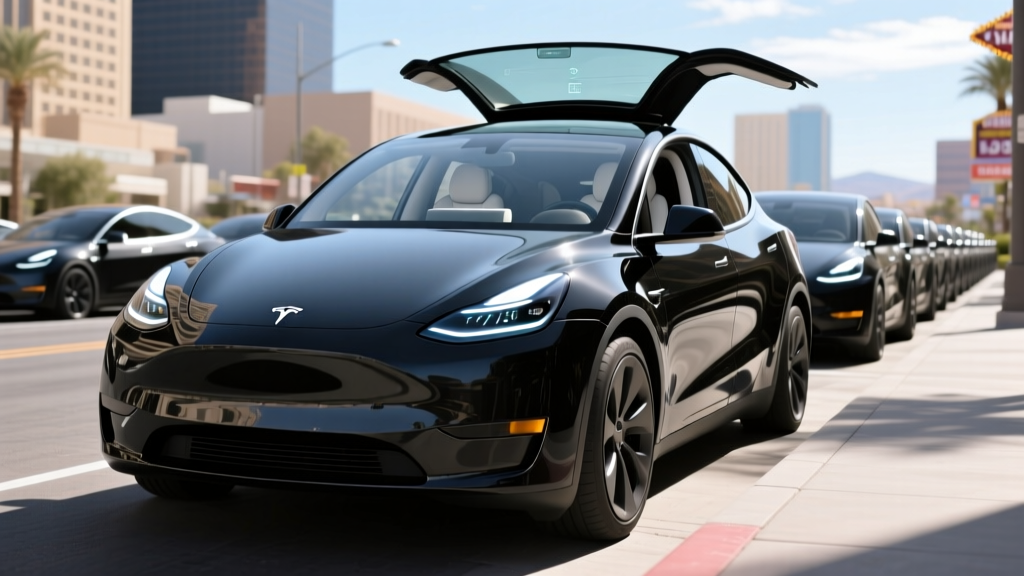
The Las Vegas Convention Center Loop—and its expanding offshoots across the Las Vegas Strip—represents one of the most unusual deployments of electric vehicles anywhere in the world. Instead of buying a car, you step into one. The Vegas Loop Tesla fleet, operated by The Boring Company, relies almost exclusively on the Tesla Model Y to shuttle passengers through narrow underground tunnels at speeds up to 40 mph. For EV shoppers, rideshare drivers, and anyone curious about how Tesla's most popular crossover performs in a high-cycle commercial environment, the Vegas Loop offers a rare, real-world stress test that no standard test drive can replicate.
This profile examines the 2026 Tesla Model Y as it exists both inside the Vegas Loop tunnels and in consumer driveways—covering range, charging, battery longevity under extreme cycle loads, and what this high-utilization deployment reveals about the vehicle's engineering. Whether you're planning a trip to Las Vegas or weighing a Model Y purchase for personal use, the data from this unique fleet operation tells a revealing story.
What Is the Vegas Loop and Which Tesla Models Run It?
The Boring Company's Vegas Loop is a network of underground tunnels designed to move passengers between hotels, casinos, the Las Vegas Convention Center, and eventually Harry Reid International Airport. The system uses standard Tesla vehicles—primarily the Model Y Long Range AWD—driven by human operators through tunnels roughly 12 feet in diameter. Unlike the original LVCC Loop, which briefly tested autonomous operation in 2021, all current Vegas Loop rides use human drivers with Tesla's Basic Autopilot (a Level 2 driver-assist system) available but not required in the tunnel environment.
As of early 2026, the Vegas Loop connects over 15 stations across the Strip, with expansion ongoing toward the airport and Allegiant Stadium. Riders request a destination via a mobile app, and a Model Y typically arrives within 2–5 minutes. The experience is essentially a free (for most hotel-connected stations) point-to-point rideshare in a Tesla, underground.
| Spec | Value |
|---|---|
| EPA Estimated Range | 320 miles |
| Battery Capacity | 78.1 kWh (usable), NMC chemistry |
| Drivetrain | Dual-Motor AWD |
| Horsepower | 384 hp (combined) |
| 0–60 mph | 4.8 seconds |
| Peak DC Fast Charge | 250 kW (V3 Supercharger) |
| 10–80% DC Charge Time | ~25 minutes |
| Level 2 Home Charge Rate | 11.5 kW (~44 miles/hr) |
| Efficiency | 122 MPGe combined / 28 kWh/100 mi |
| Cargo Volume | 30.2 cu ft (rear seats up) / 72.0 cu ft (folded) |
| Rear Legroom | 41.6 inches |
| Base MSRP | $44,990 (before destination) |
| Battery Warranty | 8 years / 120,000 miles (≥70% retention) |
Range, Efficiency, and Real-World Tunnel Performance
The 2026 Model Y Long Range carries a 78.1 kWh usable battery pack using NMC (nickel manganese cobalt) chemistry. NMC offers higher energy density than LFP (lithium iron phosphate), which is why Tesla reserves it for Long Range and Performance trims—the extra density translates directly to the Model Y's 320-mile EPA rating.
EPA Range: 320 miles
Real-World Expectation: In mixed highway/city driving at 70 mph, expect approximately 260–280 miles on a full charge. In the Vegas Loop tunnel environment—characterized by low speeds (25–40 mph), frequent stops, and heavy HVAC use in a desert climate—effective range drops to roughly 200–230 miles per charge cycle due to constant climate load and stop-and-go energy draw.
For the Vegas Loop fleet, range is less of a concern than cycle count. Vehicles typically run 16–20 hours per day, returning to surface-level charging depots for 20–30 minute DC fast-charge sessions between shifts. The Boring Company has installed dedicated V3 Supercharger stalls (250 kW peak) at fleet depots, enabling rapid turnaround.
Efficiency in the tunnel is paradoxically worse than open-road driving. The Model Y's regenerative braking recovers energy during deceleration, but the constant HVAC demand in a 110°F+ subsurface environment (tunnels are climate-controlled but vehicles still run their own systems) draws heavily on the battery. Tesla's heat pump—a standard feature on all 2026 Model Y trims—helps significantly, reducing climate energy draw by an estimated 30% compared to older resistive heating systems.
Charging Speed: DC Fast Charge and Home Level 2
Charging infrastructure is the backbone of any high-utilization EV fleet, and the Vegas Loop's Model Ys demonstrate what Tesla's charging ecosystem looks like under commercial stress.
| Charging Level | Power (kW) | Speed (miles added/hr) | 10–80% Time |
|---|---|---|---|
| Level 1 (120V household) | 1.4 kW | ~3–4 mi/hr | N/A (not practical) |
| Level 2 (240V home/public) | 11.5 kW | ~44 mi/hr | ~7.5 hours (full) |
| DC Fast (V3 Supercharger) | 250 kW peak | ~1,000 mi/hr (peak) | ~25 minutes |
| DC Fast (V4 Supercharger) | 250 kW peak* | ~1,000 mi/hr (peak) | ~25 minutes |
*V4 Supercharger cabinets currently deliver up to 250 kW to the Model Y. Higher-power vehicles (Cybertruck) can pull more from V4 hardware.
Charging curve reality check: The Model Y's 250 kW peak rate is only sustained from roughly 10–30% State of Charge. Above 50%, the charge rate tapers to approximately 120–150 kW, and above 80%, it drops below 60 kW. This is standard NMC behavior and is managed by the vehicle's Battery Management System (BMS) to protect long-term cell health. Vegas Loop fleet operators typically charge from 20% to 80% to minimize taper time and reduce cell stress—a practice that aligns with Tesla's own consumer recommendations for daily driving.
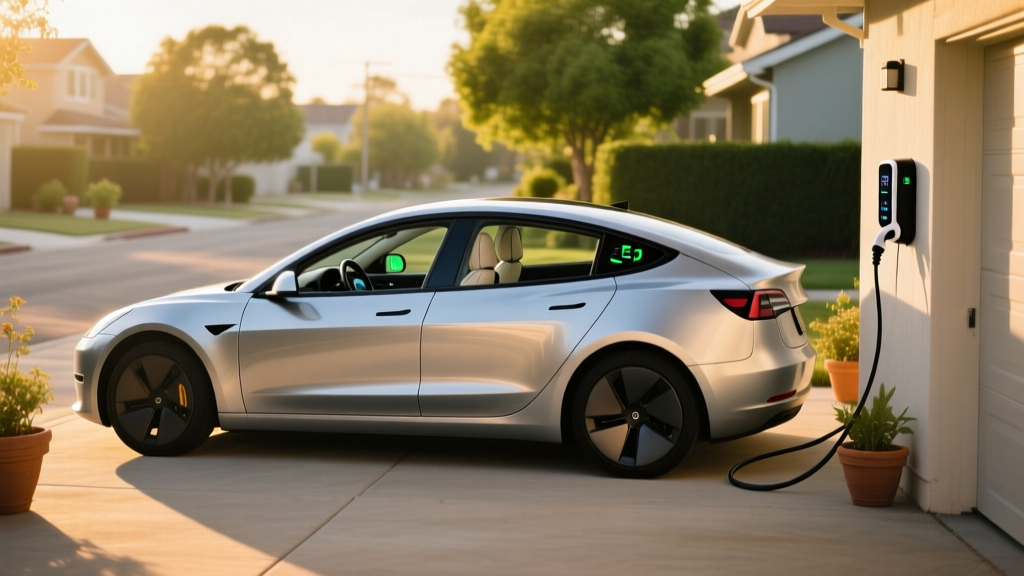
For consumer Model Y owners charging at home on a Level 2 wall connector (48-amp circuit, 11.5 kW), a full overnight charge adds roughly 44 miles of range per hour of charging. Most owners will wake to a full battery after 7–8 hours, which is more than adequate for daily commuting. According to fueleconomy.gov, the 2026 Model Y Long Range AWD achieves 122 MPGe combined, making it one of the most efficient all-wheel-drive electric crossovers on the market.
Performance and Drivetrain: Dual-Motor AWD in a Tunnel
The Model Y Long Range's dual-motor all-wheel-drive system produces 384 combined horsepower and launches the crossover from 0–60 mph in 4.8 seconds. That's genuinely quick for a five-passenger family hauler, though the Performance trim (3.5 seconds, 456 hp) takes it further.
Inside the Vegas Loop tunnels, performance is deliberately constrained. Speed limits hover around 35–40 mph, and the tunnel geometry—tight, single-lane, with minimal passing opportunity—means the Model Y's acceleration advantage is largely irrelevant. What is relevant is the vehicle's smooth, linear torque delivery, which makes stop-and-go tunnel traffic comfortable for passengers. There's no transmission hunting, no engine lag—just instant, predictable response.
The Model Y's low center of gravity (battery pack mounted under the floor) contributes to stable handling even in the tunnel's gentle curves. For consumer buyers, this same architecture delivers confident highway stability and reduces body roll compared to taller crossover competitors like the Hyundai Ioniq 5 or Ford Mustang Mach-E.
Pricing, Trims, and Federal Tax Credit Eligibility
The 2026 Tesla Model Y is available in three primary trims:
- Long Range AWD: $44,990 MSRP (+ $1,995 destination) — 320 miles EPA
- Performance AWD: $48,990 MSRP (+ $1,995 destination) — 298 miles EPA
- Long Range RWD (base): $41,990 MSRP (+ $1,995 destination) — 330 miles EPA
The Vegas Loop fleet primarily uses the Long Range AWD trim, balancing range, all-weather capability, and cost.
| Trim | MSRP + Destination | §30D Credit (est.) | Effective Price |
|---|---|---|---|
| Long Range RWD | $43,985 | $3,750* | ~$40,235 |
| Long Range AWD | $46,985 | $3,750* | ~$43,235 |
| Performance AWD | $50,985 | $3,750* | ~$47,235 |
*Federal tax credit amounts for the 2026 Model Y are subject to IRS §30D rules, including critical mineral and battery component sourcing requirements, buyer income caps ($150K single / $300K joint AGI), and the $55,000 SUV MSRP cap. As of early 2026, Tesla's US-sourced battery components qualify for partial credit. Verify current eligibility at IRS.gov or through a tax professional. Point-of-sale transfer is available at participating dealers.
The reduced credit amount (compared to the previous $7,500 maximum) reflects ongoing changes to battery-sourcing requirements under the Inflation Reduction Act. Tesla has made significant progress in US battery component manufacturing, but critical mineral sourcing from FTA-partner countries remains a moving target. Always confirm your specific eligibility before purchase.
Interior, Tech, and the Rider Experience
Step into a Vegas Loop Model Y and you'll find the same minimalist interior that defines the consumer version: a 15.4-inch center touchscreen, synthetic leather upholstery, a panoramic glass roof, and minimal physical controls. Rear passengers get 41.6 inches of legroom—generous for a compact crossover—and the flat floor (no transmission tunnel hump) makes the middle rear seat genuinely usable.
Standout tech features:
- 15.4-inch touchscreen with Tesla's native infotainment (Netflix, YouTube, arcade games while parked)
- Over-the-air software updates (the Vegas Loop fleet receives fleet-managed OTA updates regularly)
- HEPA air filtration with Bioweapon Defense Mode (relevant in tunnel environments)
- Basic Autopilot (adaptive cruise + lane centering) — Level 2 SAE automation
- Tesla mobile app integration for climate preconditioning
Notable drawbacks:
- No Apple CarPlay or Android Auto (Tesla's closed ecosystem)
- Rear visibility is compromised by the sloping roofline and small rear window
- Ride quality on rougher surfaces can be firm (the Model Y's suspension tuning prioritizes handling over comfort)
- Vegas Loop vehicles are fleet-spec: no customization, basic interior trim, high-mileage wear visible on older units
SAE Automation Level: Tesla's Autopilot and Full Self-Driving (Supervised) are Level 2 driver-assist systems. The driver must remain engaged, hands on or near the wheel, and eyes on the road at all times. The Vegas Loop uses human drivers; no Level 4 autonomous operation is currently active in the tunnel system. For true driverless rides, see Waymo's Level 4 robotaxi service in select cities.
Battery Longevity: What High-Cycle Fleet Use Reveals
Perhaps the most valuable insight from the Vegas Loop is what happens to Tesla's NMC battery under extreme cycle conditions. Consumer Model Y owners typically charge once or twice per week. Vegas Loop vehicles may charge 2–3 times per day, accumulating 200–350 miles daily.
Tesla's battery warranty covers 8 years or 120,000 miles (whichever comes first) with a guaranteed minimum of 70% capacity retention. At fleet utilization rates, a Vegas Loop Model Y could hit 120,000 miles in under 18 months. Public reporting and fleet maintenance records suggest that Tesla's NMC packs hold up well under these conditions when managed with 20–80% charge windows and active thermal management—the BMS keeps cell temperatures within an optimal range even during back-to-back DC fast charges in Nevada heat.
For consumer buyers, this is reassuring. If a Model Y battery can survive the Vegas Loop's punishing duty cycle while staying within warranty thresholds, a typical owner driving 12,000–15,000 miles per year should experience minimal degradation over the vehicle's lifespan. Independent data from Recurrent Auto suggests average Model Y battery degradation of approximately 8–10% over the first 100,000 miles under normal consumer use.
Pros, Cons, and Who This EV Suits Best
Pros
- Class-leading efficiency at 122 MPGe combined
- 250 kW DC fast charging with extensive Supercharger network
- Spacious cargo area (72 cu ft max) with practical frunk
- Strong real-world range of 260–280 miles highway
- Proven battery durability under extreme fleet use
- Over-the-air updates continuously add features
- Heat pump standard for cold-weather efficiency
Cons
- Reduced federal tax credit (est. $3,750 vs. $7,500 max)
- Firm ride quality compared to comfort-tuned rivals
- No Apple CarPlay / Android Auto
- Poor rear visibility from sloping roofline
- Insurance costs above segment average
- Tesla service center wait times in some markets
- Panel gap and build quality variability
Choose the Model Y Long Range AWD if: you prioritize efficiency and range, rely on DC fast charging for road trips, want a proven platform with extensive Supercharger coverage, and value cargo versatility.
Consider the Hyundai Ioniq 5 or Kia EV6 instead if: you prefer a softer ride, want Apple CarPlay, value 800V ultra-fast charging architecture (up to 350 kW on compatible chargers), or need a more traditional crossover driving feel.
Consider the Ford Mustang Mach-E if: driving dynamics and steering feel matter more to you than outright efficiency, and you want a more expressive exterior design.
Frequently Asked Questions
Can I ride the Vegas Loop Tesla for free?
Most Vegas Loop rides between hotel and convention center stations are complimentary, funded by participating resorts. Some future extensions (including the planned airport connection) may carry a fare. Check the Boring Company app for current station availability and pricing.
Is the Vegas Loop Tesla self-driving?
No. All Vegas Loop vehicles are operated by human drivers. Tesla's Autopilot (Level 2) may be active, but it requires driver supervision and is not autonomous. The Boring Company has discussed future autonomous operation, but no Level 4 driverless service is currently active.
Does the 2026 Model Y qualify for the full $7,500 federal tax credit?
As of early 2026, the Model Y qualifies for a partial federal tax credit (estimated at $3,750) due to battery component and critical mineral sourcing requirements under IRS §30D. Eligibility also depends on your adjusted gross income (capped at $150K single / $300K joint) and the vehicle's MSRP (must not exceed $55,000 for SUVs). Confirm at IRS.gov before purchasing.
What's the real-world range of the Model Y Long Range?
EPA estimates 320 miles. In real-world highway driving at 70 mph, expect 260–280 miles. In cold weather (below 30°F), range can drop an additional 15–25%, bringing effective range to approximately 210–240 miles. The Model Y's heat pump mitigates some of this loss compared to EVs without one.
How fast does the Model Y charge on a road trip?
At a V3 or V4 Supercharger (250 kW peak), the Model Y charges from 10–80% in approximately 25 minutes. The charge rate peaks around 250 kW at low SoC and tapers significantly above 50%. Plan stops around the 10–80% window to minimize time at the charger.
Is the Model Y worth buying over competitors in 2026?
The Model Y remains the best-selling EV in the US for good reason: efficiency, Supercharger access, and proven reliability. However, the Hyundai Ioniq 5, Kia EV6, and Ford Mustang Mach-E offer compelling alternatives with faster charging on compatible networks, softer rides, and Apple CarPlay. Your decision should weigh Supercharger network access (still a Tesla advantage, though opening to other brands via NACS adapters) against your preference for ride comfort, infotainment ecosystem, and design.
What battery chemistry does the Model Y Long Range use?
The 2026 Model Y Long Range uses NMC (nickel manganese cobalt) chemistry, which offers higher energy density than LFP (lithium iron phosphate). NMC is preferred for Long Range trims to maximize range per kWh. The base RWD trim in some markets uses LFP, which is more durable for daily 100% charging but offers less range.
Final Takeaway: What the Vegas Loop Teaches Consumer Buyers
The Vegas Loop Tesla deployment is the largest real-world stress test of the Model Y in existence. Thousands of vehicles, millions of passenger trips, and punishing duty cycles in desert heat—all while maintaining the range, charging speed, and battery health that consumer buyers depend on. The data is clear: the Model Y's powertrain and battery system are robust enough for commercial use, which translates to excellent longevity for personal ownership.
For the consumer buyer, the 2026 Model Y Long Range AWD at approximately $43,235 (after estimated tax credit) remains one of the most compelling electric crossovers available. Its 320-mile EPA range, 250 kW charging capability, and Supercharger network access make it a practical daily driver and road-trip companion. The caveats—reduced tax credit, firm ride, closed infotainment ecosystem—are real but manageable for most buyers.
If you're visiting Las Vegas, take a Vegas Loop ride. You'll experience the Model Y in a context few consumers ever see—and you'll leave with a much clearer picture of what Tesla engineering looks like when it's pushed to its limits, day after day, trip after trip.