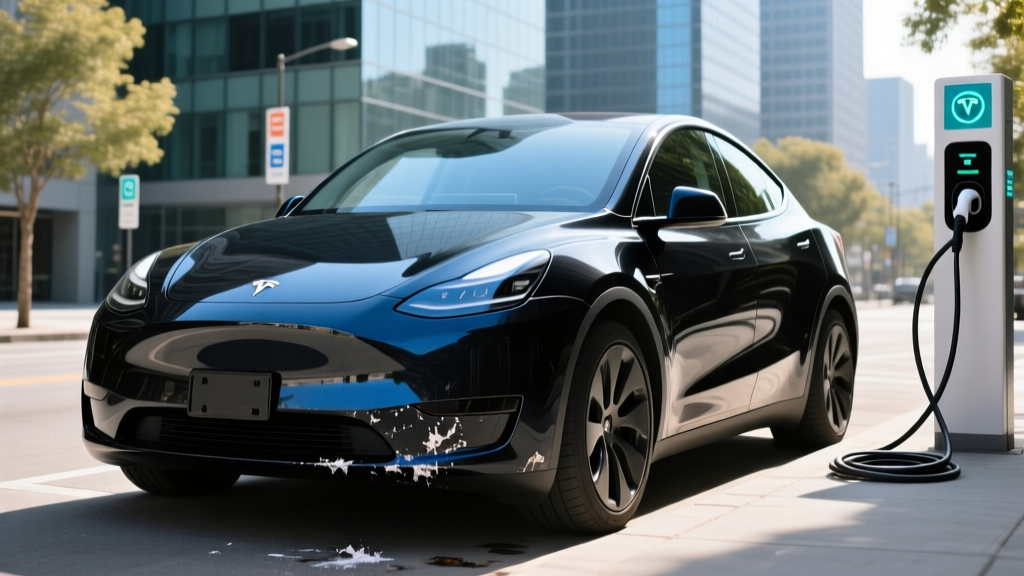
Searches for vandalizing tesla have climbed steadily as electric vehicle adoption grows and cultural polarization around EVs intensifies. From keyed paint and slashed tires to broken charge ports and politically motivated scratches, Tesla owners — and increasingly, owners of other EV brands — are reporting property damage at a rate that demands practical attention. This article reviews the 2026 Tesla Model Y (the most-targeted EV by volume) through the dual lens of ownership value and vandalism risk: what the vehicle offers, what it costs, and how to protect it.
Why Tesla Vehicles Are Vandalized More Than Other EVs
Tesla's brand visibility makes it a lightning rod. The company's CEO, its dominance in public charging infrastructure, and the distinctive design language of its vehicles mean Teslas are instantly recognizable — and, for a subset of vandals, instantly targetable. Insurance data and police reports from 2024–2025 showed a measurable uptick in "anti-EV" vandalism, with Tesla models accounting for the majority of incidents simply because they represent roughly 50% of the EVs on American roads.
Common vandalism methods include:
- Keying and paint scratching — the most frequent, often along door panels and fenders
- Tire slashing or valve stem damage — costly on EV-specific tires ($250–$400 per corner)
- Charge port damage — prying open or breaking the motorized door, disabling charging
- Window smashing — often targeting the glass roof or quarter windows
- Camera/sensor obstruction — spray paint or stickers over Autopilot cameras
- Political messaging — scratched slogans or bumper sticker residue on paint
The good news: Tesla's Sentry Mode and increasingly robust insurance options have made detection and recovery more feasible than with legacy vehicles.
2026 Tesla Model Y: Core Specs at a Glance
| Attribute | Value |
|---|---|
| EPA Range | 320 miles (Long Range AWD) |
| Battery Capacity | 75 kWh usable (NMC chemistry, LG M50 cells) |
| Peak DC Fast Charge | 250 kW (V3 Supercharger) |
| 10–80% DC Charge Time | ~25 minutes (preconditioned) |
| Level 2 Home Charge Rate | 11.5 kW / 44 mi/hr (48A Wall Connector) |
| 0–60 mph | 4.8 seconds |
| Horsepower | 384 hp (dual motor) |
| Drivetrain | AWD (dual motor, permanent magnet + induction) |
| Efficiency | 122 MPGe combined / 28 kWh/100 mi |
| Cargo Volume | 30.2 cu ft (rear seats up) / 72.1 cu ft (folded) |
| Rear Legroom | 37.7 inches |
| Base MSRP | $44,990 (Long Range AWD) |
| As-Tested (w/ FSD, Red Multi-Coat) | $55,490 |
| Battery Warranty | 8 years / 120,000 miles (min 70% retention) |
| Basic Vehicle Warranty | 4 years / 50,000 miles |
Real-World Range: What the EPA Number Doesn't Tell You
EPA Sticker: 320 miles
Real-World Highway (70–75 mph, mild weather): ~265–285 miles
Real-World City/Mixed (regenerative braking active): ~290–310 miles
Cold Weather (below 30°F, highway): ~220–250 miles (30% reduction typical for NMC chemistry)
Source: EPA fueleconomy.gov; owner-reported data aggregated by Recurrent Auto (2025)
The Model Y's 75 kWh NMC pack delivers strong efficiency at 28 kWh/100 mi — among the best in the compact electric SUV segment. However, highway driving at sustained speeds above 70 mph erodes range significantly due to aerodynamic drag, and NMC chemistry suffers more cold-weather capacity loss than LFP packs found in the base RWD Model Y.
For daily commuters covering under 80 miles round-trip, range is a non-issue. For road-trippers planning 300+ mile legs, plan one Supercharger stop per 250 miles in winter conditions.
Charging Speed and Infrastructure Access
Tesla's Supercharger network remains the most reliable DC fast-charging ecosystem in North America, with over 20,000 V3 (250 kW) and V4 stalls operational as of early 2026. The Model Y Long Range peaks at 250 kW but sustains that rate only between roughly 10% and 35% state of charge before tapering — a typical lithium-ion charge curve.
| Charging Level | Power | Miles Added Per Hour | Typical Use Case |
|---|---|---|---|
| Level 1 (120V outlet) | 1.4 kW | ~5 mi/hr | Emergency/overnight trickle |
| Level 2 (240V, 48A Wall Connector) | 11.5 kW | 44 mi/hr | Daily home charging |
| Level 2 (240V, 32A Mobile Connector) | 7.7 kW | 30 mi/hr | Apartment/travel charging |
| DC Fast (V3 Supercharger) | 250 kW peak | ~180 mi in 15 min | Road trips |
| DC Fast (CCS adapter, Electrify America) | 150–200 kW typical | ~130 mi in 15 min | Non-Tesla network backup |
Home charging installation note: A full Tesla Wall Connector install on a 60A circuit typically costs $800–$2,000 depending on panel proximity and local permit fees. Homes with 100A service panels may require a $2,000–$4,000 panel upgrade to support simultaneous EV charging and household loads. Always consult a licensed electrician for final specs.
Since 2024, Tesla has opened select Supercharger stalls to non-Tesla EVs via the NACS connector standard. For Model Y owners, this means the network is growing but stall availability at peak travel times may slightly decrease as adoption broadens.
Vandalism Protection: Sentry Mode, Cameras, and Physical Defenses
The Model Y's strongest anti-vandalism feature is Sentry Mode — a system that uses the vehicle's eight external cameras to record activity around the car when parked. When motion is detected, Sentry Mode escalates from "Standby" to "Alert" (screen flash warning) to "Alarm" (full recording + phone notification). Footage is saved to a USB drive and can be exported for police reports or insurance claims.
Key protections and their limitations:
- Sentry Mode recording: Covers 360° but requires the vehicle to remain powered (consumes ~1 mile of range per hour of active recording). Extreme cold may disable Sentry to preserve battery.
- Camera obstruction vulnerability: Spray paint on cameras disables recording — a known tactic among informed vandals. Consider clear protective film over camera housings.
- Paint protection film (PPF): Full-body PPF costs $3,000–$6,000 installed and prevents most keying damage from reaching clear coat. High ROI for high-risk parking environments.
- Ceramic coating: $800–$1,500; does not prevent scratches but makes paint easier to clean and reduces adhesion of spray paint or sticker residue.
- Dashcam (third-party): Some owners add a dedicated dashcam with parking mode as backup in case Sentry Mode is disabled or the USB drive is stolen.
- Tire security: Locking lug nuts ($30–$50) deter wheel theft but do not prevent slashing.
Pricing, Tax Credits, and Total Cost After Incentives
| Trim | Base MSRP | §30D Credit Eligible? | Est. Net Price |
|---|---|---|---|
| Long Range RWD | $42,990 | Yes (if income & sourcing rules met) | ~$35,490 |
| Long Range AWD | $44,990 | Yes (if income & sourcing rules met) | ~$37,490 |
| Performance AWD | $49,990 | Yes (if income & sourcing rules met) | ~$42,490 |
IRS §30D Federal Tax Credit Rules (2026): The $7,500 credit is available as a point-of-sale reduction (transferred to the dealer) or claimed on your tax return. Eligibility depends on:
- Buyer income caps: $150,000 single / $225,000 head of household / $300,000 married filing jointly (modified AGI)
- MSRP cap: SUVs must be under $80,000 — all Model Y trims qualify
- Battery sourcing: Critical minerals and battery components must meet escalating domestic-content thresholds. Tesla's Austin-built Model Y with U.S.-sourced LFP/NMC cells has maintained eligibility through 2025–2026, but rules tighten annually. Verify current eligibility at fueleconomy.gov before purchasing.
- One transfer per year: You can only use the point-of-sale transfer once per tax year
Always consult a tax professional for your specific situation. Rules are subject to legislative change.
Driving Experience, Tech, and Daily Usability
The Model Y's 15.4-inch center touchscreen controls virtually all vehicle functions — climate, mirrors, glovebox, and driving settings. The 2026 "Juniper" refresh added ventilated front seats, ambient lighting, a rear-seat entertainment screen, and improved sound insulation that reduces highway noise by roughly 3 dB compared to the pre-2025 model.
Driver assistance: Standard Autopilot includes Traffic-Aware Cruise Control and Autosteer (SAE Level 2). Full Self-Driving (Supervised) — a $8,000 option or $99/month subscription in 2026 — adds automatic lane changes, Navigate on Autopilot, and Smart Summon. FSD is not autonomous driving. The driver must remain fully engaged, hands on the wheel, eyes on the road at all times. It is a Level 2 system per SAE classification, not Level 4 or 5.
Notable drawbacks:
- No physical instrument cluster — all info is on the center screen, requiring glance-away
- Turn signals are on the steering wheel (no stalk), which some drivers find unintuitive
- Ride quality on 20-inch wheels is firm; 19-inch wheels recommended for daily comfort
- Insurance premiums remain 15–30% higher than comparable gas SUVs due to repair costs
Pros and Cons: The Honest Verdict
- Best-in-class Supercharger network access
- Sentry Mode provides 360° vandalism documentation
- Industry-leading efficiency (28 kWh/100 mi)
- Strong cargo space (72 cu ft max)
- Over-the-air updates continuously add features
- Low maintenance (no oil, minimal brake wear with regen)
- High visibility makes it a vandalism target
- Insurance costs above segment average
- Touchscreen-only controls can distract while driving
- NMC battery loses more range in cold than LFP competitors
- Repair costs for glass roof and camera systems are high
- Resale value uncertainty as competition intensifies
Who Should Buy the Model Y (and Who Shouldn't)
Best for: Daily commuters with home charging access, tech-forward buyers who value software updates, and road-trippers who rely on the Supercharger network's reliability. Families appreciate the cargo volume and rear-seat screen.
Consider alternatives if: You park exclusively on the street in high-vandalism areas (consider a less conspicuous EV like the Hyundai Ioniq 5 or Volkswagen ID.4), you need a physical instrument cluster, or you live in extreme cold climates where LFP-free NMC range loss becomes a daily concern.
Frequently Asked Questions
What is the real-world range of the 2026 Tesla Model Y?
EPA rates the Long Range AWD at 320 miles. In real-world highway driving at 70+ mph, expect 265–285 miles. In cold weather (below 30°F), plan for 220–250 miles. City driving with regenerative braking recovers more energy, yielding closer to EPA figures.
How fast does the Model Y charge at home and on the road?
At home on a 48A Level 2 Wall Connector (11.5 kW), you gain 44 miles of range per hour — a full overnight charge from 20% to 100% takes about 8 hours. On a V3 Supercharger (250 kW DC), a 10–80% session takes approximately 25 minutes when the battery is preconditioned.
How much does the Model Y cost after the federal tax credit?
The Long Range AWD starts at $44,990. If you meet IRS §30D income caps and battery-sourcing requirements, the $7,500 credit brings the effective price to approximately $37,490. Eligibility is not automatic — verify at irs.gov before purchasing.
Is the Model Y worth buying versus the Hyundai Ioniq 5 or Ford Mustang Mach-E?
The Model Y wins on charging infrastructure (Supercharger exclusivity), efficiency, and software. The Ioniq 5 charges faster on non-Tesla DC networks (up to 350 kW on 800V architecture) and has a less conspicuous design. The Mach-E offers a more traditional interior layout. For road-trippers, Tesla's network advantage is decisive. For urban parkers concerned about vandalism visibility, the Ioniq 5 or ID.4 may draw less attention.
Does the 2026 Model Y qualify for the $7,500 federal EV tax credit?
Yes, all current Model Y trims fall under the $80,000 SUV MSRP cap and Tesla's U.S. battery sourcing has maintained eligibility. However, buyer income limits ($150K single / $300K joint) and annual critical-mineral threshold changes mean you must verify eligibility for your specific tax year at purchase. The credit can be transferred at point of sale to reduce your out-of-pocket cost immediately.
What's the best way to protect a Tesla from vandalism?
Enable Sentry Mode with a high-capacity USB drive, apply paint protection film (PPF) to high-risk panels, install clear protective covers over external cameras, park in well-lit or garage locations when possible, and consider comprehensive insurance with glass and vandalism coverage. Some owners add a visible dashcam as a deterrent alongside Sentry Mode.
How much does it cost to repair vandalism damage on a Model Y?
Paint repair for keying ranges from $300 (spot repair) to $2,500+ (full panel repaint). Glass roof replacement can exceed $1,800. Charge port assembly replacement runs $800–$1,200. Camera recalibration after sensor damage adds $200–$400. Comprehensive insurance typically covers vandalism with your deductible applied — usually $500–$1,000 for Tesla-specific policies.