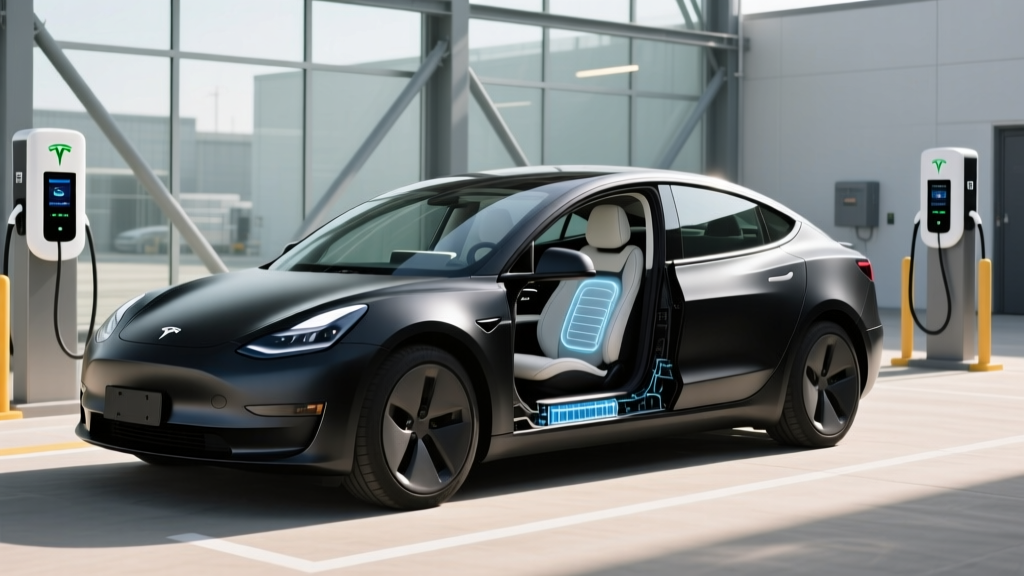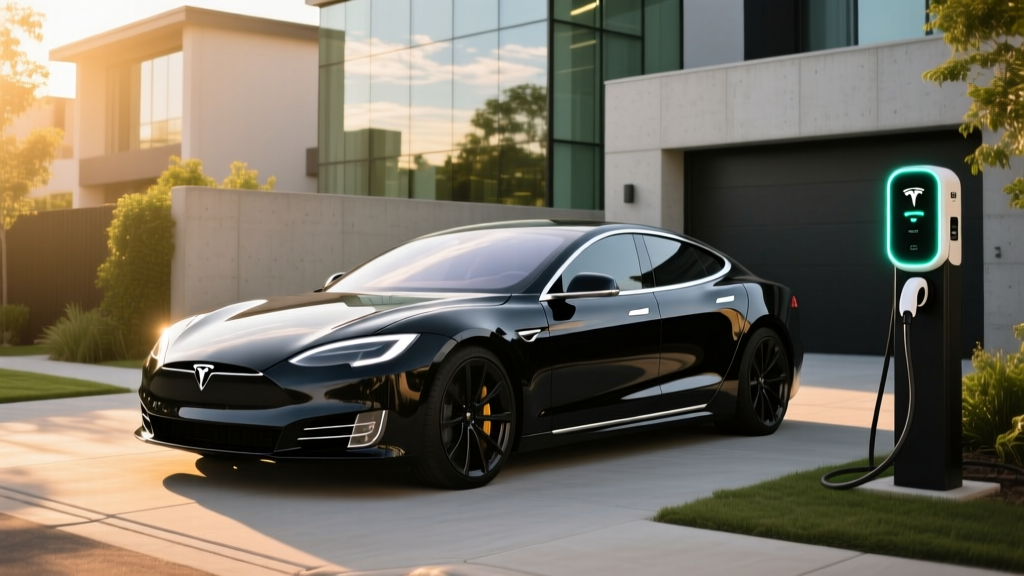
If you have spent any time researching electric vehicles, you have likely asked: what is the actual value of a Tesla car once you factor in real-world range, charging costs, tax incentives, and long-term ownership? Tesla's lineup has shifted dramatically over the past few years. Prices have dropped, competitors have caught up in range and build quality, and federal tax-credit rules have tightened. In 2026, evaluating a Tesla requires looking past the badge and running the numbers.
This review focuses on the 2026 Tesla Model Y Long Range AWD — Tesla's best-selling vehicle and the model most buyers cross-shop against the Hyundai Ioniq 5, Ford Mustang Mach-E, and Chevrolet Equinox EV. We will cover real-world range versus the EPA sticker, charging speeds at home and on the road, total cost after the federal §30D tax credit, and whether the Tesla ecosystem still justifies its price.
2026 Tesla Model Y: Core Specs at a Glance
| Specification | Value |
|---|---|
| EPA Estimated Range | 320 miles |
| Usable Battery Capacity | 75 kWh (NMC chemistry) |
| Drivetrain | Dual-Motor AWD |
| Horsepower | 384 hp (combined) |
| 0–60 mph | 4.8 seconds |
| Peak DC Fast-Charge Rate | 250 kW (CCS2/NACS via adapter or native NACS on newer builds) |
| 10–80% DC Fast Charge | ~25 minutes |
| Level 2 Home Charge Rate | 11.5 kW (~44 mi/hr) |
| EPA Efficiency | 122 MPGe combined (28 kWh/100 mi) |
| Cargo Volume (rear seats up) | 30.2 cu ft |
| Cargo Volume (rear seats folded) | 72.0 cu ft |
| Rear Legroom | 37.7 inches |
| Battery & Drive Unit Warranty | 8 years / 120,000 miles (70% minimum capacity retention) |
| Base MSRP (Long Range AWD) | $46,630 (before destination) |
| Destination Fee | $1,390 |
Source: fueleconomy.gov and Tesla Model Y design page. Specs reflect the 2026 model year as listed at time of writing.
Real-World Range: What to Expect Beyond the EPA Sticker
EPA Estimate: 320 miles
Real-World Highway (70–75 mph, mild weather): ~270–290 miles
Real-World Highway (winter, 30°F or below): ~220–250 miles
City/Commuter Driving (regen-heavy): ~300–320 miles
The EPA's 320-mile rating for the Model Y Long Range is one of the better estimates in Tesla's lineup, but real-world results depend heavily on how and where you drive. At sustained highway speeds of 70–75 mph in moderate temperatures (60–75°F), expect to see roughly 270–290 miles before the battery reaches zero. That represents an 8–15% reduction from the sticker, which is typical for crossover SUVs at highway speeds due to aerodynamic drag.
Cold weather is the bigger variable. Lithium-ion NMC batteries lose efficiency in freezing temperatures due to increased internal resistance and the energy consumed by cabin and battery heating. In our experience and consistent with testing by independent EV reviewers, a Model Y driven at highway speeds in temperatures around 20–30°F will deliver approximately 220–250 miles of range. Tesla's heat pump, standard on current models, mitigates some of this loss compared to resistive heating, but the physics of cold-weather battery chemistry cannot be fully eliminated.
City and commuter driving, where regenerative braking recaptures energy during stop-and-go traffic, pushes efficiency closer to or even slightly above the EPA combined figure. If your daily drive is under 60 miles round-trip with access to home charging, range will rarely be a concern regardless of season.
Charging Speed: DC Fast Charging and Home Level 2
Charging speed is where Tesla's Supercharger network remains a meaningful advantage, even as the network opens to non-Tesla EVs via NACS adapters. The Model Y Long Range supports a peak DC fast-charge rate of 250 kW at V3 Superchargers.
| Charging Level | Power (kW) | Speed (mi/hr added) | Typical Use Case |
|---|---|---|---|
| Level 1 (120V standard outlet) | ~1.4 kW | ~4–5 mi/hr | Emergency / overnight trickle |
| Level 2 (240V, 48A Wall Connector) | 11.5 kW | ~44 mi/hr | Daily home charging (7–8 hr for full charge) |
| DC Fast (V3 Supercharger) | Peak 250 kW | Up to ~1,000 mi/hr at peak | Road trips — 10–80% in ~25 min |
| DC Fast (V4 Supercharger) | Up to 250 kW (vehicle-limited) | Same as V3 for Model Y | Newer stations with improved cable management |
Charging curve reality: The 250 kW peak is achieved only at a low state of charge (roughly 10–20% SoC) and with a preconditioned battery. As the battery fills, the charge rate tapers. By 60% SoC, expect roughly 150 kW; by 80%, the rate drops to approximately 60–70 kW. This is why the 10–80% time of ~25 minutes is the relevant metric, not the peak kW number alone. Charging from 80% to 100% on DC fast charging adds another 20–30 minutes and is generally not recommended for battery longevity unless needed for a specific trip.
At home, a Tesla Wall Connector on a 60-amp circuit delivers 11.5 kW (48 amps continuous). That translates to roughly 44 miles of range per hour of charging, meaning a full 0–100% charge takes about 7–8 hours — easily handled overnight. Installation costs for a Level 2 home setup typically range from $500 to $2,000 depending on your electrical panel capacity and the distance from panel to charger location. If your home has a 200-amp panel with available capacity, expect the lower end. A panel upgrade to 200A can add $1,500–$3,000.
Pricing, Trims, and Federal Tax Credit Eligibility
| Trim | Base MSRP | + Destination | Total Before Incentives |
|---|---|---|---|
| Long Range AWD | $46,630 | $1,390 | $48,020 |
| Performance AWD | $52,130 | $1,390 | $53,520 |
The Model Y Long Range AWD starts at $46,630 before the $1,390 destination fee. The Performance trim adds roughly $5,500, bringing the total to $53,520. Both trims sit below the IRS §30D MSRP cap of $80,000 for SUVs, which is a necessary condition for federal tax credit eligibility.
Federal §30D Tax Credit: Do You Qualify?
- Vehicle MSRP cap: ≤ $80,000 for SUVs (Model Y qualifies)
- Buyer income cap (MAGI): ≤ $150,000 single / ≤ $300,000 joint filers
- Battery component sourcing: Must meet critical-mineral and battery-component requirements that phase in annually — check the IRS clean vehicle credit page for current-year eligible VINs
- Final assembly: Must be in North America (Model Y built in Fremont, CA and Austin, TX — qualifies)
- Point-of-sale transfer: As of 2024+, you can transfer the credit to the dealer at purchase, reducing the purchase price directly rather than waiting for a tax refund
Credit amount varies by battery-sourcing compliance. As of early 2026, Tesla's US-built vehicles have qualified for up to $7,500, but component and critical-mineral rules tighten annually. Confirm eligibility for your specific VIN at purchase.
| Scenario | Amount |
|---|---|
| MSRP + Destination | $48,020 |
| Federal §30D Credit (if fully eligible) | –$7,500 |
| Net Price After Federal Credit | ~$40,520 |
| Estimated State Rebate (varies — e.g., CA, CO, NY) | –$1,000 to –$5,000 |
| Potential Net Price (fed + state) | ~$35,520–$39,520 |
State incentives are highly jurisdiction-dependent. California's CVRP, Colorado's innovative motor vehicle credit, and New York's DRIVE Clean Rebate can stack on top of the federal credit, but each has its own income caps, residency requirements, and application deadlines. Consult your state's energy office or a tax professional for specifics.
Performance, Efficiency, and Daily Driving
The Model Y Long Range AWD produces 384 combined horsepower from its dual-motor setup and hits 60 mph in 4.8 seconds. That is brisk for a family crossover and noticeably quicker than most competitors in this price range. The Performance trim drops the 0–60 time to 3.5 seconds for buyers who prioritize acceleration.
Efficiency is where the Model Y stands out. At 122 MPGe combined (28 kWh per 100 miles), it is among the most efficient electric SUVs on the market. For context, the Hyundai Ioniq 5 AWD rates at 113 MPGe combined and the Ford Mustang Mach-E Extended Range AWD at 101 MPGe. Tesla's drivetrain efficiency — a combination of motor design, thermal management, and low rolling-resistance tires — means you spend less per mile on electricity.
At the US average residential electricity rate of roughly $0.16/kWh (per EIA data), charging a Model Y from empty to full at home costs approximately $12. Driving 12,000 miles per year at this efficiency and rate translates to about $540 annually in electricity costs. A comparable gas-powered SUV getting 28 MPG combined at $3.50/gallon would cost roughly $1,500 per year in fuel. That is approximately $960 in annual fuel savings, or $4,800 over five years.
Interior, Cargo, and Technology
The Model Y's interior remains polarizing. Tesla's minimalist approach means a single 15.4-inch center touchscreen handles virtually all controls — climate, mirrors, glovebox, and drive settings. There is no traditional instrument cluster. Build quality on 2025–2026 models has improved noticeably over earlier years, with tighter panel gaps, updated materials, and standard ventilated front seats.
Cargo capacity is a genuine strength: 30.2 cubic feet behind the second row and 72.0 cubic feet with the rear seats folded. The rear trunk floor is flat, and the front trunk (frunk) adds additional space for charging cables or a small bag. An optional third row is available but suitable only for small children — expect virtually no cargo room when it is deployed.
Technology highlights:
- Tesla's infotainment system remains one of the fastest and most responsive in the industry, with native streaming, navigation, and over-the-air updates
- Autopilot (basic) is standard and includes adaptive cruise control and lane-centering — this is an SAE Level 2 driver-assist system requiring active driver supervision
- Full Self-Driving (Supervised) is an optional $8,000 add-on (or $99/month subscription) that adds automated lane changes, traffic-light recognition, and city-street navigation — still SAE Level 2, not autonomous
- Sentry Mode dashcam recording, phone-as-key, and remote climate preconditioning are standard
Tesla Autopilot and FSD (Supervised) are SAE Level 2 driver-assistance systems. The driver must remain fully attentive, keep hands on or near the steering wheel, and be prepared to take over at any time. These systems do not make the vehicle self-driving. Misuse of Level 2 systems has been linked to serious crashes per NHTSA investigations.
Notable drawbacks: The absence of physical buttons frustrates some drivers, particularly for climate and mirror adjustments. Turn signals on the steering wheel (on refreshed models) have drawn mixed reviews. There is no Apple CarPlay or Android Auto — Tesla's native system is the only option. Road noise at highway speeds remains more noticeable than in some competitors like the Ioniq 5 or Genesis Electrified GV70.
Pros and Cons: The Honest Assessment
- Class-leading efficiency (122 MPGe combined)
- Access to Tesla Supercharger network — the most reliable DC fast-charging network in North America
- Strong cargo capacity (72 cu ft max)
- Over-the-air updates continuously add features
- Competitive 0–60 performance for the price
- Federal tax credit eligible (confirm VIN at purchase)
- Minimalist interior not for everyone — no physical buttons or knobs
- No Apple CarPlay or Android Auto
- FSD (Supervised) costs $8,000 and remains Level 2, not autonomous
- Highway road noise above 70 mph
- Cold-weather range loss of 20–30% in freezing temps
- Insurance costs tend to be higher than comparable non-Tesla EVs
Model Y vs. Key Competitors: Where the Value Lands
| Metric | Tesla Model Y LR AWD | Hyundai Ioniq 5 AWD | Ford Mach-E ER AWD |
|---|---|---|---|
| MSRP (before credit) | $48,020 | $52,350 | $53,975 |
| EPA Range | 320 mi | 290 mi | 290 mi |
| Efficiency (MPGe) | 122 | 113 | 101 |
| Peak DC Charge | 250 kW | 238 kW | 150 kW |
| 10–80% DC Time | ~25 min | ~18 min (800V arch) | ~45 min |
| Cargo (max cu ft) | 72.0 | 59.3 | 59.7 |
| Charging Network Access | NACS (native Supercharger) | NACS (adapter included) | NACS (adapter available) |
The Model Y's value proposition in 2026 rests on three pillars: lower starting price than key AWD competitors, superior efficiency (more miles per kWh), and native Supercharger access without adapters. The Ioniq 5 charges faster from 10–80% thanks to its 800-volt architecture, and the Mach-E offers a more traditional interior with physical controls. But on price-per-mile-of-range and annual fuel cost, the Model Y still leads.
Who Should Buy the Model Y — And Who Shouldn't
Choose the Model Y if: You want the lowest cost per mile of range in the electric crossover segment, you drive highway miles regularly and value Supercharger reliability for road trips, you need maximum cargo space for a family, and you are comfortable with a touchscreen-centric interior.
Look elsewhere if: You need the fastest possible DC charging (Ioniq 5's 800V system is quicker), you strongly prefer physical buttons and traditional instrument clusters, you need third-row seating for more than small children, or you want Apple CarPlay integration for your phone's interface.
Frequently Asked Questions
What is the real-world range of the Tesla Model Y?
The EPA rates the 2026 Model Y Long Range AWD at 320 miles. In real-world highway driving at 70–75 mph in moderate weather, expect 270–290 miles. In freezing winter conditions at highway speeds, range can drop to 220–250 miles. City driving with regenerative braking typically delivers results closer to the EPA estimate.
How fast does the Model Y charge at home and on the road?
On a home Level 2 Tesla Wall Connector (11.5 kW), the Model Y gains approximately 44 miles of range per hour, with a full charge taking 7–8 hours. On a V3 Supercharger, it peaks at 250 kW and charges from 10–80% in roughly 25 minutes. Remember that kW is the rate of power delivery (like water pressure), while kWh is the total energy stored (like gallons in a tank).
How much does a Tesla Model Y cost after tax credits?
The Model Y Long Range AWD lists at $48,020 including destination. If you qualify for the full $7,500 federal §30D credit (based on income, MSRP cap, and battery-sourcing rules), the net price drops to approximately $40,520. State incentives can reduce this further to $35,500–$39,500 depending on your jurisdiction. Always confirm eligibility with your tax professional and verify the specific VIN's credit status at purchase.
Does the Tesla Model Y qualify for the federal EV tax credit?
As of early 2026, the Model Y qualifies for up to $7,500 under IRS §30D, provided the buyer meets income limits ($150K single / $300K joint MAGI), the vehicle MSRP is under $80,000 (it is), and the battery meets critical-mineral and component-sourcing requirements for the current tax year. The credit can be transferred to the dealer at the point of sale, reducing your purchase price directly. Check the IRS clean vehicle credit page for the most current eligible-vehicle list.
Is the Model Y worth buying versus competitors in 2026?
For buyers who prioritize range per dollar, efficiency, cargo space, and charging-network reliability, the Model Y remains the value leader in the electric crossover segment. Competitors like the Ioniq 5 offer faster DC charging and more conventional interiors, and the Mach-E provides a familiar driving experience with physical controls. The right choice depends on which trade-offs matter most to your daily driving routine.
How long will the Tesla Model Y battery last?
Tesla warranties the Model Y's battery and drive unit for 8 years or 120,000 miles, whichever comes first, with a minimum 70% capacity retention guarantee. Real-world data from high-mileage Tesla owners and fleet studies suggest NMC batteries in the Model Y typically retain 85–90% capacity at 100,000 miles when charged primarily on Level 2 and not regularly held at 100% SoC. Battery replacement outside of warranty currently costs between $12,000 and $16,000 depending on the service center.