Quick Answer: Are the New USPS Trucks Electric?
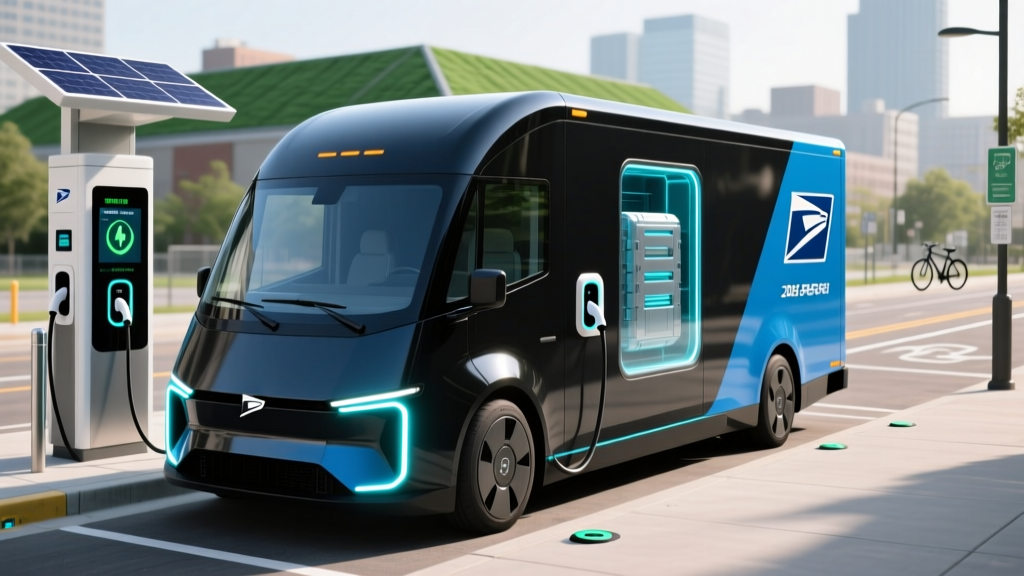
Yes — but only partially. The United States Postal Service is acquiring at least 45,000 electric vehicles as part of its Next Generation Delivery Vehicle (NGDV) program, built by Oshkosh Defense. The remaining vehicles in the 60,000+ unit NGDV order use a conventional 2.0-liter turbocharged gasoline powertrain. As of early 2026, electric NGDVs are entering service in select metro routes, while the broader fleet transition continues through 2028. The electric variant uses a ~125 kWh lithium-ion battery pack with an estimated ~86 miles of EPA-equivalent range — adequate for most daily mail routes but insufficient for long rural loops.
Why the USPS Is Going Electric (and Why It Matters to You)
If you've seen a boxy, modern mail truck replacing the iconic (and increasingly decrepit) Grumman LLV in your neighborhood, you're witnessing one of the largest fleet electrification efforts in U.S. history. The USPS operates roughly 230,000 delivery vehicles, and the average LLV is over 30 years old, achieving a dismal 8.2 MPG with no air conditioning and mounting maintenance costs.
The NGDV program, awarded to Oshkosh Defense in 2021, was initially planned as a mostly gas-powered replacement. After significant public and political pressure — including a letter from 16 state attorneys general and intervention from the EPA — the USPS revised its commitment in late 2022 to procure at least 45,000 battery-electric NGDVs out of a total order exceeding 60,000 vehicles.
For everyday EV shoppers and owners, this matters for three reasons:
- Charging infrastructure: USPS depot charging installations often expand local grid capacity and can catalyze public charging buildout in underserved areas.
- Fleet-scale validation: When the federal government bets on EV powertrains at this scale, it accelerates parts availability, technician training, and residual-value confidence for consumer EVs.
- Taxpayer economics: Understanding whether electric mail trucks save or cost money directly parallels the EV vs. gas decision every private buyer faces.
Electric NGDV vs. Gas NGDV: The Spec Sheet
Here's how the two NGDV powertrains stack up based on published USPS and Oshkosh specifications and environmental impact statement data:
| Specification | Electric NGDV (BEV) | Gas NGDV (ICE) |
|---|---|---|
| Powertrain | Single electric motor, FWD | 2.0L turbocharged I-4, FWD |
| Horsepower | ~210 hp | ~230 hp |
| Battery / Fuel Tank | ~125 kWh lithium-ion (NMC) | ~20-gallon fuel tank |
| EPA-Equivalent Range | ~86 miles | ~280 miles (est. at 14 MPG) |
| Fuel Economy | ~2.1 kWh/mile (~160 MPGe) | ~13–14 MPG combined |
| DC Fast Charge Rate | ~50–60 kW peak | N/A |
| Level 2 Charge Rate | ~19.2 kW (depot charger) | N/A |
| Charge Time (0–100%) | ~7–8 hours at 19.2 kW | ~5 min refuel |
| Cargo Volume | ~140 cu ft | ~140 cu ft |
| Payload Capacity | ~2,000 lbs (reduced by battery weight) | ~2,500 lbs |
| HVAC | Electric heat pump + A/C (standard) | A/C standard, conventional heat |
| Estimated Unit Cost | ~$70,000–$80,000 | ~$45,000–$50,000 |
| Warranty | 8-year/100,000-mile battery | 5-year/60,000-mile powertrain |
A few notes on these numbers: the electric NGDV's ~86-mile range is purpose-built. The average urban mail route covers 15–25 miles per day with frequent stops, meaning the electric variant has ample buffer for most metro deliveries. Rural routes, however, can stretch 80–120+ miles — which is why the USPS retained the gas option for those assignments.
Total Cost of Ownership: Electric vs. Gas Mail Trucks
The higher upfront cost of the electric NGDV is the headline, but fleet operators — like individual EV buyers — need to look at total cost of ownership (TCO) over the vehicle's service life. The USPS expects NGDVs to remain in service for 20+ years, mirroring the LLV's extraordinary longevity.
| Cost Category (15-Year Projection) | Electric NGDV | Gas NGDV |
|---|---|---|
| Vehicle Acquisition | $75,000 | $47,000 |
| Charging Infrastructure (per vehicle share) | $8,000–$15,000 | $0 |
| Energy/Fuel Cost (15 yrs, 18 mi/day avg) | $9,500–$13,000 | $38,000–$48,000 |
| Maintenance (15 yrs) | $12,000–$18,000 | $28,000–$38,000 |
| Battery Replacement (if needed) | $15,000–$25,000 | $0 |
| Estimated 15-Year TCO | $119,500–$146,000 | $113,000–$133,000 |
The TCO gap narrows significantly — and may flip in favor of electric — when you factor in the USPS's access to federal fleet electrification funding under the Inflation Reduction Act's Clean Heavy-Duty Vehicle program, which subsidizes the price premium and charging infrastructure. Without subsidies, the gas NGDV holds a modest TCO advantage, primarily because electricity costs for commercial fleets vary widely by region and time-of-use rates.
This mirrors the consumer EV equation: higher purchase price, lower operating costs, with the break-even point depending heavily on your local electricity rate, annual mileage, and available incentives.
Real-World Range: What 86 Miles Actually Means
The ~86-mile EPA-equivalent range figure deserves context, because fleet operations and consumer driving differ substantially:
Real-World Urban Route Range: 60–75 miles (stop-and-go, HVAC load, payload)
Cold-Weather Range (below 30°F): 45–60 miles (battery chemistry + cabin heating draw)
Highway/Transfer Route Range: 70–80 miles (higher sustained speed, less regen opportunity)
The NGDV's NMC lithium-ion pack will experience the same cold-weather capacity loss that affects all consumer EVs — typically 20–30% range reduction in freezing temperatures, exacerbated by the energy required to heat a large, uninsulated cargo cabin. USPS depots in Minneapolis, Chicago, and Buffalo will need to rely on preconditioning while plugged in and may need to assign gas NGDVs to longer winter routes.
For consumer EV buyers, this is instructive: if a purpose-built, low-speed delivery vehicle with a 125 kWh battery achieves ~60 real-world miles in cold weather, your 80 kWh consumer SUV with a 300-mile EPA rating might realistically deliver 200–220 miles in January. Plan accordingly.
Charging Logistics: How the USPS Charges (and What It Means for Your Neighborhood)
USPS electric NGDVs charge exclusively at depot locations — postal facilities equipped with Level 2 chargers (typically 19.2 kW per vehicle) that replenish the battery overnight. The USPS does not plan to use public DC fast-charging networks for routine operations, though the NGDV supports DC fast charging at ~50–60 kW for mid-day top-ups if needed.
At 19.2 kW, a depleted 125 kWh pack requires roughly 6.5–8 hours for a full charge — well within the window between end-of-route and next-morning dispatch.
The infrastructure investment is substantial. Equipping a single postal depot with 20–50 Level 2 chargers requires:
- Electrical panel upgrades or new dedicated transformers: $50,000–$200,000+
- Charger hardware (commercial-grade Level 2): $3,000–$6,000 per unit
- Installation, trenching, conduit: $2,000–$5,000 per stall
- Software/network management: $500–$1,500/year per charger
For residents near USPS depots undergoing electrification, this can be a net positive: utilities upgrading distribution feeders to handle depot charging often add capacity that benefits surrounding homes and can accelerate local EV adoption by improving grid readiness.
Common Misconceptions About USPS Electric Trucks
| Myth | Fact |
|---|---|
| "All new USPS trucks are electric." | Only about 45,000 of the 60,000+ NGDV order are electric. The rest use a 2.0L gas engine. |
| "Electric mail trucks can't handle rural routes." | Correct — which is exactly why the USPS assigned gas NGDVs to longer rural routes. The EVs target urban/suburban routes under 25 miles/day. |
| "Taxpayers are overpaying for electric trucks." | Unit cost is higher (~$75K vs ~$47K), but lifetime fuel and maintenance savings narrow the gap. Federal IRA funding offsets the premium. |
| "They'll need new batteries every few years." | NMC packs with proper thermal management and shallow daily cycling (25-mile routes on a 86-mile battery) should experience minimal degradation. The 8-year/100K-mile warranty provides coverage. |
| "Electric mail trucks will break down in winter." | Cold-weather range loss is real (~30%), but urban routes have enough buffer. Preconditioning at the depot mitigates the worst impacts. |
What USPS Electrification Means for Consumer EV Buyers
The USPS NGDV program is more than a fleet procurement story — it's a real-world stress test of EV technology at a scale and duty cycle that few commercial fleets can match. Here's what everyday EV buyers and owners should take away:
Charging infrastructure is expanding in unexpected places
When the USPS installs depot chargers in small cities and rural towns, it often requires utility upgrades that make Level 2 home charging easier for nearby residents. Watch for USPS electrification announcements in your area as a leading indicator of grid readiness.
Fleet adoption validates long-term battery durability
If the USPS's NMC packs hold up over 15+ years of daily cycling (albeit shallow cycles), it provides real-world data that supports consumer confidence in battery longevity. The IRS §30D tax credit battery-sourcing requirements for consumer EVs already push manufacturers toward the same NMC chemistries used in fleet applications.
The route-matching principle applies to your purchase
The USPS made the smart call: electric for short urban routes, gas for long rural ones. Consumer buyers should apply the same logic. If your daily commute is 20–30 miles and you have home charging, a BEV is a strong fit. If you regularly drive 200+ miles in cold weather without reliable en-route charging, a PHEV may be the pragmatic choice.
Decision Framework: Should You Go Electric, Hybrid, or Gas?
Choose a Battery-Electric Vehicle (BEV) If:
- Your daily driving is under 60 miles round-trip
- You have access to Level 2 home charging (garage or driveway with 240V outlet)
- You live in a region with moderate winters or have a second gas car for long trips
- You want to minimize maintenance (no oil changes, fewer brake replacements via regen)
- You qualify for the federal §30D credit (income under $150K single / $300K joint, vehicle MSRP under $55K cars / $80K SUVs/trucks)
Choose a Plug-In Hybrid (PHEV) If:
- Your daily commute is under 35 miles (covering most PHEV electric-only ranges)
- You lack reliable home charging but want some electric driving
- You frequently take road trips exceeding 300 miles
- You live in a very cold climate where BEV range loss is a dealbreaker
Choose a Conventional Hybrid (HEV) or Gas Vehicle If:
- You have zero home or workplace charging access
- Your annual mileage exceeds 20,000 miles, mostly highway
- You tow frequently (towing cuts BEV range by 40–60%)
- Upfront cost is your primary constraint and no incentives apply
Frequently Asked Questions
How many electric trucks does the USPS currently have?
As of early 2026, the USPS has taken delivery of several thousand electric NGDVs, with deployments concentrated in metro areas including Washington D.C., Los Angeles, and New York. The full 45,000-unit EV commitment is expected to be delivered through 2028. The USPS also operates a smaller number of older electric delivery vehicles from previous pilot programs, including Mercedes-Benz Metris EVs and other legacy models.
Can USPS electric trucks use Tesla Superchargers?
No. The electric NGDV uses a commercial fleet charging standard and charges at USPS depots via Level 2 connectors. It is not equipped with NACS or CCS connectors for public charging networks. Consumer EVs with NACS ports (standard on all new Teslas and increasingly adopted by Ford, GM, Rivian, Hyundai, and others for the 2025+ model years) have access to Tesla's Supercharger network — but that's irrelevant to the NGDV fleet.
Will USPS electrification raise my electricity rates?
Unlikely at the individual level. USPS depot charging is typically negotiated under commercial/industrial rate schedules with utilities, and the load is managed through overnight charging windows. In some cases, the grid upgrades required for depot charging actually improve local distribution capacity, benefiting residential customers.
What happens to the old Grumman LLV mail trucks?
Most LLVs are being decommissioned and scrapped or auctioned as they're replaced by NGDVs. Some have been sold to private buyers and collectors. The LLV was never electric — it used a 2.5-liter GM Iron Duke engine producing just 103 horsepower and averaging 8.2 MPG. Its replacement by vehicles achieving 13–14 MPG (gas NGDV) or ~160 MPGe (electric NGDV) represents a significant efficiency improvement.
Does the USPS electric truck qualify for the federal EV tax credit?
No. The §30D Clean Vehicle Credit applies only to vehicles purchased by individual taxpayers for personal use. Fleet purchases by federal agencies like the USPS are not eligible. However, the USPS benefits from separate federal fleet electrification appropriations and IRA Clean Heavy-Duty Vehicle funding that offset the higher acquisition cost of electric NGDVs.
How does the electric NGDV compare to the Rivian EDV used by Amazon?
Amazon's Rivian EDV (Electric Delivery Van) is a direct competitor in the last-mile delivery space. The EDV offers three body sizes (500, 700, and 900 cubic feet of cargo), uses a ~105–140 kWh battery depending on variant, and achieves an estimated 120–150 miles of range. Amazon has deployed over 10,000 EDVs as of 2026. The NGDV is smaller and less range-capable but purpose-built for USPS-specific requirements including right-hand drive for curbside mailbox access.