Quick Answer: Are the New Mail Trucks Electric?
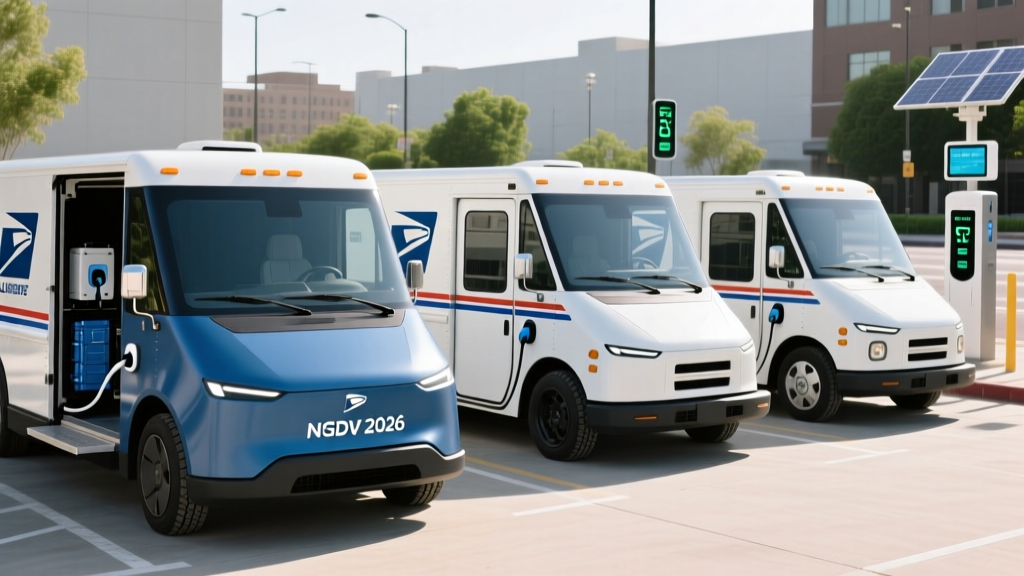
Partially. The U.S. Postal Service's Next Generation Delivery Vehicle (NGDV) fleet includes both battery-electric and gasoline-powered variants. Under the final contract with Oshkosh Defense, USPS committed to purchasing at least 45,000 battery-electric NGDVs (BEVs) out of a total planned fleet of up to 106,000 vehicles. The remaining units are low-emission gas-powered models. As of early 2026, electric NGDVs are actively deployed in select metro routes, with the full rollout continuing through 2028.
Why the USPS Went (Partially) Electric
The USPS had been operating a fleet of roughly 140,000 aging Grumman LLVs — boxy, right-hand-drive mail trucks introduced in 1987 that averaged just 8.2 MPG and had become increasingly costly to maintain. The NGDV program was designed to replace these vehicles with modern, safer, and more efficient alternatives.
Initially, the 2021 contract awarded to Oshkosh Defense envisioned as few as 10% electric vehicles. Following pressure from the White House, the EPA, and environmental groups — plus the passage of the Inflation Reduction Act, which allocated $3 billion specifically for USPS electrification — the commitment was revised upward. By late 2022, USPS confirmed it would procure at least 45,000 BEVs, with the balance being fuel-efficient internal-combustion models.
The logic is straightforward: mail delivery routes are among the most predictable, low-speed, stop-and-go patterns in fleet driving — an ideal use case for electric drivetrains where regenerative braking shines and daily mileage rarely exceeds 70–90 miles.
NGDV Electric vs. Gas: Spec-by-Spec Comparison
Both the BEV and gas NGDV share the same body structure, built on Oshkosh's flexible platform. Here's how the powertrains compare based on USPS disclosures and Oshkosh technical documentation:
| Specification | NGDV BEV (Electric) | NGDV Gas (ICE) |
|---|---|---|
| Powertrain | Battery-electric, single motor | 1.5L turbocharged 3-cylinder |
| Horsepower | ~200 HP | ~150 HP |
| Battery Capacity | ~94 kWh (NMC lithium-ion) | N/A |
| Fuel Tank | N/A | ~12 gallons |
| EPA Range / Estimated | ~70–90 miles (route-dependent) | ~150–180 miles |
| Fuel Economy / Efficiency | ~2.0–2.5 kWh/mile | ~8.2–12 MPG |
| Max Charge Rate (DC) | ~50 kW (CCS1) | N/A |
| Level 2 Charging | ~7.2 kW (AC, J1772) | N/A |
| 10–80% Charge Time (DC) | ~90 minutes (est.) | |
| Overnight Level 2 Charge | ~12–14 hours (full) | N/A |
| Payload Capacity | ~1,500 lbs | ~1,500 lbs |
| Cargo Volume | ~120 cu ft | ~120 cu ft |
| Climate Control | Electric heat pump HVAC | Conventional HVAC |
| Unit Cost (approx.) | ~$65,000–$75,000 | ~$45,000–$50,000 |
Note: USPS fleet vehicles are not EPA-rated on fueleconomy.gov like consumer cars. Range and efficiency figures are based on USPS environmental impact statements and Oshkosh disclosures. Actual range varies significantly with payload, climate, and stop frequency.
Real-World Range and Route Reality
The NGDV BEV's estimated 70–90 mile range is not a limitation for its intended use. According to USPS operational data, the average urban mail delivery route covers roughly 15–25 miles per day, with rural routes occasionally reaching 60–80 miles. Even accounting for cold-weather battery losses — typically 20–30% range reduction in sub-freezing temperatures — the electric NGDV has sufficient capacity for the vast majority of routes with overnight depot charging.
However, this is precisely why USPS retained gas-powered NGDVs: long rural routes in extreme climates where depot charging infrastructure is sparse or nonexistent remain better served by internal combustion. The split fleet reflects practical operational reality, not a compromise.
Common Misconceptions About Electric Mail Trucks
| Myth | Fact |
|---|---|
| "All new mail trucks are electric." | Only about 42% of the NGDV order is electric. The rest are low-emission gas models. |
| "Electric mail trucks can't handle cold weather." | Range drops 20–30% in freezing temps, but most urban routes are well under the remaining range buffer. Depot charging overnight restores full capacity. |
| "They'll break down like the old LLVs." | The NGDV is an entirely new platform with modern safety features (airbags, AEB, 360° cameras) and EV drivetrains with far fewer moving parts than 1980s-era vehicles. |
| "Taxpayers are overpaying for electric trucks." | The BEV variant costs ~$20,000 more upfront but saves an estimated $4,000–$6,000 per year in fuel and maintenance over a 20-year service life, yielding net savings of $60,000–$100,000+ per vehicle. |
| "They can't charge fast enough for daily routes." | Mail trucks return to the depot nightly. Level 2 overnight charging (7.2 kW over 12 hours) fully replenishes a ~94 kWh battery — no DC fast charging needed for daily ops. |
Cost Breakdown: Electric NGDV vs. Gas NGDV Over 20 Years
The USPS plans to operate NGDVs for roughly 20 years — the same service life as the outgoing LLVs. Here's a projected total cost of ownership comparison based on fleet analyses and USPS inspector general reports:
| Cost Category | NGDV BEV (Electric) | NGDV Gas (ICE) |
|---|---|---|
| Purchase Price | $70,000 (avg.) | $48,000 (avg.) |
| Depot Charger Install (per stall) | $5,000–$15,000 (Level 2) | $0 |
| Annual Fuel/Energy (15,000 mi/yr) | $1,200–$1,800 (electricity) | $4,500–$5,500 (gasoline at $3.50/gal) |
| Annual Maintenance | $800–$1,200 | $2,500–$3,500 |
| 20-Year Fuel/Energy Total | $24,000–$36,000 | $90,000–$110,000 |
| 20-Year Maintenance Total | $16,000–$24,000 | $50,000–$70,000 |
| Battery Replacement (if needed) | $15,000–$25,000 (year 12–15 est.) | Engine/transmission rebuild: $5,000–$8,000 |
| Estimated 20-Year Total | $130,000–$170,000 | $193,000–$236,000 |
The electric NGDV saves an estimated $40,000–$80,000 over its service life despite a higher upfront price. These savings are amplified by the IRA funding, which offsets a significant portion of the initial procurement and charging infrastructure costs.
What the NGDV Tells Consumer EV Buyers
You can't buy a USPS NGDV — it's a purpose-built fleet vehicle. But the program's logic is directly relevant to anyone considering an electric car, truck, or SUV. Here's what to extract from the government's largest EV fleet decision:
1. Match the Vehicle to the Route
USPS chose electric for short, predictable urban routes and gas for long, variable rural ones. Apply the same thinking: if your daily driving is under 80 miles round-trip with home charging access, a BEV like the Hyundai Ioniq 5 or Chevrolet Equinox EV is ideal. If you regularly drive 300+ miles in areas with sparse charging, a PHEV (like the Toyota RAV4 Prime) or gas vehicle may still make sense.
2. Overnight Charging Is the Backbone
The entire NGDV electric strategy hinges on depot (Level 2) overnight charging. The same is true for consumers: Level 2 home charging at 7.2–11.5 kW is the single most important factor in EV satisfaction. A 240V home charger adds 25–45 miles of range per hour and eliminates reliance on public charging for daily needs.
3. Maintenance Savings Are Real and Measurable
Electric drivetrains eliminate oil changes, spark plugs, transmission fluid, and exhaust system repairs. The USPS's projected maintenance savings of 50–65% for BEVs mirrors what consumer EV owners report. According to Consumer Reports analysis, EV owners save an average of $4,600 in maintenance and repairs over the life of the vehicle compared to gas-car owners.
4. Cold Weather Reduces Range — Plan for It
The NGDV fleet acknowledges cold-weather range loss by keeping gas variants for northern rural routes. Consumer EV buyers in cold climates should budget 20–30% less range in winter and prioritize vehicles with heat pump HVAC systems (standard on many 2025–2026 models including Tesla, Hyundai/Kia, and Ford) to minimize cabin-heating energy draw.
Should You Go Electric? A Decision Framework
The same logic USPS applied to its fleet can guide your personal purchase:
- Choose a BEV if: Your daily driving is under 100 miles, you have access to Level 2 home or workplace charging, you live in a moderate climate or can accept winter range loss, and you want the lowest long-term operating cost.
- Choose a PHEV if: You want 25–45 miles of electric-only commuting but need 300+ mile road-trip range without charging stops. Good for single-vehicle households with mixed urban/highway use.
- Choose gas/HEV if: You lack reliable charging access (no home garage, apartment without EV infrastructure), you drive long rural routes daily, or your budget doesn't accommodate the higher upfront cost of an EV even with the §30D federal tax credit (up to $7,500, subject to income, MSRP, and battery sourcing requirements).
Charging Infrastructure: The Depot Lesson
USPS is investing heavily in depot charging — installing hundreds of Level 2 chargers at postal facilities nationwide. This mirrors the broader reality that EV infrastructure investment is destination-based, not just corridor-based. For consumers, the takeaway is clear:
- Home Level 2 installation costs between $500–$2,500 for the charger unit plus $800–$3,000 for electrician labor and permits, depending on whether your electrical panel needs an upgrade to 200A service.
- Public DC fast charging (50–350 kW) is designed for road trips, not daily use. Relying on it exclusively is more expensive ($0.30–$0.50/kWh vs. $0.12–$0.18/kWh at home) and can accelerate battery degradation if used exclusively.
- The NGDV's use of the CCS1 connector for DC charging reflects the current fleet standard. Consumer EVs are rapidly transitioning to NACS (Tesla's connector) as of 2025–2026, with adapters available for CCS-equipped vehicles.
Frequently Asked Questions
Who manufactures the new USPS electric mail trucks?
The NGDV is manufactured by Oshkosh Defense, a subsidiary of Oshkosh Corporation based in Wisconsin. The electric powertrain components are integrated from various suppliers. Oshkosh won the contract over competitors including Karsan and Mahindra.
How many electric mail trucks will USPS have?
USPS committed to at least 45,000 battery-electric NGDVs as part of a total order of up to 106,000 vehicles. Additional electric units may be added in future contract modifications. The full fleet replacement is expected to continue through approximately 2028–2030.
Can you buy a USPS NGDV for personal use?
No. The NGDV is a government fleet vehicle not available for consumer purchase. Retired LLVs (the old mail trucks) occasionally surface at government surplus auctions, but NGDVs are not expected to enter the resale market for decades given their 20-year planned service life.
Do electric mail trucks use the same charging connectors as consumer EVs?
The NGDV BEV uses a CCS1 connector for DC fast charging and a J1772 connector for Level 2 AC charging — both standard connectors widely used in consumer EVs. However, the consumer market is rapidly adopting the NACS connector (developed by Tesla) as the new standard for 2025–2026 models from Ford, GM, Rivian, Hyundai, and others.
What's the environmental impact of switching to electric mail trucks?
USPS estimates the BEV fleet will reduce greenhouse gas emissions by approximately 300,000 metric tons of CO₂ annually once fully deployed, compared to the outgoing LLV fleet. The actual impact depends on the electricity grid mix in each region — routes charged on grids with high renewable penetration see greater reductions.
Will the USPS electric trucks qualify for EV tax credits?
No. The §30D federal tax credit applies to consumer vehicle purchases, not government fleet procurement. USPS electrification is funded through congressional appropriations and Inflation Reduction Act allocations, not consumer tax incentives.
Sources: USPS Next Generation Delivery Vehicle program disclosures, USPS official announcements, IRS §30D Clean Vehicle Credits, fueleconomy.gov EV technology overview.