What Is the Electric Mail Truck?
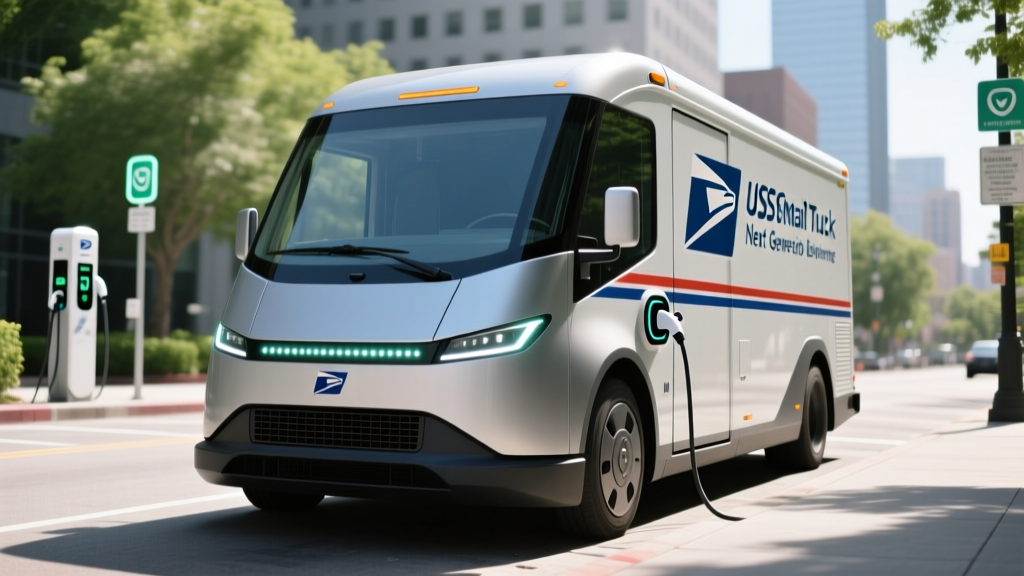
The USPS electric mail truck is officially called the Next Generation Delivery Vehicle (NGDV), built by Oshkosh Defense. It comes in two variants: a battery-electric vehicle (BEV) with an estimated 70-mile EPA range and a 143 kWh NMC lithium-ion battery, and a low-emission internal combustion engine (ICE) variant. The BEV model produces 295 horsepower, supports Level 2 AC charging at up to 11.5 kW, and is designed for stop-and-go postal routes averaging 15–25 miles per day. As of 2026, USPS has taken delivery of over 10,000 NGDVs across both variants, with the electric version deploying primarily to urban and suburban routes where daily mileage stays well within range limits.
USPS NGDV Electric Mail Truck: Full Specifications
Here's what we know from Oshkosh Defense and USPS fleet deployment data as of early 2026. Note that the NGDV is a purpose-built commercial fleet vehicle — it is not available for private consumer purchase.
| Specification | NGDV BEV (Electric) | NGDV ICE (Gas) |
|---|---|---|
| Powertrain | Battery Electric (BEV) | 2.0L Turbo 4-cyl |
| Horsepower | 295 hp | 235 hp |
| Battery Capacity | 143 kWh (NMC chemistry) | N/A |
| EPA-Estimated Range | ~70 miles (route-dependent) | ~125 miles (8.2 MPG) |
| Cargo Volume | 120 cu ft | 120 cu ft |
| Payload Capacity | ~1,850 lbs | ~1,850 lbs |
| Level 2 Charging | Up to 11.5 kW (J1772) | N/A |
| Full Charge Time (L2) | ~12–14 hours (0–100%) | N/A |
| 0–30 mph | ~5.0 sec (unloaded) | ~6.5 sec |
| GVWR | ~9,500 lbs | ~9,500 lbs |
| Estimated Unit Cost | ~$65,000–$75,000 | ~$45,000–$50,000 |
| Warranty | 8 years / 100,000 miles (battery) | 5 years / 60,000 miles (powertrain) |
The 143 kWh battery is significantly larger than most consumer EVs (for comparison, a Ford F-150 Lightning Extended Range pack is 131 kWh). That's necessary to support the NGDV's heavy stop-and-go duty cycle, frequent door openings, HVAC load, and parcel-heavy payload — all of which consume energy differently than highway driving.
Why 70 Miles of Range Is Enough for Mail Delivery
Seventy miles sounds modest next to a 350-mile Tesla Model 3, but context matters. According to USPS operational data, the average rural route runs 15–25 miles per day, while urban routes average 10–20 miles. Even the longest routes rarely exceed 40 miles. The NGDV's 70-mile range provides a comfortable buffer for:
- Detours, wrong turns, and re-deliveries
- HVAC use in extreme heat or cold (which can reduce range by 20–30%)
- Battery degradation over the 8-year warranty period
- Parade and community-event use without route anxiety
Because mail trucks return to the same depot every night, they are ideal candidates for overnight Level 2 charging. There is no need for DC fast charging infrastructure — a fleet of NGDVs can charge sequentially or simultaneously on 11.5 kW Level 2 chargers at the post office between 5 PM and 6 AM, a 13-hour window that easily covers a full 0–100% cycle.
Electric Mail Truck vs. Gas: Real Cost Comparison
The original Grumman LLV (Long Life Vehicle) that the NGDV replaces is legendary for longevity — some have been in service since 1987 — but terrible for efficiency. The LLV gets roughly 8–10 MPG on route, and maintenance costs have ballooned as parts become scarce for 30-year-old vehicles.
Here's a five-year operating cost comparison for a single delivery vehicle averaging 20 miles per day, 312 delivery days per year (6,240 miles/year):
| Cost Category (5-Year) | NGDV BEV | NGDV ICE | Legacy Grumman LLV |
|---|---|---|---|
| Fuel / Electricity | ~$2,800 (at $0.13/kWh) | ~$10,920 (at $3.50/gal, 8 MPG) | ~$12,480 (at $3.50/gal, 7 MPG) |
| Maintenance | ~$1,500 | ~$4,800 | ~$8,500 |
| Estimated Purchase | ~$70,000 | ~$48,000 | N/A (fully depreciated) |
| Total 5-Year Operating Cost | ~$4,300 | ~$15,720 | ~$20,980 |
| Cost Per Mile (Operating) | ~$0.14 | ~$0.50 | ~$0.67 |
The BEV variant saves roughly $11,400 in operating costs over five years per vehicle compared to the ICE NGDV, and even more versus the aging LLV. At a fleet scale of 60,000+ planned vehicles, the savings become enormous — though the higher upfront purchase price ($20,000–$25,000 more per BEV unit) and depot charging infrastructure investment must be factored in.
Charging Infrastructure: What Depots Need
Fleet charging for the NGDV is fundamentally different from consumer charging. Here's what USPS depot installations look like:
| Infrastructure Component | Estimated Cost per Stall | Notes |
|---|---|---|
| Level 2 Charger (11.5 kW, hardwired) | $1,200–$2,500 | Commercial-grade, J1772 connector |
| Electrical panel upgrade (480V service) | $15,000–$60,000 | Varies by depot size and existing service |
| Trenching and conduit (per run) | $3,000–$8,000 | Distance from panel to parking stall |
| Load management software | $5,000–$15,000 | Staggers charging to avoid demand charges |
| Permit and inspection | $2,000–$5,000 | Commercial permitting varies by jurisdiction |
| Total per 20-stall depot (est.) | $180,000–$350,000 | Includes all components above |
A critical operational detail: USPS does not need DC fast charging for the NGDV. Since vehicles charge overnight at the depot, Level 2 at 11.5 kW delivers roughly 35–40 miles of range per hour of charging. Even a depleted 143 kWh battery reaches full charge within the overnight window. This eliminates the need for expensive 150+ kW DC chargers and the utility demand charges that come with them.
However, depot electrification is not trivial. Many older post offices have 200-amp or 400-amp three-phase service that cannot support 20+ simultaneous 11.5 kW chargers without a utility upgrade. The USPS has been working with the Department of Energy and utility partners to manage these upgrades, which can add 12–18 months to depot readiness.
Common Misconceptions About the Electric Mail Truck
| Myth | Fact |
|---|---|
| "70 miles of range isn't enough" | Average mail routes are 15–25 miles/day. 70 miles provides a 2.8x–4.6x buffer, even with HVAC and degradation factored in. |
| "They'll break down in cold weather" | NMC batteries lose 20–30% range in sub-freezing temps, reducing 70 miles to ~50 miles — still sufficient for most routes. The NGDV also includes a heat pump for more efficient cabin heating. |
| "You can buy one for personal use" | The NGDV is a government fleet vehicle built under a $6.6 billion USPS contract. It is not sold to consumers. Retired Grumman LLVs are sometimes auctioned, but NGDVs will not be available privately for decades. |
| "The whole fleet is going electric" | USPS originally committed to 90% BEV, but political and budgetary pressure reduced this. The current plan includes a mix of BEV and ICE NGDVs, with BEV deployed to routes where range and charging infrastructure support it. |
| "It's slower and less capable than the old LLV" | The NGDV BEV has 295 hp vs. the LLV's 100 hp. It accelerates faster, has a larger cargo area (120 vs. 100 cu ft), and includes modern safety features like 360-degree cameras, automatic emergency braking, and air conditioning. |
Fleet Ownership Considerations: What a Postal Operator Should Know
While private consumers cannot buy the NGDV, the lessons from its deployment apply broadly to commercial fleet electrification. Here's what matters:
Battery Degradation and Warranty
The NGDV's 143 kWh NMC battery carries an 8-year / 100,000-mile warranty. For a vehicle averaging 6,240 miles per year, that's over 16 years of typical use within the warranty period. NMC chemistry typically retains 80–85% capacity after 1,000 full charge cycles. Given that mail trucks rarely discharge below 50% state of charge (SoC) in daily use, actual cycle count is far lower, suggesting the battery will outlast the warranty period with meaningful range remaining.
Cold-Weather Operations
In northern routes where winter temperatures regularly drop below 20°F, fleet managers should expect a real-world range of approximately 49–56 miles (a 20–30% reduction from the 70-mile baseline). The NGDV's heat pump helps mitigate cabin heating energy draw, but battery chemistry itself becomes less efficient in cold. Routes exceeding 40 miles in extreme cold may require the ICE variant or mid-day opportunity charging — though the latter requires depot infrastructure changes.
Maintenance Savings Are Real
BEV drivetrains eliminate oil changes, spark plugs, timing belts, exhaust systems, and transmission fluid. The NGDV BEV's primary maintenance items are brake pads (which last longer thanks to regenerative braking), cabin air filters, windshield washer fluid, and tire rotation. USPS estimates a 60–70% reduction in scheduled maintenance costs for the BEV vs. the ICE variant.
Decision Framework: When Electric Mail Trucks Make Sense (for Any Fleet)
Choose BEV fleet vehicles if:
- Daily routes are under 50 miles (provides 40%+ range buffer for cold and degradation)
- Vehicles return to a fixed depot nightly (enables overnight Level 2 charging)
- Depot electrical service can support concurrent charging, or can be upgraded within budget
- The fleet operates in an area with electricity rates below $0.20/kWh (commercial rates vary widely)
- Total cost of ownership (5–10 year) matters more than upfront acquisition cost
Choose ICE or hybrid fleet vehicles if:
- Routes regularly exceed 60+ miles per day, especially in cold climates
- Vehicles do not return to a fixed depot (e.g., rural carriers using personal vehicles)
- Depot charging infrastructure is infeasible due to utility constraints or leased facilities
- Budget cycles require lowest possible upfront acquisition cost
Frequently Asked Questions
Can I buy a USPS electric mail truck for personal use?
No. The Oshkosh NGDV is manufactured exclusively for the United States Postal Service under a federal contract. It is not available for consumer purchase, and USPS has not indicated any future plan to sell retired NGDVs to the public. If you're looking for a similar boxy electric utility vehicle, the closest consumer options are the Rivian EDV (Amazon's delivery van, also not consumer-available) or the Ford E-Transit, which starts around $45,000 for commercial buyers.
How much does it cost to charge the electric mail truck?
At a commercial electricity rate of $0.13/kWh, fully charging the NGDV's 143 kWh battery costs approximately $18.60. Since most routes use only 20–30% of the battery per day, the daily charging cost is roughly $3.70–$5.60 — compared to $15–$20 per day in gasoline for the ICE variant or legacy LLV.
Does the electric mail truck have DC fast charging?
No. The NGDV BEV is equipped with Level 2 AC charging only (up to 11.5 kW via J1772 connector). This is intentional — since the vehicle charges overnight at the depot for 10–13 hours, DC fast charging capability would add cost and weight without operational benefit. A full charge at 11.5 kW takes approximately 12–14 hours.
What battery chemistry does the NGDV use?
The NGDV BEV uses NMC (nickel manganese cobalt) lithium-ion chemistry in its 143 kWh pack. NMC offers higher energy density than LFP (lithium iron phosphate), which matters for a vehicle that needs to maximize cargo space while carrying a large battery. The trade-off is that NMC degrades slightly faster than LFP over thousands of cycles, but the NGDV's duty cycle is gentle enough that this is not a practical concern within the vehicle's service life.
How many electric mail trucks has USPS ordered?
Under the original 2022 contract, USPS committed to acquiring at least 60,000 NGDVs over 10 years, with a target of 90% being battery-electric. Subsequent budget negotiations and congressional scrutiny revised the BEV share. As of 2026, the plan calls for approximately 45,000 BEV units and 15,000 ICE units across the total order, though these numbers remain subject to further adjustment based on infrastructure readiness and operational feedback.
Sources: USPS Next Generation Delivery Vehicle program announcements, Oshkosh Defense NGDV specification sheets, U.S. Department of Energy fleet electrification data, and fueleconomy.gov for comparable commercial EV efficiency figures.