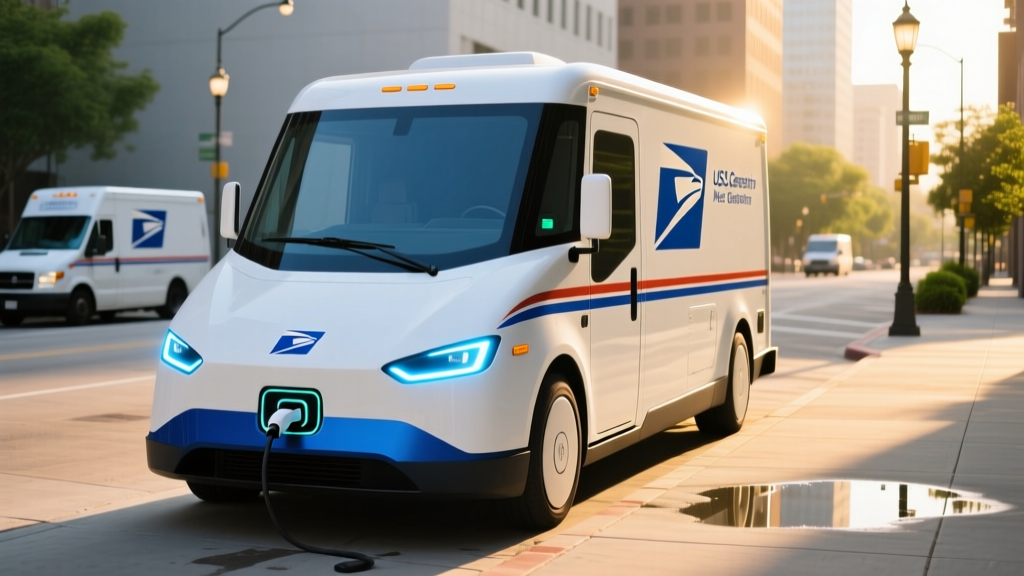
Quick Answer: The USPS EV mail truck — officially the Next Generation Delivery Vehicle (NGDV) built by Oshkosh Defense — is a battery-electric van with an EPA-estimated 125-mile range, a 93 kWh NMC battery pack, and Level 2 AC charging at ~19.2 kW (no DC fast charging). It is not available for private purchase and does not qualify for the §30D federal tax credit (fleet/government vehicle). For individual buyers researching EV delivery vans for commercial or personal use, models like the Ford E-Transit (126-mile EPA range, ~$55,000) or BrightDrop Zevo 600 (up to 250 miles, fleet-only) are the realistic alternatives.
What the USPS EV Mail Truck Actually Is
The U.S. Postal Service began replacing its aging Grumman LLV fleet — some dating back to 1987 — with the Oshkosh NGDV under a $6.6 billion contract awarded in 2021. After significant public and congressional pressure, USPS committed to making at least 75% of the NGDV fleet battery-electric, with the remainder being low-emission internal combustion variants for extreme-climate routes.
By early 2026, NGDV production is ramping at Oshkosh's Spartanburg, South Carolina facility, with initial deliveries concentrated in metropolitan areas where depot charging infrastructure is already installed. The electric NGDV is purpose-built for postal delivery: right-hand drive, frequent stop-and-go, low average speeds, and return-to-depot daily cycles.
NGDV Electric Mail Truck Specs: Range, Battery, and Charging
| Specification | USPS NGDV (Electric) |
|---|---|
| EPA-Estimated Range | ~125 miles |
| Battery Capacity | 93 kWh (usable), NMC chemistry |
| Motor Output | ~210 hp / 350 lb-ft torque |
| 0-30 mph | ~4.5 seconds (unloaded, est.) |
| Level 2 AC Charging | 19.2 kW (J1772/CCS1 AC) |
| DC Fast Charging | Not equipped |
| Full Charge Time (Level 2) | ~5–6 hours (0–100%) |
| Cargo Volume | ~120 cu ft |
| Payload Capacity | ~1,700 lbs |
| Air Conditioning | Yes (standard — LLV had none) |
| Availability | Fleet/government only — not for private sale |
Real-World Range Reality: The 125-mile EPA figure assumes a mixed route profile. On actual postal routes averaging 20–30 miles per day with hundreds of stops, range is more than sufficient. However, in cold climates (below 25°F), expect 15–25% range reduction due to cabin heating and battery chemistry limitations — bringing effective range to roughly 95–105 miles. USPS has acknowledged this by assigning ICE variants to the harshest northern routes.
Why the EV Mail Truck Works (and Where It Doesn't)
Postal delivery is one of the most predictable use cases for fleet electrification. The average USPS route covers 18–25 miles per day, with vehicles returning to a central depot each evening. This means:
- No range anxiety: Even with cold-weather degradation, a 93 kWh battery provides 4–5x the daily energy requirement.
- Depot charging works: Overnight Level 2 charging at 19.2 kW fully replenishes the battery in ~5 hours — well within an 8–12 hour depot window.
- Regenerative braking shines: Hundreds of stops per route mean constant regen, recovering energy that a gas LLV wasted as brake heat.
- Maintenance savings: No oil changes, no transmission fluid, no exhaust system, far fewer brake replacements.
The limitations are equally real:
- No DC fast charging: If a vehicle needs a mid-day top-up, it's limited to Level 2 speeds — adding roughly 15–20 miles per hour of charging.
- Cold-weather heating load: Unlike a gas engine that produces waste heat, the electric NGDV must use battery energy for cabin and cargo-area heating.
- Charging infrastructure cost: USPS must install thousands of Level 2 chargers at depots nationwide, a multi-billion-dollar undertaking.
EV Mail Truck vs. the Old Grumman LLV: A Generational Leap
| Metric | Grumman LLV (1987–present) | NGDV Electric (2025+) |
|---|---|---|
| Powertrain | 2.5L 4-cyl gas (103 hp) | Battery-electric (~210 hp) |
| Fuel/Energy Cost per Mile | ~$0.22/mile (gas at $3.50/gal, 10 MPG) | ~$0.05/mile (electric at $0.13/kWh) |
| Annual Fuel/Energy (25 mi/day, 300 days) | ~$1,650 | ~$375 |
| A/C | None (retrofitted in some) | Standard |
| Safety Features | None (no airbags, no ABS originally) | AEB, lane departure, backup camera, 360° view |
| Maintenance Cost/Year (est.) | $3,500–$5,000 | $800–$1,200 |
| Emissions | ~10 metric tons CO₂/year | Zero tailpipe (upstream varies by grid) |
The cost differential is stark. Per vehicle, USPS stands to save roughly $1,275/year on energy and $2,500–$3,800/year on maintenance — totaling approximately $3,775–$5,075 annually. Across a planned fleet of 45,000+ electric NGDVs, that translates to hundreds of millions in annual operating savings, even before accounting for the higher upfront acquisition cost.
Can You Buy an EV Mail Truck? (And What to Buy Instead)
No. The NGDV is manufactured exclusively under federal contract and is not available for private or commercial purchase. There is no consumer order book, no dealer allocation, and no used market (these vehicles will remain government property throughout their service life).
If you're researching electric delivery vans for a small business, last-mile delivery operation, or personal project, here's how the realistic alternatives compare:
| Vehicle | EPA Range | Battery (kWh) | DC Fast Charge | Starting MSRP | Availability |
|---|---|---|---|---|---|
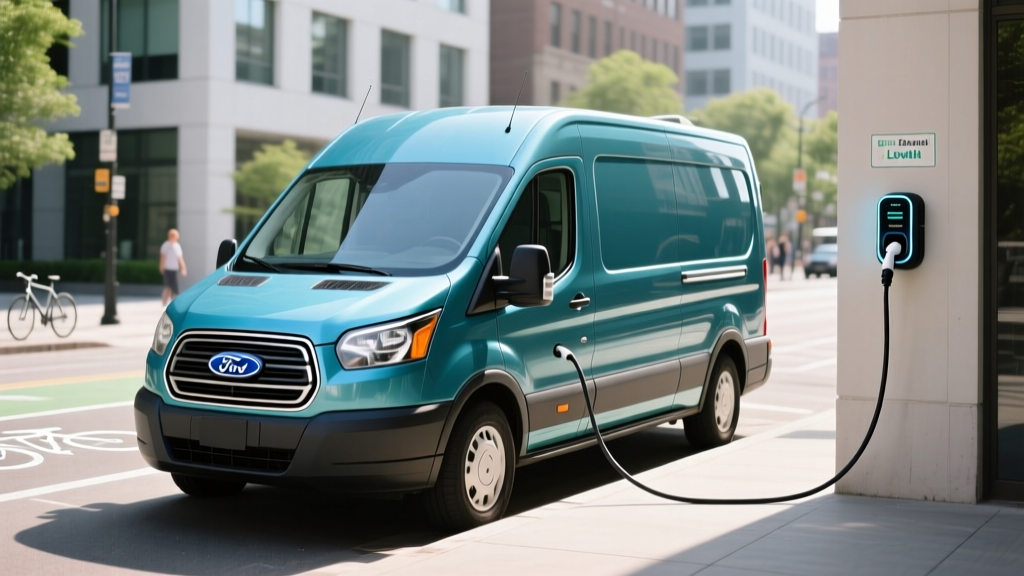
| Ford E-Transit (2026) | 126 mi | 68 kWh (usable), NMC | 115 kW peak, 10–80% in ~45 min | ~$55,000 | Consumer & fleet |
| BrightDrop Zevo 400 | ~160 mi | ~90 kWh, NMC | 120 kW peak | Fleet only (~$75,000 est.) | Fleet orders |
| Mercedes eSprinter (2026) | ~200 mi | 113 kWh (usable), NMC | 115 kW peak, 10–80% in ~42 min | ~$72,000 | Consumer & fleet |
| Rivian EDV (Amazon) | ~150 mi | ~105 kWh, NMC | Not public | Amazon exclusive | Not available |
For individual buyers or small fleet operators, the Ford E-Transit remains the most accessible electric delivery van in 2026, with a usable cargo area of 246.7 cu ft (low-roof, extended-wheelbase), DC fast charging capability, and eligibility for the §30D federal tax credit (up to $7,500, subject to MSRP caps, buyer income limits, and battery sourcing requirements — consult a tax professional).
Ownership Costs: Electric Delivery Van vs. Gas Equivalent
For anyone actually purchasing an electric delivery van, here's a realistic 5-year cost comparison using the Ford E-Transit vs. the gas Ford Transit as a proxy (based on 25 miles/day, 300 days/year):
| Cost Category | Ford E-Transit (EV) | Ford Transit (Gas, 3.5L V6) |
|---|---|---|
| Purchase Price (base) | $55,000 | $46,000 |
| Federal Tax Credit (§30D) | –$7,500 (if eligible) | $0 |
| Net Acquisition | $47,500 | $46,000 |
| Energy/Fuel (5 years, 37,500 mi) | $1,875 | $8,250 |
| Maintenance (5 years) | $2,500 | $7,500 |
| Insurance (5 years, est.) | $9,000 | $7,500 |
| 5-Year Total Cost | $60,875 | $69,250 |
| Cost Per Mile | $0.38 | $0.50 |
Key takeaway: The EV delivery van breaks even on acquisition cost after the tax credit and pulls ahead significantly on operating costs. The breakeven point is roughly year 2–3, after which the EV saves approximately $1,500–$2,000 per year. However, insurance premiums for commercial EVs tend to run 10–20% higher due to repair cost data — a factor often overlooked.
Common Misconceptions About the EV Mail Truck
| Myth | Fact |
|---|---|
| "The EV mail truck will run out of battery mid-route." | Average routes are 18–25 miles. The 125-mile EPA range provides a 5x buffer, even with cold-weather degradation. |
| "Electric mail trucks are slower and can't keep up with traffic." | Electric motors deliver instant torque. The NGDV's ~350 lb-ft from 0 RPM makes it quicker off the line than the 4-cylinder LLV it replaces. |
| "You can buy an NGDV for personal use." | The NGDV is a federal fleet vehicle. It is not and will not be available for private purchase. |
| "EVs are worse in cold weather for delivery." | Range is reduced, but depot charging eliminates the risk. Gas LLVs also suffered in cold weather (poor heating, starting issues, worse fuel economy). |
| "The battery will need replacing within a few years." | NMC batteries in fleet service with daily partial cycles (20–80% SoC) typically retain >80% capacity at 8–10 years. Oshkosh warranties the pack accordingly. |
Decision Framework: What Should You Actually Do?
If you're a postal worker assigned to an NGDV route: Expect a dramatically better driving experience (A/C, safety tech, smooth electric acceleration). Your depot will handle charging — you'll never need to plug in at home or at a public station. Report any range concerns to fleet management; cold-weather route adjustments are standard.
If you're a small business owner researching electric delivery vans: The Ford E-Transit is your most accessible option in 2026. Check §30D eligibility (income caps: $150K single / $300K joint for new vehicles; MSRP cap: $80,000 for vans/trucks). Install a Level 2 charger at your depot — budget $2,000–$5,000 for a commercial-grade 19.2 kW unit plus electrical work.
If you're an EV enthusiast fascinated by the NGDV: You can't buy one, but you can track USPS fleet electrification progress via USPS sustainability reports. The NGDV program is one of the largest single EV fleet deployments in U.S. history and will shape public perception of electric commercial vehicles for decades.
If you're comparing EV vs. gas for last-mile delivery: Choose electric if your daily route is under 80 miles, you have depot charging access, and you plan to keep the vehicle 4+ years. Choose gas if your routes exceed 150 miles daily, you operate in extreme cold without depot charging, or you need same-day route flexibility without charging downtime.
Frequently Asked Questions
How many EV mail trucks is USPS ordering?
USPS has committed to acquiring at least 45,000 NGDVs by 2028, with a minimum of 75% (33,750+) being battery-electric. The remaining 25% will be internal combustion variants for routes in extreme climates or areas without sufficient charging infrastructure.
Does the EV mail truck have air conditioning?
Yes. Unlike the Grumman LLV, which was built without A/C (and was notorious for extreme cabin heat), the NGDV includes standard air conditioning and heating. This was one of the most-requested improvements by letter carriers.
What happens if an NGDV battery degrades?
Fleet batteries are managed with strict state-of-charge windows (typically 20–80% daily) and thermal management, which significantly extends cycle life. Even at 70% state of health after 8–10 years, the remaining ~65 miles of range would still cover most postal routes. Battery replacement cost for a 93 kWh pack in 2026 is estimated at $12,000–$18,000, though this falls on USPS, not individual carriers.
Can I charge an electric delivery van at home?
If you own a Ford E-Transit or Mercedes eSprinter for business use, yes — but Level 2 home charging (240V) is essential. A standard 120V outlet (Level 1) would take 40+ hours for a full charge on these large batteries. Budget $1,500–$4,000 for a home Level 2 installation (charger unit + electrician + permit), and verify your electrical panel has capacity — a 200-amp panel may need upgrading for a 48-amp (11.5 kW) or higher circuit.
Why doesn't the NGDV have DC fast charging?
USPS designed the NGDV around a return-to-depot model: vehicles leave in the morning, run a route, and come back by early afternoon with 12–16 hours before the next shift. Level 2 charging at 19.2 kW fully replenishes the 93 kWh battery in about 5–6 hours, making DC fast charging unnecessary for this use case — and eliminating the added cost and complexity of DCFC hardware on each vehicle.