Quick Answer: What Is the USPS Electric Vehicles Sale and Senate Bill About?
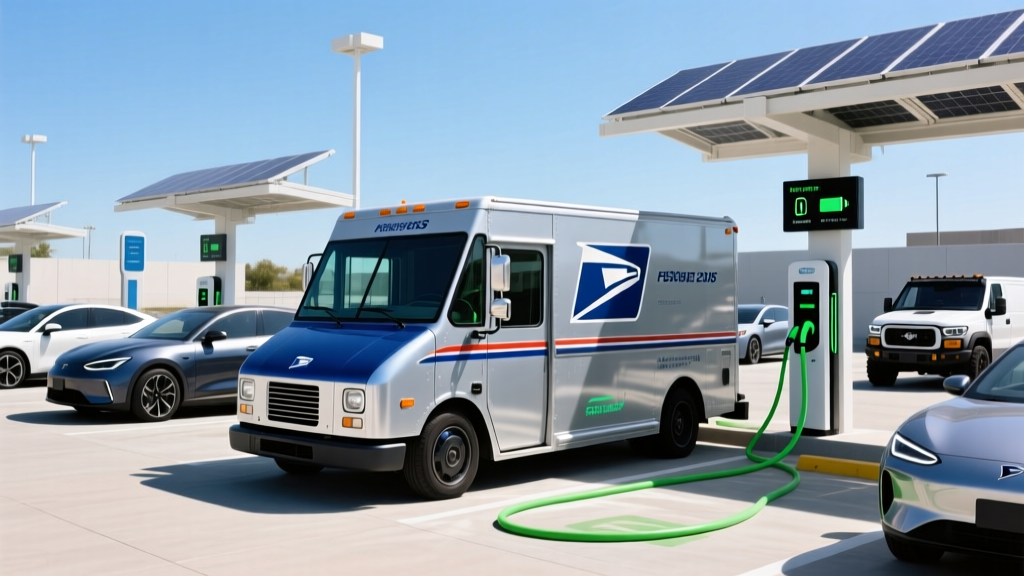
The USPS electric vehicles sale refers to ongoing congressional debate over the U.S. Postal Service's $9.6 billion Next Generation Delivery Vehicle (NGDV) contract with Oshkosh Defense. A 2022 Senate bill pushed for 100% zero-emission USPS fleet purchases; the resulting compromise mandated at least 90% of the 60,000+ new NGDVs be battery-electric (BEVs), with the remainder low-emission. As of 2026, USPS has begun receiving the first BEV NGDV units (badged Oshkosh DV-1), with full-scale deployment underway. For fleet managers and private buyers, the USPS program signals massive federal commitment to commercial EVs — but real-world range (~140 miles EPA est.), cold-weather losses, and depot-charging infrastructure remain critical considerations before any fleet operator mirrors the USPS strategy.
Why the USPS Electric Vehicle Fleet Matters to You
When the federal government commits to electrifying the largest civilian vehicle fleet in the United States — roughly 230,000 vehicles — it reshapes the entire commercial EV ecosystem. The USPS NGDV program, born from a contested 2022 contract and refined through Senate oversight and appropriations battles, has become a bellwether for fleet electrification economics.
Here's what matters for private fleet buyers, small-business owners, and even individual consumers watching this unfold:
- Supply chain scale-up: The USPS order (50,000+ BEV NGDVs) forced battery suppliers, charging infrastructure providers, and upfitters to scale commercial-grade components — lowering costs for everyone.
- Charging infrastructure buildout: USPS depot charging installations across hundreds of facilities are proving (and stress-testing) large-scale Level 2 and DC fast-charging deployments in real postal routes.
- Total cost of ownership (TCO) data: Federal fleet reporting will generate the largest public dataset on commercial BEV operating costs, maintenance intervals, and battery degradation under stop-and-go duty cycles.
- Legislative precedent: The Senate bill's 90% BEV mandate sets a benchmark other municipal and federal fleets will reference in their own procurement rules.
If you're evaluating electric vans, light trucks, or commercial EVs for your own operation, the USPS program is the most important real-world case study in American fleet electrification.
USPS NGDV BEV: The Specs Fleet Buyers Need
The Oshkosh-built NGDV battery-electric variant (sometimes referenced as the DV-1 EV) is a purpose-built right-hand-drive delivery vehicle. Here are the key specifications based on USPS and Oshkosh disclosures, as deliveries ramp through 2026:
| Specification | NGDV BEV |
|---|---|
| Battery Capacity | ~126 kWh (usable), LFP chemistry |
| EPA Est. Range | ~140 miles (fully loaded, mixed route) |
| Real-World Range (Cold Weather) | ~95–110 miles (20°F, stop-and-go with cabin heat) |
| Max DC Fast Charge | ~75 kW (CCS1) |
| Level 2 Charge Rate | ~19.2 kW (AC) |
| 10–80% DC Charge Time | ~75 minutes (at 75 kW peak) |
| Payload Capacity | ~1,850 lbs |
| Cargo Volume | ~140 cu ft |
| Motor Output | ~200 kW (~268 hp) |
| GVWR | ~9,990 lbs (Class 2b) |
| Warranty (Battery/Powertrain) | 8 years / 150,000 miles |
Real-World Range Reality Check
The ~140-mile EPA estimate assumes a loaded vehicle on a standard mixed route. In practice, USPS letter carriers face extreme stop-and-go driving (150–200 stops per day), frequent idling for cabin climate control, and cold-weather operations in northern states. Expect 25–35% range reduction in sub-freezing conditions. For routes exceeding 100 miles or operating in harsh climates, the USPS buildout plan includes strategic depot-charger placement and route optimization — a lesson any fleet buyer must replicate.
Cost Breakdown: USPS NGDV BEV vs. Gas Equivalent
The central argument for the Senate bill's electrification mandate was total cost of ownership. Let's compare the NGDV BEV against the low-emission (ICE) variant and a conventional gas delivery van on a per-vehicle, 10-year basis:
| Cost Category (10-Year / 150k mi) | NGDV BEV | NGDV ICE (Gas) | Legacy Gas Van (e.g., Grumman LLV replacement) |
|---|---|---|---|
| Purchase Price (est.) | ~$68,000 | ~$46,000 | ~$42,000 |
| Fuel / Electricity | ~$10,500 (at $0.14/kWh avg) | ~$28,500 (at $3.40/gal, 10 MPG) | ~$34,200 (at $3.40/gal, 8 MPG) |
| Maintenance | ~$6,000 | ~$18,000 | ~$22,000 |
| Depot Charger Install (amortized) | ~$4,500 | $0 | $0 |
| Insurance (est.) | ~$14,000 | ~$12,500 | ~$11,000 |
| Total 10-Year Cost | ~$103,000 | ~$105,000 | ~$109,200 |
Key takeaway: The BEV variant carries a ~$22,000 higher upfront cost but saves roughly $18,000–$21,000 in fuel and maintenance over a decade. The TCO crossover typically occurs around year 5–6, depending on local electricity rates and route intensity. This math is what convinced Senate appropriators to push for 90% BEV procurement despite the higher sticker price.
For private fleet buyers, the equation shifts based on your electricity cost (commercial rates vary from $0.08/kWh in parts of Texas to $0.22/kWh in California), annual mileage, and whether you qualify for the IRS §45W Commercial Clean Vehicle Credit, which offers up to $7,500 for vehicles under 14,000 lbs GVWR or $40,000 for heavier vehicles.
Senate Bill Timeline: How We Got Here
Understanding the legislative arc helps fleet buyers anticipate what comes next — including potential expansion of EV mandates to other federal and state fleets:
- February 2022: USPS awards $2.98 billion contract to Oshkosh Defense for 50,000 NGDVs, with only ~10% planned as BEV. The rest would be gas-powered.
- March–July 2022: Senate Democrats, EPA, and environmental groups challenge the low BEV percentage. The EPA raises concerns about the environmental review process.
- Late 2022: Senate appropriations language and subsequent USPS revised plans push BEV commitment to 45,000+ of the initial 60,000 NGDV order (roughly 75–90% BEV).
- Inflation Reduction Act (2022): Provides additional funding and tax incentives supporting federal fleet electrification, including USPS.
- 2023–2025: USPS conducts pilot deployments; Oshkosh scales production in Spartanburg, SC. Depot charging infrastructure contracts awarded.
- 2026 (current): First production BEV NGDVs entering active postal routes. Full-rate production ramping toward 60,000+ total vehicles.
The legislative fight over this contract demonstrated that even a politically divided Congress can converge on fleet electrification when TCO data supports it — a signal that future municipal, state, and private fleet mandates will likely follow similar patterns.
What Fleet Buyers Should Learn From USPS Charging Strategy
The USPS isn't relying on public charging networks. Their strategy centers on depot-based charging — vehicles return to a central facility, plug in overnight, and depart fully charged. Here's how that breaks down and what it means for your fleet:
| Charging Level | Power (kW) | Miles Added/Hour | USPS Use Case |
|---|---|---|---|
| Level 2 (AC Depot) | 19.2 kW | ~40–45 mi/hr | Primary overnight charging (6–8 hr session = full battery) |
| DC Fast Charge | 75 kW | ~120–140 mi/hr | Mid-day top-up for extended or split-shift routes |
| Level 1 (120V) | 1.4 kW | ~3–4 mi/hr | Not used (far too slow for fleet ops) |
Critical infrastructure cost: Installing a single 19.2 kW Level 2 depot charger runs $8,000–$15,000 per port (equipment + trenching + electrical panel upgrades + permitting) for commercial installations. For a 50-vehicle depot, expect $500,000–$900,000 in charging infrastructure — a cost that must be factored into any fleet electrification business case.
USPS secured federal appropriations to cover this. Private fleet buyers will need to lean on utility demand-management rebates, state EV infrastructure grants, and the IRS §30C Alternative Fuel Vehicle Refueling Property Credit (up to $100,000 per item for commercial charging property placed in service in eligible census tracts through 2032).
Common Misconceptions About the USPS EV Program
| Myth | Fact |
|---|---|
| "USPS is buying only electric vehicles." | The mandate covers ~90% of the NGDV order. Roughly 10% are low-emission ICE vehicles for routes where range or climate makes BEVs impractical. |
| "The BEV NGDV has 200+ miles of range." | EPA estimate is ~140 miles loaded. Real-world stop-and-go postal routes with climate control pull that to 95–120 miles in practice. |
| "USPS vehicles charge at Tesla Superchargers." | No. They use CCS1 connectors at depot-installed commercial chargers. The USPS fleet does not use public networks for daily operations. |
| "Private buyers can purchase the NGDV." | The NGDV is a government-only, right-hand-drive vehicle. It is not available for private sale. However, its platform validates LFP battery tech and depot-charging strategies applicable to commercial vans like the Ford E-Transit and BrightDrop Zevo 600. |
| "The Senate bill forced USPS to go 100% electric." | The final compromise was ~90% BEV. Full 100% mandates were debated but not enacted, acknowledging operational realities in extreme climates and rural routes. |
Decision Framework: Should Your Fleet Follow USPS Into EVs?
Fleet Electrification Decision Guide
Electrify your fleet NOW if:
- Your vehicles travel under 120 miles per day on predictable routes
- You have depot or yard space for overnight Level 2 charging
- Your local utility offers commercial EV time-of-use rates below $0.12/kWh
- You qualify for §45W commercial credits and/or §30C charging infrastructure credits
- Your vehicles are in Class 2b–4 (vans, box trucks) where BEV options exist today
- Maintenance cost reduction is a priority (EVs eliminate oil, transmission, exhaust system service)
Wait or choose hybrid/ICE if:
- Daily routes exceed 180 miles with no mid-day charging opportunity
- Your fleet operates in sustained sub-10°F conditions (30%+ range loss compounds quickly)
- Your depot lacks 3-phase electrical service and panel upgrades would exceed $150,000
- Your vehicles tow heavy loads (>5,000 lbs) where BEV range drops precipitously
- You need vehicles in Class 5+ where BEV options remain limited and expensive in 2026
- Your fleet turnover cycle is under 3 years (TCO crossover requires 5–6+ years)
Comparing USPS NGDV to Private Fleet EV Options
You can't buy the NGDV, but you can buy vehicles that share its LFP chemistry and commercial-grade design philosophy. Here's how the USPS BEV stacks up against private-purchase commercial EVs available in 2026:
| Vehicle | Battery (kWh) | EPA Range | Max DC Charge | 10–80% Time | Base MSRP |
|---|---|---|---|---|---|
| USPS NGDV BEV (govt. only) | ~126 kWh LFP | ~140 mi | 75 kW | ~75 min | N/A (contract) |
| Ford E-Transit (2026) | 68 kWh NMC | 126 mi | 115 kW | ~45 min | $52,000 |
| BrightDrop Zevo 600 (2026) | 165 kWh NMC | ~250 mi | 120 kW | ~80 min | $78,000 |
| Rivian EDV (Amazon fleet) | ~135 kWh NMC | ~161 mi | 200 kW | ~40 min | N/A (Amazon exclusive) |
| Canoo Lifestyle Delivery Van | 80 kWh NMC | ~130 mi | 80 kW | ~60 min | ~$49,000 |
What stands out: The USPS NGDV uses LFP (lithium iron phosphate) batteries — a deliberate choice for fleet duty. LFP chemistry sacrifices ~15% energy density compared to NMC but gains substantially in cycle life (3,000+ cycles vs. ~1,500 for NMC), thermal stability, and lower per-kWh cost. For vehicles expected to run 10+ years with daily full-cycle use, LFP is the superior fleet chemistry. Ford and BrightDrop still rely on NMC, which offers more range per pound but may require battery replacement sooner in heavy-cycle applications.
Frequently Asked Questions
Can I buy a USPS electric delivery vehicle for personal use?
No. The Oshkosh NGDV is manufactured exclusively under federal contract for USPS use. It is right-hand-drive, not DOT-certified for private sale, and will not be available on the used market for many years. However, if you're a fleet operator, the Ford E-Transit, BrightDrop Zevo, and emerging commercial vans offer comparable capability.
How much does the USPS save per electric vehicle vs. gas?
Based on USPS and Congressional Budget Office estimates, the BEV NGDV saves approximately $1,800–$2,500 per year in fuel and maintenance compared to a gas-powered equivalent, depending on route intensity and local electricity rates. Over a 10-year lifespan, that translates to roughly $18,000–$25,000 in operational savings per vehicle — offsetting the higher purchase price by year 5–6.
What battery chemistry does the USPS EV use and why does it matter?
The NGDV BEV uses LFP (lithium iron phosphate) chemistry. LFP batteries are heavier and less energy-dense than NMC (nickel manganese cobalt), but they last significantly longer (3,000+ full charge cycles vs. ~1,500), are far less prone to thermal runaway, and don't require cobalt — reducing supply chain and ethical sourcing risks. For a fleet vehicle expected to run daily for 10+ years, cycle life matters more than weight savings.
Does the USPS EV program use taxpayer money for charging infrastructure?
Yes. Federal appropriations funded both the vehicle purchases and depot charging installations. The USPS charging buildout is estimated at over $1 billion across hundreds of facilities. For private fleet buyers, the IRS §30C credit can offset up to 30% of charging equipment and installation costs (up to $100,000 per item) if your depot is located in an eligible low-income or non-urban census tract.
Will the Senate bill mandate extend to private fleets?
As of 2026, no federal law mandates private fleet electrification. However, several states (California, New York, Washington) have enacted or proposed commercial fleet ZEV (zero-emission vehicle) phase-in requirements for fleets above certain sizes. The USPS program's TCO data is being cited by regulators to justify these mandates. Fleet operators in regulated states should begin planning now even without a federal private-fleet mandate.
How does cold weather affect the USPS electric delivery van?
Like all BEVs, the NGDV loses 25–35% of its range in sustained sub-freezing temperatures due to battery chemistry limitations and cabin-heating energy draw. USPS routes in Minnesota, Maine, and Alaska have been the most challenging for BEV deployment. The USPS addresses this with route-length adjustments, pre-conditioning while still plugged in at the depot, and reserving ICE NGDVs for the most extreme cold-weather routes. Private fleet buyers in cold climates should apply the same strategy: size routes conservatively and keep a few ICE or PHEV backup vehicles.