The USPS Electric Truck at a Glance
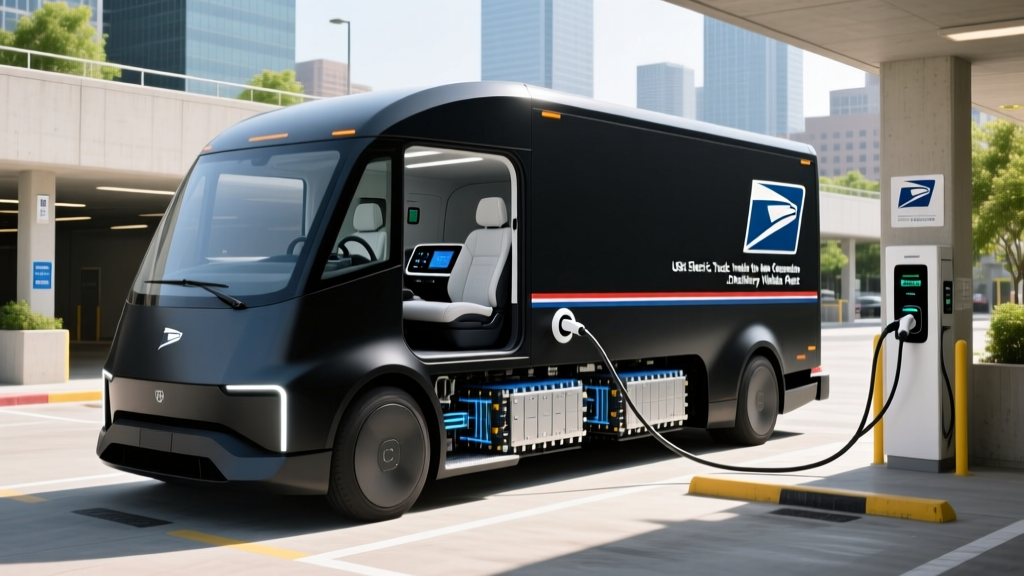
The USPS electric Next Generation Delivery Vehicle (NGDV), built by Oshkosh Defense, features a 94 kWh lithium iron phosphate (LFP) battery, an EPA-estimated 125-mile range, and a 224 kW (300 hp) electric motor. As of early 2026, USPS has taken delivery of over 14,000 electric NGDVs across more than 400 facilities nationwide, part of a commitment to acquire at least 45,000 electric units by 2028 under a $9.6 billion contract. The electric NGDV replaces the 30-year-old Grumman LLV, cutting fuel costs by roughly 60% per mile and eliminating tailpipe emissions on delivery routes.
What Is the USPS Electric Truck and Why Does It Matter?
If you've noticed a boxy, modern mail truck replacing the aging white-and-red Grumman LLVs in your neighborhood, you're seeing the USPS Next Generation Delivery Vehicle (NGDV) — and increasingly, its all-electric variant. The United States Postal Service awarded Oshkosh Defense a contract to build a purpose-built mail delivery fleet, and after significant political and environmental pressure, committed to making at least 75% of the initial 60,000-vehicle order fully electric.
For EV watchers and fleet operators, the USPS electric truck represents one of the largest single deployments of commercial electric vehicles in U.S. history. It's not a Tesla Semi or a Rivian EDV (Amazon's delivery van), but it is the vehicle most Americans will encounter daily — parked at curbside, idling at mailboxes, and charging overnight at postal depots.
USPS Electric NGDV: Full Specifications
| Specification | USPS Electric NGDV |
|---|---|
| Battery Capacity | 94 kWh (usable), LFP chemistry |
| EPA-Estimated Range | 125 miles |
| Real-World Range (stop-and-go route) | ~90–110 miles (route-dependent, HVAC load) |
| Motor Output | 224 kW (300 hp) |
| Drivetrain | Rear-wheel drive, single-speed reduction |
| 0–30 mph | ~3.5 seconds (unloaded) |
| Top Speed | 70 mph (governed) |
| Max Payload | ~2,000 lbs |
| Cargo Volume | 140 cu ft |
| DC Fast Charging | Up to 80 kW (CCS1); 10–80% in ~75 min |
| Level 2 AC Charging | 19.2 kW (depot); full charge in ~5.5 hours |
| GVWR | 9,990 lbs (Class 2b) |
| Manufacturer | Oshkosh Defense (Spartanburg, SC) |
| Contract Value | $9.6 billion (total program, incl. ICE variants) |
The choice of LFP (lithium iron phosphate) chemistry is significant. LFP batteries trade some energy density for superior cycle life — typically 3,000+ full cycles before reaching 80% state-of-health — and better thermal stability. For a vehicle that charges nightly and operates in stop-and-go conditions year-round, LFP is a pragmatic choice that avoids the nickel-cobalt supply chain concerns associated with NMC cells.
Electric NGDV vs. the Old Grumman LLV: A Generational Leap
To understand what the electric NGDV replaces, consider the Grumman Long Life Vehicle (LLV). Built between 1987 and 1994, the LLV runs a 2.5-liter GM Iron Duke four-cylinder engine producing just 100 horsepower. It gets roughly 8–10 mpg in stop-and-go delivery service — and that's before decades of mechanical wear. The LLV has no air conditioning in most units, no modern safety features, and increasingly unreliable parts availability.
| Metric | Grumman LLV (Gas) | Electric NGDV |
|---|---|---|
| Powertrain | 2.5L I4 gas, 100 hp | 224 kW electric motor, 300 hp |
| Fuel/Range | 8–10 mpg (~80 mi range on 10 gal) | 125 mi EPA (94 kWh battery) |
| Energy Cost per Mile | ~$0.35/mi ($3.50/gal gas) | ~$0.14/mi ($0.13/kWh avg commercial rate) |
| Annual Fuel Cost (12,000 mi/yr) | ~$4,200 | ~$1,680 |
| Maintenance Cost/Mile | ~$0.18/mi (oil, belts, exhaust, trans) | ~$0.06/mi (no oil, no exhaust, regen braking) |
| HVAC | Heater only (most units, no A/C) | Full climate control with heat pump |
| Safety Features | None (pre-airbag era design) | ABS, traction control, backup camera, airbags |
| Emissions (tailpipe) | ~400 g CO₂/mile | 0 g CO₂/mile (tailpipe) |
The cost comparison is stark. Over a 10-year, 120,000-mile service life, the electric NGDV saves USPS roughly $25,000–$30,000 per vehicle in combined fuel and maintenance savings, even after accounting for higher upfront acquisition cost. Multiply that by 45,000 electric vehicles, and the taxpayer savings become substantial — roughly $1.1–$1.35 billion over the fleet's lifetime.
Real-World Range: What 125 EPA Miles Means on a Mail Route
EPA Range vs. Route Reality
EPA sticker: 125 miles
Typical urban delivery route: 90–110 miles effective range
Cold-weather (below 32°F) route: 70–90 miles effective range
Highway/inter-facility transfer: ~85–100 miles at 55–65 mph
Mail delivery is one of the most demanding duty cycles for any vehicle: hundreds of stops per day, constant idling at mailboxes, frequent door openings (losing cabin heat/cooling), and low average speeds. The NGDV's 125-mile EPA rating was tested on a mixed cycle, but real postal routes differ significantly.
Regenerative braking partially offsets stop-and-go inefficiency — every deceleration to a mailbox recovers energy that a gas LLV wastes as brake heat. However, HVAC load is the major range variable. In Phoenix summer heat (110°F+), the air conditioning compressor can draw 3–5 kW continuously, cutting range by 15–25%. In Minneapolis winters, cabin heating via heat pump (more efficient than resistive heating) still reduces range by 20–30%.
USPS has addressed this by sizing routes to the vehicle. Most urban carrier routes run 25–40 miles per day, well within the NGDV's effective range even with climate penalties. Rural routes exceeding 80 miles may require mid-day opportunity charging or remain assigned to the ICE NGDV variant or legacy LLVs until additional depot chargers are installed.
Charging Infrastructure: How USPS Powers the Fleet
Charging a fleet of 45,000 electric trucks is a logistical challenge that dwarfs consumer EV adoption. USPS is installing depot-based charging infrastructure at processing and distribution centers (P&DCs) and local post offices nationwide, funded through a combination of the USPS fleet budget and Inflation Reduction Act clean-fleet provisions.
| Charging Level | Power | Charge Time (0–100%) | Use Case |
|---|---|---|---|
| Level 2 AC (Depot) | 19.2 kW | ~5.5 hours | Overnight charging at post offices |
| DC Fast Charge | Up to 80 kW (CCS1) | ~75 min (10–80%) | Opportunity charging, route extension |
| Trickle/Maintenance | ~3 kW | N/A (battery conditioning) | Long-term storage, 12V system support |
The 80 kW DC fast-charging rate is modest by passenger EV standards (many 2026 passenger EVs peak at 175–350 kW), but it's appropriate for the NGDV's 94 kWh battery and operational pattern. Charging at 80 kW yields a C-rate below 1C, which is gentle on LFP cells and preserves long-term battery health. USPS vehicles charge overnight at Level 2 and rarely need DC fast charging during operating hours.
Depot installation costs vary enormously. A single 19.2 kW Level 2 charger with pedestal and wiring runs $4,000–$8,000 per unit, but a 50-vehicle depot requiring utility service upgrades, switchgear, conduit trenching, and load management software can cost $500,000–$1.5 million per facility. USPS has prioritized facilities in dense urban areas with shorter routes and favorable utility rates for initial rollout.
Cost Breakdown: Acquisition, Operation, and the Taxpayer Equation
Unlike consumer EVs, the USPS electric truck isn't purchased by individuals — it's procured with federal appropriations. But the economics still matter to taxpayers and policymakers evaluating the fleet transition.
| Cost Category | Electric NGDV | ICE NGDV (Gas Variant) |
|---|---|---|
| Unit Acquisition Cost | ~$75,000–$85,000 | ~$45,000–$55,000 |
| Depot Charger Share (per vehicle) | ~$8,000–$15,000 | $0 |
| Annual Energy Cost (12,000 mi) | ~$1,680 | ~$4,200 |
| Annual Maintenance | ~$720 | ~$2,160 |
| 10-Year Total Cost of Ownership | ~$110,000–$135,000 | ~$115,000–$140,000 |
| Cost Break-Even Point | Year 4–6 (depending on energy prices) | |
The electric NGDV carries a $20,000–$30,000 acquisition premium over its gas counterpart, but the total cost of ownership converges within 4–6 years thanks to dramatically lower fuel and maintenance expenses. With the NGDV expected to serve 15–20 years (the LLVs lasted 30+), the lifetime savings per vehicle are substantial.
USPS does not qualify for the federal §30D EV tax credit — that credit applies to private purchasers and businesses, not federal agencies. However, the fleet transition benefits from IRA provisions directing federal agencies toward zero-emission vehicle procurement, and USPS has leveraged separate appropriations for charging infrastructure.
Common Misconceptions About the USPS Electric Truck
| Myth | Fact |
|---|---|
| "The electric mail truck can't handle rural routes." | Most rural routes under 60 miles/day are well within range. Longer rural routes are assigned to the ICE NGDV variant or charged mid-route as depot infrastructure expands. |
| "LFP batteries won't last in cold climates." | LFP cells perform adequately in cold when paired with thermal management. The NGDV includes battery preconditioning and a heat pump. Range drops ~20–30% below freezing, but routes are sized accordingly. |
| "It's slower and less capable than the old LLV." | The NGDV produces 300 hp vs. the LLV's 100 hp. It accelerates faster, carries more payload, and has a governed top speed of 70 mph vs. the LLV's ~65 mph. |
| "Taxpayers are overpaying for electric trucks." | The 10-year TCO of the electric NGDV is equal to or lower than the gas variant. Higher upfront cost is offset by $2,500+/year in fuel and maintenance savings per vehicle. |
| "The electric NGDV is made in China." | Oshkosh Defense manufactures the NGDV in Spartanburg, South Carolina. Battery cells are sourced from compliant supply chains under federal procurement rules. |
What This Means for Consumer EV Buyers
You can't buy a USPS electric NGDV — it's a government fleet vehicle. But the program's scale carries lessons for consumer EV shoppers:
- LFP is proven at scale. If the U.S. government trusts LFP chemistry for a 45,000-vehicle fleet expected to last 15+ years, the concerns some buyers have about LFP in passenger EVs (Tesla Model 3 Standard Range, Ford Mustang Mach-E Select) deserve re-evaluation.
- Depot charging works. The NGDV's overnight Level 2 strategy mirrors what most EV owners do at home. You don't need 350 kW DC fast charging for daily use — a 19.2 kW home Level 2 charger (or even a 7.7 kW unit) covers 95% of driving needs.
- Fleet TCO favors electric. The same math that makes the NGDV cheaper over 10 years applies to consumer vehicles. A 2026 Hyundai Ioniq 5 or Chevrolet Equinox EV costs less to operate per mile than a comparable gas crossover, especially when home charging is available.
Should You Wait for Fleet-Trickle-Down Tech?
If you need a consumer EV now: The NGDV's technology (LFP batteries, heat pumps, CCS1 charging) is already available in 2026 passenger vehicles. Don't wait.
If you're evaluating LFP vs. NMC: The NGDV's LFP adoption reinforces that LFP is durable, safe, and cost-effective — ideal for buyers who prioritize longevity over maximum range.
If you're a fleet manager: Study USPS's depot charging rollout. Their phased approach — starting with urban, short-route facilities — is a template for any commercial fleet electrification.
Frequently Asked Questions
How many USPS electric trucks are on the road in 2026?
As of early 2026, USPS has deployed over 14,000 electric NGDVs across more than 400 postal facilities. The total commitment is at least 45,000 electric units by 2028, with the remaining ~15,000 of the initial 60,000-vehicle order being gas-powered ICE variants for longer rural routes.
What happens if an electric NGDV runs out of charge on a route?
USPS route planning software assigns routes within the vehicle's effective range, including a safety buffer. If an NGDV does deplete its battery, it can be towed to the nearest depot or charged via mobile DC fast-charging units that some districts maintain. The 80 kW CCS1 port also allows charging at public DC stations in emergencies, though this is not standard practice.
Can I buy a retired USPS electric NGDV?
Not yet. The NGDV fleet is new (deliveries began in 2024), and vehicles won't reach retirement age for 15–20 years. When they do, federal surplus vehicle auctions (via GSA Auctions) would be the likely disposal channel, but no electric NGDVs have entered the surplus market as of 2026.
Does the electric NGDV have autonomous driving features?
No. The NGDV is an SAE Level 0 vehicle — no driver-assistance automation. It includes modern safety features (ABS, traction control, airbags, backup camera) but no adaptive cruise control, lane-keeping, or self-driving capability. The driver remains fully responsible for vehicle operation at all times.
How does the NGDV handle extreme heat in southwestern states?
The NGDV includes a full HVAC system with heat pump and battery thermal management. In extreme heat (110°F+), range drops 15–25% due to A/C compressor load and battery cooling requirements. USPS accounts for this in route planning for facilities in Arizona, Nevada, and Southern California, assigning shorter routes or scheduling mid-day charging where needed.
Who makes the battery for the USPS electric truck?
Oshkosh Defense has not publicly disclosed the specific cell supplier for the NGDV's 94 kWh LFP pack, though the battery system was developed in partnership with major commercial battery manufacturers compliant with federal procurement sourcing requirements. The pack includes active thermal management and is warrantied for the vehicle's service life.
Sources: USPS Newsroom, Oshkosh Defense, EPA fueleconomy.gov fleet data.