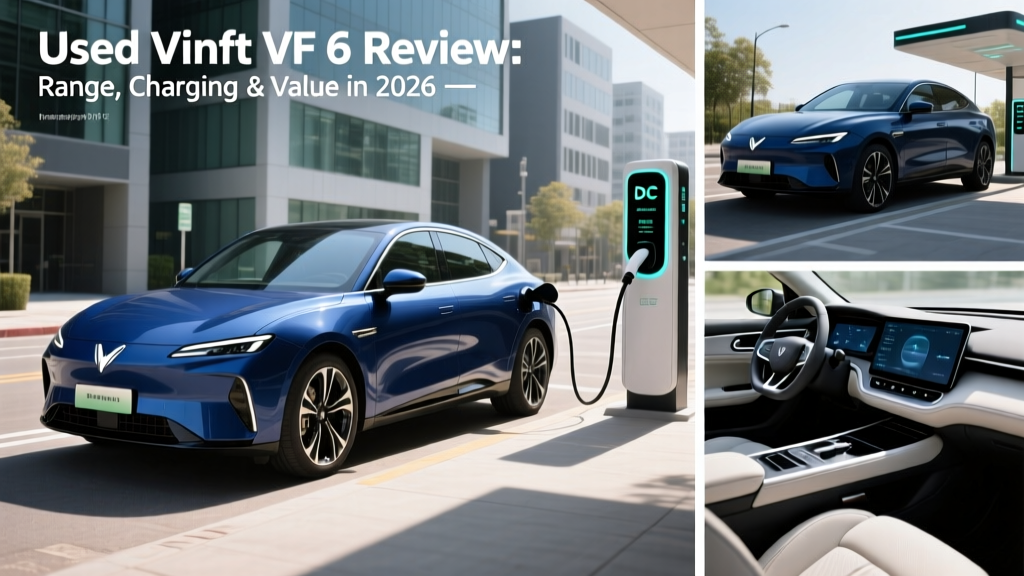
The VinFast VF 6 occupies a space few subcompact electric SUVs dare to enter: genuinely affordable, stylish, and packed with tech that punches above its segment. But as 2026 unfolds and the first wave of off-lease and dealer-demo VF 6 models hit the used market, prospective buyers face a different calculus than new-car shoppers. Depreciation, battery health, software maturity, and shifting tax-credit rules all reshape the value equation. This review dissects what a used VF 6 actually delivers in range, charging speed, daily usability, and long-term ownership cost — with exact numbers, not marketing gloss.
Quick Verdict: Who Should Consider a Used VF 6?
The used VinFast VF 6 makes the most sense for urban commuters and small households who need a nimble, tech-forward EV with adequate range for city and suburban driving, but don't require road-trip prowess. Its 59 kWh LFP battery delivers dependable daily mileage, DC fast charging is respectable if not class-leading, and the cabin offers more premium touches than rivals like the Chevrolet Bolt EUV or Hyundai Kona Electric at similar used prices. It is not the right pick for frequent long-distance travelers or families needing maximum cargo space.
Range, Efficiency, and Real-World Expectations
Real-World Expectation: Plan for ~200–220 miles on mixed highway/city driving. At sustained 75 mph highway speeds, expect closer to 185–200 miles. In cold weather (below 32°F), range can drop 20–30%, landing around 155–185 miles depending on cabin heat usage and whether you precondition.
Efficiency: 113 MPGe combined / 29 kWh per 100 miles
VinFast equipped the VF 6 with a 59 kWh (usable capacity) lithium iron phosphate (LFP) battery pack. LFP chemistry offers distinct advantages for used-EV buyers: it degrades more slowly over charge cycles than nickel-manganese-cobalt (NMC) cells, tolerates regular 100% charging without accelerating wear, and poses lower thermal-runaway risk. The trade-off is lower energy density — meaning the pack is physically heavier for its capacity — but in a subcompact SUV the packaging penalty is manageable.
On the EPA test cycle, the VF 6 Plus achieves 248 miles. The Eco trim, with slightly different tuning and equipment, rates at approximately 237 miles. These are competitive figures for the segment, though the Hyundai Kona Electric (261 mi EPA) and the Volvo EX30 (265 mi EPA extended-range) edge ahead. Where the VF 6 holds its ground is in LFP longevity — a critical factor when buying used, since battery replacement on any EV remains a $10,000–$18,000 proposition.
Charging Speed: DC Fast, Level 2, and Level 1
| Charging Level | Power / Voltage | Speed | Notes |
|---|---|---|---|
| Level 1 (120V) | ~1.4 kW | ~4 mi/hr | Emergency/trickle only; full charge in ~42 hours |
| Level 2 (240V) | ~11 kW (48A) | ~30 mi/hr | 0–100% in ~6 hours on a home wallbox |
| DC Fast Charge | Peak ~100 kW | 10–80% in ~34 min | CCS connector; charge curve tapers sharply above 80% |
The VF 6's peak DC fast-charge rate of roughly 100 kW is its most debated spec. For context, rivals like the Hyundai Kona Electric peak around 100 kW as well, while the Kia Niro EV reaches approximately 85 kW. The VF 6 is in the middle of the subcompact pack — adequate for highway top-ups but not competitive with vehicles built on 800V architectures (Hyundai Ioniq 5, Kia EV6) that sustain 200+ kW.
Here's where the charge curve matters: the VF 6 sustains close to its peak rate from roughly 10% to 55% state of charge, then tapers progressively. From 80% to 100%, charging slows dramatically to protect the LFP cells — a characteristic shared by most EVs but particularly pronounced on LFP chemistry. For road-trip planning, figure on 34-minute stops from 10–80%, then drive on. You won't want to wait for a full charge at a public station.
At home on a Level 2 wallbox (240V, 48-amp circuit), the VF 6 replenishes about 30 miles of range per hour, meaning an overnight session easily covers daily driving. Most owners will rarely need public charging if home Level 2 is available.
Performance and Driving Dynamics
| Spec | VF 6 Eco | VF 6 Plus |
|---|---|---|
| Drivetrain | FWD (single motor) | FWD (single motor) |
| Horsepower | 134 hp | 201 hp |
| Torque | 184 lb-ft | 228 lb-ft |
| 0–60 mph | ~8.5 sec | ~6.7 sec |
| Battery (usable) | 59 kWh (LFP) | 59 kWh (LFP) |
| EPA Range | 237 mi | 248 mi |
| MPGe (combined) | 110 MPGe | 113 MPGe |
The VF 6 Plus, with 201 horsepower and 228 lb-ft of torque, delivers genuinely sprightly acceleration for a subcompact crossover. The 0–60 mph time of approximately 6.7 seconds means confident highway merging and passing. The Eco trim, at 134 hp, feels more leisurely but is adequate for city commuting.
Ride quality is firm but controlled — VinFast tuned the suspension with input from Magna Steyr, and it shows in composed highway manners. Cabin noise isolation is a step above what you'd expect at this price point. Regenerative braking offers multiple levels adjustable via steering-wheel paddles, including a strong-enough setting for one-pedal driving in stop-and-go traffic.
Interior, Cargo, and Tech
Inside, the VF 6 presents a minimalist, screen-centric cabin. A 12.9-inch central touchscreen dominates the dashboard, running VinFast's proprietary infotainment OS. Wireless Apple CarPlay and Android Auto are standard, which is essential given the native software's learning curve. A head-up display (Plus trim) projects speed and navigation onto the windshield.
Passenger and Cargo Dimensions:
- Front headroom: 39.4 in / Front legroom: 40.6 in
- Rear headroom: 38.0 in / Rear legroom: 36.2 in
- Cargo behind rear seats: 18.5 cu ft
- Cargo with rear seats folded: 46.2 cu ft
- No front trunk (frunk)
Rear legroom is tight for taller passengers on long trips. Cargo volume is competitive with the Kona Electric but trails the Bolt EUV. The absence of a frunk is a missed opportunity for additional storage.
Driver-Assistance Tech: The VF 6 comes equipped with VinFast's ADAS suite, including adaptive cruise control, lane-keeping assist, automatic emergency braking, and a 360-degree camera system. These are SAE Level 2 driver-assistance features — the driver must remain fully engaged with hands on the wheel and eyes on the road. This is not autonomous driving.
Used Pricing, Trims, and Tax Credit Eligibility
| Item | VF 6 Eco (Used Est.) | VF 6 Plus (Used Est.) |
|---|---|---|
| Original MSRP (2025) | $31,900 | $35,400 |
| Avg. Used Price (2026, ~15K mi) | $22,500–$25,000 | $25,000–$28,500 |
| Federal Used EV Credit (§25E) | Up to $4,000 (30% of sale price) | Up to $4,000 (30% of sale price) |
| Est. Price After Credit | $18,500–$21,000 | $21,000–$24,500 |
Used VF 6 pricing in early 2026 reflects typical first-year EV depreciation of roughly 25–35%. The Eco trim, originally $31,900, now trades between $22,500 and $25,000 depending on mileage and condition. The Plus trim commands $25,000 to $28,500.
Critical tax credit distinction for used EVs: The federal §25E Used Clean Vehicle Credit — not the §30D new-vehicle credit — applies here. It provides 30% of the sale price, up to a maximum of $4,000, for qualified used EVs purchased through a licensed dealer. Key eligibility requirements:
- Buyer income cap: Modified AGI ≤ $75,000 (single), ≤ $112,500 (head of household), ≤ $150,000 (joint)
- Vehicle price cap: Sale price must be ≤ $25,000
- Vehicle age: Must be at least 2 model years old (2024 or older for a 2026 purchase)
- Dealer sale required: Private-party sales do not qualify
- First used sale: Credit applies only to the first qualified resale after the vehicle becomes eligible
This means the VF 6 Plus, often selling above $25,000 used, may not qualify for the used credit in many transactions. The Eco trim, more likely to fall at or below $25,000, has a clearer path to the $4,000 credit. Always verify with the selling dealer and consult irs.gov or a tax professional before finalizing a purchase, as rules and vehicle eligibility can shift.
Warranty and Battery Longevity
VinFast backed the VF 6 with one of the strongest warranty packages in the segment:
- Battery & Powertrain: 8 years / 100,000 miles (whichever comes first), with a capacity-retention threshold of 70%
- Bumper-to-Bumper: 5 years / 60,000 miles
- Roadside Assistance: 5 years / 60,000 miles
For used buyers, the critical question is how much of that warranty remains. A 2025 VF 6 purchased in early 2026 with 15,000 miles still has roughly 7 years and 85,000 miles of battery/powertrain coverage — substantial protection against a catastrophic battery failure. The LFP chemistry further reduces degradation anxiety; industry data suggests LFP packs retain 90%+ capacity after 1,000 full charge cycles, translating to well over 150,000 miles of real-world use before hitting the 70% threshold.
One ownership caveat: VinFast's service network in the U.S. remains far smaller than legacy automakers'. As of early 2026, the company operates service centers in roughly 20 metro areas and partners with third-party repair shops in additional markets. Check VinFast's official site for service availability in your region before buying.
Pros, Cons, and Competitive Position
Pros
- LFP battery chemistry offers superior longevity and safety for used buyers
- Strong 8-yr/100K-mi battery warranty with most of it remaining on low-mile examples
- Competitive 248-mi EPA range in the subcompact segment
- 201 hp (Plus) provides genuinely quick acceleration
- Premium interior materials and tech for the price
- Up to $4,000 federal used-EV credit on qualifying Eco trims
Cons
- DC fast charging peaks at ~100 kW — slow for road trips vs 800V rivals
- Thin U.S. service and dealer network limits support in many regions
- No frunk; cargo space trails some competitors
- Rear legroom is tight for adults on longer trips
- Proprietary infotainment OS has a learning curve
- Used credit may not apply to Plus trim above $25K sale price
Against the used Chevrolet Bolt EUV (247 mi EPA, widely available, slower 55 kW DC charging), the VF 6 offers faster charging and a more modern interior, but the Bolt has a far larger service network and more established parts availability. The used Hyundai Kona Electric (261 mi EPA, ~100 kW DC) is the closest direct rival — it matches the VF 6 in charging speed and edges ahead in range and cargo, though its cabin feels less premium. The used Volvo EX30 offers more range and quicker charging but commands a higher used price.
Frequently Asked Questions
What is the real-world range of a used VinFast VF 6?
The EPA rates the VF 6 Plus at 248 miles. In real-world mixed driving, plan for 200–220 miles. Sustained highway speeds of 75 mph reduce that to roughly 185–200 miles. In freezing weather with cabin heat, expect 155–185 miles. Preconditioning the battery while plugged in helps mitigate cold-weather losses and improves DC charging speed.
How fast does the VF 6 charge at home and on the road?
On a home Level 2 charger (240V, 48A), the VF 6 adds about 30 miles of range per hour, reaching a full charge in roughly 6 hours. On a DC fast charger, it peaks at approximately 100 kW and charges from 10% to 80% in about 34 minutes. Above 80%, charging slows significantly — don't plan on topping off at public stations.
Does a used VinFast VF 6 qualify for a federal tax credit?
It may qualify for the §25E Used Clean Vehicle Credit — up to $4,000 (30% of sale price). However, the vehicle must sell for $25,000 or less, be at least 2 model years old, and the buyer must meet income caps ($75K single / $150K joint). The Eco trim is more likely to qualify than the Plus. Verify eligibility with the dealer and a tax professional.
Is the VF 6 worth buying over a used Bolt EUV or Kona Electric?
Choose the VF 6 if you prioritize cabin quality, LFP battery longevity, and a strong remaining factory warranty. Choose the Bolt EUV if service-network access is critical or if you need more cargo room. Choose the Kona Electric if maximizing EPA range and cargo space matters most. All three are solid used EV values — the best pick depends on your local service options and daily driving needs.
What should I check before buying a used VF 6?
Request the battery State of Health (SoH) report from VinFast's diagnostic system or the vehicle's infotainment screen. Verify the remaining warranty coverage (battery/powertrain and bumper-to-bumper). Confirm there is a VinFast-authorized service center or partner within reasonable distance of your home. Test DC fast-charge speed at a known-good station to verify the vehicle's charge system is functioning properly.