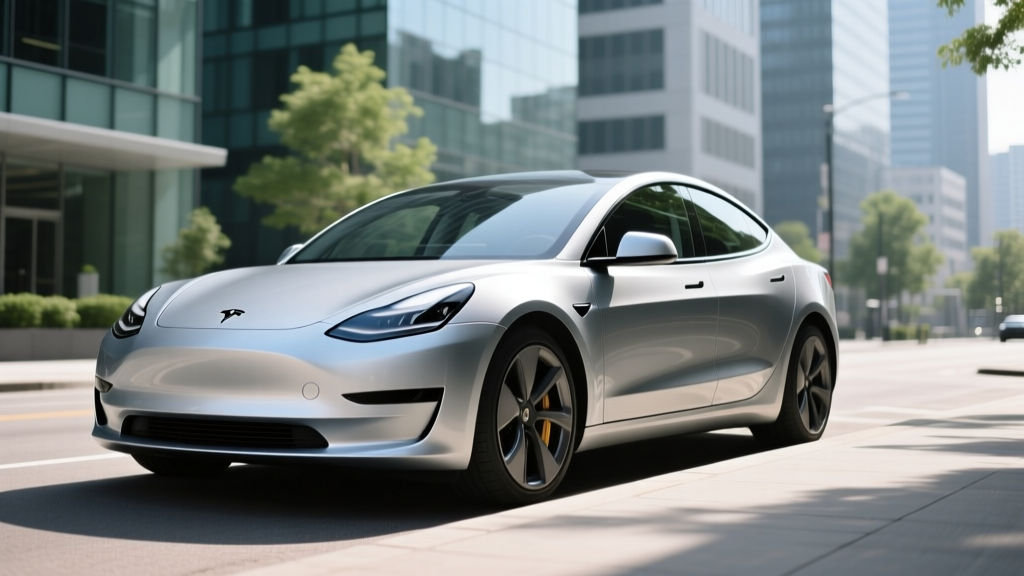
Buying a used Tesla is one of the most accessible paths into electric-vehicle ownership. Prices on three- and four-year-old Model 3 and Model Y examples have dropped substantially, and the Supercharger network remains the gold standard for public DC fast charging. But the moment you hand over cash for a pre-owned Tesla, the question that matters most isn't 0-60 time — it's what happens if something breaks. Understanding the used Tesla warranty — what transfers, what expires, and what could cost you thousands out of pocket — is the single most important piece of due diligence you can do before buying.
This guide breaks down every layer of Tesla's warranty as it applies to second- and third-owner vehicles in 2026, using the Model 3 and Model Y (the two most common used Tesla purchases) as reference points. We'll cover remaining battery and drive-unit coverage, the limits of the basic vehicle warranty, what Tesla's Certified Pre-Owned program adds, and the real-world repair costs you should budget for once warranty protection runs out.
Tesla's Warranty Structure: Three Layers Explained
Tesla's warranty is split into three distinct coverage periods. When evaluating a used Tesla, you need to know which layers are still active and which have already expired based on the vehicle's in-service date and odometer reading.
| Warranty Tier | Duration | Mileage Limit | Transferable to Second Owner? |
|---|---|---|---|
| Basic Vehicle (Bumper-to-Bumper) | 4 years | 50,000 miles | Yes — remainder transfers automatically |
| Battery & Drive Unit (Long Range / Performance) | 8 years | 120,000 miles | Yes — remainder transfers automatically |
| Battery & Drive Unit (Standard Range / RWD) | 8 years | 100,000 miles | Yes — remainder transfers automatically |
The critical detail: Tesla warranties follow the vehicle, not the owner. If you buy a 2022 Model 3 Long Range that was first delivered on March 15, 2022, and it currently has 47,000 miles, the Basic Vehicle warranty expired on March 15, 2026. However, the Battery and Drive Unit warranty remains active until March 15, 2030, or 120,000 miles — whichever comes first. You can verify the in-service date through Tesla's app or by requesting the vehicle's warranty status directly from Tesla with the VIN.
Battery Warranty Deep Dive: What 70% Retention Really Means
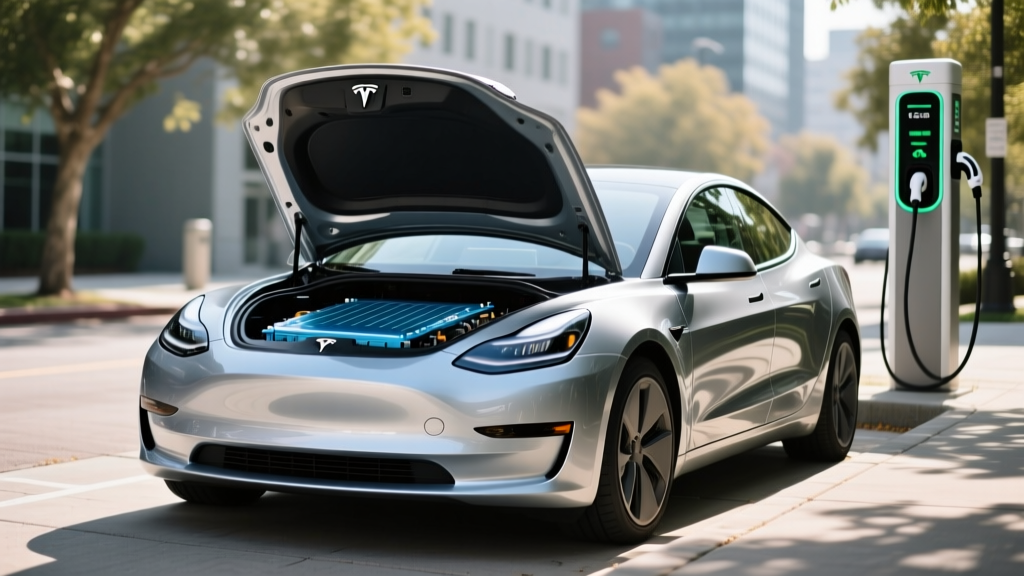
Tesla's Battery and Drive Unit Limited Warranty guarantees that the high-voltage traction battery will retain at least 70% of its original usable capacity for the duration of the coverage period. If degradation drops below that threshold within 8 years or the applicable mileage limit, Tesla will repair or replace the battery to bring it back to at least 70% — not 100%.
Here's the nuance that catches some used buyers off guard: the warranty covers capacity loss, not range loss due to external factors. If your real-world range drops because of cold weather, tire pressure, or driving habits, that's not a warranty claim. The battery must demonstrably fall below 70% of original capacity as measured by Tesla's diagnostic tools.
Battery Chemistry by Trim: LFP vs. NMC
| Model / Trim | Battery Chemistry | Usable Capacity | EPA Range | Battery Warranty |
|---|---|---|---|---|
| Model 3 RWD (2023–2026) | LFP | ~57 kWh | 272 mi | 8 yr / 100,000 mi |
| Model 3 Long Range AWD | NMC | ~75 kWh | 341 mi | 8 yr / 120,000 mi |
| Model 3 Performance | NMC | ~75 kWh | 315 mi | 8 yr / 120,000 mi |
| Model Y RWD (2025–2026) | LFP | ~57 kWh | 274 mi | 8 yr / 100,000 mi |
| Model Y Long Range AWD | NMC | ~75 kWh | 320 mi | 8 yr / 120,000 mi |
| Model Y Performance | NMC | ~75 kWh | 294 mi | 8 yr / 120,000 mi |
What the Used Tesla Warranty Does NOT Cover
This is where second-owner risk concentrates. Once the 4-year/50,000-mile Basic Vehicle warranty expires, the following components are entirely your financial responsibility:
- Touchscreen / MCU (Media Control Unit): Replacement runs $1,500–$2,500. Earlier Model 3 units (2018–2020) had higher failure rates; the AMD Ryzen-based MCU introduced in 2022 is more reliable.
- Suspension components: Control arms, bushings, and strut mounts on pre-2023 Model 3 and Model Y vehicles were a known wear point. Tesla revised the upper control arms in 2023, but earlier cars may need $800–$1,400 in front suspension work.
- 12V auxiliary battery: The lithium-ion 12V battery (introduced in late 2021) lasts longer than the older lead-acid units, but replacement still costs $300–$500 when it eventually fails.
- Heat pump / HVAC system: The octovalve and heat pump assembly in Model Y (and post-2021 Model 3) is complex. Out-of-warranty replacement has been quoted at $2,000–$4,000 at Tesla Service Centers.
- Glass roof and windows: Not covered for cracks or chips unless caused by a manufacturing defect. Comprehensive insurance is essential.
- Tires: EV-specific tires wear 20–30% faster than on comparable ICE vehicles due to instant torque and heavier curb weight. Budget $200–$350 per tire for replacements.
- Charge port and onboard charger: Failures are uncommon but costly — an onboard charger replacement can exceed $1,500.
Tesla Certified Pre-Owned vs. Private-Party: Warranty Differences
Tesla's Certified Pre-Owned (CPO) program is available only through Tesla's own used-vehicle inventory. CPO vehicles come with an additional warranty layer on top of whatever original factory coverage remains:
| Factor | Tesla CPO | Private-Party / Third-Party Dealer |
|---|---|---|
| Inspection | Tesla-performed multi-point inspection | Varies — buyer must arrange independently |
| Added Warranty | 1 year / 12,500 mi beyond Basic Vehicle expiration (or from CPO purchase date if Basic has expired) | None — only remaining original factory warranty applies |
| Return Policy | 7-day return window | Typically sold as-is |
| Financing | Tesla financing available | Arrange through bank/credit union |
| Price Premium | Typically $1,500–$4,000 above private market | Lower upfront cost |
For a used Tesla with 55,000+ miles where the Basic Vehicle warranty has already expired, the CPO added coverage is genuinely valuable — it's essentially a 12-month bumper-to-bumper extension. For lower-mileage examples still within the original 4/50,000 window, the CPO premium buys less incremental protection.
Real-World Range and Charging: What Used Buyers Actually Get
A used Tesla's window sticker EPA range is a starting point, not a guarantee. Here's what to expect from the most commonly available used models in 2026:
EPA Estimated Range: 334 miles
Real-world highway (70 mph, 72°F): ~280–300 miles
Real-world highway (32°F, winter): ~230–260 miles
City / mixed driving with regen: ~300–320 miles
At 80,000 miles with ~10% degradation: subtract ~30 miles from all figures above
Charging Speed Specifications
| Charging Method | Model 3 Long Range | Model 3 RWD (LFP) | Model Y Long Range |
|---|---|---|---|
| DC Fast Charge (Peak) | 250 kW (CCS/NACS) | 170 kW | 250 kW |
| 10–80% DC Fast Charge | ~27 minutes | ~32 minutes | ~27 minutes |
| Level 2 Home (48A / 11.5 kW) | ~44 mi/hr | ~30 mi/hr | ~44 mi/hr |
| Level 2 Home (32A / 7.7 kW) | ~30 mi/hr | ~20 mi/hr | ~30 mi/hr |
| Level 1 (120V / 1.4 kW) | ~3 mi/hr | ~3 mi/hr | ~3 mi/hr |
Important charging-curve note: Tesla's 250 kW peak rate applies only between roughly 10–30% state of charge. The rate tapers to ~100 kW above 50% and drops further above 80%. The "10–80% in 27 minutes" figure reflects this taper — sustained peak charging does not occur across the full session. Always precondition the battery (navigate to a Supercharger in the Tesla app or nav system) before DC fast charging to reach peak rates; without preconditioning, cold-soak can cut charge speeds by 40–60%.
Performance and Efficiency Reference
| Spec | Model 3 RWD | Model 3 LR AWD | Model 3 Perf. | Model Y LR AWD |
|---|---|---|---|---|
| 0–60 mph | 5.8 sec | 4.2 sec | 3.1 sec | 4.8 sec |
| Horsepower | 271 hp | 346 hp | 510 hp | 384 hp |
| Drivetrain | RWD | Dual-Motor AWD | Dual-Motor AWD | Dual-Motor AWD |
| MPGe (Combined) | 132 MPGe | 131 MPGe | 125 MPGe | 122 MPGe |
| kWh/100 mi | 25 kWh | 26 kWh | 27 kWh | 28 kWh |
| Cargo Volume | 23 cu ft (trunk + frunk) | 23 cu ft | 23 cu ft | 76 cu ft (seats folded) |
Data sourced from fueleconomy.gov and Tesla's official specifications.
Pricing, Tax Credits, and Total Used-Tesla Cost
Used Tesla prices in early 2026 have settled into more predictable territory. Here's the approximate market and what federal incentives may apply:
| Model (Typical Year / Miles) | Avg. Market Price | Used EV Tax Credit (§25E) | Effective Price After Credit |
|---|---|---|---|
| 2021 Model 3 LR AWD (~50k mi) | $24,000–$28,000 | Up to $4,000 | $20,000–$24,000 |
| 2022 Model 3 RWD (~40k mi) | $22,000–$26,000 | Up to $4,000 | $18,000–$22,000 |
| 2022 Model Y LR AWD (~45k mi) | $28,000–$33,000 | Up to $4,000 | $24,000–$29,000 |
| 2023 Model 3 Perf. (~25k mi) | $33,000–$38,000 | Up to $4,000 | $29,000–$34,000 |
Critical tax credit rules for used Teslas (IRS §25E): The Previously-Owned Clean Vehicle Credit provides 30% of the sale price, up to a maximum of $4,000. However, eligibility requires:
- The vehicle must be at least 2 model years old (a 2024 model purchased in calendar year 2026 qualifies)
- The sale price must be $25,000 or less — this eliminates most low-mileage Model Y and Performance variants from credit eligibility
- Buyer income caps: $75,000 single / $112,500 head of household / $150,000 married filing jointly (modified adjusted gross income)
- The vehicle must be purchased from a licensed dealer, not a private party
- The credit can be transferred to the dealer at the point of sale as an immediate discount (per IRS guidelines)
Note: The $25,000 sale-price cap is the most restrictive factor. Many used Model Y listings exceed this threshold, meaning buyers will pay full price. The new-vehicle §30D credit (up to $7,500) does not apply to used purchases.
Out-of-Warranty Repair Costs: What to Budget
If you're buying a used Tesla with 60,000+ miles or one where the Basic Vehicle warranty has expired, plan for these potential expenses:
| Component | Estimated Repair Cost | Likelihood (100k–150k mi) |
|---|---|---|
| MCU / Touchscreen | $1,500–$2,500 | Low–Moderate |
| Drive Unit (motor) | $3,000–$5,000 | Low (covered under 8-yr warranty) |
| Heat Pump Assembly | $2,000–$4,000 | Low–Moderate |
| Front Suspension (control arms) | $800–$1,400 | Moderate (pre-2023 vehicles) |
| Onboard Charger | $1,200–$1,800 | Low |
| 12V Li-Ion Battery | $300–$500 | Moderate (5–8 year lifespan) |
| Full Battery Replacement | $12,000–$16,000 | Very Low (covered under 8-yr warranty) |
The Battery and Drive Unit warranty is your safety net for the most expensive possible failure. At 8 years and 100,000–120,000 miles, it covers the two components that would otherwise total the car financially. The practical risk for used buyers lies in the medium-cost items — heat pump, MCU, suspension — that fall outside warranty coverage once the Basic Vehicle period ends.
Who Should Buy a Used Tesla (and Who Shouldn't)
- You want access to the Supercharger network (20,000+ stations globally) without adapter hassles
- Your daily commute is under 100 miles and you can charge at home with Level 2
- You prioritize over-the-air software updates and an active app ecosystem
- You're buying a 2022+ model where the Battery/Drive Unit warranty still has 4+ years remaining
- You can verify service history and battery health via a Tesla pre-purchase inspection
- You need a vehicle with remaining bumper-to-bumper coverage and don't want to buy CPO
- You live in an area with limited Tesla Service Center access (rural regions)
- You want physical buttons, a traditional instrument cluster, or Apple CarPlay/Android Auto
- You're buying a pre-2021 model with 70,000+ miles and no remaining Basic Vehicle warranty
- You need a third row or more than 76 cu ft of cargo space (consider a used Model X or Rivian R1S)
Frequently Asked Questions
Does the Tesla warranty transfer to a second or third owner?
Yes. Tesla's Basic Vehicle warranty and Battery/Drive Unit warranty are tied to the vehicle's VIN, not the original owner. When you buy a used Tesla, the remaining warranty coverage transfers automatically — no paperwork or fee required. You can verify remaining coverage by entering the VIN in the Tesla app or contacting Tesla Support.
How do I check a used Tesla's battery health before buying?
Navigate to Settings > Software > Battery Health on the vehicle's touchscreen (available on 2022+ software versions). This shows an estimated degradation percentage. For a more precise reading, a Tesla Service Center can run a full battery health test during a pre-purchase inspection. Third-party apps like Tessie or Teslamate (with an OBD-II dongle) can also log detailed SoH (State of Health) data over time.
What does the Tesla battery warranty NOT cover?
The warranty does not cover range reduction from cold weather, high-speed driving, or tire/wheel changes. It also excludes damage from accidents, floods, fire, improper charging (e.g., using damaged or non-compliant equipment), or modifications to the battery or high-voltage system. Normal degradation above the 70% retention threshold is not a claimable issue.
Are extended warranties or third-party service contracts worth it for a used Tesla?
Tesla does not offer an extended warranty beyond its factory coverage and CPO program. Third-party EV warranty providers (such as Endurance or CarShield) have begun offering EV-specific plans, but coverage for the battery and drive unit is often excluded since Tesla's own 8-year warranty already covers them. The value proposition is primarily for MCU, HVAC, and suspension components. Read the exclusion list carefully — many plans exclude "wear items" and pre-existing conditions.
Can I still use Superchargers if I buy a used Tesla from a private seller?
Yes. Supercharger access is tied to the vehicle, not the owner. The only exception is if the previous owner had unpaid Supercharging fees, which can result in the vehicle being blocked from the network until the balance is settled. Before purchasing, ask the seller to show their Tesla app billing screen, or contact Tesla Support with the VIN to confirm there are no outstanding charges.
Is Autopilot or Full Self-Driving transferable on a used Tesla?
Autopilot (basic lane-keeping and traffic-aware cruise control) is standard and stays with the car. Enhanced Autopilot and Full Self-Driving (Supervised) capabilities are also tied to the vehicle and transfer with ownership — Tesla does not currently revoke purchased FSD on resale. However, Tesla occasionally changes this policy, and FSD purchased as a monthly subscription does not transfer. Note: FSD (Supervised) is an SAE Level 2 driver-assistance system, not autonomous driving. The driver must remain fully engaged at all times.