Quick Verdict: Should You Take Over a Used Tesla Model Y Lease?
The Tesla Model Y remains the best-selling electric vehicle in the United States for good reason: usable range, a vast Supercharger network, and practical crossover packaging. But if you're evaluating a used Tesla Model Y lease — whether through a lease transfer marketplace, a certified pre-owned program, or a dealership off-lease unit — the calculus is different from buying new. You're inheriting someone else's mileage, wear patterns, and potentially a battery that's already seen thousands of charge cycles.
This guide breaks down exactly what to expect from 2024–2026 Model Y variants you'll encounter on the used-lease market, including real-world range, charging performance, tax-credit eligibility on purchase, and the ownership costs that determine whether a used lease is actually a smart move in 2026.
Real-World Range and Efficiency: Beyond the EPA Sticker
The EPA range figure on the window sticker is a starting point, not a guarantee. Here's what the 2024–2026 Model Y lineup delivers on paper and what you should actually plan for.
| Trim | EPA Range | Real-World Highway (70 mph) | Cold Weather (20°F) |
|---|---|---|---|
| Long Range AWD (NMC) | 320 mi | ~270–285 mi | ~220–240 mi |
| Performance AWD (NMC) | 293 mi | ~245–260 mi | ~200–220 mi |
| RWD (LFP, 2025+) | 302 mi | ~255–270 mi | ~210–230 mi |
Highway figures assume 70 mph sustained, moderate HVAC use. Cold-weather figures assume 20°F ambient with cabin heating. Per fueleconomy.gov, the 2025 Model Y Long Range AWD achieves 122 MPGe combined (28 kWh/100 mi).
The Long Range AWD uses a nickel-manganese-cobalt (NMC) battery pack with approximately 75 kWh of usable capacity. NMC offers higher energy density — meaning more range in a lighter package — but it degrades slightly faster than LFP over thousands of cycles and Tesla recommends charging to 80% for daily use to preserve longevity.
The RWD variant introduced for 2025 uses a lithium iron phosphate (LFP) battery, roughly 60 kWh usable. LFP chemistry is heavier and slightly less energy-dense, but it tolerates 100% daily charges, has a longer cycle life, and is less prone to capacity loss over time. If you're picking up a used lease with an LFP pack, the battery health outlook is generally better at high mileage.
Charging Performance: DC Fast, Level 2, and the Supercharger Advantage
Charging speed is the make-or-break factor for road-trip usability. The Model Y's peak DC fast-charge rate and the sustained charging curve matter far more than a single headline number.
| Charging Level | Long Range / Performance (NMC) | RWD (LFP) | Miles Added per Hour |
|---|---|---|---|
| Level 1 (120V, 12A) | 1.4 kW | 1.4 kW | ~3–4 mi/hr |
| Level 2 (240V, 48A) | 11.5 kW | 11.5 kW | ~36–40 mi/hr |
| DC Fast Charge (peak) | 250 kW (CCS/NACS) | 170 kW | N/A (see 10–80% below) |
| 10–80% DC Fast Time | ~25 minutes | ~30 minutes | N/A |
Charging curve reality: The Long Range and Performance models peak at 250 kW on a V3 Supercharger or equivalent CCS station, but that peak only holds between roughly 10% and 30% state of charge. By 50% SoC, the rate tapers to ~150 kW, and above 80%, it drops sharply to under 50 kW. The 25-minute 10–80% figure assumes battery preconditioning is active (navigation routed to a Supercharger). Without preconditioning — for instance, if you pull into a station with a cold battery — expect 10–80% to stretch to 35–40 minutes.
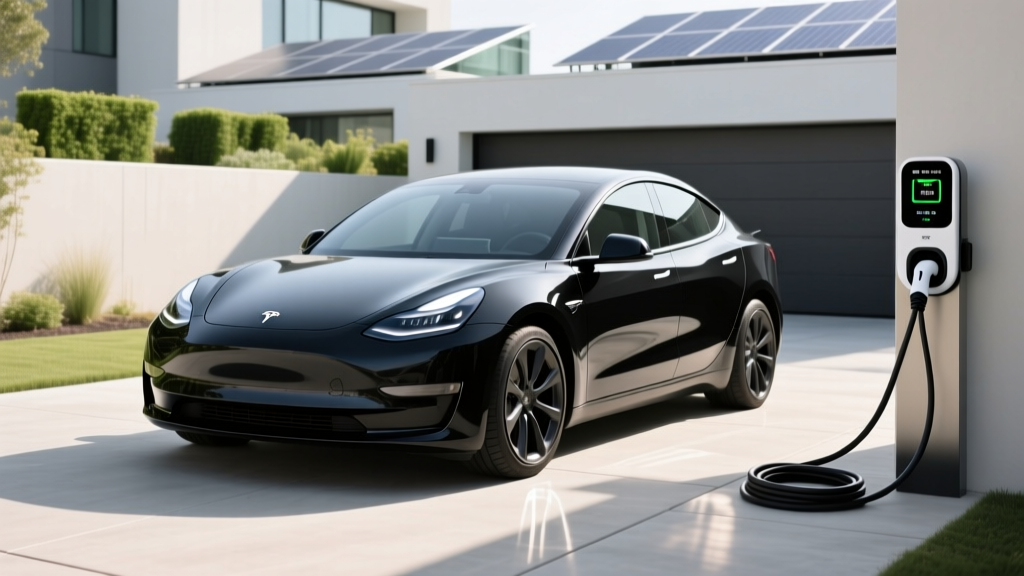
All 2024–2026 Model Y vehicles sold in North America come equipped with the NACS (North American Charging Standard) port natively. This grants access to over 20,000 Tesla Supercharger stalls without an adapter. For Electrify America or other CCS-based networks, Tesla sells a CCS adapter (approximately $175), though the expanding NACS adoption by other networks is reducing this friction over time.
Performance, Drivetrain, and What It Feels Like to Drive
| Specification | Long Range AWD | Performance AWD | RWD |
|---|---|---|---|
| 0–60 mph | 4.8 seconds | 3.5 seconds | 6.6 seconds |
| Horsepower | 384 hp | 456 hp | 295 hp |
| Drivetrain | Dual-motor AWD | Dual-motor AWD | Rear-wheel drive |
| Top Speed | 135 mph | 155 mph | 135 mph |
| Towing Capacity | 3,500 lbs | 3,500 lbs | Not rated |
The dual-motor AWD variants provide confident traction in rain and light snow, with torque-vectoring between the front and rear motors. The Performance trim's 3.5-second 0–60 time is genuinely sports-car quick, though it comes at the cost of roughly 27 miles of EPA range versus the Long Range.
Ride quality on the 2024–2026 Model Y is firm but controlled. Tesla revised the suspension tuning for the 2025 refresh (internally called "Juniper"), adding frequency-selective dampers that noticeably reduce impact harshness over sharp bumps. If you're choosing between a pre-refresh 2024 and a 2025+ used lease, the ride comfort improvement is tangible.
Interior Space, Tech, and Notable Drawbacks
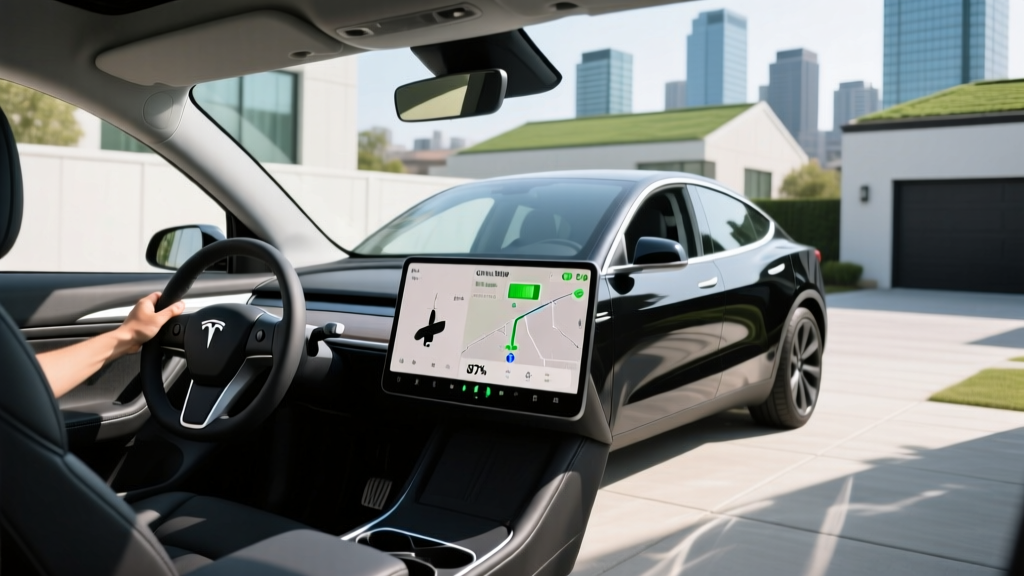
The Model Y's cabin is minimalist to a fault — a single 15.4-inch touchscreen handles nearly all vehicle functions, from climate control to glovebox release. There is no instrument cluster, no head-up display, and no physical buttons for frequently used functions like wiper speed or mirror adjustment.
Cargo and passenger dimensions:
- Rear cargo (seats up): 30.2 cu ft
- Rear cargo (seats folded): 72.1 cu ft
- Front trunk (frunk): 4.1 cu ft
- Rear legroom: 41.6 inches
- Front headroom: 41.0 inches
- Optional third-row seat (reduces cargo to 12.8 cu ft behind third row)
Standout technology:
- Over-the-air software updates that add features post-purchase
- Tesla app with remote climate, location tracking, and Sentry Mode dashcam access
- Autopilot standard (SAE Level 2): adaptive cruise, lane centering, auto emergency braking
- Optional FSD (Supervised) — still SAE Level 2, requires active driver attention
- HEPA air filtration with Bioweapon Defense Mode
- Integrated trip planner with Supercharger routing and battery preconditioning
Notable drawbacks:
- No Apple CarPlay or Android Auto — Tesla's proprietary infotainment only
- No physical buttons; touchscreen dependency frustrates some drivers
- Panel gap quality remains inconsistent, even on 2025+ builds
- No spare tire — only a tire inflation kit
- Rear visibility is compromised by the sloping roofline and small rear window
Pricing, Tax Credits, and the Used-Lease Math
Here's where the used Tesla Model Y lease decision gets nuanced. Pricing varies significantly by model year, trim, mileage, and whether you're assuming a lease, buying out the residual, or purchasing a CPO unit.
| Scenario | Typical Cost Range | Federal Tax Credit (§30D) |
|---|---|---|
| Assume existing lease (monthly payments) | $399–$699/mo depending on trim and remaining term | Not applicable — original lessee claimed credit at lease inception (if eligible) |
| Buy out lease residual | $32,000–$42,000 depending on trim and contract | Potentially eligible under Used EV Credit (§25E): up to $4,000 or 30% of sale price, whichever is less. Income caps: $75K single / $150K joint. Vehicle must be ≥2 model years old and priced ≤$25,000. |
| Certified Pre-Owned (Tesla or dealer) | $34,000–$48,000 | Same §25E used-EV rules apply if criteria met |
| New 2026 Model Y Long Range AWD | $47,990 MSRP + destination | Up to $7,500 under §30D if MSRP ≤$80K, buyer income ≤$150K (single)/$300K (joint), and battery sourcing requirements met. Point-of-sale transfer available. |
Critical tax-credit details for used purchases: The federal used-EV credit (IRS §25E) is capped at $4,000 or 30% of the sale price, whichever is lower. The vehicle must be at least two model years old, the sale price must not exceed $25,000, and buyer adjusted gross income must be under $75,000 (single) or $150,000 (joint). This means many Model Y lease buyouts — which often carry residuals above $25,000 — will not qualify. Always verify with a tax professional before counting on this credit.
For new 2026 Model Y purchases, the §30D new-vehicle credit of up to $7,500 remains available, but it depends on battery critical-mineral and component sourcing requirements that change annually. Tesla's eligibility status shifts as supply chains evolve — check the latest list at fueleconomy.gov before purchasing.
Warranty Coverage: What Transfers and What Doesn't
When you take over or buy out a used Model Y lease, the remaining factory warranty transfers to you automatically. Here's the baseline coverage for 2024–2026 models:
- Basic Vehicle Limited Warranty: 4 years / 50,000 miles (whichever comes first)
- Battery and Drive Unit Warranty: 8 years / 120,000 miles (Long Range, Performance) or 8 years / 100,000 miles (RWD)
- Battery capacity retention threshold: Tesla warrants that the battery will retain at least 70% of its original capacity during the warranty period
If the original lessee purchased an Extended Service Agreement, verify whether it's transferable — Tesla's extended warranties generally transfer to subsequent owners, but third-party aftermarket warranties may not. Always request the vehicle's warranty status through Tesla's VIN lookup or the service menu in the car's touchscreen.
Battery degradation reality: Tesla's NMC packs typically lose 5–8% capacity in the first 30,000 miles, then the degradation curve flattens significantly. An LFP pack (RWD) tends to lose only 3–5% in the same period and maintains a flatter curve overall. A three-year-old Model Y with 36,000 miles will typically show 92–95% state of health — well within the 70% warranty floor.
Pros and Cons: The Honest Summary
- Access to 20,000+ Tesla Supercharger stalls (most reliable DC fast-charging network in the US)
- Strong real-world range (270+ mi highway for Long Range)
- Over-the-air updates keep the vehicle current
- Spacious cargo area with available third-row seating
- Low running costs: ~$0.04–$0.08 per mile on home charging vs. $0.12–$0.16 for gas equivalents
- Strong resale value relative to other EVs
- LFP battery option (RWD) offers excellent long-term durability
- Touchscreen-only controls are a dealbreaker for some drivers
- No Apple CarPlay / Android Auto support
- Insurance premiums run 15–30% higher than comparable gas crossovers
- Panel gaps and paint quality can be inconsistent
- Used-lease vehicles may have high-mileage fast-charging history (accelerates degradation slightly)
- FSD (Supervised) costs $8,000 or $99/mo but remains Level 2 — not autonomous
- Tire wear is higher than gas vehicles due to instant torque and vehicle weight
Who Should Consider a Used Tesla Model Y Lease?
- You want the lowest monthly payment on a premium EV and can find a lease transfer with favorable remaining terms
- You have reliable home Level 2 charging access (the single biggest predictor of EV satisfaction)
- You value Supercharger network access for road trips over brand loyalty to legacy automakers
- You're comfortable with touchscreen-dominant controls and minimal physical buttons
- You need a practical family crossover with strong cargo capacity and optional third-row seating
- You can't install a Level 2 charger at home and would rely entirely on public charging
- You need Apple CarPlay or Android Auto for your daily commute
- You prefer traditional dealership service experiences over Tesla's mobile-ranger and service-center model
- You want a fully autonomous driving experience — no consumer vehicle offers this at any price
Compared to key competitors like the Hyundai Ioniq 5 (310 mi EPA, 350 kW peak charging), Ford Mustang Mach-E (320 mi Extended Range, 150 kW peak), and Kia EV6 (310 mi, 350 kW peak), the Model Y trades the fastest charging speeds for the most mature charging network and the strongest software ecosystem. If DC fast-charge speed is your top priority, the Ioniq 5 and EV6 charge 10–80% in approximately 18 minutes on a 350 kW station — seven minutes faster than the Model Y. But if network reliability and route planning matter more, Tesla's integrated Supercharger ecosystem remains unmatched.
Frequently Asked Questions
What is the real-world range of a used Tesla Model Y?
For a 2024–2026 Long Range AWD, expect approximately 270–285 miles on highway drives at 70 mph in moderate temperatures, and 220–240 miles in cold weather (20°F). The EPA sticker reads 320 miles, but sustained highway speeds, cold temperatures, and battery age all reduce usable range. An LFP-equipped RWD model delivers roughly 255–270 miles highway.
How fast does the Model Y charge at home and on the road?
On a home Level 2 charger (240V, 48A), the Model Y adds approximately 36–40 miles of range per hour, reaching a full charge from 10% in about 8–9 hours. On DC fast charging, Long Range and Performance models peak at 250 kW and charge 10–80% in roughly 25 minutes with preconditioning. The RWD (LFP) peaks at 170 kW and takes about 30 minutes for 10–80%.
Does a used Tesla Model Y qualify for the federal EV tax credit?
It depends. If you're assuming a lease, the tax credit was likely claimed by the original lessee or the leasing entity — you won't receive it. If you're buying out the lease residual or purchasing a CPO unit, the §25E used-EV credit offers up to $4,000, but only if the sale price is $25,000 or less, the vehicle is at least two model years old, and your income is under $75K (single) or $150K (joint). Many Model Y buyouts exceed the $25K price cap, making them ineligible.
Is a used Model Y lease better than buying a new Hyundai Ioniq 5 or Ford Mach-E?
If monthly cash flow is your priority and you can assume a lease at $400–$500/month, the used Model Y lease is hard to beat on value. But if you want the latest warranty coverage, faster DC charging (Ioniq 5/EV6), Apple CarPlay, or physical buttons, a new competitor may be worth the higher payment. The Model Y's Supercharger advantage is real but narrowing as other networks adopt NACS.
What should I check before taking over a used Model Y lease?
Request the battery state of health (visible in the Tesla app or service menu), review the charging history (frequent DC fast charging slightly accelerates degradation), check for open recalls via NHTSA's VIN lookup, inspect tire tread depth (EVs wear tires faster), and verify whether the original lessee's insurance claims history shows collision damage. Also confirm that Tesla's lease-transfer process allows assumption in your state — some leases require approval and a transfer fee of approximately $400–$700.
How much does it cost to charge a Model Y at home vs. gas?
At the US average residential electricity rate of ~$0.16/kWh, fully charging a Long Range Model Y (75 kWh) costs approximately $12, yielding a cost per mile of roughly $0.04–$0.05. A comparable gas crossover getting 28 MPG at $3.40/gallon costs about $0.12 per mile. Over 15,000 miles annually, home charging saves approximately $1,200–$1,500 per year versus gasoline.