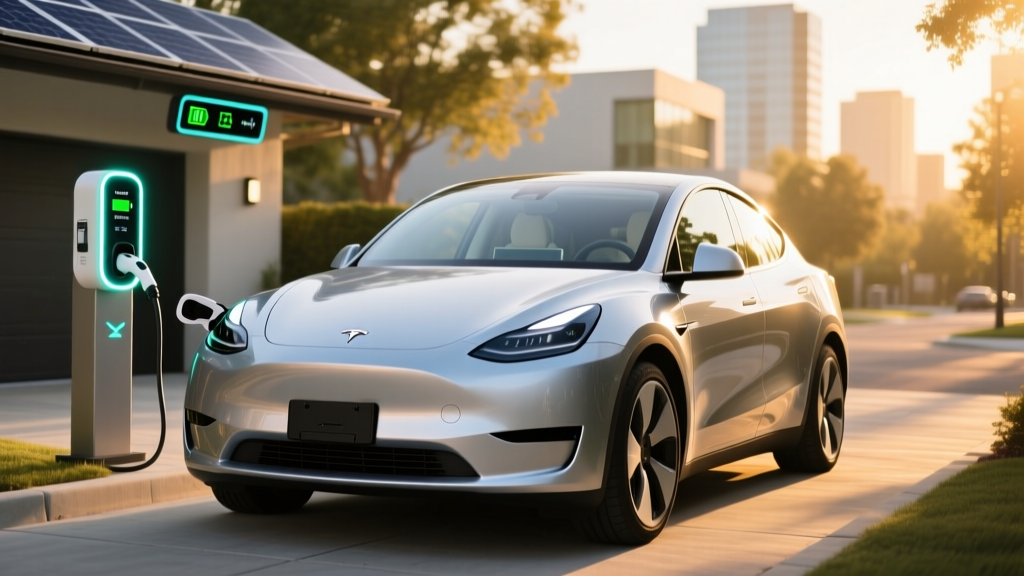
The Used Tesla Model Y in 2026: Still the Default EV Choice?
The Tesla Model Y remains the best-selling electric vehicle in the United States for good reason: it combines practical crossover space with a mature Supercharger network, competitive range, and strong performance. But as thousands of 2020–2025 Model Y vehicles enter the used market, buyers face a new set of questions that don't apply to a showroom purchase. Which model year offers the best value? How much battery degradation should you expect? Does a used Model Y still qualify for any federal tax credits?
This guide covers everything a used Model Y buyer needs to know — from real-world range and charging speeds to battery chemistry differences between model years and the specific things to inspect before handing over your money. All specifications reflect EPA data and Tesla's official documentation, cross-referenced with real-world owner reports.
Used Model Y Spec Sheet: What You're Actually Getting
| Spec | Value |
|---|---|
| EPA Range | 330 miles |
| Battery Capacity (usable) | ~75 kWh (NMC) / ~60 kWh (LFP, RWD) |
| Battery Chemistry | NMC (Long Range/Performance) or LFP (RWD Standard Range, 2022+) |
| Max DC Fast Charge | 250 kW (peak) |
| 10–80% DC Fast Charge | ~27 minutes (NMC Long Range) |
| Level 2 Home Charging | 11.5 kW / 44 mi/hr (2021+), 7.7 kW / 30 mi/hr (2020) |
| 0–60 mph | 5.0 sec (Long Range) / 3.5 sec (Performance) |
| Horsepower | 384 hp (Long Range) / 456 hp (Performance) |
| Drivetrain | Dual Motor AWD (Long Range/Performance) / RWD (Standard Range) |
| EPA Efficiency | 117 MPGe combined / 29 kWh/100 mi |
| Cargo Volume | 30.2 cu ft (rear seats up) / 72.1 cu ft (rear seats folded) |
| Second-Row Legroom | 41.6 inches |
| Frunk | 4.1 cu ft |
| Towing Capacity | 3,500 lbs (when equipped) |
| Battery Warranty (original) | 8 years / 120,000 miles (Long Range AWD) |
| Basic Warranty | 4 years / 50,000 miles |
Note on 2020 models: The first-year Model Y used a different rear drive unit and had a lower Level 2 charge acceptance rate (7.7 kW vs. 11.5 kW on 2021+ models). This matters if you charge at home nightly — a 2020 model adds roughly 30 miles of range per hour on a 48-amp Level 2 circuit, while a 2021+ model adds 44 miles per hour on the same circuit.
Real-World Range: What the EPA Sticker Doesn't Tell You
EPA Rated: 330 miles
Real-World Highway (70 mph, 70°F): ~275–295 miles
Real-World City/Suburban: ~310–330 miles
Cold Weather (30°F, highway): ~220–250 miles
Cold Weather + Cabin Heat (below 20°F): ~190–220 miles
The Model Y Long Range's 330-mile EPA rating is achievable in mild conditions with mixed city driving, where regenerative braking recovers significant energy. Highway driving at 75–80 mph pushes aerodynamic drag higher, typically reducing range by 10–15%. The Model Y's heat pump (standard on all US-market units) helps mitigate cold-weather losses compared to EVs using resistive heating, but you should still plan for a 25–35% range reduction in sub-freezing temperatures.
For LFP Standard Range models (2022–2025): The EPA rating is 260–279 miles depending on model year. Expect ~220–240 miles on the highway and ~170–190 miles in deep cold. LFP chemistry also experiences slightly more range variance at low state-of-charge, so Tesla recommends charging LFP batteries to 100% at least weekly.
Degradation impact on used models: A 2021 Model Y with 50,000 miles will typically show 4–7% battery degradation, reducing a 330-mile EPA range to roughly 307–317 miles at full charge. Higher-mileage examples (80,000+ miles) may show 8–12% loss. Always check the car's displayed range at 100% state-of-charge during your test drive — this is the clearest indicator of battery health.
Charging Speed: DC Fast Charging and Home Setup
| Charging Level | Power (kW) | Miles Added per Hour | Notes |
|---|---|---|---|
| Level 1 (120V outlet) | 1.0–1.4 kW | 3–5 mi/hr | Emergency/trickle only |
| Level 2 (240V, 32A) | 7.7 kW | 30 mi/hr | 2020 model year |
| Level 2 (240V, 48A) | 11.5 kW | 44 mi/hr | 2021+ models |
| DC Fast (V3 Supercharger) | 250 kW peak | ~1,000 mi/hr at peak | 10–80% in ~27 min (NMC) |
| DC Fast (CCS adapter) | Up to 250 kW | Varies by station | CCS adapter included on 2025+; aftermarket for older |
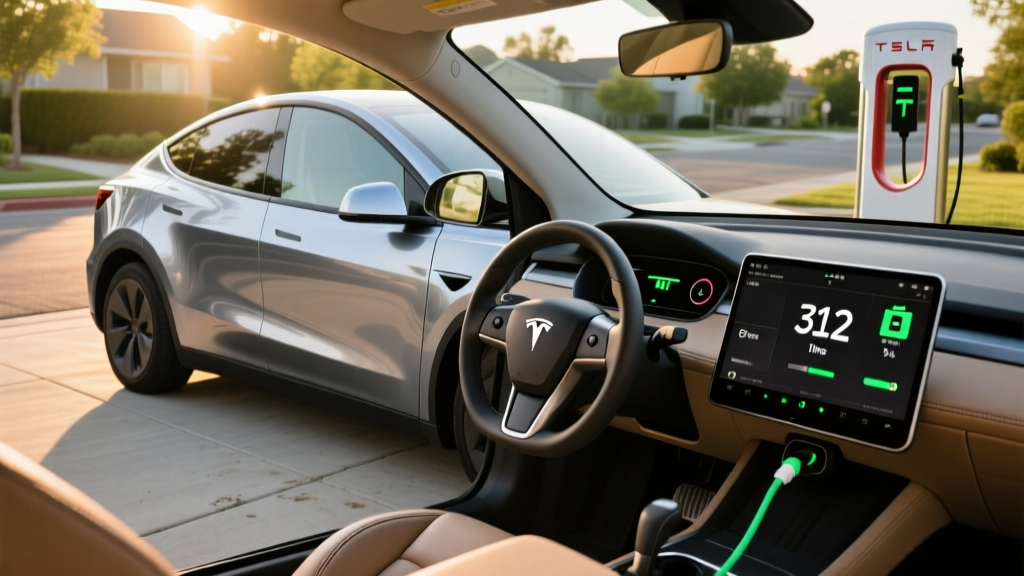
The Model Y's DC fast-charging curve is well-characterized. On a V3 Supercharger (250 kW capable), a Long Range NMC model peaks near 250 kW from roughly 5–20% state-of-charge, then tapers progressively: ~170 kW at 40%, ~100 kW at 60%, ~50 kW at 80%. The 10–80% session takes approximately 27 minutes. The final 80–100% can add another 25–30 minutes due to aggressive tapering — a common pattern across NMC lithium-ion batteries designed to protect long-term cell health.
LFP models charge differently: The Standard Range LFP battery has a lower peak charge rate (~170 kW) and a flatter curve, reaching 10–80% in roughly 30–35 minutes. The trade-off is that LFP cells tolerate frequent 100% charging far better than NMC, making daily full charges practical.
CCS compatibility note: Tesla opened the Supercharger network to non-Tesla EVs using the NACS connector, and the Model Y retains native NACS (Tesla) charging. However, if you plan to use Electrify America or other CCS-only networks, you'll need a Tesla CCS adapter (roughly $175–$250 aftermarket for pre-2025 models). Verify the adapter is included or budget for one.
Battery Chemistry Matters: NMC vs. LFP in Used Model Y Vehicles
| Factor | NMC (Long Range / Performance) | LFP (Standard Range / RWD) |
|---|---|---|
| Energy Density | Higher — enables 330 mi range | Lower — 260–279 mi range |
| Cycle Life | ~1,500–2,000 full cycles | ~3,000–5,000 full cycles |
| Daily Charge Recommendation | 80% for daily; 100% for trips | 100% weekly recommended |
| Cold-Weather Performance | Better low-temp range retention | More range loss in cold; preconditioning critical |
| Typical Degradation (50k mi) | 4–7% | 2–5% |
| Found In | 2020–2025 Long Range, Performance | 2022–2025 RWD Standard Range (US-built) |
This distinction is critical for used buyers. If you're shopping a 2022–2025 Model Y, check the badge and drivetrain: a "Long Range" or "Performance" badge means NMC chemistry, while a base "Model Y" (RWD) from Austin-built 2022+ vehicles likely has LFP. The LFP models are generally cheaper on the used market and offer superior long-term cycle life, but sacrifice ~60 miles of EPA range and some cold-weather capability.
For buyers who charge at home nightly and rarely road-trip more than 200 miles in a day, an LFP Model Y RWD can be the smarter long-term ownership play — the battery will likely outlast the rest of the vehicle. For road-trippers, cold-climate drivers, or those who need AWD, the NMC Long Range remains the better fit.
Pricing, Trims, and the Used EV Tax Credit
Used Model Y pricing in early 2026 varies significantly by model year, mileage, and trim:
| Configuration | Model Year | Typical Used Price | Original MSRP (new) |
|---|---|---|---|
| Long Range AWD | 2020–2021 | $24,000–$30,000 | $52,990–$56,990 |
| Long Range AWD | 2022–2023 | $30,000–$38,000 | $52,990–$54,990 |
| Performance AWD | 2021–2023 | $32,000–$40,000 | $61,990–$65,990 |
| RWD (LFP) | 2022–2024 | $26,000–$34,000 | $43,990–$47,740 |
| Long Range (Refresh) | 2025 | $38,000–$44,000 | $49,990 |
Does a Used Model Y Qualify for the Federal Tax Credit?
Yes — under IRS §25E (the Previously-Owned Clean Vehicle Credit), you may qualify for up to $4,000 (or 30% of the sale price, whichever is lower) when buying a used Model Y from a licensed dealer. Here are the requirements:
- Sale price cap: The vehicle must sell for $25,000 or less to qualify.
- Vehicle age: Must be at least two model years old (e.g., a 2024 or older model purchased in 2026).
- Income limits (modified AGI): $75,000 single / $112,500 head of household / $150,000 joint filers.
- Dealer requirement: Must be purchased from a licensed dealer (private-party sales do not qualify).
- First transfer: The credit applies to the first qualified sale since August 16, 2022 — a vehicle can only trigger this credit once.
- Point-of-sale: As of 2024+, you can transfer the credit to the dealer at purchase for an immediate price reduction.
Practical impact: A 2021 Model Y Long Range listed at $28,000 won't qualify (above the $25,000 cap). But a 2020 Model Y Long Range at $24,500 could net you $4,000 off, bringing your effective cost to $20,500 — an exceptional value for a 330-mile AWD crossover. Search dealer inventories carefully and filter by price to find sub-$25K examples.
Note: The new-vehicle §30D credit (up to $7,500) does not apply to used purchases. The §25E used credit is the relevant program, and its rules are distinct. Consult a tax professional to confirm your eligibility before relying on the credit in your budget.
Tech, Interior, and What It's Like to Live With
The Model Y's interior is defined by minimalism — a 15-inch center touchscreen handles nearly every vehicle function, from climate controls to glovebox release. This appeals to some buyers and frustrates others. Here's what stands out:
Infotainment & Software: Tesla's software remains the industry benchmark for over-the-air updates, navigation with real-time Supercharger routing, and integrated streaming (Netflix, YouTube, Spotify while parked). The interface is responsive, though the lack of physical buttons for wipers, mirrors, and glovebox requires muscle-memory adaptation.
Driver Assistance: All Model Y vehicles come with Tesla's Basic Autopilot (lane centering, adaptive cruise control, traffic-aware features). Enhanced Autopilot ($6,000 option when new) adds auto lane-change, navigate-on-autopilot, and summon. Full Self-Driving (Supervised) was a $12,000–$15,000 option. Critical clarification: FSD Supervised is an SAE Level 2 driver-assistance system — it does not make the vehicle self-driving. The driver must remain attentive, hands on or near the wheel, and legally responsible at all times.
Cargo and space: With 30.2 cubic feet behind the second row and 72.1 cubic feet with seats folded, the Model Y out-cargoes most compact crossovers and rivals midsize SUVs. The rear seats offer 41.6 inches of legroom — genuinely comfortable for adults on long trips. The 4.1-cubic-foot frunk handles charging cables or a small bag.
Notable drawbacks: The Model Y's ride quality is firm — road imperfections transmit more than in a Hyundai Ioniq 5 or Ford Mustang Mach-E. Panel gap consistency improved after 2022 (Austin production) but early Fremont-built 2020–2021 models may show uneven gaps. Cabin noise at highway speed is noticeable, particularly from the frameless windows and panoramic glass roof.
Model Y vs. Used Competition: Is It Still the Best Buy?
- Supercharger network access is a priority for road trips
- You want the longest EPA range in this price bracket (330 mi)
- OTA software updates and integrated nav-routing matter to you
- You value strong resale value and parts availability
- You need 3,500-lb towing in an electric crossover
- You want a softer ride and quieter cabin (try Ioniq 5)
- Physical buttons and Apple CarPlay/Android Auto are must-haves (try Mach-E or EV6)
- You need a third row (try used Model X or Kia EV9)
- You want a sub-$25K used EV credit-eligible vehicle with more comfort features (try Bolt EUV, Ioniq 5)
- You prefer a traditional dealer service experience over Tesla mobile/service-center model
The Model Y's strongest competitive moat remains the Supercharger network. While Tesla has opened Superchargers to NACS-equipped non-Tesla EVs, Tesla vehicles still enjoy the most seamless plug-and-charge experience with the largest stall count. For buyers who road-trip more than a few times per year, this is a tangible advantage over used Ioniq 5 or Mach-E examples, which rely on Electrify America, EVgo, or ChargePoint networks that remain less consistent in rural areas.
However, the 2022–2023 Hyundai Ioniq 5 offers 800V ultra-fast charging (10–80% in ~18 minutes at a 350 kW charger), a more comfortable ride, physical climate controls, and Apple CarPlay — all for comparable used pricing. The Ford Mustang Mach-E (2021–2023) provides a more engaging driving feel and CarPlay support, though its EPA range tops out at 312 miles (Extended Range) and its DC charging is slower (~200 kW peak, 10–80% in ~38 minutes).
Pre-Purchase Checklist: What to Inspect on a Used Model Y
- Battery health: Charge to 100% and note the displayed range. Compare to the original EPA rating — more than 10% loss at under 60,000 miles warrants concern.
- Service history: Request records via the Tesla app (transfers with the vehicle). Look for drive unit replacements, battery service, or suspension work.
- Panel gaps and paint: Inspect door, hood, and trunk gaps. 2020–2021 Fremont units are most prone to inconsistencies.
- Heat pump operation: Run the HVAC in both heat and cool modes. Listen for unusual compressor noise — early heat pump failures were documented in 2021 models.
- Tire wear: EVs are heavier and produce instant torque; uneven or excessive tire wear may indicate alignment issues or aggressive driving history. Budget $800–$1,200 for a set of EV-rated tires if needed.
- 12V battery: The Model Y uses a small 12V lithium-ion auxiliary battery. If the vehicle shows a "12V battery needs replacement" warning, factor in ~$300–$500 for replacement.
- Warranty remaining: The 8-year/120,000-mile battery and drive unit warranty transfers to subsequent owners. A 2021 model with 45,000 miles still has roughly 4 years and 75,000 miles of battery coverage remaining.
- FSD/Autopilot transfer: Enhanced Autopilot or FSD purchases generally transfer with the vehicle, but verify in the Tesla app under Software > Autopilot before finalizing the purchase.
Frequently Asked Questions
What is the real-world range of a used Tesla Model Y?
A 2023 Model Y Long Range AWD rates at 330 miles EPA, but expect ~275–295 miles on the highway at 70 mph in mild weather, and ~220–250 miles in freezing conditions. A 2020–2021 model with 40,000–60,000 miles will typically show 5–7% degradation, reducing full-charge range to ~307–314 miles.
How fast does a used Model Y charge at home and on road trips?
At home on a 240V Level 2 charger, 2021+ models add 44 miles per hour (11.5 kW); 2020 models add 30 mi/hr (7.7 kW). On a V3 Supercharger, the Long Range reaches 10–80% in approximately 27 minutes at peak speeds up to 250 kW. LFP Standard Range models take ~30–35 minutes for 10–80% at a peak of ~170 kW.
How much does a used Model Y cost after the federal tax credit?
If you find a dealer-listed Model Y priced at $25,000 or less (typically a 2020 model with higher mileage), the §25E used EV credit can reduce your cost by up to $4,000 — bringing a $24,500 car down to roughly $20,500. Most 2021–2023 examples sell above $25,000 and do not qualify for this credit.
Is a used Model Y worth buying vs. a used Ioniq 5 or Mach-E?
It depends on your priorities. The Model Y wins on Supercharger access, EPA range (330 vs. 303–312 miles for competitors), cargo space, and software integration. The Ioniq 5 wins on ride comfort, charging speed (18-minute 10–80% on 350 kW chargers), and CarPlay. The Mach-E wins on driving dynamics. If road trips and range are paramount, the Model Y holds the edge.
What are the biggest pros and cons of a used Model Y?
Pros: Supercharger network, class-leading range, strong OTA software, spacious cargo area, good performance, strong resale value, 8-year battery warranty that transfers.
Cons: Firm ride quality, no Apple CarPlay/Android Auto, minimalist interior isn't for everyone, 2020–2021 panel gap issues, touchscreen-only controls require adaptation, service center wait times in some regions.
Does a used Model Y qualify for the federal EV tax credit?
It can — but only under the §25E Previously-Owned Clean Vehicle Credit, not the new-vehicle §30D credit. The used credit is up to $4,000, requires a sale price of $25,000 or less, income limits apply ($75K single / $150K joint), and it must be purchased from a licensed dealer. Check IRS guidelines for current-year eligibility.
How long will a used Model Y battery last?
Tesla's NMC batteries in the Long Range are designed for 1,500–2,000 full charge cycles, which translates to roughly 300,000–400,000+ miles before reaching 70% capacity. Most used Model Y vehicles with under 80,000 miles show less than 10% degradation. The 8-year/120,000-mile battery warranty covers capacity below 70%, and it transfers to subsequent owners.