The Tesla Model X has always been the polarizing flagship of the EV world — a three-row electric SUV with supercar acceleration, divisive Falcon Wing doors, and a price tag that originally scared off all but the most committed early adopters. Now, with the used market flooded by lease returns and fleet turnovers, a used Tesla Model X is within reach of buyers who want premium electric family hauling without the six-figure new-car sting.
But buying a used EV — especially one with complex door mechanisms and early-production quirks — requires a different calculus than buying a used gas SUV. Battery degradation, out-of-warranty repair exposure, charging access, and shifting tax-credit rules all factor into the equation. This guide walks through every generation, trim, and model year to help you decide which used Model X is worth your money in 2026.
Model X Generations at a Glance: What Changed and When
Tesla never follows traditional model-year refreshes, but the Model X has gone through distinct evolutionary phases that dramatically affect what you're getting on the used market:
- 2016–2020 (Pre-Refresh): Original interior with vertical 17-inch screen, MCU1 (later MCU2) infotainment, 75D/90D/100D/P100D battery variants. Early build-quality issues are common.
- 2021–2022 (Plaid Refresh): Horizon-style 17-inch landscape screen, yoke steering option, rear passenger entertainment screen, heat pump standard, Plaid tri-motor variant (1,020 hp). Structural battery pack introduced on some builds.
- 2023–2025 (Current Generation): Refined interior materials, HW4 Autopilot computer, improved panel gaps, NACS native port, 6-seat and 7-seat configurations. Long Range and Plaid trims continue.
The single biggest dividing line is the 2021 refresh. Pre-2021 cars look and feel dated inside; post-refresh models are competitive with any luxury EV SUV on the market. Your budget will largely determine which era you're shopping.
Real-World Range, Battery Chemistry, and Degradation
Range is the first question every used EV buyer asks, and the Model X — with its heavy curb weight and aerodynamic compromise from those Falcon Wing doors — needs careful scrutiny.
| Era / Trim | Usable Battery (kWh) | Chemistry | EPA Range (mi) | Real-World Highway | Cold Weather Est. |
|---|---|---|---|---|---|
| 2016–2020 75D | ~75 | NMC | 237–259 | ~195–215 | ~165–185 |
| 2016–2020 100D | ~100 | NMC | 289–325 | ~240–270 | ~200–230 |
| 2016–2020 P100D | ~100 | NMC | 289–305 | ~235–260 | ~195–220 |
| 2021+ Long Range | ~100 (usable ~95) | NMC (2170 cells) | 348–351 | ~280–310 | ~240–265 |
| 2021+ Plaid | ~100 (usable ~95) | NMC (2170 cells) | 311–333 | ~260–290 | ~220–250 |
Battery degradation: All used Model X vehicles use NMC (nickel manganese cobalt) chemistry — Tesla never offered LFP in the Model X. NMC provides higher energy density but degrades slightly faster than LFP over time. Expect 8–15% degradation on a 5-to-8-year-old Model X depending on charging habits and climate. A 2018 100D that originally delivered 290 EPA miles may now show 250–265 miles at 100% State of Charge. Always check the car's projected range at full charge in the Tesla app or on the instrument cluster before purchasing.
Sources: fueleconomy.gov, Tesla owner community degradation tracking.
Charging Speed: DC Fast Charging and Home Level 2
Charging infrastructure compatibility is where the used Model X story gets complicated — and where knowing the model year matters enormously.
| Charge Type | Pre-2021 Models | 2021+ Models | Notes |
|---|---|---|---|
| Max DC Fast Charge | 120–150 kW (peak) | 250 kW (peak) | Pre-2021 hardware-limited |
| 10–80% DCFC Time | ~45–55 minutes | ~28–32 minutes | Varies by SoC and temp |
| Level 2 Home (kW) | 11.5 kW (48A) | 11.5 kW (48A) | ~30–34 mi/hr at L2 |
| Connector | Tesla proprietary (NACS) | Tesla NACS (native) | All years use NACS |
| CCS Adapter | Available ($175–$250) | Available / included on some | Opens non-Tesla networks |
The charging-curve reality: The 250 kW peak on 2021+ models is a maximum, not a sustained rate. In real-world testing, a refreshed Model X Long Range peaks near 250 kW only between roughly 10–30% State of Charge, then tapers to ~170 kW by 50%, and drops to ~80 kW by 70%. The 10–80% time of ~28–32 minutes reflects this taper. Pre-2021 cars charge more slowly throughout the curve — plan on 45+ minutes at a Supercharger for a meaningful session.
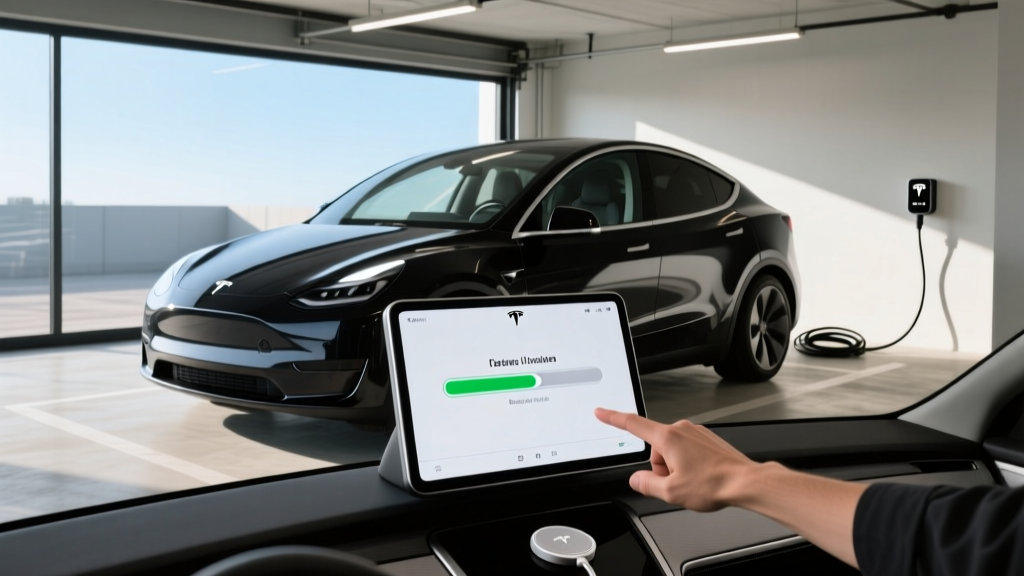
Home charging: At 11.5 kW on a 48-amp Level 2 circuit (requiring a 60-amp breaker), you'll recover roughly 30–34 miles per hour of charging. An overnight session of 8–10 hours will fully replenish even a depleted 100 kWh battery. Budget $800–$2,000 for a Tesla Wall Connector installation depending on your panel capacity and conduit run. Homes with 100-amp electrical panels may need a $2,000–$4,000 panel upgrade before adding a dedicated 60-amp EV circuit.
CCS adapter note: While all Model X vehicles use Tesla's NACS connector natively (now the industry standard), purchasing Tesla's CCS adapter unlocks Electrify America and other CCS-only public chargers. This is essential if you road-trip in areas with limited Supercharger coverage.
Performance, Efficiency, and What It's Like to Drive
The Model X has always been absurdly quick for a three-row SUV. Even base models embarrass sports cars at stoplights, and the Plaid variant borders on ridiculous.
| Trim / Era | Drivetrain | Horsepower | 0–60 mph | MPGe (Combined) | kWh/100mi |
|---|---|---|---|---|---|
| 2016–2020 75D | Dual-Motor AWD | ~328 | 6.0 sec | 93 MPGe | 36 |
| 2016–2020 100D | Dual-Motor AWD | ~328–417 | 4.7 sec | 100 MPGe | 34 |
| 2016–2020 P100D (Ludicrous) | Dual-Motor AWD | ~532–762 | 2.9 sec | 89 MPGe | 38 |
| 2021+ Long Range | Dual-Motor AWD | 670 | 3.8 sec | 102 MPGe | 33 |
| 2021+ Plaid | Tri-Motor AWD | 1,020 | 2.5 sec | 98 MPGe | 35 |
Efficiency context: The Model X is one of the least efficient EVs in Tesla's lineup due to its weight and frontal area. At 33–38 kWh per 100 miles, it consumes roughly 25–40% more energy per mile than a Model Y. If you're paying $0.15/kWh at home, that translates to roughly $0.05–$0.06 per mile — still dramatically cheaper than a comparable gas SUV at $0.12–$0.18/mile, but noticeably thirstier than smaller EVs.
Driving impressions: The air suspension (standard on all Model X years) delivers a compliant ride that improves markedly post-2021 with revised damping. Steering is precise but numb. The 2021+ refresh added a heat pump that dramatically improves cold-weather efficiency and cabin warm-up speed. The yoke steering wheel (optional on refresh models) is divisive — some owners love the unobstructed screen view; others find it impractical for parking maneuvers and roundabouts. Test-drive both configurations before committing.
Cargo, Passenger Space, and the Falcon Wing Reality
The Model X offers configurations for 5, 6, or 7 passengers, with the 6-seat layout (second-row captain's chairs with center console) being the most popular for family buyers.
- Cargo behind 3rd row: ~15.0 cu ft (tight for a vehicle this size)
- Cargo behind 2nd row (3rd row folded): ~42.0 cu ft
- Max cargo (all rear seats folded): ~81.5 cu ft
- Front trunk (frunk): ~6.5 cu ft
- Second-row legroom: ~38.4 inches
- Third-row legroom: ~32.7 inches (best for children)
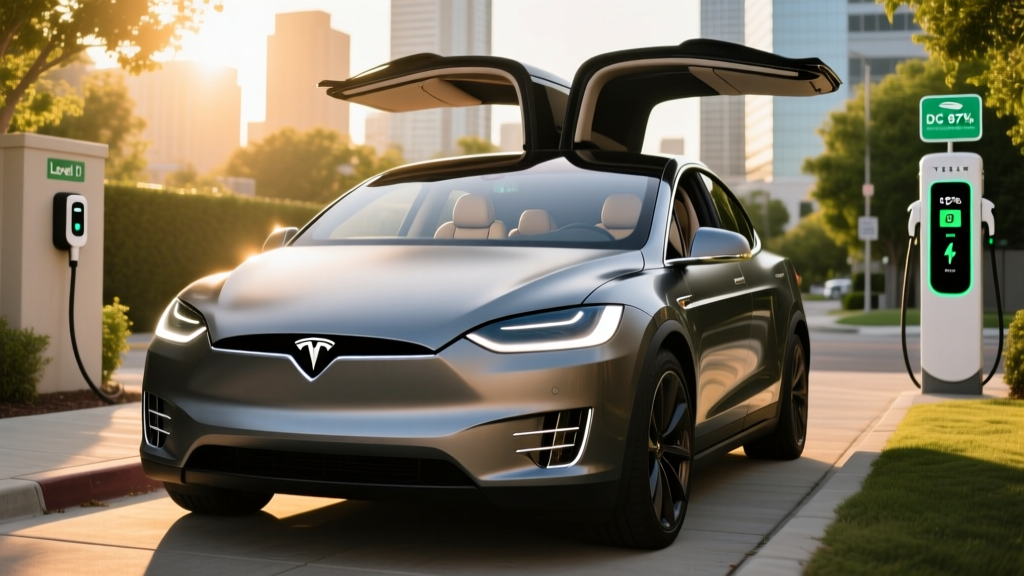
The Falcon Wing situation: The rear gullwing-style doors are the Model X's most recognizable feature and its most common maintenance headache. They use ultrasonic sensors to detect obstacles and adjust their opening arc, but early (2016–2019) models are notorious for sensor glitches, hydraulic strut wear, and seal leaks. Post-2021 models improved the mechanism substantially. When inspecting a used Model X, cycle the Falcon Wings at least 10 times — listen for grinding, watch for uneven movement, and check the rubber seals for cracking or moisture intrusion. Repair costs for Falcon Wing components range from $1,500–$4,000 per door out of warranty.
Towing: The Model X is rated to tow 5,000 lbs (with 20-inch wheels) or 3,500 lbs (with 22-inch wheels). Towing cuts range roughly in half — expect 150–180 miles from a Long Range model when pulling a loaded trailer.
Pricing, Tax Credits, and Total Cost of Ownership
The used Model X market in 2026 spans a wide range depending on year, mileage, and condition. Here's what to expect:
| Era / Trim | Typical Used Price | Mileage Range | Federal Used EV Credit (§25E) | Effective Price |
|---|---|---|---|---|
| 2016–2018 75D | $28,000–$36,000 | 80K–120K mi | Up to $4,000 (if eligible) | $24,000–$32,000 |
| 2018–2020 100D / Long Range | $38,000–$52,000 | 50K–90K mi | Up to $4,000 (if eligible) | $34,000–$48,000 |
| 2021–2022 Long Range | $58,000–$72,000 | 25K–55K mi | Up to $4,000 (if eligible) | $54,000–$68,000 |
| 2021–2022 Plaid | $68,000–$85,000 | 15K–45K mi | Up to $4,000 (if eligible) | $64,000–$81,000 |
| 2023–2025 Long Range | $75,000–$95,000 | 5K–25K mi | Up to $4,000 (if eligible) | $71,000–$91,000 |
- Credit is 30% of the sale price, up to $4,000 maximum
- Vehicle must be at least 2 model years old (e.g., a 2024 model qualifies in 2026)
- Sale price must be $25,000 or less — this eliminates most used Model X vehicles from qualifying
- Buyer income caps: $75,000 single / $112,500 head of household / $150,000 joint
- Must purchase from a licensed dealer (private-party sales excluded)
- Can be transferred to the dealer as a point-of-sale discount
Source: IRS §25E Used Clean Vehicle Credit. Rules are subject to change; consult a tax professional.
The $25,000 cap problem: Because most used Model X vehicles sell well above $25,000, the federal used-EV credit effectively excludes the Model X for most buyers. Only high-mileage 2016–2017 75D examples might scrape under the cap. The new-vehicle §30D credit ($7,500) does not apply to used purchases. Check your state for additional incentives — some states (California, Colorado, Massachusetts) offer their own used-EV rebates that stack independently of the federal cap.
Warranty coverage on used models:
- Battery & Drive Unit: 8 years / 150,000 miles (Long Range & Plaid) or 8 years / 125,000 miles (older variants), whichever comes first, with minimum 70% capacity retention
- Basic Vehicle: 4 years / 50,000 miles — likely expired on any used Model X
- Key risk: Once the basic warranty expires, you're exposed to Falcon Wing repairs, air suspension failures ($1,500–$3,000 per corner), and screen/electronics issues. Tesla does not offer a certified pre-owned (CPO) extended warranty program as of 2026, though third-party EV warranties are emerging.
Autopilot, FSD, and Tech Features
Tesla Autopilot and Full Self-Driving (Supervised) are SAE Level 2 systems. The driver must remain fully engaged, hands on the wheel (or torque-confirmed with the yoke), and eyes on the road at all times. These systems do not make the vehicle autonomous. Only Level 4 services like Waymo operate without a human driver.
What you get:
- Basic Autopilot (included): Adaptive cruise control + lane centering on highways. Competent but basic compared to GM Super Cruise or Ford BlueCruise on mapped highways.
- FSD Supervised ($8,000 add-on or $99/month): Adds automatic lane changes, traffic light/stop sign recognition, Navigate on Autopilot, and city-street assisted driving. Impressive in capability but requires constant supervision. Transfers with the vehicle if already purchased — a major value add on used cars.
- Infotainment: Pre-2021 models have the MCU1 (sluggish) or MCU2 (upgraded) screen. All 2021+ models have the Ryzen-based MCU with responsive navigation, Netflix/YouTube streaming while parked, and a rear-seat entertainment screen. Over-the-air updates continue for all Model X vehicles.
- FSD does not transfer automatically if the original owner purchased it as a subscription — only one-time-purchase FSD transfers with the vehicle
- HW3 computers (2019–2022) may require a free upgrade to HW4 for future FSD capability — confirm with Tesla before purchase
- FSD performance varies dramatically by geography and road type — it excels in well-marked suburban areas but struggles in construction zones, unmapped roads, and adverse weather
Pros, Cons, and the Verdict
Pros
- Class-leading acceleration in every trim — even a base 75D feels quick
- Access to Tesla Supercharger network (most reliable DC fast-charging in the US)
- Genuine three-row seating with a usable frunk and decent cargo volume
- Over-the-air updates keep older cars gaining features
- Air suspension and available 5,000-lb towing
- Strong safety ratings (5-star NHTSA on tested years)
Cons
- Falcon Wing doors are a known maintenance liability on pre-2021 models
- Efficiency lags behind Model Y, Rivian R1S, and BMW iX
- Third row is cramped for adults on long trips
- Out-of-warranty repair costs can be severe (air suspension, screens, doors)
- Pre-2021 interior feels dated and build quality is inconsistent
- No federal used-EV credit for most examples (price above $25K cap)
Who Should Buy a Used Model X — and Who Shouldn't
- You need three rows and want an EV with Supercharger access for road trips
- You can find a 2021+ Long Range with remaining battery warranty and under 60K miles
- You value acceleration and tech over efficiency and low running costs
- You have home Level 2 charging and access to Superchargers for longer trips
- You want FSD capability at a used-car discount (confirm it transfers)
- Your budget limits you to pre-2021 models with expired warranties — the repair risk is real
- You prioritize efficiency and low cost-per-mile (consider a used Model Y or Hyundai Ioniq 5)
- You need adult-friendly third-row space (look at the Rivian R1S or Kia EV9)
- You lack reliable home or workplace charging — the Model X's appetite for electrons means public-only charging gets expensive fast
Frequently Asked Questions
What is the real-world range of a used Tesla Model X?
A 2021+ Long Range delivers roughly 280–310 miles on the highway in mild weather, dropping to 240–265 in freezing temperatures. Pre-2021 100D models realistically deliver 240–270 highway miles, less in cold. Always verify the car's current projected range at 100% SoC — this accounts for degradation.
How fast does a used Model X charge at home and on the road?
At home on a 48-amp Level 2 charger, expect ~30–34 miles of range per hour. On DC fast charging, 2021+ models peak at 250 kW (10–80% in ~28–32 minutes), while pre-2021 cars peak at 120–150 kW (10–80% in ~45–55 minutes).
Does a used Tesla Model X qualify for any federal tax credit?
The federal used-EV credit (§25E) caps at a $25,000 sale price, which excludes most used Model X vehicles. Only the cheapest, highest-mileage 2016–2017 examples might qualify. The new-vehicle §30D credit does not apply to used purchases. Check your state for additional incentives. Source: IRS.gov.
Is a used Model X worth it vs. a Rivian R1S or BMW iX?
The Model X wins on Supercharger network access, acceleration, and (on 2021+ models) software. The Rivian R1S offers better build quality, more rugged capability, and a more practical third row. The BMW iX is more refined and efficient but seats only five. If Supercharger reliability matters most, the Model X still leads; if build quality and warranty peace of mind matter more, the R1S or iX are stronger picks.
What are the biggest risks of buying a used Model X?
The top three are: (1) Falcon Wing door mechanism failures ($1,500–$4,000 per repair), (2) air suspension strut replacement ($1,500–$3,000 per corner), and (3) battery degradation beyond the 70% warranty threshold on high-mileage examples. Always get a pre-purchase inspection from a Tesla-qualified technician and verify remaining battery/drive-unit warranty.
Does FSD transfer when I buy a used Model X?
Full Self-Driving transfers with the vehicle only if the original owner purchased it outright (one-time purchase). FSD subscriptions do not transfer. Tesla has occasionally run promotional FSD transfers — verify the car's FSD status in the Tesla app or by contacting Tesla directly with the VIN before purchase.