Quick Verdict: Is a Used Tesla Model 3 the Smartest EV Deal in 2026?
The used Tesla Model 3 remains one of the most compelling entry points into electric vehicle ownership, especially when the federal used-EV tax credit applies. Under IRS §25E (the Previously-Owned Clean Vehicle Credit), eligible buyers can claim up to $4,000 — or 30% of the sale price, whichever is lower — on a qualifying pre-owned Model 3 purchased from a licensed dealer. Combined with the Model 3's class-leading efficiency, access to Tesla's Supercharger network, and over-the-air updates that keep older cars feeling current, a used example can undercut a new budget EV while delivering more range and better charging infrastructure.
But eligibility is not automatic. Battery-sourcing rules, income caps, dealer-sale requirements, and the $25,000 price ceiling all determine whether you actually see that credit. This guide covers the full ownership picture — real-world range, charging curves, battery longevity, and the exact math on what a used Model 3 costs after incentives.
Which Used Model 3 Trims Qualify for the Tax Credit?
The IRS §25E credit applies to previously owned EVs that meet these requirements:
- Model year: At least two years older than the current calendar year (so for a 2026 purchase, model year 2024 or earlier).
- Sale price: $25,000 or less from a licensed dealer. Private-party sales do not qualify.
- Buyer income caps (MAGI): $75,000 single / $112,500 head of household / $150,000 married filing jointly.
- Battery capacity: At least 7 kWh (all Model 3 variants exceed this).
- Credit amount: 30% of the sale price, up to $4,000 maximum.
- Claim frequency: Once every three years per buyer.
§25E Used-EV Tax Credit Checklist for Tesla Model 3
- ✅ Purchase from a licensed dealer (not private party)
- ✅ Sale price ≤ $25,000
- ✅ Model year 2024 or earlier (for 2026 purchases)
- ✅ Buyer MAGI within income caps
- ✅ Not claimed a used-EV credit in the past 3 years
- ✅ Vehicle has not been transferred after Aug 16, 2022 to someone ineligible (title-chain rule)
- ⚠️ Point-of-sale transfer available — dealer applies credit at purchase if you elect it
Real-world pricing note: As of early 2026, used Model 3 Standard Range Plus (2019–2021) examples with 40,000–70,000 miles commonly list between $18,000 and $23,000 at dealers — squarely in credit-eligible territory. Long Range AWD models from 2019–2021 often land between $22,000 and $25,000, meaning you must negotiate carefully to stay at or below the $25,000 cap. A $24,500 Long Range purchase nets you $4,000 back (30% exceeds the cap), bringing the effective price to $20,500.
Range & Efficiency: EPA vs. Real World
The used Model 3 lineup spans several battery and drivetrain configurations. Here are the EPA figures for the most common model years you'll find on the used market:
| Model 3 Trim | Model Years | Battery (kWh usable) | Chemistry | EPA Range | MPGe (combined) | kWh/100mi |
|---|---|---|---|---|---|---|
| Standard Range Plus RWD | 2019–2021 | ~50 kWh | NMC (2170 cells) | 250–263 mi | 141–142 MPGe | 24–25 |
| Long Range AWD | 2018–2021 | ~75 kWh | NMC (2170 cells) | 310–353 mi | 130–134 MPGe | 25–26 |
| Performance AWD | 2018–2021 | ~75 kWh | NMC (2170 cells) | 299–315 mi | 125–130 MPGe | 26–27 |
| RWD (LFP) | 2022–2023 | ~57.5 kWh | LFP (CATL prismatic) | 272 mi | 132 MPGe | 25 |
Real-World Range Expectations
EPA 263 mi (SR+): Expect 210–230 mi on mixed highway driving at 70 mph. In freezing temperatures (below 30°F), plan for 170–195 mi due to cabin heating demand and reduced battery efficiency. City driving with regen braking can push closer to 250–260 mi.
EPA 353 mi (2021 LR AWD): Highway real-world is typically 280–310 mi. Cold weather drops this to 230–260 mi. The heat pump introduced on 2021+ Model 3 (Project Highland refresh and later) significantly reduces winter losses compared to 2018–2020 resistive-heater models.
EPA 272 mi (2022–2023 LFP RWD): LFP chemistry maintains range more consistently across charge cycles but is more sensitive to cold. Expect 220–245 mi highway, and 180–200 mi in deep cold.
Key ownership insight: Battery degradation on 2019–2021 NMC packs typically runs 8–12% over 60,000 miles based on fleet data. A 2019 Long Range with 55,000 miles may show 90–92% State of Health (SoH), meaning its effective full-charge range is closer to 290–320 mi rather than the original 310 mi EPA. Always check the car's displayed range at 100% SoC and compare it to the original EPA figure to estimate degradation.
Charging Speed: DC Fast Charge and Home Level 2
Charging speed is where the used Model 3 story gets nuanced. Tesla uses the proprietary NACS (North American Charging Standard) connector, which gives you native access to the Tesla Supercharger network — widely considered the most reliable DC fast-charging network in North America. Non-Tesla networks (Electrify America, EVgo) require a CCS-to-NACS adapter, which Tesla sells for approximately $250.
| Charging Level | Connector | Max Power | Speed | 10–80% Time |
|---|---|---|---|---|
| Level 1 (120V) | NACS / J1772 adapter | ~1.2 kW | ~3–4 mi/hr | N/A (days) |
| Level 2 (240V, 32A) | NACS / Wall Connector | 7.7 kW | ~30 mi/hr | ~8–10 hours (full) |
| Level 2 (240V, 48A) | Tesla Wall Connector | 11.5 kW | ~44 mi/hr | ~6–7 hours (full) |
| DC Fast (V2 Supercharger) | NACS | 150 kW peak | ~500 mi/hr peak | ~28–32 min |
| DC Fast (V3 Supercharger) | NACS | 250 kW peak (LR/Perf) 170 kW peak (SR+/LFP) | ~1,000 mi/hr peak | ~22–28 min (LR) ~28–35 min (SR+) |
Charging-curve reality check: The 250 kW peak on V3 Superchargers applies only to Long Range and Performance models with the larger NMC pack, and only between roughly 10–30% State of Charge. Above 50%, the rate tapers significantly — typically to 60–80 kW by 70% SoC and 30–40 kW by 85%. The SR+ and LFP models peak lower (around 150–170 kW on V3 chargers) because their smaller packs limit the C-rate. A 10–80% charge in "25 minutes" is realistic for the LR on a V3 stall; for the SR+, budget 30–35 minutes.
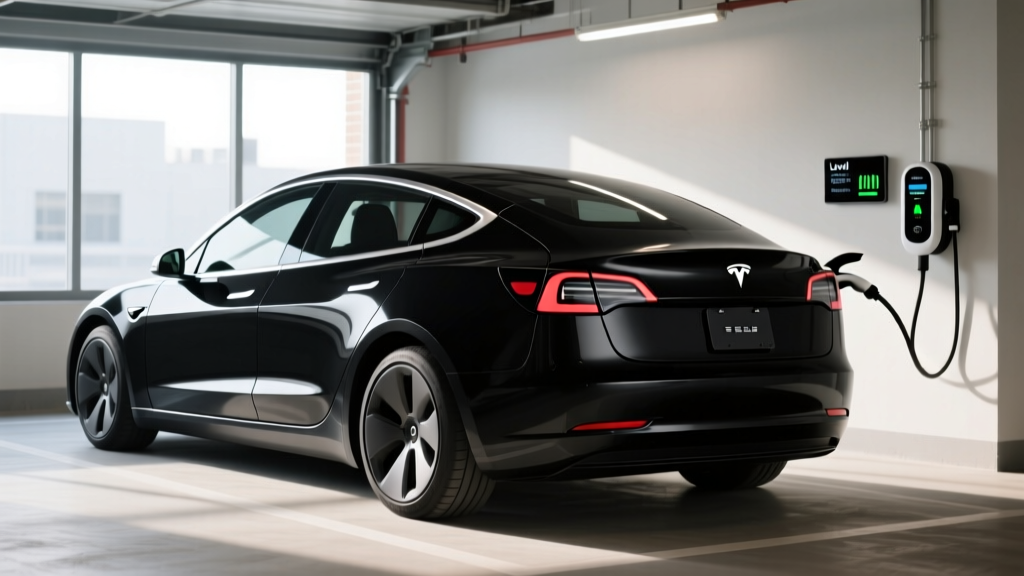
Home charging recommendation: The onboard charger in 2019–2021 Model 3 vehicles is rated at 7.7 kW (32A) for AC charging. The 2022+ LFP models upgraded to 11.5 kW (48A). If you install a Tesla Wall Connector on a 60A circuit, you'll get the maximum AC rate your car supports. For a 2019–2021 Model 3, that means ~30 mi/hr of range added — enough to fully replenish overnight for any daily commute under 200 miles.
Performance, Interior & Tech
Even base used Model 3 variants deliver performance that embarrasses similarly priced gas sedans.
| Trim | Drivetrain | Horsepower | 0–60 mph | Cargo (cu ft) | Rear Legroom (in) |
|---|---|---|---|---|---|
| SR+ RWD | Rear-Wheel Drive | ~283 hp | 5.3 sec | 23 cu ft (trunk + frunk) | 35.2 |
| Long Range AWD | Dual-Motor AWD | ~346 hp | 4.2 sec | 23 cu ft | 35.2 |
| Performance AWD | Dual-Motor AWD | ~450 hp | 3.1 sec | 23 cu ft | 35.2 |
Interior & cargo: The Model 3's minimalist cabin centers on a 15.4-inch touchscreen that controls virtually every function — climate, mirrors, glovebox, and driver-assist settings. The 23 cu ft of combined cargo (15 cu ft trunk + ~3 cu ft frunk + fold-flat rear seats) is adequate for a couple's road trip but tighter than a Model Y's 30+ cu ft hatchback space. Rear legroom at 35.2 inches is sufficient for adults on shorter trips but snug for tall passengers on long hauls.
Tech highlights:
- Autopilot (standard): SAE Level 2 adaptive cruise + lane-centering. Requires hands-on-wheel supervision. Competent for highway commuting but not "self-driving."
- FSD Supervised (optional, ~$8,000 add-on or $99/mo): Adds automatic lane changes, traffic light/stop sign recognition, and Navigate on Autopilot. Still SAE Level 2 — driver must remain fully engaged. Does not transfer automatically on used purchases; check if the car has an active FSD subscription or purchased license.
- Over-the-air updates: Tesla continues pushing software updates to 2018+ Model 3 vehicles, including UI refreshes, efficiency improvements, and new features. A 2019 Model 3 in 2026 runs essentially the same software as a new one.
- Sentry Mode & Dashcam: Built-in camera recording when parked or driving — no aftermarket hardware needed.
Notable drawbacks: No physical buttons for climate or volume (everything is on-screen). No head-up display. Panel gap quality on 2018–2020 Fremont-built cars is inconsistent. Road noise is noticeable on models before the 2021 acoustic-glass refresh. The SR+ lacks a heat pump (uses resistive heating), which increases winter energy consumption by 20–30%.
Warranty & Battery Longevity on a Used Model 3
This is where used-EV buyers need the most clarity. Tesla's original warranties transfer to subsequent owners automatically:
- Basic Vehicle Limited Warranty: 4 years / 50,000 miles (whichever comes first). Likely expired on most 2018–2021 used examples.
- Battery & Drive Unit Warranty: 8 years / 100,000 miles (SR+ RWD) or 8 years / 120,000 miles (LR AWD and Performance). Tesla guarantees the battery will retain at least 70% of original capacity during this period. If it drops below 70%, Tesla replaces or refurbishes the pack at no cost.
What this means in practice: A 2019 Long Range with 65,000 miles still has battery/drive-unit warranty coverage through 2027 or 120,000 miles. A 2020 SR+ with 48,000 miles is covered through 2028 or 100,000 miles. This is a significant safety net — out-of-warranty battery replacements on the Model 3 currently range from $12,000 to $16,000 depending on pack size and service center.
LFP vs NMC longevity: If you're looking at 2022–2023 LFP (Standard Range) models, the CATL lithium iron phosphate pack is rated for 3,000+ full charge cycles before reaching 80% SoH — roughly 15–20 years of average use. Tesla recommends charging LFP packs to 100% regularly (unlike NMC, which benefits from an 80% daily limit). LFP's trade-off: lower energy density (less range in the same physical pack) and worse cold-weather performance.
Pricing: What Does a Used Model 3 Actually Cost After the Tax Credit?
| Trim / Year | Typical Dealer Price (2026) | §25E Credit (30%, max $4K) | Effective Price After Credit |
|---|---|---|---|
| 2019 SR+ RWD (55K mi) | $18,500 | $4,000 | $14,500 |
| 2020 SR+ RWD (40K mi) | $20,000 | $4,000 | $16,000 |
| 2021 LR AWD (50K mi) | $24,500 | $4,000 | $20,500 |
| 2019 Performance AWD (60K mi) | $23,000 | $4,000 | $19,000 |
| 2022 RWD LFP (30K mi) | $25,500 | ❌ Over $25K cap | $25,500 |
Critical pricing note: The $25,000 sale-price cap is strict. If the dealer lists the car at $25,500, it does not qualify — even if you negotiate down to $25,000 after the fact. The sale price on the purchase agreement must be $25,000 or less. Work with the dealer to set the price at or below the threshold before closing. Also: the credit is non-refundable if claimed on your tax return, but the point-of-sale transfer option (available since 2024) lets the dealer apply the credit as a down-payment reduction at purchase — effectively making it a refundable discount regardless of your tax liability.
How Does It Compare to Other Used EVs?
Choose the Used Model 3 If:
- You want the most reliable public charging network (Superchargers)
- Efficiency matters — Model 3 leads its class in kWh/100mi
- You value ongoing OTA software updates
- You drive mostly solo or with one passenger
- You want a sub-$20K effective price after the credit
Look at Competitors If:
- Used Chevy Bolt EV/EUV (2020–2023): More cargo room, similar credit eligibility, but slower DC charging (~55 kW peak) and no heat pump.
- Used Hyundai Kona Electric (2019–2022): 258 mi EPA range, decent efficiency, but CCS charging network is less reliable and DC charging peaks at ~75 kW.
- Used Model Y (2020–2022): Hatchback cargo space and available 7 seats, but most examples still exceed the $25,000 credit cap.
- Used Polestar 2 (2021–2022): Premium build quality, Google Automotive OS, but lower efficiency (240 mi EPA for single-motor) and higher maintenance costs.
Pros
- Class-leading efficiency (24–26 kWh/100mi)
- Native Supercharger access — best public charging in the US
- Over-the-air updates keep older cars current
- Strong battery warranty (8yr/100–120K mi) transfers to used buyers
- Sub-$16K effective price possible with §25E credit on SR+
- Performance even on base trim (5.3s 0–60)
Cons
- Minimalist interior not for everyone — no physical buttons
- Rear seat space is tight for tall adults
- 2018–2020 models lack heat pump (worse winter range)
- SR+ DC charging peaks at ~150 kW — slower road-trip charging
- Insurance premiums 15–25% higher than comparable gas sedans
- FSD transfer on used purchases is inconsistent — verify before buying
Frequently Asked Questions
What is the real-world range of a used Tesla Model 3?
For the most common used SR+ (EPA 250–263 mi), expect 210–230 mi highway, 240–255 mi city, and 170–195 mi in freezing cold. The Long Range AWD (EPA 310–353 mi) delivers 280–310 mi highway and 230–260 mi in winter. Battery degradation of 8–12% is typical at 60,000 miles, slightly reducing these figures.
How fast does a used Model 3 charge at home and on the road?
Home Level 2 charging at 7.7 kW (2019–2021) adds ~30 mi/hr — a full charge in 8–10 hours. At 11.5 kW (2022+ LFP), it's ~44 mi/hr. On V3 Superchargers, Long Range models peak at 250 kW and hit 10–80% in ~22–28 minutes. SR+ and LFP models peak around 150–170 kW, taking 28–35 minutes for 10–80%.
How much does a used Tesla Model 3 cost after the tax credit?
With the §25E used-EV credit, a 2019 SR+ at $18,500 drops to an effective $14,500. A 2021 Long Range AWD at $24,500 drops to $20,500. The credit is 30% of sale price up to $4,000, and the car must be sold for $25,000 or less by a licensed dealer. Income caps apply ($75K single / $150K joint).
Does a used Tesla Model 3 qualify for the federal EV tax credit?
Yes — under the §25E Previously-Owned Clean Vehicle Credit, not the §30D new-vehicle credit. The Model 3 qualifies if purchased from a dealer for $25,000 or less, the model year is at least two years old, and the buyer meets income caps. The credit is up to $4,000 and can be transferred to the dealer at point of sale as a price reduction.
Is a used Model 3 worth buying vs. a new budget EV?
At $14,500–$20,500 effective price after the credit, a used Model 3 offers more range, faster charging, better performance, and Supercharger access than new budget EVs like the Chevy Equinox EV or Nissan Leaf — which start at $33,000+ before credits. The trade-off is remaining warranty coverage, potential cosmetic wear, and older hardware. For most buyers who can charge at home, the value proposition is excellent.
Should I worry about the battery on a used Model 3?
Tesla's 8-year/100,000–120,000-mile battery warranty (70% capacity retention guarantee) transfers automatically to used owners. Most 2019–2021 Model 3 NMC packs show 88–92% State of Health at 50,000–70,000 miles — well above the 70% threshold. Request a battery health report from Tesla or use third-party tools like Recurrent or Tessie to check SoH before purchasing.