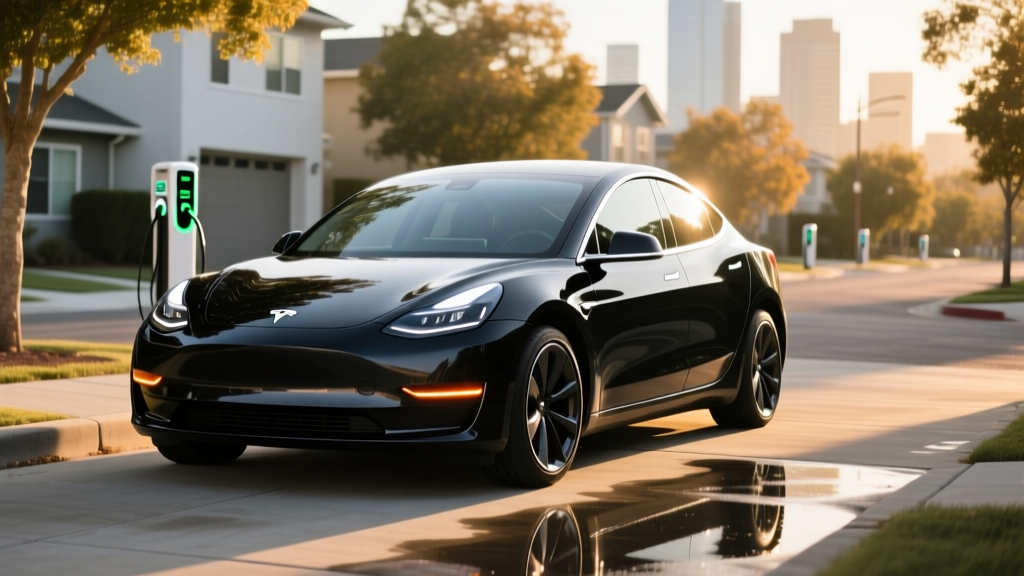
Why Off-Lease Tesla Model 3s Are Flooding the Market in 2026
The 36-month lease cycle that began in 2022-2023 has created a massive wave of off-lease Tesla Model 3 vehicles hitting dealer lots and private-party listings throughout 2026. For bargain-conscious EV shoppers, this represents the single best opportunity to acquire a premium electric sedan at a steep discount — often 30-40% below original MSRP. But buying a used Tesla lease Model 3 requires navigating battery chemistry differences, assessing remaining warranty coverage, and understanding which federal incentives still apply to secondhand buyers.
This guide covers every critical spec, real-world ownership reality, and financial consideration you need before signing paperwork on a pre-owned Model 3.
Model 3 Trims You'll Find on the Used-Lease Market
Off-lease Model 3s from the 2022-2023 model years fall into three primary configurations. Tesla simplified naming conventions during this period, but battery chemistry is the hidden variable that matters most for long-term ownership.
| Specification | Model 3 RWD (Standard Range) | Model 3 Long Range AWD | Model 3 Performance |
|---|---|---|---|
| EPA Range | 272 miles | 341 miles | 315 miles |
| Battery Capacity (usable) | ~57.5 kWh | ~75 kWh | ~75 kWh |
| Battery Chemistry | LFP (Lithium Iron Phosphate) | NMC (Nickel Manganese Cobalt) | NMC |
| Drivetrain | Rear-Wheel Drive | Dual-Motor AWD | Dual-Motor AWD |
| Horsepower | 283 hp | 346 hp | 480 hp |
| 0-60 mph | 5.8 seconds | 4.2 seconds | 3.1 seconds |
| EPA Efficiency | 132 MPGe / 25 kWh/100mi | 131 MPGe / 26 kWh/100mi | 125 MPGe / 27 kWh/100mi |
| Original MSRP (2023) | ~$40,240 | ~$47,740 | ~$53,240 |
| Typical 2026 Used Price | $24,000–$28,000 | $30,000–$36,000 | $35,000–$42,000 |
Sources: EPA / fueleconomy.gov, Tesla archived spec sheets. Used pricing reflects Q1 2026 market averages for 25,000–40,000 mile examples.
Real-World Range: What the EPA Sticker Doesn't Tell You
• Mixed city/suburban driving: 320–340 miles (near EPA estimate)
• Sustained highway (75 mph): 270–295 miles (~15–20% reduction)
• Cold weather (below 32°F): 230–270 miles (20–30% reduction)
• Cold + highway combined: 210–240 miles (worst-case scenario)
The Model 3's efficiency is among the best in the EV segment thanks to its low drag coefficient (0.23 Cd) and excellent thermal management. But physics is physics. Highway speeds above 70 mph push aerodynamic drag exponentially higher, and cold temperatures increase battery internal resistance while demanding cabin heating energy.
The LFP-equipped RWD model suffers slightly more cold-weather range loss than NMC variants — expect roughly 25-35% reduction in freezing conditions versus the EPA estimate. However, LFP batteries tolerate repeated 100% charging without accelerated degradation, meaning you can top off daily and still access the full 272-mile envelope when needed.
Battery degradation at 30,000–40,000 miles (typical off-lease mileage) is generally minimal. Tesla's battery management system is conservative, and most 2022-2023 Model 3s show 93-97% State of Health (SoH) at lease return. NMC packs may show 3-5% degradation; LFP packs often show even less due to chemistry stability. Always check the battery health readout in the Tesla service menu or request a third-party scan before purchasing.
Charging Speed: DC Fast Charge and Home Level 2
| Charging Level | Max Rate | Model 3 RWD (LFP) | Model 3 LR / Perf (NMC) | Miles Added per Hour |
|---|---|---|---|---|
| Level 1 (120V outlet) | 1.4 kW | ~3–4 mi/hr | ~3–4 mi/hr | 3–4 |
| Level 2 (240V home) | 11.5 kW (48A) | ~30–33 mi/hr | ~37–44 mi/hr | 30–44 |
| DC Fast Charge (V3 Supercharger) | 250 kW peak | ~170 kW sustained peak | ~250 kW peak | N/A (see below) |
DC fast-charging reality: The NMC Long Range and Performance models can peak at 250 kW on a V3 Supercharger, but that peak only holds between roughly 10-30% State of Charge. The charging curve tapers significantly above 60%, and the full 10-80% session takes approximately 25–30 minutes. The LFP RWD model peaks lower — around 170 kW — and its 10-80% time stretches to roughly 30–35 minutes due to the smaller battery and chemistry characteristics.
Home charging is where the Model 3 excels. The onboard charger accepts up to 11.5 kW (48 amps) on a 240V circuit, which means a full overnight charge from 20% to 80% takes roughly 4–5 hours for the Long Range and 3–4 hours for the RWD. A professionally installed Level 2 home charger (NACS connector, 60A circuit with a 48A continuous charger like the Tesla Wall Connector) typically costs $800–$2,000 installed depending on panel proximity and local permit fees.
As of 2026, the Model 3 uses Tesla's NACS connector natively. If you encounter a 2022-2023 model with the older proprietary Tesla port, it is fully compatible with the entire Supercharger network. For CCS-based public chargers (Electrify America, EVgo), you'll need a NACS-to-CCS adapter — widely available for around $150–$200.
Warranty Coverage on a Used Tesla Lease Model 3
One of the strongest arguments for buying an off-lease Model 3 is the remaining factory warranty. Tesla's coverage transfers fully to subsequent owners:
- Basic Vehicle Limited Warranty: 4 years / 50,000 miles (whichever comes first)
- Battery & Drive Unit Warranty: 8 years / 100,000 miles for RWD; 8 years / 120,000 miles for Long Range and Performance
- Battery capacity retention threshold: Tesla warrants that the battery will retain at least 70% of original capacity during the warranty period
A 2023 Model 3 coming off a 36-month lease in early 2026 with ~35,000 miles will still have approximately 1 year / 15,000 miles of basic warranty and roughly 5 years / 65,000–85,000 miles of battery and drive unit coverage remaining. That's substantial protection against the most expensive potential failure points.
Extended warranty option: Tesla does not currently offer a factory extended warranty on the Model 3. Third-party EV warranty providers exist (e.g., Endurance, CARCHEX) but coverage terms and EV-specific exclusions vary widely. Read the contract carefully — many exclude battery degradation below the 70% threshold that Tesla already covers.
Federal Tax Credit: Does a Used Model 3 Qualify?
| Requirement | Detail |
|---|---|
| Credit Amount | 30% of sale price, up to $4,000 maximum |
| Vehicle Price Cap | Sale price must be $25,000 or less |
| Vehicle Age | Must be at least 2 model years old (2024 or older for 2026 purchase) |
| Buyer Income Cap | $75,000 single / $112,500 head of household / $150,000 joint |
| Dealer Requirement | Must purchase from a licensed dealer (private-party sales excluded) |
| Frequency Limit | Once every 3 years per buyer |
| Point-of-Sale | Credit can be transferred to dealer at purchase for immediate price reduction |
Source: IRS.gov — Used Clean Vehicle Credit (§25E). Rules current as of 2026; consult a tax professional for personal eligibility.
The practical reality: The $25,000 price cap is the critical bottleneck. Most off-lease Model 3 Long Range and Performance variants sell above this threshold, making them ineligible. However, higher-mileage or cosmetically imperfect RWD examples occasionally dip to $24,000–$25,000 at franchised dealers, which would qualify for the full $4,000 credit — bringing effective cost down to $20,000–$21,000.
This is where negotiation matters. If a dealer lists a Model 3 RWD at $26,500, negotiating down to $25,000 doesn't just save you $1,500 — it unlocks a $4,000 federal credit, for a net swing of $5,500 in effective value.
Tech, Interior, and Daily Livability
The 2022-2023 Model 3 interior is defined by its minimalist approach. A single 15.4-inch center touchscreen handles infotainment, climate, navigation, and vehicle settings. There is no traditional instrument cluster — speed and driving information display on the left edge of the center screen.
Standout tech features:
- Tesla Autopilot (standard): SAE Level 2 driver assistance — adaptive cruise control and lane centering. Driver must remain attentive with hands on the wheel at all times. This is not self-driving.
- Full Self-Driving (FSD) Supervised (optional, ~$8,000 original add-on): Also SAE Level 2. Adds automatic lane changes, traffic light/stop sign recognition, and Navigate on Autopilot. Despite the name, the driver must supervise continuously. FSD transfers with the vehicle if previously purchased — a significant value-add on used examples that have it.
- Over-the-air updates: Tesla continues pushing software updates to older vehicles, adding features and refinements years after purchase.
- Sentry Mode / Dashcam: Built-in camera system records surroundings when parked or driving. Requires a USB drive for storage.
- Heat pump (standard on 2022-2023 models): Dramatically improves cold-weather efficiency vs. resistive heating, reducing winter range loss.
Cargo and passenger space:
- Trunk: 23 cu ft (including under-floor storage)
- Frunk (front trunk): 3.1 cu ft — useful for charging cables and small bags
- Rear legroom: 35.2 inches — adequate for adults under 6 feet, tight for taller passengers on long trips
- Seating: 5-passenger capacity (though the rear middle seat is best for short trips)
Notable drawbacks:
- No Apple CarPlay or Android Auto — Tesla's proprietary system is the only option
- Rear visibility is compromised by the sloping rear glass; rely on the backup camera
- Panel gaps and paint quality on 2022-2023 Fremont-built cars can be inconsistent; inspect carefully
- No physical buttons for climate or mirrors — everything routes through the touchscreen
- Ride quality on the standard suspension is firm; some owners find it harsh on rough pavement
- Best-in-class efficiency (25–27 kWh/100mi)
- Access to Tesla Supercharger network — most reliable DC fast-charging infrastructure
- Strong remaining battery/drivetrain warranty on off-lease examples
- LFP battery option (RWD) allows daily 100% charging with minimal degradation
- Over-the-air updates keep older vehicles current
- Low operating cost: ~$0.04–$0.06 per mile on home electricity vs. ~$0.12–$0.15 for gas equivalent
- No Apple CarPlay/Android Auto
- Rear seat space is tight for taller passengers
- Firm ride quality on base suspension
- Used-EV tax credit eligibility limited by $25,000 price cap
- Touchscreen-dependent controls frustrate some drivers
- Insurance premiums 15–25% higher than comparable gas sedans
How It Stacks Up: Model 3 vs. Key Used-EV Competitors
At the $24,000–$36,000 used price point, the off-lease Model 3 competes with several strong alternatives:
- Hyundai Ioniq 6 (2023): Longer EPA range (up to 361 mi), 800V architecture for faster DC charging (10-80% in ~18 min), but smaller Supercharger-equivalent network. Often slightly more expensive used.
- BMW i4 eDrive40 (2022-2023): More luxurious interior, CarPlay support, similar range (~301 mi EPA), but slower DC charging and higher maintenance costs.
- Polestar 2 (2022-2023): Distinctive design, Google-based infotainment with Android Auto, but less range (~270 mi) and a smaller charging network.
- Chevrolet Bolt EUV (2022-2023): Significantly cheaper ($15,000–$20,000 used), qualifies more easily for the $4,000 used credit, but slower DC charging (~55 kW peak) and shorter range (~247 mi).
The Model 3's combination of efficiency, Supercharger access, and software integration remains difficult to beat at this price point — particularly for road-trip-capable use cases where DC charging infrastructure matters.
Who Should Buy a Used Tesla Lease Model 3?
Choose the Model 3 Long Range AWD if: You take regular road trips (200+ miles), live in a cold-weather state where AWD and the larger battery buffer matter, or need the extra performance for mountain driving. Expect to pay above the $25,000 used-credit threshold.
Choose the Model 3 Performance if: Acceleration and handling are priorities, and you accept higher insurance costs and lower efficiency. This trim is hardest to find under the used-credit cap.
Look elsewhere if: You need rear-seat space for tall teenagers or adults, require Apple CarPlay, or frequently drive in areas with limited Supercharger coverage and no home charging option.
Frequently Asked Questions
What is the real-world range of a used Tesla Model 3?
The RWD (LFP) delivers approximately 240–260 miles in mixed driving and 200–220 miles on the highway. The Long Range AWD achieves 310–330 miles mixed and 270–295 highway. Cold weather (below freezing) reduces these figures by 20–30%. At typical off-lease mileage (30,000–40,000 miles), battery degradation is minimal — expect 93–97% of original capacity.
How fast does a used Model 3 charge at home and on the road?
On a 240V Level 2 home charger, expect 30–44 miles of range per hour depending on trim. A full overnight charge from 20% to 80% takes 3–5 hours. On a V3 Supercharger (250 kW), the Long Range charges 10-80% in approximately 25–30 minutes; the RWD takes 30–35 minutes due to its lower peak charge rate and smaller battery.
How much does a used Tesla lease Model 3 cost after tax credits?
Typical 2026 pricing: RWD $24,000–$28,000, Long Range $30,000–$36,000, Performance $35,000–$42,000. If you find a dealer-listed RWD at $25,000 or less and meet income requirements, the §25E used-EV credit can reduce your effective cost by up to $4,000. Long Range and Performance trims rarely qualify due to the $25,000 price cap.
Is a used Model 3 worth buying vs. competitors?
For efficiency, Supercharger network access, and software quality, the Model 3 remains a top choice. The Hyundai Ioniq 6 offers more range and faster charging architecture; the BMW i4 provides a more premium interior; the Chevrolet Bolt EUV is far cheaper. Your priority (range, luxury, price, or charging network) determines the best fit.
Does a used Model 3 qualify for the federal EV tax credit?
Not the new-vehicle §30D credit — that applies only to new purchases. However, the §25E Used Clean Vehicle Credit offers up to $4,000 (30% of sale price) if the vehicle is purchased from a dealer for $25,000 or less, is at least 2 model years old, and the buyer meets income caps ($75K single / $150K joint). Consult IRS guidelines and a tax professional for your specific situation.
What should I inspect before buying an off-lease Model 3?
Check battery State of Health via the Tesla service menu or a third-party diagnostic tool. Inspect panel gaps, paint quality, and suspension components. Verify Autopilot/FSD status (purchased vs. trial). Confirm the vehicle's Supercharging eligibility (some salvage-title Teslas lose network access). Review service history in the Tesla app for any open recalls or campaign bulletins.
Will Tesla still support 2022-2023 Model 3 vehicles with software updates?
Yes. Tesla continues delivering over-the-air updates to vehicles from this generation, including safety improvements, UI refinements, and new features. The 2022-2023 Model 3 shares its core hardware platform with current models, ensuring long-term software compatibility.