The Used F-150 Lightning: America's Electric Truck at a Discount
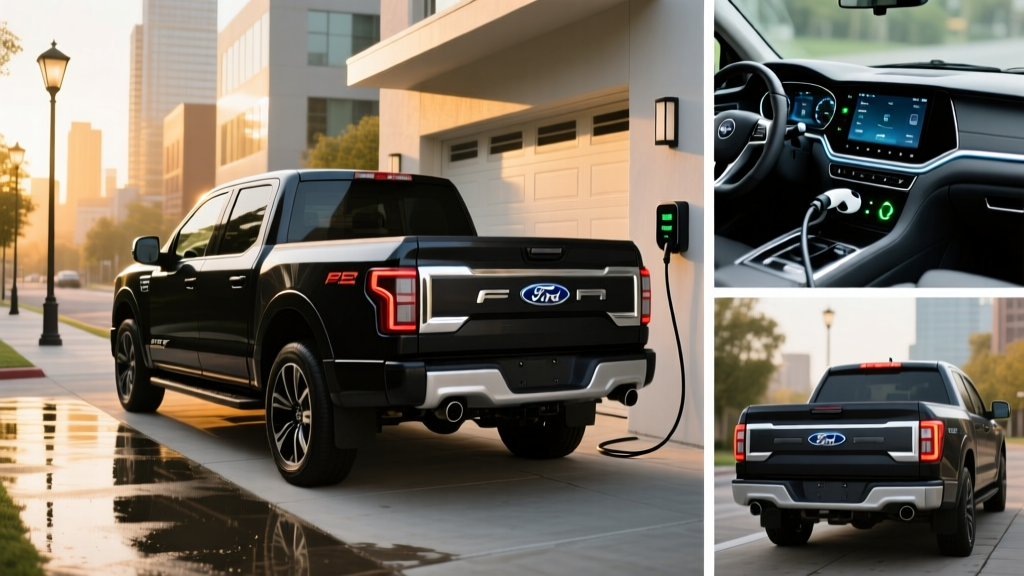
The Ford F-150 Lightning reshaped the full-size pickup segment when it launched for the 2022 model year, proving that a battery-electric truck could handle real work while serving as a daily driver. Now, with three model years (2022–2024) circulating on the used market and Ford's 2025 refresh introducing NACS native charging, pre-owned Lightnings represent some of the best value in the electric truck space. But buying a used EV requires different homework than a used gas truck — battery health, charging hardware revisions, and shifting federal tax credit rules all factor into the equation.
This guide covers every model year of the F-150 Lightning you'll encounter on dealer lots and private-party listings in 2026, with exact specs, real-world ownership data, and the math on whether the used-EV tax credit applies to your purchase.
Spec Snapshot: 2022–2024 F-150 Lightning by the Numbers
| Specification | Standard Range (SR) | Extended Range (ER) |
|---|---|---|
| Battery Capacity (usable) | 98 kWh | 131 kWh |
| Battery Chemistry | NMC (Nickel Manganese Cobalt) | NMC (Nickel Manganese Cobalt) |
| EPA Estimated Range | 240 miles (2022–23); 240 mi (2024) | 320 miles (2022–23); 320 mi (2024) |
| MPGe (Combined) | 76 MPGe | 70 MPGe |
| Efficiency (kWh/100 mi) | ~47 kWh/100 mi | ~51 kWh/100 mi |
| Drivetrain | Dual-motor AWD | Dual-motor AWD |
| Horsepower | 563 hp | 563 hp (2022); 580 hp (2023+) |
| Torque | 775 lb-ft | 775 lb-ft |
| 0–60 mph | ~4.0 sec | ~3.8 sec |
| Max Towing (w/ Max Trailer Tow) | 7,700 lbs | 10,000 lbs |
| Max Payload | ~2,235 lbs | ~1,800 lbs |
| Original MSRP (base trim) | ~$55,974 (2022 Pro) | ~$69,974 (2022 Lariat ER) |
Sources: fueleconomy.gov, Ford Motor Company specifications.
Real-World Range: What the EPA Sticker Doesn't Tell You
Standard Range (98 kWh): EPA 240 mi → Expect 190–215 mi highway at 70 mph; 150–180 mi in sub-freezing weather.
Extended Range (131 kWh): EPA 320 mi → Expect 260–285 mi highway at 70 mph; 210–245 mi in sub-freezing weather.
The F-150 Lightning's boxy aerodynamics and 6,000+ lb curb weight work against highway efficiency. In our experience and consistent with third-party testing, the Extended Range model loses roughly 15–18% of its EPA range at sustained 70–75 mph highway speeds. The Standard Range battery sees a slightly larger proportional drop because its smaller pack means less thermal mass and fewer kWh to buffer against inefficiency.
Cold weather compounds this. Lithium-ion NMC cells experience increased internal resistance below 40°F, and cabin heating draws significant energy — the Lightning uses a resistive PTC heater on 2022 models, with a heat pump becoming available on select 2023+ trims. In 20°F weather with cabin heat active, plan for 25–35% range reduction versus the EPA sticker. This is normal for a full-size electric truck, but it matters if your commute or job site is 100+ miles one way in winter.
Towing reality check: If you're buying a used Lightning for towing, expect range to roughly halve when pulling a 5,000–7,000 lb trailer at highway speed. The Extended Range model might deliver 140–160 miles with a heavy trailer in moderate weather. For frequent heavy towing, a diesel or hybrid truck may still be the more practical choice.
Charging Speed: DC Fast Charge and Home Level 2
| Charging Level | Standard Range (98 kWh) | Extended Range (131 kWh) |
|---|---|---|
| Level 1 (120V / 12A) | ~2 mi/hr added | ~2 mi/hr added |
| Level 2 (240V / 48A, standard onboard charger) | 11.5 kW → ~20 mi/hr | 11.5 kW → ~19 mi/hr |
| Level 2 (240V / 80A, dual onboard charger option) | 19.2 kW → ~33 mi/hr | 19.2 kW → ~31 mi/hr |
| DC Fast Charge (peak) | 120 kW peak | 150 kW peak |
| DC Fast 10–80% time | ~44 minutes | ~41 minutes |
| Connector (2022–2024) | CCS1 | CCS1 |
The Lightning's DC fast-charging speed is its most debated spec. The Standard Range pack peaks at roughly 120 kW and the Extended Range at about 150 kW — competitive for 2022 but behind the 200–250+ kW peaks of newer platforms like Hyundai's E-GMP or the Tesla Cybertruck. The charge curve is relatively flat through 60% State of Charge, then tapers significantly above 80%, which is standard behavior to protect NMC cell longevity.
Important for used buyers: All 2022–2024 Lightnings use the CCS1 connector. Ford began equipping 2025 models with the native NACS (Tesla-style) port. If you plan to use Tesla Superchargers — which now dominate the U.S. DC fast-charging landscape — a 2022–2024 Lightning requires Ford's CCS-to-NACS adapter. Ford has offered this adapter to existing owners; confirm whether the used truck you're evaluating includes one, or budget ~$200 for a third-party adapter rated for the Lightning's peak charge rate.
Home charging is where the Lightning excels. The standard 11.5 kW onboard charger fully replenishes the 98 kWh pack overnight (~10 hours from empty). The available 19.2 kW dual charger cuts that to roughly 6 hours for the 131 kWh pack — but it requires a 100-amp dedicated circuit, which means a panel upgrade for many homes. Factor in $500–$2,000 for electrical work beyond a basic Level 2 install if you want the full 80A circuit. The Lightning's Pro Power Onboard feature (available in 2.4 kW or 9.6 kW output) turns the truck into a mobile generator via bed and cabin outlets — a genuine differentiator for job-site use and emergency backup power.
What a Used F-150 Lightning Costs in 2026
Used Lightning pricing has settled after the initial depreciation hit that affected most early EVs. Here's what you'll encounter on the market:
| Model Year / Trim | Original MSRP | Typical Used Price (2026) | Depreciation |
|---|---|---|---|
| 2022 Pro SR | ~$55,974 | $32,000–$38,000 | ~35–43% |
| 2022 XLT SR | ~$62,974 | $36,000–$42,000 | ~33–43% |
| 2022 Lariat ER | ~$77,474 | $44,000–$52,000 | ~33–43% |
| 2023 Platinum ER | ~$96,874 | $55,000–$65,000 | ~33–43% |
| 2024 XLT ER | ~$71,990 | $50,000–$58,000 | ~19–30% |
Prices vary by mileage, condition, battery State of Health (SoH), and region. Extended Range models hold value somewhat better due to their versatility. The 2022 Pro trim — originally the value king — is now the most affordable entry point into a full-size electric pickup.
Does a Used Lightning Qualify for the Federal Tax Credit?
Possibly — under the IRS §25E used clean vehicle credit, you may qualify for up to $4,000 (or 30% of the sale price, whichever is less) when buying from a licensed dealer. Key requirements:
- Sale price cap: The dealer sale price must be $25,000 or less. This eliminates most Extended Range and higher-trim Lightnings, but some high-mileage 2022 Pro SR models may qualify.
- Income limits: Modified adjusted gross income cannot exceed $75,000 (single), $112,500 (head of household), or $150,000 (joint filers).
- Vehicle age: The model must be at least two model years old — so in 2026, 2024 and older models qualify.
- Dealer sale required: Private-party purchases do not qualify.
- One-time use per buyer: You can only claim this credit once every three years.
The original §30D new vehicle credit of up to $7,500 no longer applies to used purchases. Always confirm eligibility with a tax professional before relying on the credit in your budgeting.
Battery Health, Warranty, and Longevity
The F-150 Lightning uses NMC (nickel manganese cobalt) lithium-ion cells in both battery sizes. Ford provides an 8-year / 100,000-mile battery warranty that guarantees the pack will retain at least 70% of its original capacity. This warranty transfers to subsequent owners, which is a significant advantage for used buyers.
What to check before buying:
- Battery State of Health (SoH): Ask the dealer or seller to pull the battery health report via Ford's diagnostic tools or the FordPass app. A 2022 model with 40,000 miles should show 92–96% SoH under normal use.
- Charging history: Frequent DC fast charging above 150 kW in extreme heat accelerates degradation. A truck that was primarily Level 2 home-charged will typically show better SoH than one used for daily fast-charging.
- Thermal management system: The Lightning uses an active liquid cooling/heating system for the battery. Confirm there are no coolant leak warnings or thermal management fault codes.
- Remaining warranty: A 2022 model's 8-year battery warranty runs through 2030; a 2023 through 2031. This provides substantial coverage headroom.
Real-world degradation data from early Lightning owners suggests roughly 3–6% capacity loss over the first 50,000 miles, which is consistent with NMC packs in liquid-cooled systems. The Lightning's large battery buffers mean that even 10% degradation on the 131 kWh pack still leaves you with ~118 usable kWh — more than most new EVs on the market.
Tech, Interior, and Daily Livability
The Lightning's cabin mirrors the 14th-generation F-150, which means generous space and a work-oriented layout. Key interior dimensions:
- Front legroom: 43.9 inches
- Rear legroom: 41.2 inches (SuperCrew)
- Bed length: 5.5 ft (67.1 cu ft volume)
- Front trunk (frunk): 14.1 cu ft — lockable, weatherproof, with a 400-lb payload rating and integrated drain
- Max interior cargo (behind front seats): ~52.8 cu ft
Standout technology:
- SYNC 4 / SYNC 4A: 12-inch touchscreen standard on most trims; the 15.5-inch portrait screen is available on Lariat and standard on Platinum. Wireless Apple CarPlay and Android Auto across the board.
- BlueCruise: Ford's Level 2 hands-free driver-assist system works on approved divided highways (over 130,000 miles mapped as of 2025). It requires an active subscription after the initial trial period — typically $75/month or $800/year. Confirm whether the used truck has an active subscription or if you'll need to reactivate it.
- Pro Power Onboard: Available as 2.4 kW (bed outlets) or 9.6 kW (bed + cabin + frunk outlets). The 9.6 kW version can power most home essentials during an outage when paired with Ford's Home Integration System.
- Intelligent Backup Power: With the Ford Charge Station Pro and Home Integration System, the Lightning can provide up to 9.6 kW of whole-home backup power during outages — potentially 3+ days of essential power.
Notable drawbacks:
- The 2022 model year had several software-related recalls and build-quality inconsistencies (panel gaps, 12V battery drain issues). Ford addressed many of these via OTA updates and service campaigns, but verify recall completion.
- Ride quality is firm when unloaded — the independent rear suspension is an improvement over the leaf-sprung gas F-150, but the truck's weight is noticeable on rough roads.
- The CCS1 port on 2022–2024 models requires an adapter for Tesla Supercharger access, adding a step to trip planning.
- Efficiency trails that of the Rivian R1T and is far behind the Tesla Cybertruck's more aerodynamic design, meaning higher per-mile electricity costs on road trips.
How It Compares: Lightning vs. R1T vs. Silverado EV
- You need a traditional truck bed and full-size crew cab
- Pro Power Onboard / home backup power is a priority
- You want the widest dealer service network
- Towing up to 10,000 lbs matters
- Budget is under $55,000
- You prioritize driving dynamics and efficiency
- You want a gear tunnel for adventure storage
- You prefer quad-motor performance (2023+ models)
- You don't need a full 8-ft-compatible bed
- You want 350+ kW DC fast charging (2024+ 4WT)
- Native NACS charging (2025+ models)
- You need the available Multi-Flex midgate for long cargo
- Used availability increases as fleet leases expire
Pros, Cons, and Final Verdict
- Best value in full-size electric trucks on the used market
- Pro Power Onboard is unmatched for work/backup utility
- 14.1 cu ft frunk is genuinely useful
- AWD, 563+ hp, and ~4-sec 0–60 as standard
- 8-yr/100,000-mi battery warranty transfers to used owners
- Familiar F-150 dimensions and service network
- Home backup power capability (with proper hardware)
- DC fast charging peaks at 120–150 kW — slow for road trips vs. newer platforms
- CCS1 port requires adapter for Tesla Supercharger access
- Highway and cold-weather range loss is significant
- Towing cuts range roughly in half
- 2022 models had early build-quality and software issues
- Heavy: 6,000+ lbs curb weight impacts tire wear and efficiency
- Used §25E credit has a $25,000 price cap — most trims exceed it
Bottom line: A used 2022–2024 F-150 Lightning is an excellent choice for buyers who need a full-size electric truck for daily commuting, light-to-moderate towing, job-site power, and home backup — and who charge primarily at home. The Extended Range model is the sweet spot for versatility. Road-trippers who rely on frequent DC fast charging should weigh the Lightning's 120–150 kW peak against newer platforms, and anyone in a cold climate should budget range expectations accordingly.
Frequently Asked Questions
What is the real-world range of a used F-150 Lightning?
The Extended Range (131 kWh) model delivers roughly 260–285 miles at highway speeds in moderate weather, dropping to 210–245 miles in freezing temperatures. The Standard Range (98 kWh) model yields about 190–215 miles highway, and 150–180 miles in cold weather. Towing a heavy trailer cuts range roughly in half regardless of battery size.
How fast does a used F-150 Lightning charge?
On DC fast charging, the Standard Range peaks at 120 kW and the Extended Range at 150 kW, with 10–80% taking roughly 41–44 minutes. At home on a 240V/48A Level 2 charger, expect about 19–20 miles of range added per hour. The optional 80A/19.2 kW onboard charger adds roughly 31–33 miles per hour but requires a 100-amp circuit.
Does a used F-150 Lightning qualify for a federal tax credit?
Under the IRS §25E used clean vehicle credit, you may receive up to $4,000 if the dealer sale price is $25,000 or less, your income falls within limits ($75K single / $150K joint), and you buy from a licensed dealer. Most used Lightnings exceed the $25,000 cap, though some high-mileage 2022 Pro SR models may qualify. Consult a tax professional for your specific situation.
Is a used F-150 Lightning worth it vs. a Rivian R1T or gas F-150?
For buyers prioritizing truck utility, home backup power, and dealer serviceability at a sub-$55K price, the used Lightning is hard to beat. The Rivian R1T offers better efficiency and driving dynamics but at a higher used price and with a smaller service network. A gas F-150 wins on range flexibility and towing endurance, but the Lightning's fuel and maintenance savings — plus Pro Power Onboard — make a compelling case for buyers with home charging access.
What should I check before buying a used F-150 Lightning?
Prioritize: (1) battery State of Health report via FordPass or dealer diagnostics, (2) completion of all open recalls (especially 2022 software and 12V battery recalls), (3) whether a CCS-to-NACS adapter is included, (4) BlueCruise subscription status, and (5) service records for the thermal management system and suspension components. A pre-purchase inspection at a Ford EV-certified dealer is strongly recommended.