The used EV market in 2026 offers more inventory and lower sticker prices than ever, but a bargain purchase price is only the beginning of the ownership math. Between federal tax credits for pre-owned electric vehicles, home charging economics, rising insurance premiums, and steep depreciation curves, the total cost of owning a used EV can either save you thousands or surprise you with hidden expenses. This guide breaks down every dollar — from the moment you drive off the lot through five full years of ownership.
The Used EV Market in 2026: What You're Working With
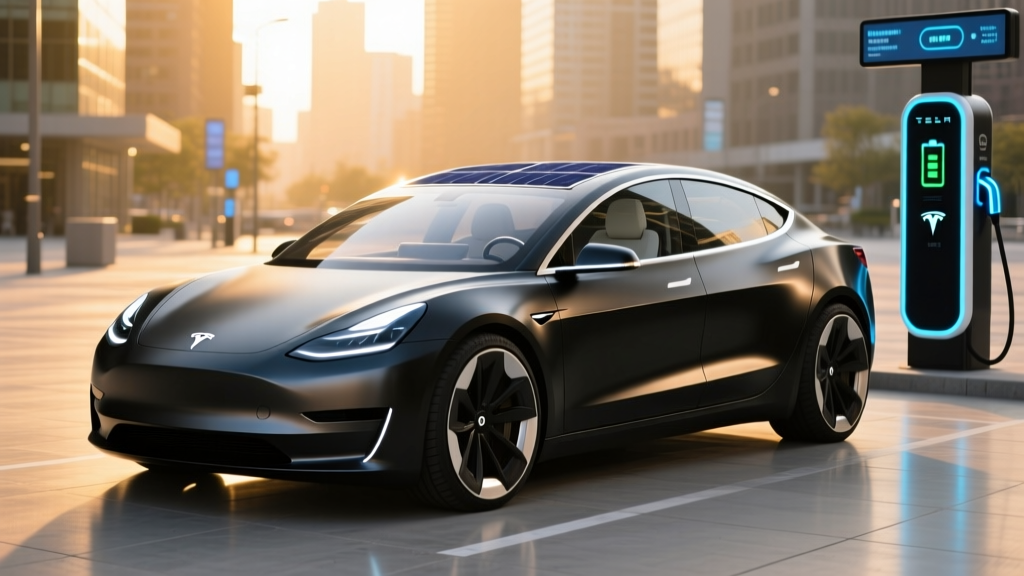
Three-year-old EVs from the 2023 model year are now flooding the used market as leases mature. Models like the Tesla Model 3, Hyundai Ioniq 5, Ford Mustang Mach-E, and Chevrolet Bolt EUV are available in significant volume. Prices have dropped considerably — a 2023 Model 3 Long Range that stickered around $47,000 new can now be found between $22,000 and $28,000 depending on mileage and condition, according to listings aggregated by Edmunds.
That price drop is both an opportunity and a warning. EV depreciation has been steeper than gas-car depreciation over the past three years, which means you can buy in at a discount — but you should also plan for continued value erosion. More on that below.
The Federal Used EV Tax Credit: Up to $4,000 Under §25E
The IRS §25E credit for previously owned clean vehicles offers up to $4,000 — or 30% of the sale price, whichever is lower. This is distinct from the §30D new-vehicle credit (which offers up to $7,500). Here's the critical eligibility framework:
- Vehicle price cap: Sale price must be $25,000 or less
- Vehicle age: Must be at least 2 model years old (2024 or older for a 2026 purchase)
- Buyer income limits: AGI must not exceed $75,000 (single), $112,500 (head of household), or $150,000 (joint filers)
- Vehicle type: Must be a qualifying clean vehicle (BEV or eligible PHEV with 7+ kWh battery)
- Dealer requirement: Must be purchased from a licensed dealer (private-party sales do not qualify)
- Frequency limit: You can only claim this credit once every 3 years
- Point-of-sale transfer: As of 2024+, you can transfer the credit to the dealer at purchase for an immediate price reduction rather than waiting to claim it on your tax return
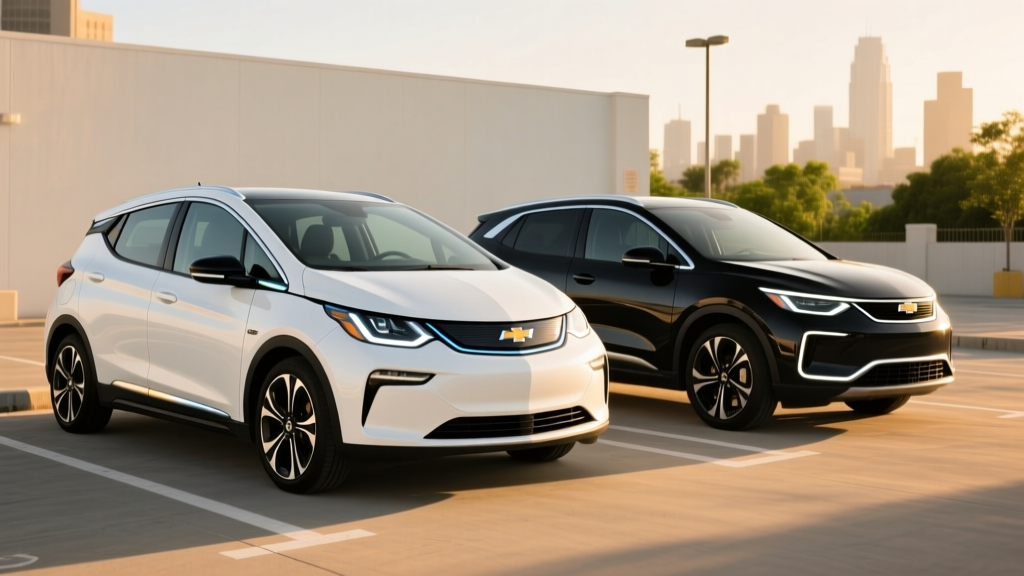
Real-world scenario: You buy a 2023 Chevrolet Bolt EUV from a dealer for $18,500. You file jointly with an AGI of $120,000. The credit is 30% × $18,500 = $5,550, but the cap is $4,000. You transfer the credit to the dealer at point of sale and pay $14,500 out the door (before taxes and fees). That's a transformative discount that makes a 259-mile EPA range EV one of the cheapest vehicles you can buy in 2026.
Note: Tax rules are subject to change. Always verify current-year requirements on IRS.gov and consult a tax professional before making a purchase decision based on credit eligibility.
5-Year Total Cost of Ownership: Used EV vs. Comparable Gas Car
To understand whether a used EV actually saves money, we need to compare it head-to-head with a similarly priced used gas car over a full 5-year ownership period. For this analysis, we're using a 2023 Hyundai Ioniq 5 SEL (used, ~$24,000 purchase) versus a 2023 Toyota Camry LE (used, ~$22,000 purchase).
| Cost Category | 2023 Ioniq 5 SEL (Used EV) | 2023 Camry LE (Used Gas) |
|---|---|---|
| Purchase Price (after credits) | $20,000 (after $4,000 §25E credit) | $22,000 |
| Fuel/Energy (5 years, 75,000 mi) | $3,375 (home charging at $0.15/kWh) | $9,375 (32 MPG avg at $4.00/gal) |
| Insurance (5 years) | $10,500 (~$2,100/yr avg) | $7,500 (~$1,500/yr avg) |
| Maintenance (5 years) | $1,250 | $3,750 |
| Depreciation (estimated resale at yr 5) | −$6,000 (resale ~$14,000) | −$7,000 (resale ~$15,000) |
| Net 5-Year Cost | $29,125 | $35,625 |
The used EV wins by roughly $6,500 over five years, but the breakdown reveals important nuances: you save massively on fuel and maintenance, but you pay significantly more for insurance. The purchase-price advantage only exists if you qualify for and claim the §25E credit. Buyers with income above the cap will see the gap narrow considerably.
Charging vs. Gas: The Per-Mile Cost Reality
Fuel savings are the single largest advantage of EV ownership — but the exact number depends heavily on how and where you charge.
| Scenario | Rate | Cost Per Mile (Ioniq 5 at 3.6 mi/kWh) | Cost Per Mile (Camry at 32 MPG) |
|---|---|---|---|
| Home Level 2 (national avg electricity) | $0.15/kWh | $0.042/mile | — |
| Home Level 2 (high-cost state like CA) | $0.30/kWh | $0.083/mile | — |
| Public DC Fast Charging (avg) | $0.40/kWh | $0.111/mile | — |
| Gasoline (national avg) | $4.00/gallon | — | $0.125/mile |
| Gasoline (high-cost state like CA) | $5.25/gallon | — | $0.164/mile |
The takeaway: If you charge at home at average electricity rates, you'll spend roughly 4.2 cents per mile versus 12.5 cents per mile on gas — a savings of about $1,250 per year at 15,000 miles. However, if you rely primarily on public DC fast charging, your per-mile cost nearly matches gasoline, erasing the fuel advantage. Home charging access is the single most important variable in EV ownership economics.
According to fueleconomy.gov, the 2023 Ioniq 5 RWD with the 77.4 kWh battery pack achieves 114 MPGe combined (2.94 miles/kWh in real-world mixed driving), though expect closer to 2.6-2.8 mi/kWh in sustained highway driving at 70+ mph or in cold weather below 30°F.
Maintenance Savings: Where EVs Quietly Win
EVs have roughly 20 moving parts in their drivetrain compared to 2,000+ in an internal combustion engine. That simplicity translates to real dollars.
| Service Item | EV Cost | Gas Car Cost |
|---|---|---|
| Oil changes | $0 | $600-$900 (6-10 changes) |
| Brake pads (front) | $0-$200 (regen braking extends life to 80,000+ mi) | $300-$600 (2-3 replacements) |
| Transmission fluid | $0 (single-speed reduction gear) | $150-$300 |
| Coolant flush | $100-$150 | $150-$250 |
| Cabin air filter | $50-$100 | $50-$100 |
| Tire rotation | $100-$150 | $100-$150 |
| Tire replacement (EVs wear tires 20-30% faster due to weight and instant torque) | $1,200-$1,600 | $800-$1,200 |
| Total (5-year estimate) | $1,250-$1,800 | $3,000-$4,500 |
The biggest hidden cost is tires. EVs are heavy — the Ioniq 5 weighs 4,431 lbs — and instant torque accelerates tread wear. Budget for a tire replacement around year 3 or 4, and consider EV-specific touring tires (like the Michelin e.Primacy or Hankook iON evo) that are engineered for lower rolling resistance and noise reduction.
Insurance: The Cost Category EV Owners Can't Ignore
EV insurance premiums are typically 20-40% higher than equivalent gas vehicles. According to data from the Insurance Information Institute, the average annual EV insurance premium in 2025 was approximately $2,100 versus $1,500 for a comparable gas sedan.
Why the gap?
- Higher repair costs: EV-specific components (battery packs, power electronics, heat pumps) are expensive to replace after a collision
- Specialized labor: Fewer body shops have high-voltage certification, driving up labor rates
- Total-loss thresholds: Even minor battery damage can trigger a total-loss declaration, increasing insurer payout risk
- Vehicle value: Used EVs still command higher prices than comparable gas cars in many segments
How to reduce your premium: Shop quotes from at least 4-5 insurers. Some carriers (like Progressive and State Farm) have introduced EV-specific policies with competitive rates. Bundling home and auto, maintaining a clean record, and choosing higher deductibles ($1,000+) can bring EV insurance costs closer to gas-car levels. Also check whether your state offers any insurance-related incentives for EV ownership.
Depreciation and Resale Value: The Honest Picture
EVs have experienced steeper depreciation than the broader used-car market since 2023. Several factors drove this:
- Aggressive price cuts on new EVs: When Tesla cut Model 3 pricing by 15-25% in 2023-2024, it instantly devalued every used Model 3 on the market
- Battery health uncertainty: Some buyers discount used EVs due to unknown long-term battery degradation
- Technology obsolescence: Newer EVs charge faster, go farther, and have better software — making 3-year-old models feel dated
- Tax credit dynamics: The availability of credits on both new and used vehicles has reshuffled demand
Based on current market data, a 3-year-old mainstream EV retains approximately 45-55% of its original MSRP, compared to 55-65% for a comparable gas vehicle. However, buying used means you're acquiring the vehicle after the steepest depreciation has already occurred. Your year-3-to-year-8 depreciation curve will likely be gentler.
- Tesla Model 3/Y: High volume means competitive resale, but price cuts continue to pressure values. Expect 40-50% retention at 5 years from original MSRP.
- Hyundai Ioniq 5 / Kia EV6: Strong build quality and 800V charging architecture hold appeal. Expect 48-55% retention.
- Chevrolet Bolt EV/EUV: Discontinued but beloved for value. LFP-adjacent reliability and low price floor mean depreciation is limited in absolute dollars.
- Ford Mustang Mach-E: Mixed reviews and Ford's EV restructuring have softened values. Expect 40-48% retention.
- Luxury EVs (Porsche Taycan, BMW i4): Steeper depreciation curves, often 35-45% retention at 5 years. Great used buys if maintenance is budgeted.
State, Local, and Utility Incentives: The Variable Layer
Beyond the federal §25E credit, many buyers can stack additional incentives:
- State rebates: States like California (CVRP program), Colorado, Massachusetts, and New York have offered rebates ranging from $1,000 to $5,000+ for EV purchases, sometimes applicable to used vehicles. Income-based tiers often provide larger rebates to lower-income buyers.
- Utility rebates: Many electric utilities offer $250-$1,500 rebates for purchasing an EV and/or installing a home Level 2 charger. Pacific Gas & Electric, ConEdison, Xcel Energy, and others have run such programs.
- HOV lane access: States including California, New York, New Jersey, and Virginia have offered HOV lane stickers or toll discounts for EV owners, though some programs have sunset or restricted eligibility.
- Registration fee offsets: Some states charge higher annual registration fees for EVs (to compensate for lost gas-tax revenue) — typically $50-$225/year. Factor this into your cost model.
Check the Alternative Fuels Data Center for a state-by-state incentive database, and contact your local utility directly for current EV rebate programs.
Frequently Asked Questions About Used EV Ownership
How much does it really cost to own a used EV over 5 years?
Based on our analysis, a used EV purchased around $24,000 (before the $4,000 federal credit) costs approximately $28,000-$30,000 over 5 years including energy, insurance, maintenance, and depreciation — roughly $5,000-$8,000 less than a comparable used gas car, assuming you qualify for the credit and charge primarily at home.
Do I qualify for the federal used EV tax credit?
You qualify for the §25E credit (up to $4,000) if: the vehicle costs $25,000 or less, is at least 2 model years old, you buy from a licensed dealer, and your AGI falls below $75,000 (single), $112,500 (head of household), or $150,000 (joint). You can only claim it once every 3 years. Verify details on IRS.gov.
How much do I save on fuel and maintenance?
Expect $5,000-$7,000 in fuel savings over 5 years if you charge at home at average electricity rates ($0.12-$0.18/kWh). Maintenance savings typically run $1,500-$3,000 over the same period, though EV tire replacement costs are 30-50% higher than gas-car tires.
Are used EVs more expensive to insure?
Yes — typically 20-40% more than comparable gas vehicles. Higher repair costs, specialized labor, and battery-related total-loss risk drive premiums up. Shop multiple insurers and consider EV-specific policies to narrow the gap.
How well do used EVs hold their value?
EVs depreciated faster than gas cars between 2023 and 2026, retaining roughly 45-55% of MSRP at 3 years versus 55-65% for gas vehicles. However, buying used means the steepest depreciation has already occurred. Expect a gentler curve going forward, though technology improvements in new EVs will continue to pressure older models.
Should I worry about battery replacement on a used EV?
Battery replacement costs range from $8,000 to $20,000+ depending on the model, but catastrophic failure within the first 8 years is rare. All EVs sold in the US carry a federally mandated battery warranty of at least 8 years/100,000 miles (covering defects and capacity loss below ~70%). If you buy a 3-year-old EV with 35,000 miles, you still have 5 years and 65,000 miles of warranty coverage remaining. Check the specific warranty terms for the model you're considering.
What about home charging installation costs?
A Level 2 home charger (240V, 32-48 amps) typically costs $500-$800 for the unit and $600-$2,500 for professional installation, depending on whether your electrical panel needs an upgrade. Total: $1,100-$3,300. Some utilities rebate $250-$1,000 of this cost. A 200-amp panel is generally sufficient; older homes with 100-amp service may need a $2,000-$5,000 panel upgrade. Always get a quote from a licensed electrician before finalizing your EV purchase budget.
The Bottom Line: Who Should Buy a Used EV in 2026?
A used EV is a strong financial choice if you meet three conditions: (1) you qualify for the §25E tax credit (income under the cap, vehicle under $25,000), (2) you can charge at home reliably, and (3) you've budgeted for higher insurance premiums. Under those conditions, a 5-year ownership period will likely save you $5,000-$8,000 compared to a comparable used gas vehicle — with the added benefit of smoother, quieter, and more responsive daily driving.
If you lack home charging access or your income exceeds the credit cap, the math tightens considerably. In those cases, consider a used PHEV (plug-in hybrid) as a bridge — you'll get some electric-only driving for daily commutes with gas flexibility for road trips, and insurance costs tend to be closer to gas-car levels.
Whatever you choose, run the numbers with your specific electricity rate, insurance quote, and driving mileage. The spreadsheet always beats the headline.