The Real Math Behind Buying a Used EV in 2026
The used electric vehicle market has matured considerably, and the used car EV tax credit — officially known as the Previously-Owned Clean Vehicle Credit under IRS §25E — remains one of the most accessible incentives for American buyers. Unlike the new-vehicle §30D credit with its complex battery-sourcing and critical-mineral requirements, the used EV credit is more straightforward, though it still carries strict eligibility rules around price, income, and vehicle history.
This guide breaks down exactly what you can claim, who qualifies, and what owning a used EV actually costs over five years when you factor in electricity, insurance, maintenance, and depreciation. No marketing spin — just the numbers that matter at the dealership and on your tax return.
Understanding the Used Car EV Tax Credit (IRS §25E)
The Previously-Owned Clean Vehicle Credit provides a tax credit equal to 30% of the sale price, up to a maximum of $4,000, for qualifying used electric vehicles and plug-in hybrids. This credit applies to both battery-electric vehicles (BEVs) and plug-in hybrid electric vehicles (PHEVs) with a minimum battery capacity of 7 kWh.
The credit can now be transferred to the dealer at the point of sale, meaning you can take the discount directly off the purchase price rather than waiting to claim it on your tax return. This is a significant advantage for buyers who may not have the tax liability to absorb a credit.
§25E Used EV Tax Credit — Eligibility Checklist
- Maximum credit: $4,000 (or 30% of sale price, whichever is less)
- Vehicle sale price cap: $25,000 or less
- Vehicle age: Must be at least 2 model years older than the calendar year of purchase (for 2026, that means model year 2024 or older)
- Buyer income limits (modified AGI): $75,000 single / $112,500 head of household / $150,000 joint
- Battery capacity: Minimum 7 kWh
- Vehicle weight: Under 14,000 lbs GVWR
- Dealer requirement: Must be purchased from a licensed dealer (private-party sales do not qualify)
- First use: You must be the first person to claim this credit for this specific vehicle since August 16, 2022
- Claim frequency: One used EV credit per taxpayer every 3 years
- Point-of-sale transfer: Available — apply the credit directly at purchase
For complete and current rules, always verify with the IRS §25E official guidance, as requirements can shift with new Treasury determinations.
Which Used EVs Qualify? Popular Models Under $25,000
The $25,000 price cap is the tightest constraint. Here's a snapshot of commonly available used EVs that typically fall within the cap as of early 2026, along with their key specs:
| Model | Model Years in Range | Battery (kWh) | EPA Range | Typical Used Price |
|---|---|---|---|---|
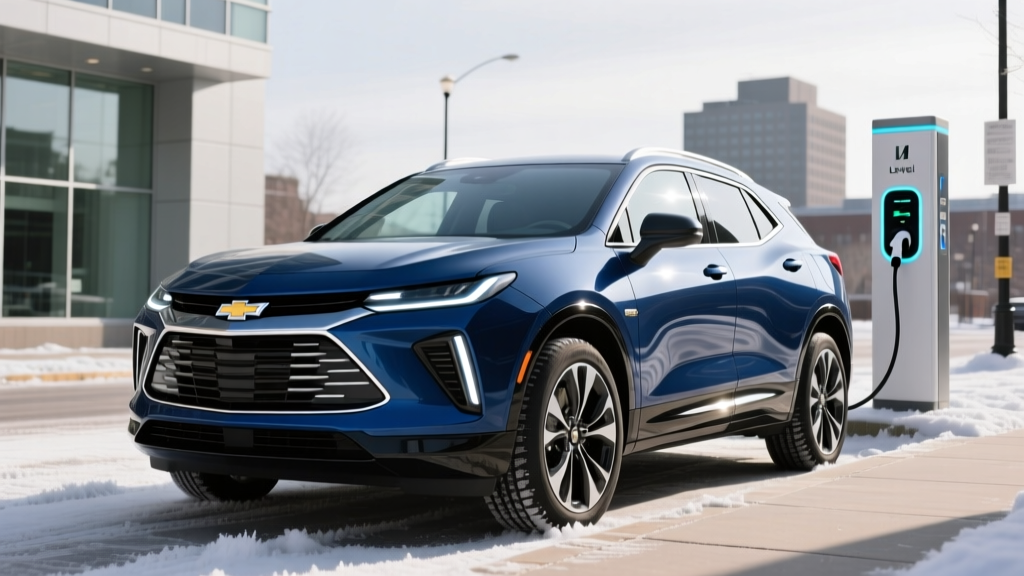
| Chevrolet Bolt EV | 2020–2023 | 65 (NMC) | 259 mi | $14,000–$22,000 |
| Chevrolet Bolt EUV | 2022–2023 | 65 (NMC) | 247 mi | $17,000–$24,000 |
| Nissan LEAF S | 2021–2023 | 40 (NMC) | 149 mi | $13,000–$19,000 |
| Nissan LEAF SV Plus | 2021–2023 | 62 (NMC) | 212 mi | $16,000–$23,000 |
| Hyundai Kona Electric | 2020–2022 | 64 (NMC) | 258 mi | $17,000–$24,500 |
| Kia Niro EV | 2020–2022 | 64 (NMC) | 239 mi | $16,500–$23,000 |
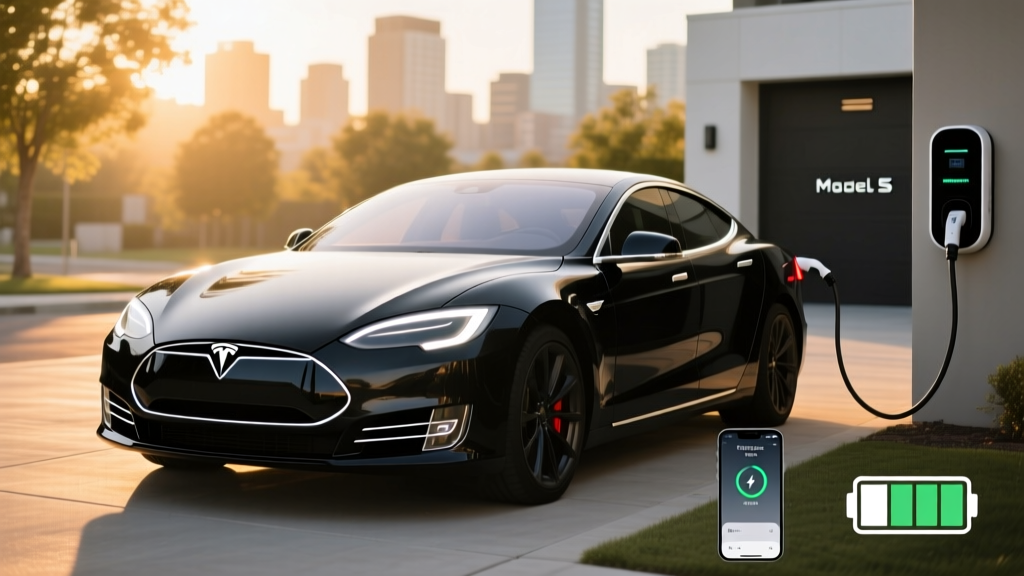
| Tesla Model 3 Std Range | 2019–2021 | 50–54 (NMC/LFP) | 240–272 mi | $18,000–$25,000 |
Real-world range caveat: EPA figures are measured under controlled conditions. Expect 10–15% less range at sustained highway speeds (70+ mph) and 20–30% reduction in sub-freezing temperatures. A used Bolt EV rated at 259 miles EPA may deliver 200–220 miles on a cold winter highway commute. Always factor in battery degradation on used vehicles — most 3-to-5-year-old EVs show 5–12% capacity loss depending on climate and charging habits.
5-Year Total Cost of Ownership: Used EV vs. Comparable Gas Car
To model real ownership costs, we're comparing a used 2022 Chevrolet Bolt EV (purchased at $18,500 before credit) against a used 2022 Honda Civic 2.0L (purchased at $19,000). Both vehicles are driven 12,000 miles per year for 5 years. Electricity is assumed at $0.14/kWh (national average for residential charging), and gasoline at $3.40/gallon.
| Cost Category | Used 2022 Bolt EV | Used 2022 Civic 2.0L |
|---|---|---|
| Purchase Price | $18,500 | $19,000 |
| Used EV Tax Credit (§25E) | −$4,000 | $0 |
| Net Purchase Cost | $14,500 | $19,000 |
| Fuel/Energy (5 yr / 60,000 mi) | $2,772 (3.0 mi/kWh) | $6,182 (33 MPG avg) |
| Maintenance (5 yr) | $1,400 | $3,200 |
| Insurance (5 yr) | $8,400 | $6,900 |
| Depreciation (est. resale at yr 5) | −$4,000 (sell for ~$8,500) | −$5,500 (sell for ~$11,500) |
| Net 5-Year Cost | $23,072 | $29,782 |
Net savings over 5 years: approximately $6,700 in favor of the used Bolt EV. The tax credit and fuel savings do the heavy lifting, while higher insurance and steeper EV depreciation partially offset those gains.
Charging vs. Gasoline: The Per-Mile Cost Reality
The single largest ongoing savings for EV owners comes from energy costs. Here's how the math works at current rates:
| Metric | Bolt EV (Home Charging) | Bolt EV (Public DCFC) | Honda Civic (Gas) |
|---|---|---|---|
| Energy Source | Residential electricity | Public fast charger | Unleaded regular |
| Rate | $0.14/kWh | $0.40/kWh | $3.40/gallon |
| Efficiency | 3.0 mi/kWh (120 MPGe) | 3.0 mi/kWh | 33 MPG combined |
| Cost per mile | $0.047 | $0.133 | $0.103 |
| Cost for 12,000 mi/yr | $554 | $1,596 | $1,236 |
The key insight: home charging is where the savings materialize. At $0.14/kWh, the Bolt EV costs less than half per mile compared to gasoline. However, if you rely exclusively on public DC fast charging at $0.35–$0.48/kWh, your energy cost can actually exceed what you'd pay for gasoline. This is why home Level 2 charging access is practically a prerequisite for EV ownership economics to work.
Check fueleconomy.gov for EPA-rated efficiency figures (kWh/100mi and MPGe) for any specific model you're considering.
Maintenance Savings: What You Actually Skip
EVs eliminate several routine maintenance items that gasoline vehicles require. Here's a realistic 5-year maintenance comparison:
| Maintenance Item | EV (Bolt) | Gas (Civic) |
|---|---|---|
| Oil changes (every 5K–10K mi) | Not required | $450–$750 (6–10 changes) |
| Transmission fluid | Not required (single-speed) | $150–$300 |
| Spark plugs | Not required | $200–$400 |
| Engine air filter | Not required | $75–$150 |
| Brake pads | $0–$200 (regen extends life 2–3×) | $400–$800 (1–2 replacements) |
| Cabin air filter | $50–$100 | $50–$100 |
| Tire rotation/replacement | $800–$1,200 (EVs wear tires ~15% faster) | $600–$1,000 |
| Coolant flush | $100–$150 | $100–$200 |
| 5-Year Total | $1,000–$1,650 | $2,025–$3,700 |
Regenerative braking is the unsung hero here. By using the electric motor to decelerate, the friction brakes are used far less frequently. Many EV owners report original brake pads lasting 80,000–100,000+ miles. The trade-off is tire wear: EVs are heavier and deliver instant torque, which accelerates tread wear by roughly 15% compared to equivalent gas vehicles.
Insurance: The Cost Most Buyers Overlook
EV insurance premiums run 15–25% higher than comparable gasoline vehicles, and this is the single biggest offset to EV ownership savings. Why?
- Higher repair costs: EV-specific components (battery packs, power electronics, high-voltage wiring) require specialized training and parts. A minor rear-end collision that would cost $2,500 to repair on a gas car can total an EV if battery damage is suspected.
- Total-loss thresholds: Insurers often declare EVs total losses at lower damage thresholds because battery replacement costs ($8,000–$20,000+) can exceed the vehicle's actual cash value on older models.
- Repair network limitations: Fewer body shops are certified for high-voltage EV repairs, increasing labor rates and turnaround time.
- Vehicle value: Even used EVs can carry higher premiums because replacement-part costs remain elevated.
For our Bolt EV example, expect annual premiums around $1,600–$1,800 versus $1,300–$1,500 for the Civic, depending on your state, driving record, and coverage level. Always get quotes from at least three insurers before purchasing — some companies (notably GEICO, State Farm, and Progressive) have narrowed their EV premium gap in recent years.
Depreciation: How Well Do Used EVs Hold Value?
EV depreciation has been volatile. Between 2023 and 2025, used EV values dropped sharply — in some cases 30–40% in a single year — driven by aggressive new-EV price cuts (especially from Tesla), rapidly improving new models making older ones feel obsolete, and lingering consumer concerns about battery longevity.
As of 2026, the market has stabilized somewhat, but EVs still depreciate faster than comparable gas vehicles in percentage terms:
- Typical 5-year-old EV retention: 35–45% of original MSRP
- Typical 5-year-old gas car retention: 45–55% of original MSRP
However, the depreciation story for a used EV buyer is more nuanced. You're purchasing after the steepest depreciation has already occurred. A 2022 Bolt EV that originally stickered at $26,500 and is now selling for $18,500 has already absorbed 30% depreciation. If you hold it for 5 more years and sell for $8,500, you've lost $10,000 — but after the $4,000 tax credit, your net depreciation cost drops to $6,000, which is competitive with many gas vehicles.
Battery health is the wildcard. A used EV with a verified State of Health (SoH) above 90% will command a premium at resale. Request a battery health report from the dealer or use an OBD-II diagnostic tool to check capacity before buying. Most manufacturers warranty the battery at 70% capacity retention for 8 years/100,000 miles, and that warranty transfers to subsequent owners.
State, Local, and Utility Incentives
Important: State and local incentives vary significantly by jurisdiction and change frequently. Always verify current programs with your state energy office or the Alternative Fuels Data Center. Below are examples, not a comprehensive list.
Beyond the federal used EV credit, many states and utilities stack additional incentives:
- Colorado: Up to $3,500 state tax credit for used EVs under $25,000 (stackable with federal)
- California: Clean Cars 4 All program offers up to $9,500 for low-income buyers trading in older gas cars for used EVs
- New York: Drive Clean Rebate (check current availability — funding varies by fiscal year)
- Utility rebates: Many electric utilities offer $250–$1,000 rebates for purchasing a used EV, plus additional rebates ($300–$700) for installing a home Level 2 charger
- HOV lane access: Several states (CA, CO, FL, GA, MD, MN, NJ, NY, VA, WA) offer solo HOV lane access for EVs — sometimes including used EVs, sometimes not
- Registration fee offsets: Some states waive or reduce EV registration surcharges for lower-income buyers
A buyer in Colorado purchasing a $20,000 used Bolt EV could potentially stack: $4,000 federal credit + $3,500 state credit + $500 utility charger rebate = $8,000 in total incentives, bringing the effective purchase price to $12,000. This is where the used EV value proposition becomes extraordinary — but it requires being in the right jurisdiction.
Decision Framework: Is a Used EV Right for You?
Choose a used EV with the §25E credit if:
- Your income falls under the AGI caps ($75K single / $150K joint)
- You have reliable home charging access (garage or driveway with a 240V outlet)
- Your daily commute is under 80 miles round-trip (covering range even in cold weather)
- You drive 10,000+ miles per year (higher mileage = more fuel savings)
- You can verify battery State of Health before purchase
Stick with a used gas car or PHEV if:
- You lack home charging access and would rely entirely on public chargers
- You regularly drive 200+ miles one-way in rural areas with sparse charging infrastructure
- You live in an area with extreme cold (below 0°F) and no garage
- Your insurance quotes come back more than 30% higher for the EV
- The specific used EV you're considering has a battery SoH below 85%
Frequently Asked Questions
Can I claim the used car EV tax credit more than once?
No. The §25E credit is limited to one claim per taxpayer every three years. If you claimed it in 2024, you cannot claim it again until 2027 at the earliest.
Does the used EV tax credit work for plug-in hybrids?
Yes, as long as the PHEV has a battery capacity of at least 7 kWh and meets all other eligibility requirements (price under $25,000, model year at least 2 years old, etc.). Qualifying PHEVs include models like the Toyota RAV4 Prime, Chrysler Pacifica Hybrid, and Ford Escape PHEV — though many of these exceed the $25,000 price cap on the used market.
What if I don't owe enough in taxes to use the full credit?
The §25E credit is non-refundable, meaning it can only reduce your tax liability to zero — it won't generate a refund beyond that. However, the point-of-sale transfer option solves this: you can transfer the credit to the dealer for an immediate price reduction regardless of your tax situation, as long as you meet the income eligibility requirements.
How do I verify a used EV's battery health before buying?
Ask the dealer for a battery State of Health (SoH) report. Many dealerships with EV service departments can pull this from the vehicle's onboard diagnostics. Alternatively, you can use a third-party OBD-II scanner (such as those from OBDeleven or LeafSpy for Nissan LEAFs) to read the battery's current maximum capacity versus its original rated capacity. Aim for 90% SoH or higher on a 3-to-5-year-old vehicle.
Are used Tesla Model 3s eligible for the credit?
Some are. A 2019–2021 Model 3 Standard Range that sells for under $25,000 from a licensed dealer can qualify, provided you meet the income requirements and haven't claimed the credit in the past 3 years. The vehicle must be at least 2 model years old — so in 2026, a 2024 or older model year qualifies. Check the specific VIN with the dealer, as Tesla's MSRP history matters for the price-cap calculation.
Does the federal used EV credit affect my state tax return?
The federal §25E credit applies only to your federal income tax. It does not reduce your state taxable income in most states, though rules vary. Consult a tax professional for your specific situation, and verify current-year rules on irs.gov before filing.