If you're searching for a 2016 electric vehicle to buy used in 2026, you're likely drawn by the low entry price — many 2016 EVs now trade between $6,000 and $14,000. But the real question is whether a decade-old battery pack still delivers usable range and reliable daily service. Here's the direct answer: a well-maintained 2016 Nissan LEAF, Chevrolet Spark EV, or BMW i3 can still serve as a capable city commuter with 60–90 miles of real-world range, provided you verify battery State of Health (SoH) before purchase and have access to home Level 2 charging. These cars will not road-trip like a modern 300-mile EV, and DC fast-charging speeds are painfully slow by today's standards. But for the right buyer — short commutes, home charging, second-car duty — a 2016 electric car can cost less than $1,500 per year to operate.
Quick Verdict: Is a 2016 Electric Car Worth It in 2026?
Yes, but only if: you can charge at home (Level 2), your daily driving is under 50 miles round-trip, you live in a moderate climate, and you verify the battery retains at least 75% of original capacity. Avoid if you need highway road-trip capability, live in extreme cold without a garage, or rely solely on public charging.
Which 2016 Electric Models Are Still Worth Considering?
The 2016 model year was a transitional period for EVs. Most mainstream models carried small battery packs by today's standards — typically 20–30 kWh — but a few stood out. Here are the most common 2016 electric vehicles you'll find on the used market, with their original EPA-rated range and what to expect from a 10-year-old battery today.
| 2016 Model | Battery (kWh usable) | EPA Range (New) | Est. Range Today (80% SoH) | DC Fast Charge (Peak kW) | Typical Used Price (2026) |
|---|---|---|---|---|---|
| Nissan LEAF S (24 kWh) | 22 kWh | 84 mi | ~55–65 mi | 50 kW (CHAdeMO) | $6,000–$8,500 |
| Nissan LEAF SV/SL (30 kWh) | 28 kWh | 107 mi | ~75–85 mi | 50 kW (CHAdeMO) | $7,500–$10,000 |
| Chevrolet Spark EV | 19 kWh | 82 mi | ~55–65 mi | 50 kW (CCS) | $5,500–$7,500 |
| BMW i3 (60 Ah) | 18.8 kWh | 81 mi | ~55–65 mi | 50 kW (CCS) | $9,000–$13,000 |
| BMW i3 REx (range extender) | 18.8 kWh + gas | 72 mi EV + ~80 mi gas | ~50–60 mi EV | 50 kW (CCS) | $10,000–$14,000 |
| VW e-Golf | 21.2 kWh | 83 mi | ~60–70 mi | 50 kW (CCS) | $8,000–$11,000 |
| Fiat 500e | 21 kWh | 87 mi | ~60–70 mi | None (L2 only) | $6,000–$8,000 |
| Tesla Model S 60/75/90 | 60–85 kWh | 208–294 mi | ~150–230 mi | 120 kW (NACS) | $16,000–$28,000 |
The Tesla Model S is the clear outlier — its larger battery means even with 15–20% degradation, you're looking at 150+ miles of range and access to the Supercharger network (with a CCS adapter). But it also commands a higher price and carries more expensive repair risks (air suspension, drive unit, MCU). The more affordable options — LEAF, Spark EV, e-Golf — are best understood as city runabouts, not primary vehicles for long commutes.
Battery Degradation: The Single Most Important Factor
When buying any 2016 electric car, battery State of Health (SoH) matters more than odometer reading. Lithium-ion batteries degrade through two mechanisms: calendar aging (time and temperature exposure) and cycle wear (charge/discharge cycles). A 10-year-old pack will have experienced significant calendar aging regardless of mileage.
Here's what real-world data tells us about 2016-era battery packs at the 10-year mark:
- Nissan LEAF (24 kWh, passive air cooling): Most vulnerable to degradation, especially in hot climates. Phoenix and Las Vegas LEAFs commonly show 65–75% SoH at 10 years. Pacific Northwest and moderate-climate examples fare better at 75–85% SoH. The lack of active thermal management is the LEAF's biggest long-term liability.
- BMW i3 (Samsung SDI cells, active cooling): Generally holds 78–88% SoH at 10 years. The active thermal management system protects the pack more effectively.
- VW e-Golf (active cooling): Similar to the i3, typically 78–85% SoH at 10 years.
- Chevrolet Spark EV (active cooling): Good degradation performance, often 80–88% SoH.
- Tesla Model S (active liquid cooling): Wide variance. Early 60 kWh and 85 kWh packs showed 10–20% degradation by year 10, but some early 85 kWh packs experienced cell-balancing issues and premature failure. The 90 kWh pack generally performs better.
Common Misconceptions About Older EV Batteries
| Myth | Fact |
|---|---|
| "A 10-year-old EV battery is dead and needs a $15,000 replacement." | Most 2016 packs retain 70–85% capacity. Replacement is rarely needed — you just live with reduced range. Full replacements cost $5,000–$12,000 depending on model, and refurbished packs are increasingly available for $3,000–$6,000. |
| "Low mileage means the battery is in great shape." | Calendar aging occurs regardless of use. A 2016 LEAF with 20,000 miles stored in an Arizona parking lot may have worse SoH than one with 80,000 miles garaged in Portland. |
| "You can't check battery health without a dealer." | Apps like Leaf Spy (Nissan), BimmerCode (BMW), and OBDeleven (VW) can read SoH directly from the battery management system for under $30 in hardware. |
| "Fast charging ruins old batteries." | Occasional DC fast charging causes minimal additional wear. The bigger degradation factors are sustained high SoC storage, extreme heat, and deep discharges. |
How to Verify Battery Health Before Buying
Before any purchase, insist on reading the battery SoH. For the Nissan LEAF, buy a compatible OBD-II dongle and use the Leaf Spy Pro app to check the "Hx" (health) value — anything above 75% is acceptable for city use. For the BMW i3, a BimmerCode or Carly adapter reveals SoH percentage. For Tesla, the car's own energy graph and a calculated kWh measurement (charge from 10% to 100% and note kWh added) gives a practical SoH estimate. Always verify that the reported SoH aligns with the dashboard range estimate at full charge.
Charging a 2016 Electric Car: What's Changed and What Hasn't
The charging landscape has transformed dramatically since 2016, but the cars themselves haven't. Here's what you need to know about plugging in a decade-old EV.
| Charging Level | Power (kW) | Time to Full (20–25 kWh pack) | Miles Added per Hour | Notes for 2016 EVs |
|---|---|---|---|---|
| Level 1 (120V household) | 1.2–1.4 kW | 16–22 hours | 3–5 mi/hr | Included cord set works but is impractical for daily use on depleted packs |
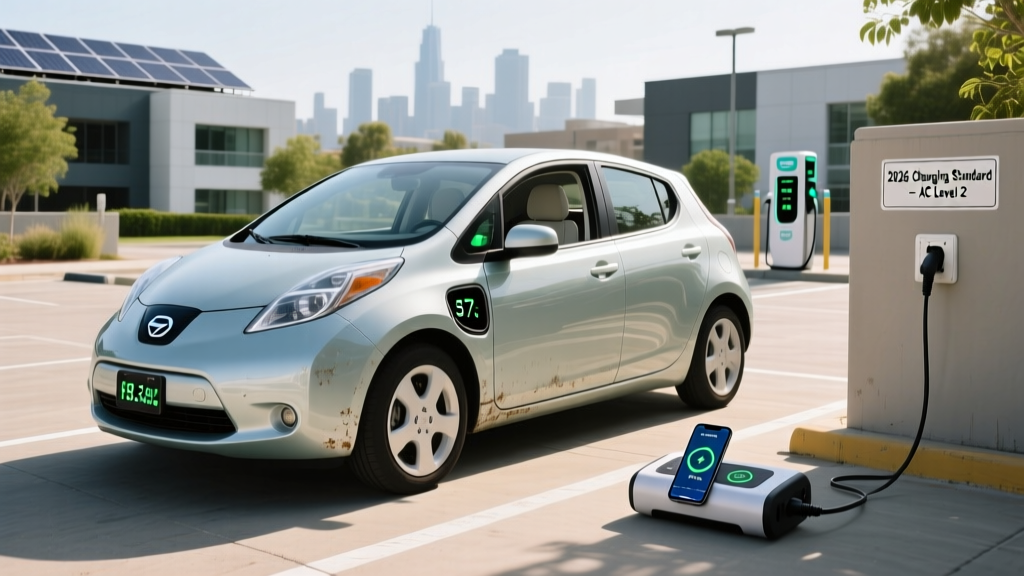
| Level 2 (240V home/public) | 3.3–7.2 kW | 3–7 hours | 12–25 mi/hr | Primary charging method; most 2016 EVs have 3.3 or 6.6 kW onboard chargers |
| DC Fast Charge | 24–50 kW (typical) | 30–45 min (10–80%) | 80–150 mi/hr | Many 2016 EVs cap at 50 kW; Tesla Model S can accept up to 120 kW on Superchargers |
Connector compatibility is a growing issue. Most 2016 EVs use either CHAdeMO (Nissan LEAF) or CCS1 (Spark EV, e-Golf, BMW i3). The industry has largely standardized on NACS (Tesla's connector) for new vehicles starting in 2025. CHAdeMO infrastructure is shrinking in the US, which is a real concern for LEAF buyers. CCS networks (Electrify America, EVgo) remain widely available but are gradually adding NACS cables. Tesla Model S owners retain native Supercharger access.
Home charging is practically mandatory for a 2016 electric car. With 60–85 miles of range, you need to start each morning with a full battery. A Level 2 home charger (240V, 32–40 amp circuit) installed by a licensed electrician typically costs $800–$2,000 including equipment, depending on panel proximity and local permit fees. If your electrical panel needs an upgrade from 100A to 200A service, add $1,500–$3,000.
Real Costs: 2016 Electric Car vs. Comparable Gas Car
Let's compare what it actually costs to own and operate a 2016 Nissan LEAF SV versus a 2016 Honda Civic — two common used-car choices in the $8,000–$10,000 range — over a typical year of 10,000 miles of city-heavy driving.
| Annual Cost | 2016 Nissan LEAF SV | 2016 Honda Civic (gas) |
|---|---|---|
| Purchase Price (2026 used market) | $8,500 | $9,500 |
| Fuel / Electricity (10,000 mi) | $360 (home L2, $0.13/kWh, 4 mi/kWh) | $1,200 (32 MPG combined, $3.85/gal) |
| Maintenance | $250 (cabin filter, brake fluid, tire rotation) | $650 (oil changes, filters, spark plugs at interval) |
| Insurance (avg.) | $1,100 | $1,050 |
| Estimated Repairs | $300 (12V battery, suspension wear) | $500 (aging components) |
| Total Annual Operating Cost | ~$2,010 | ~$3,400 |
The LEAF saves roughly $1,390 per year in operating costs, primarily through fuel and maintenance savings. Over a 5-year ownership period, that's approximately $6,950 in savings — nearly covering the purchase price. According to EPA data on fuel economy, the efficiency gap between electric and gasoline drivetrains remains the single largest cost differentiator in used-vehicle ownership.
However, there are cost risks unique to older EVs:
- Traction battery failure: Rare but expensive. A refurbished 24 kWh LEAF pack costs $4,000–$6,000 installed. The risk is lower on actively-cooled packs (BMW, VW, GM).
- Onboard charger failure: Known issue on some 2013–2017 LEAFs. Replacement: $800–$1,500.
- 12V auxiliary battery: EVs still use a conventional 12V battery for accessories. Expect replacement every 3–5 years ($150–$250).
- CHAdeMO network shrinkage: If you rely on DC fast charging, fewer stations means longer detours.
Used EV Tax Credits and Incentives in 2026
The federal IRS §25E used clean vehicle credit offers up to $4,000 or 30% of the sale price (whichever is less) for qualifying used EVs purchased through a licensed dealer. For a $8,500 LEAF, that means a potential $2,550 credit, bringing your effective cost to under $6,000.
§25E Used EV Credit Eligibility (2026)
- Sale price cap: Vehicle must sell for $25,000 or less
- Vehicle age: Must be at least 2 model years old (2016 qualifies)
- Buyer income limits: AGI ≤ $75,000 single / $112,500 head of household / $150,000 joint
- Dealer sale required: Private-party sales do not qualify
- First transfer: Credit applies to the first qualified resale since August 16, 2022
- Point-of-sale transfer: You can apply the credit as an immediate down-payment reduction at the dealer
- Claim frequency: Once every 3 years per buyer
Always verify eligibility with a tax professional before relying on the credit. Rules may shift, and your specific tax situation matters. Many state and local incentives also apply — check the Alternative Fuels Data Center for your jurisdiction.
Decision Framework: Should You Buy a 2016 Electric Car?
If-Then Buying Guide
Buy a 2016 electric car IF:
- Your daily round-trip commute is under 40 miles (leaving a 20+ mile buffer on a degraded pack)
- You can install or already have Level 2 home charging (240V)
- You live in a moderate climate (avoid extreme heat states for passively-cooled LEAFs)
- This is a second vehicle or dedicated commuter car
- You can verify battery SoH ≥ 75% before purchase
- You want to minimize operating costs and qualify for the used-EV tax credit
Look elsewhere (newer EV or PHEV) IF:
- You regularly drive more than 60 miles in a day
- You lack reliable home or workplace charging access
- You need road-trip capability (200+ mile range, fast DC charging)
- You live in a region with harsh winters and no garage (expect 30–40% range loss at 20°F)
- You want modern ADAS features (automatic emergency braking, lane-keeping) — most 2016 EVs lack these
- You need to tow anything
When a PHEV Might Be the Smarter Used Buy
If your situation falls between the two columns above, consider a used plug-in hybrid instead. A 2016 Chevrolet Volt (53 miles EV range, 42 MPG gas) or a 2016 Toyota Prius Prime (25 miles EV, 54 MPG) gives you electric commuting with gas-engine backup. You eliminate range anxiety entirely while still cutting fuel costs by 50–70% for city driving. The trade-off is higher maintenance complexity (two powertrains) and no eligibility for the used-EV credit on some PHEV models (check IRS qualification lists).
First-Time EV Buyer Checklist: What to Inspect on a 2016 Model
Before signing paperwork on any 2016 electric car, run through this checklist:
- Read battery SoH via OBD-II app — insist on seeing the number, not just the seller's word
- Check for battery warranty remaining — federal law mandates 8 years/100,000 miles on the traction battery; a 2016 model's warranty expired in 2024 unless extended. Verify any transferable extended coverage
- Test all charging ports — bring a J1772 adapter for Level 2 and confirm the port latch engages cleanly
- Inspect the charging cord — the included Level 1 EVSE often shows wear; replacement costs $200–$400
- Check tire age and wear — EVs wear tires faster due to instant torque and heavier weight; 10-year-old tires must be replaced regardless of tread ($500–$800 for a set)
- Test regenerative braking — it should feel progressive and consistent, not grabby or intermittent
- Verify software updates — some 2016 models received battery management firmware updates that improve longevity; check with a dealer
- Get a pre-purchase inspection from a shop experienced with EVs, not just a generic mechanic
Frequently Asked Questions
Is a 2016 Nissan LEAF safe to drive in 2026?
The 2016 LEAF earned a "Good" rating in most IIHS crash tests and includes standard stability control and airbags. However, it lacks modern automatic emergency braking (AEB) and lane-keeping assist. It's safe for city driving but doesn't match the active-safety technology of newer vehicles. Check IIHS ratings for the 2016 LEAF for full details.
How much does it cost to replace a 2016 EV battery?
Battery replacement costs vary widely by model. A refurbished 24 kWh Nissan LEAF pack runs $4,000–$6,000 installed. A BMW i3 pack replacement is $6,000–$10,000. Tesla Model S packs range from $8,000–$15,000 depending on capacity. However, most 2016 packs are lasting well beyond initial projections — replacement is the exception, not the rule, when SoH is verified before purchase.
Can I road-trip in a 2016 electric car?
Technically yes, but it's impractical for most models. A 2016 LEAF with 65 miles of range and 50 kW CHAdeMO charging means stopping every 50–60 miles for 30–40 minutes — and CHAdeMO chargers are increasingly rare. The Tesla Model S is the exception: with 150–200+ miles of range and Supercharger access, road trips are feasible, though still slower than in a modern EV with 300+ mile range and 250 kW charging.
Does cold weather destroy the range of a 2016 EV?
Cold weather significantly reduces range in any EV, and older packs with less capacity have less buffer to absorb the hit. At 20°F, expect 30–40% range reduction — a LEAF with 65 miles of normal range may deliver only 40–45 miles. Preconditioning the battery while plugged in helps, and a garage makes a substantial difference. If you live in Minnesota, North Dakota, or similar climates, a 2016 EV with under 80 miles of range is a risky daily driver in winter.
Is home charging installation worth it for a cheap used EV?
Absolutely. A $1,200–$2,000 Level 2 home charging installation pays for itself within 18–24 months through fuel savings alone, and it transforms the ownership experience. Without home charging, a 60-mile-range EV becomes a constant logistical puzzle. If you can't install home charging (apartment, street parking), a 2016 EV is not recommended — look at a hybrid or PHEV instead.