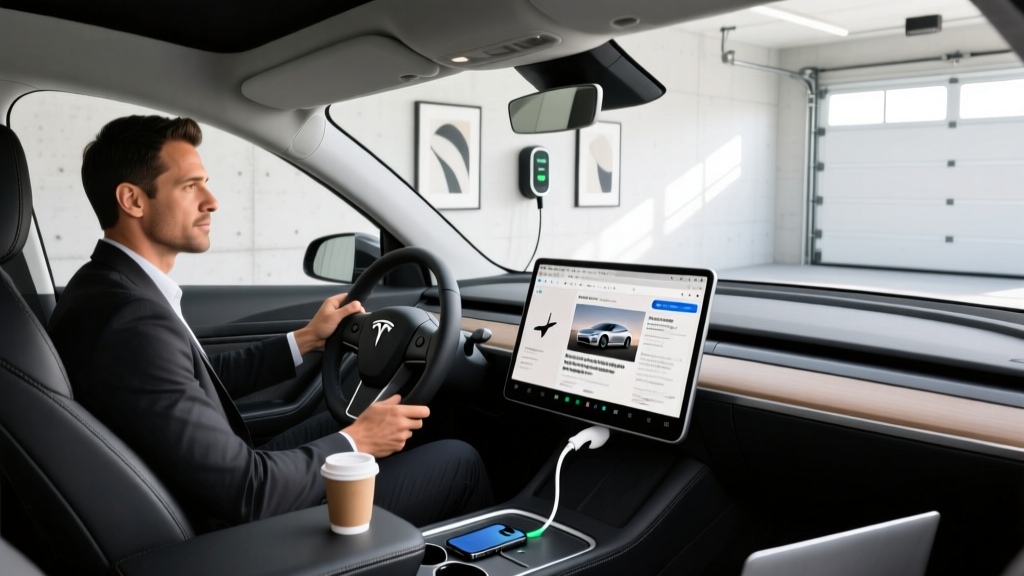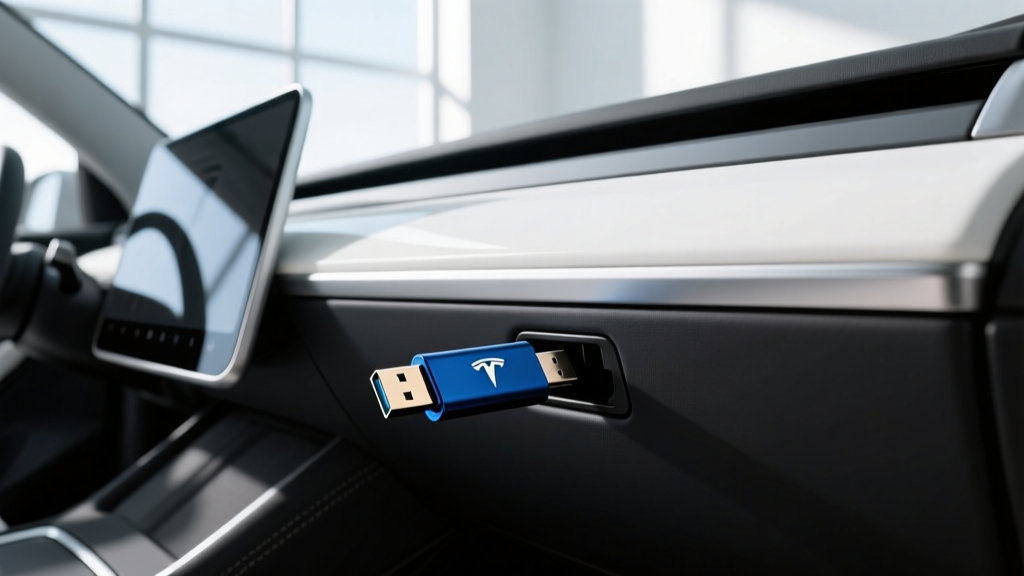
If you own a Tesla Model 3, one of the first accessories you'll want is a reliable USB drive for Sentry Mode and the built-in dashcam. Unlike traditional dashcams that record to internal storage, Tesla's system relies on an external USB drive to store video clips from all eight cameras. Pick the wrong drive and you'll face corrupted footage, dropped recordings, or sluggish playback. This guide covers exactly which USB drives work best for the Model 3, how to format and configure them, and — because you're evaluating the car holistically — a complete 2026 Tesla Model 3 spec and ownership breakdown.
Why the Right USB Drive Matters for Tesla Model 3
Tesla's Sentry Mode and dashcam system writes data continuously while you drive (dashcam) and whenever motion is detected while parked (Sentry Mode). That's a write-heavy workload that destroys cheap, consumer-grade thumb drives within months. The system records from up to eight cameras simultaneously, generating roughly 1–2 GB of data per hour of driving. Sentry Mode can easily add another 1–3 GB overnight in a busy parking lot.
The Model 3 (2024 refresh and later, including the 2026 model year) uses USB-C ports in the front center console and rear passenger area. For dashcam and Sentry Mode, Tesla requires the drive to be plugged into one of the front USB-C ports (or the glovebox USB port if your vehicle is so equipped). Rear ports are for device charging only and do not support data for dashcam functions.
Minimum USB Drive Requirements
- Capacity: 64 GB minimum; 128 GB or 256 GB recommended for multi-day Sentry Mode coverage
- Interface: USB-C (USB 3.0 or faster) — USB-A drives require an adapter and may not sustain write speeds
- Write speed: Sustained sequential write of at least 20 MB/s; 50+ MB/s preferred
- Endurance: High-endurance or industrial-grade flash rated for continuous write cycles
- Format: exFAT (Tesla's required filesystem; the car can format it for you on first insertion)
- Operating temperature: Rated for at least -13°F to 185°F (-25°C to 85°C) — cabin temperatures in summer can exceed 140°F
Top USB Drives for Tesla Model 3 Sentry Mode & Dashcam
Based on sustained write performance, thermal endurance, and real-world Tesla owner reports, these are the drives that consistently perform well in the Model 3 environment:
| Drive | Capacity | Sustained Write | Endurance Rating | Estimated Price |
|---|---|---|---|---|
| Samsung BAR Plus (USB-C variant) | 256 GB | ~60 MB/s | Consumer (moderate) | $28–$35 |
| SanDisk High Endurance | 128 GB (microSD + USB-C adapter) | ~40 MB/s | High (dashcam-rated) | $20–$28 |
| Samsung PRO Endurance (microSD + adapter) | 256 GB | ~50 MB/s | Very High (up to 140,000 hrs) | $35–$45 |
| Transcend High Endurance microSD + adapter | 128 GB | ~35 MB/s | High (dashcam-rated) | $18–$25 |
| Samsung FIT Plus (USB-A + adapter) | 256 GB | ~55 MB/s | Consumer (moderate) | $25–$32 |
Our pick for most owners: The Samsung PRO Endurance 256 GB microSD paired with a quality USB-C card reader. It's designed specifically for continuous-recording applications, handles thermal stress well, and 256 GB provides roughly 5–7 days of Sentry Mode clips before the system overwrites the oldest footage. The per-gigabyte cost is low, and replacement is simple if the card eventually wears out.
How to Set Up Your USB Drive in the Model 3
- Insert the drive into a front USB-C port or the glovebox USB port.
- On the touchscreen, go to Controls > Safety > Dashcam and tap Format USB Drive. This creates the required
TeslaCamfolder structure automatically. - Enable Sentry Mode under Controls > Safety > Sentry Mode. You can set exclusions for Home, Work, or Favorites.
- Review clips via Controls > Dashcam Viewer on the touchscreen, or remove the drive and view files on a computer (clips are organized into RecentClips, SavedClips, and SentryClips folders).
2026 Tesla Model 3: Full Spec & Ownership Profile
Whether you're researching USB drives because you already own a Model 3 or because you're evaluating a purchase, here's the complete picture of the current-generation vehicle.
| Specification | Model 3 RWD | Model 3 Long Range AWD | Model 3 Performance |
|---|---|---|---|
| EPA Range | 272 mi | 363 mi | 315 mi |
| Battery (usable) | ~57.5 kWh (LFP) | ~75 kWh (NMC) | ~75 kWh (NMC) |
| Drivetrain | Rear-Wheel Drive | Dual-Motor AWD | Dual-Motor AWD |
| Horsepower | 271 hp | 346 hp | 510 hp |
| 0–60 mph | 5.8 sec | 4.2 sec | 2.9 sec |
| Max DC Fast Charge | 170 kW | 250 kW | 250 kW |
| 10–80% DC Time | ~25 min | ~18 min | ~18 min |
| Level 2 Home Charging | ~30 mi/hr (11.5 kW) | ~44 mi/hr (11.5 kW) | ~44 mi/hr (11.5 kW) |
| MPGe (combined) | 132 MPGe | 130 MPGe | 118 MPGe |
| Efficiency | 25 kWh/100mi | 26 kWh/100mi | 29 kWh/100mi |
| Cargo Volume | 23 cu ft (trunk + frunk combined) | ||
| Rear Legroom | 35.2 in | ||
| Base MSRP | $38,990 | $45,990 | $53,990 |
Charging: Home and DC Fast-Charge Reality
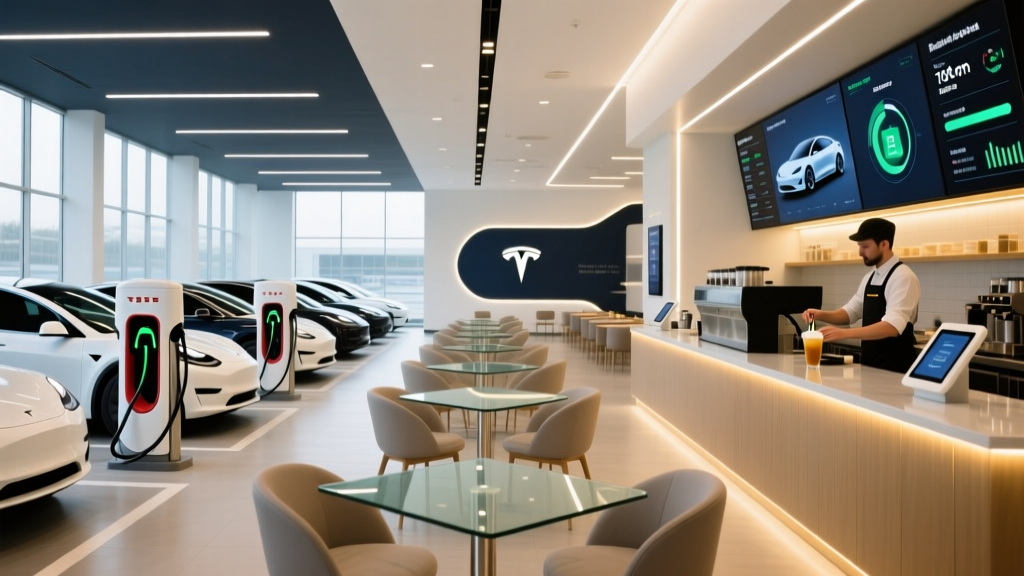
The 2026 Model 3 uses the NACS (North American Charging Standard) connector natively — the same connector used across Tesla's Supercharger network, which now exceeds 25,000 stalls in North America. This remains a significant infrastructure advantage, though non-Tesla NACS chargers from operators like Electrify America and EVgo are expanding rapidly.
| Charging Method | Power | Speed (Approx.) | Use Case |
|---|---|---|---|
| Level 1 (120V outlet) | ~1.4 kW | ~5 mi/hr | Emergency / overnight trickle |
| Level 2 (240V, 48A Wall Connector) | 11.5 kW | 30–44 mi/hr | Daily home charging |
| DC Fast Charge (Supercharger V3/V4) | Up to 250 kW | 10–80% in ~18 min | Road trips |
Charging curve reality check: The Model 3 Long Range and Performance peak at 250 kW only in the 10–30% state-of-charge window. From 30–60%, expect ~150–180 kW. Above 80%, the rate drops sharply to ~40–60 kW to protect battery health. This is why Tesla recommends charging to 80% for daily use on NMC batteries and why the 10–80% metric is more meaningful than peak kW alone. The LFP battery in the RWD model can and should be charged to 100% regularly — Tesla recommends this for accurate state-of-charge calibration.
For home installation, a Tesla Wall Connector on a 60-amp circuit (48A continuous) costs roughly $500–$1,500 installed depending on your panel proximity and whether a subpanel upgrade is needed. The Wall Connector itself retails for ~$420.
Pricing, Trims, and Federal Tax Credit Eligibility
The 2026 Model 3 lineup starts at $38,990 for the RWD and tops out at $53,990 for the Performance before destination fees and options. Here's how the federal tax credit applies:
- Up to $7,500 for qualifying new EVs, available as a point-of-sale rebate (transferred to the dealer).
- MSRP cap: Sedans must be ≤$55,000. All Model 3 trims qualify.
- Income cap: Adjusted gross income must not exceed $150,000 (single), $225,000 (head of household), or $300,000 (joint).
- Battery sourcing: Critical minerals and battery components must meet phased-in domestic-content and FEOC (Foreign Entity of Concern) thresholds that tighten annually. Verify current-year compliance on IRS.gov before purchasing.
| Trim | Base MSRP | Est. After $7,500 Credit | Destination |
|---|---|---|---|
| RWD | $38,990 | ~$32,490 | $1,390 |
| Long Range AWD | $45,990 | ~$39,890 | $1,390 |
| Performance | $53,990 | ~$47,890 | $1,390 |
Tech, Safety, and Driver Assistance
The refreshed Model 3 (codenamed "Highland" and carried forward into 2026) features a markedly quieter cabin, revised suspension tuning, ventilated front seats, ambient lighting, and a rear touchscreen for passengers. The 15.4-inch front touchscreen handles all vehicle controls — there are no physical stalks or buttons for turn signals or gear selection (these are on the steering wheel and touchscreen, respectively).
Driver assistance: All Model 3s include Basic Autopilot (adaptive cruise control + lane centering). This is an SAE Level 2 system — meaning the driver must remain fully engaged, hands on the wheel, and eyes on the road at all times. Full Self-Driving (Supervised) is available as a $8,000 add-on (or $99/month subscription) and adds automatic lane changes, traffic light/stop sign control, and city street navigation. Despite the name, FSD is also SAE Level 2 and requires constant driver supervision. It is not autonomous driving.
Safety ratings remain strong: the Model 3 earned the IIHS Top Safety Pick+ designation and a 5-star overall rating from NHTSA.
Pros, Cons, and Who Should Buy the Model 3
- Class-leading efficiency (25–29 kWh/100mi)
- Access to 25,000+ Tesla Superchargers (NACS native)
- Strong real-world range on Long Range AWD (363 mi EPA)
- Excellent safety ratings (IIHS TSP+, NHTSA 5-star)
- Over-the-air updates continuously add features
- Low maintenance cost (no oil, minimal brake wear with regen)
- No physical turn signal stalk — steering-wheel buttons take adaptation
- Rear-seat headroom is tight for passengers over 6'2"
- FSD ($8,000) remains Level 2 despite the "self-driving" name
- Sentry Mode range drain adds up during long-term parking
- Insurance premiums run 15–30% higher than comparable gas sedans
- Ride can feel firm on broken pavement (even post-refresh)
Best for: Commuters and small families who want a high-efficiency sedan with best-in-class charging infrastructure access. The Long Range AWD is the sweet spot for road-trippers who need 300+ miles of real-world range. The RWD with its LFP battery suits urban drivers who can charge at home nightly and want a lower entry price with excellent battery longevity.
Consider alternatives if: You need more rear-seat space (look at the Hyundai Ioniq 6 or BMW i4), you want a physical turn signal stalk, or you regularly tow (the Model 3 is not rated for towing).
Warranty and Battery Longevity
Tesla provides the following warranty coverage for the 2026 Model 3:
- Basic vehicle: 4 years / 50,000 miles
- Battery & drive unit (RWD, LFP): 8 years / 100,000 miles, minimum 70% capacity retention
- Battery & drive unit (Long Range/Performance, NMC): 8 years / 120,000 miles, minimum 70% capacity retention
LFP batteries in the RWD model degrade more slowly than NMC and tolerate 100% state-of-charge storage better, making them a strong choice for high-mileage commuters. Real-world data from fleet operators suggests LFP packs retain 90%+ capacity at 100,000 miles with normal use. NMC packs in the Long Range and Performance models typically show 5–10% degradation at 100,000 miles, with the curve flattening significantly after the initial break-in period.
Frequently Asked Questions
What size USB drive do I need for Tesla Sentry Mode?
A 128 GB drive handles about 3–4 days of typical Sentry Mode and dashcam use. A 256 GB drive extends that to roughly 5–7 days. The system automatically overwrites the oldest clips when full, so larger drives simply give you a longer lookback window.
Can I use a USB-A flash drive in the 2026 Model 3?
The 2026 Model 3 has USB-C ports only. You can use a USB-A drive with a USB-A-to-USB-C adapter, but ensure the adapter supports data transfer (not just charging) and that the drive meets sustained write-speed requirements.
What is the real-world range of the Tesla Model 3?
The Long Range AWD's 363-mile EPA rating translates to roughly 290–320 miles at highway speeds (70–75 mph) in mild weather, and 250–280 miles in freezing conditions. The RWD's 272-mile EPA rating yields approximately 210–240 miles on the highway in winter.
How fast does the Model 3 charge at home?
On a 240V/48A Tesla Wall Connector, the Model 3 adds 30–44 miles of range per hour depending on the trim. A full overnight charge (8 hours) replenishes 240–350 miles — more than enough for any daily commute.
Does the 2026 Tesla Model 3 qualify for the federal EV tax credit?
All Model 3 trims fall under the $55,000 sedan MSRP cap. Eligibility depends on your income (≤$150K single / ≤$300K joint) and the vehicle's battery-sourcing compliance with current-year FEOC rules. Check the IRS qualified vehicle list before purchasing, as sourcing requirements tighten periodically.
Is the Tesla Model 3 worth buying vs. the Hyundai Ioniq 6 or BMW i4?
The Model 3 wins on charging infrastructure (Supercharger network), software ecosystem, and efficiency. The Ioniq 6 offers more rear-seat space and a conventional driving experience with physical controls. The BMW i4 provides a more premium interior and traditional luxury feel. If Supercharger access and over-the-air updates matter most, the Model 3 remains the segment benchmark.