The Short Answer on UPS EV Trucks
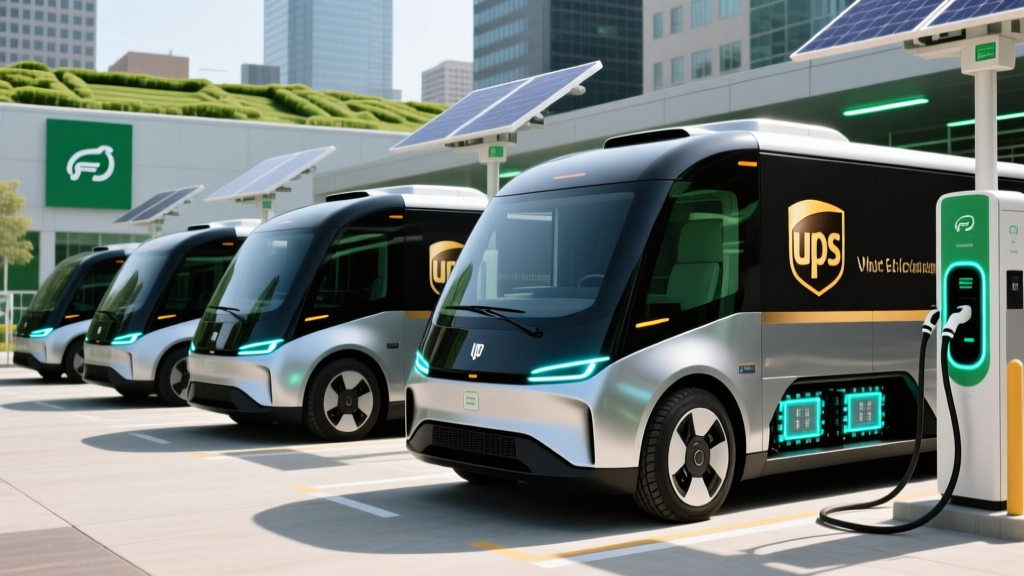
UPS operates one of the largest electric commercial vehicle fleets in North America, with over 1,000 battery-electric delivery trucks deployed as of early 2026 — primarily Class 5–6 step vans from Workhorse, Lightning eMotors, and TELO. These UPS EV trucks typically carry 150–200 kWh battery packs (NMC chemistry), achieve 100–150 miles of real-world range, and charge at depot-based Level 2 (19.2 kW) or DC fast chargers (up to 150 kW). Compared to diesel equivalents, UPS estimates roughly 40–50% lower per-mile energy costs and dramatically reduced maintenance spend, though upfront vehicle cost remains 2–3× higher. For everyday EV buyers, the bigger story is how UPS's depot charging buildout is accelerating public charging infrastructure in urban corridors.
Why UPS Is Going Electric — and Why It Matters to You
UPS has committed to sourcing 40% of its ground fleet fuel from alternatives by 2025 and achieving carbon neutrality by 2050. The company's EV rollout isn't just corporate sustainability theater — it's driven by hard economics. A diesel delivery truck averages 6–8 MPG in stop-and-go urban routes. An electric equivalent operates at roughly 1.8–2.2 kWh/mile, which at commercial electricity rates of $0.10–$0.14/kWh translates to $0.18–$0.31 per mile in energy cost versus $0.55–$0.75 per mile for diesel at $3.80/gallon.
For passenger EV buyers, the UPS EV buildout matters for two concrete reasons:
- Infrastructure spillover: UPS depot charging installations (often 500 kW–2 MW per site) are driving utility upgrades in industrial zones that eventually support public charging networks nearby.
- Technology validation: When a logistics giant runs 1,000+ electric trucks through daily abuse — 800+ stops per day, extreme heat and cold, heavy payloads — it generates degradation and reliability data that informs the batteries in your SUV.
UPS EV Truck Specs: What's Actually in the Fleet
| Spec | UPS EV Step Van (Typical) | Diesel Equivalent (Freightliner MT55) |
|---|---|---|
| Battery Capacity | 150–200 kWh (NMC) | N/A — 60-gal diesel tank |
| EPA / Real-World Range | ~150 mi loaded (no EPA sticker for Class 5) | ~400–480 mi |
| Peak DC Charge Rate | 150 kW (CCS1) | N/A |
| 10–80% Charge Time | ~55–70 min at 150 kW | ~10 min (diesel fill) |
| Level 2 Depot Charging | 19.2 kW (~8–10 hr overnight) | N/A |
| Energy Efficiency | ~2.0 kWh/mi | ~7 MPG |
| Horsepower / Torque | ~250 HP / 600 lb-ft | ~240 HP / 660 lb-ft |
| Upfront Vehicle Cost | ~$180,000–$250,000 | ~$85,000–$110,000 |
| Maintenance Cost/Mile | ~$0.08–$0.12 | ~$0.20–$0.28 |
Sources: UPS 2025 Sustainability Report, fueleconomy.gov (diesel baseline), Workhorse E-Gen/Lightning eMotors spec sheets.
The Real Costs: EV Fleet vs. Diesel Fleet
Let's break down 5-year operating costs for a single delivery truck running 25,000 miles/year — a realistic figure for urban last-mile routes.
| Cost Category (5 Years / 125,000 mi) | UPS EV Truck | Diesel Truck |
|---|---|---|
| Vehicle Purchase | $215,000 | $95,000 |
| Federal Commercial EV Credit (§45W, up to $40,000) | –$40,000 | $0 |
| Net Purchase Cost | $175,000 | $95,000 |
| Energy/Fuel (125,000 mi) | $31,250 (at $0.125/kWh, 2.0 kWh/mi) | $84,821 (at $3.80/gal, 7 MPG) |
| Maintenance | $12,500 | $30,000 |
| Depot Charger Install (shared across fleet) | $8,000 (per-vehicle allocation) | $0 |
| 5-Year Total Cost | $226,750 | $209,821 |
| Cost Per Mile | $1.81 | $1.68 |
The EV truck still costs roughly 8% more per mile over 5 years when you include the higher purchase price. But that gap narrows every year as battery costs decline (down ~14% YoY through 2025 per BloombergNEF) and as utilities offer commercial demand-charge discounts for depot charging. By year 7, most UPS EV routes break even — and by year 10, the EV is substantially cheaper.
What UPS's EV Strategy Gets Wrong (and Right)
| Myth | Fact |
|---|---|
| "UPS EV trucks can handle any route." | Real-world range of 100–150 mi loaded means rural and long-haul routes still require diesel or CNG. UPS deploys EVs specifically on dense urban routes under 120 mi/day. |
| "Electric trucks charge as fast as diesel fills up." | A 10–80% DC fast charge takes 55–70 minutes. UPS relies on overnight Level 2 depot charging (8–10 hours at 19.2 kW) for daily operations. Mid-day top-ups are rare and operationally expensive. |
| "Cold weather doesn't affect delivery trucks." | NMC battery packs in UPS EVs lose 20–35% range in sub-25°F conditions, same as passenger EVs. Northern-route trucks require larger battery buffers or heated cargo bays that draw additional kWh. |
| "Fleet electrification means public chargers everywhere." | Depot chargers are private. But utility transformer upgrades for depot sites often add grid capacity that later supports public Level 2 and DC stations in the same corridor. |
| "UPS EV batteries won't last." | Commercial NMC packs are warrantied for 8–10 years / 250,000 miles at 70% capacity retention. UPS data from early-adopted 2020–2022 units shows ~5–7% degradation at 100,000 miles — consistent with passenger EV curves. |
What This Means for Passenger EV Buyers
You're not buying a UPS step van. But the fleet electrification trend directly affects your ownership experience in three ways:
1. Grid Capacity Is Improving in Metro Areas
When UPS installs a 1.5 MW depot charger in an industrial park outside Atlanta or Chicago, the local utility upgrades transformers and feeders. That same infrastructure supports the Electrify America or EVgo station you use on your commute. According to the DOE's EV infrastructure tracking, commercial fleet depot installations accounted for roughly 18% of new medium-voltage grid connections in major metro areas in 2024–2025.
2. Battery Degradation Data Is More Transparent
Commercial fleets generate high-mileage battery health data far faster than consumer owners. UPS's published degradation curves (5–7% loss at 100K miles for NMC packs cycled daily to 80% DoD) mirror what you'll see in a Tesla Model Y or Hyundai Ioniq 5 with similar chemistry. The takeaway: daily charging to 80% (not 100%) and avoiding frequent DC fast charging extends NMC battery life well past 150,000 miles.
3. The Used EV Market Will Get Fleet Vehicles
UPS typically cycles delivery trucks at 7–10 years. Starting around 2028–2030, expect used commercial EVs to enter secondary markets — potentially as converted camper platforms or small-business delivery vehicles. The battery health reports from these high-mileage units will set benchmarks for what "good condition" means in used EVs.
Decision Framework: Should You Care About Fleet EVs When Buying Your Own?
If you live in a metro area where UPS, FedEx, or Amazon are deploying EVs → Your local grid is being upgraded. Public charging reliability in your area will likely improve over the next 2–3 years. An EV purchase is lower-risk.
If you're considering a commercial EV for your own business (plumbing, catering, last-mile delivery) → The §45W commercial clean vehicle credit (up to $40,000 for vehicles over 14,000 lbs GVWR) makes fleet EVs financially competitive with diesel by year 5–7. Check IRS §45W guidelines for current eligibility, as sourcing requirements apply.
If you're a passenger EV buyer in a rural area → Fleet electrification won't help you directly. Depot chargers are concentrated in urban logistics hubs. Focus on your own home Level 2 installation and verify DC fast-charger density along your common routes using the DOE Alternative Fuels Station Locator.
If you're worried about battery longevity in your passenger EV → Fleet data confirms: NMC batteries at 80% daily depth-of-discharge retain 90–93% capacity at 100,000 miles. Your passenger EV, driven 12,000–15,000 mi/year and charged to 80%, should comfortably reach 150,000+ miles before hitting the 70% warranty threshold.
UPS EV Fleet: Common Questions
What EV truck brands does UPS use?
UPS's primary EV suppliers include Workhorse (E-Gen platform), Lightning eMotors (Class 5–6 step vans), and newer entrants like TELO and Xos Trucks. The company also tests smaller package vans from Ford (E-Transit) and BrightDrop for lighter routes. Supplier mix varies by depot and route type.
Do UPS EV trucks use LFP or NMC batteries?
Most current UPS EV trucks use NMC (nickel manganese cobalt) chemistry for its higher energy density — critical when payload capacity matters. LFP adoption is increasing in newer 2025–2026 orders where route distances are shorter and weight penalties are acceptable, similar to the LFP shift in passenger vehicles like the Tesla Model 3 Standard Range.
How much does a UPS EV charging depot cost to build?
Per-vehicle depot charging allocation runs $5,000–$15,000 including electrical infrastructure, chargers, and utility interconnection. A 50-vehicle depot with ten 150 kW DC fast chargers and forty 19.2 kW Level 2 units can cost $2–4 million total, often with 30–50% offset from utility make-ready programs and federal/state grants.
Can I charge my personal EV at a UPS depot?
No. UPS depot chargers are private, fleet-only infrastructure. However, some UPS facilities near retail centers have advocated for adjacent public chargers as part of utility upgrade agreements. Check PlugShare or the DOE AFDC locator for public options near you.
Will UPS's EV push lower the cost of passenger EV batteries?
Indirectly, yes. Fleet-scale battery orders (tens of MWh per year) give UPS and similar fleets negotiating leverage with cell manufacturers like Panasonic, LG Energy Solution, and CATL. That production volume drives down per-kWh costs across the industry — the same factories supply both commercial and consumer cells.